Calibre record · Automatic
Sellita SW200-1
Developed after the 2824 design entered the public domain, when ETA began restricting supply of movements to other brands.
- Manufacturer
- Sellita
- Type
- Automatic
- Winding
- Automatic (bidirectional rotor), hand-winding, hacking
- Production
- 2000s–present
- Country
- Switzerland
- Diameter
- 25.6 mm (11½ lignes)
- Height
- 4.6 mm
- Jewels
- 26
- Frequency
- 28,800 vph (4 Hz)
- Power reserve
- c. 38–41 h
- Oscillator / escapement
- Detached lever escapement
- Complications
- Date
Figures are those commonly published for the standard version; individual versions and grades differ. “Undocumented here” means the value has not yet been confirmed for this record.
How it is built
The SW200 follows the layout of the ETA 2824-2: an automatic movement 25.6 mm across (11½ lignes) and 4.6 mm high, with a bidirectional rotor, a date with quick-set, hand-winding and a stop-seconds (hacking) function. It beats at 28,800 vibrations per hour (4 Hz). Parts are largely interchangeable with the 2824, which makes servicing straightforward.
Sellita, founded in 1950 in La Chaux-de-Fonds, had long assembled and finished movements for other companies. When ETA, the Swatch Group's movement maker, announced in the early 2000s that it would reduce the supply of movements to watch brands outside the group, Sellita began making its own versions of designs whose patents had expired, and the SW200 became the best known.
Watches fitted with it
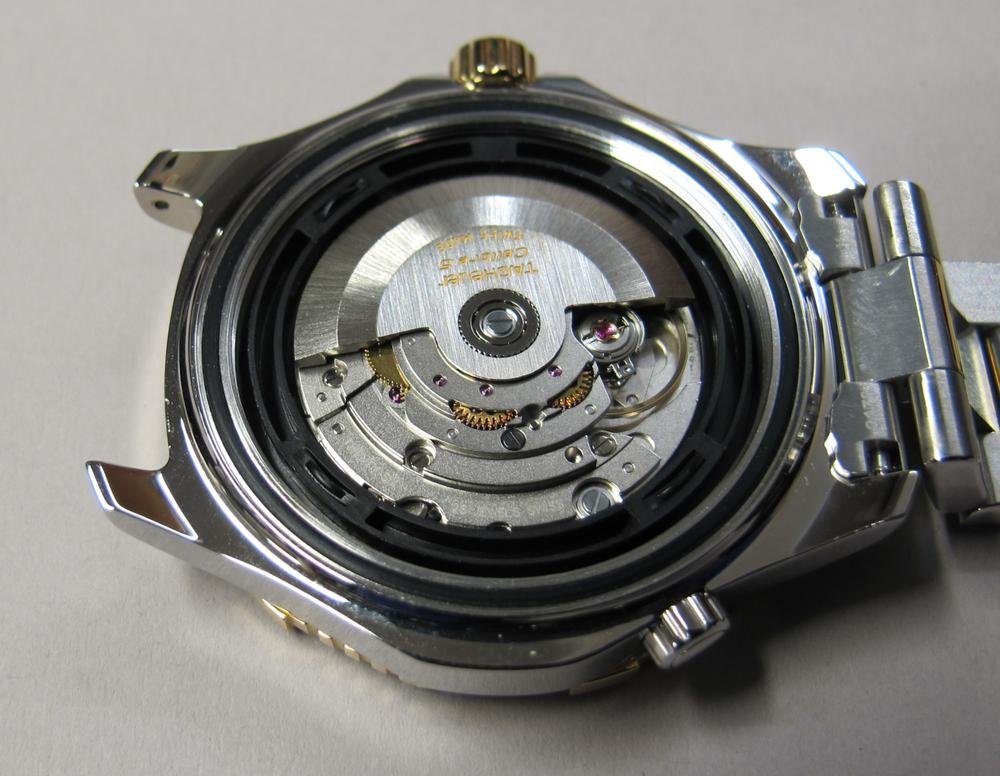
- TAG Heuer Calibre 5 (some versions)
- Many Swiss mid-price and independent brands from the 2000s onwards
The numbers explained
- 28,800 vibrations per hour means the balance makes 8 beats (ticks) every second — 4 complete back-and-forth oscillations, or 4 Hz.
- A sweeping seconds hand therefore advances in 8 small steps per second.
- That is 691,200 beats a day. A watch that gains one second a day is out by about 1 part in 86,400 — roughly 11.6 parts per million.
- Faster balances resist knocks and changes of position better but wear their pivots and need fresh oil sooner.
Convert beat rates and daily error with the Atlas tools · See a balance and escapement in the lab
How to recognise it
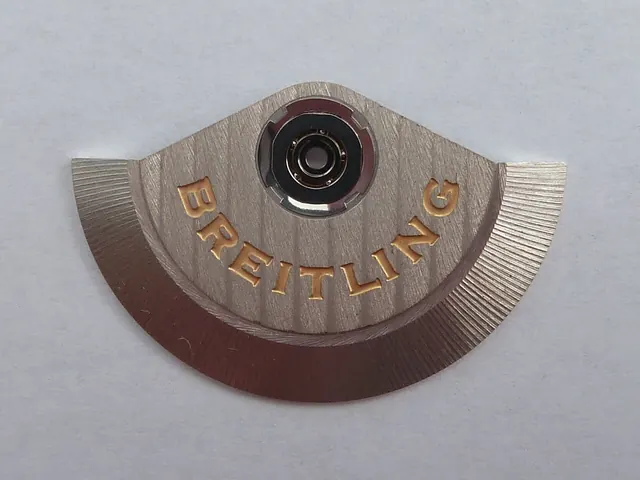
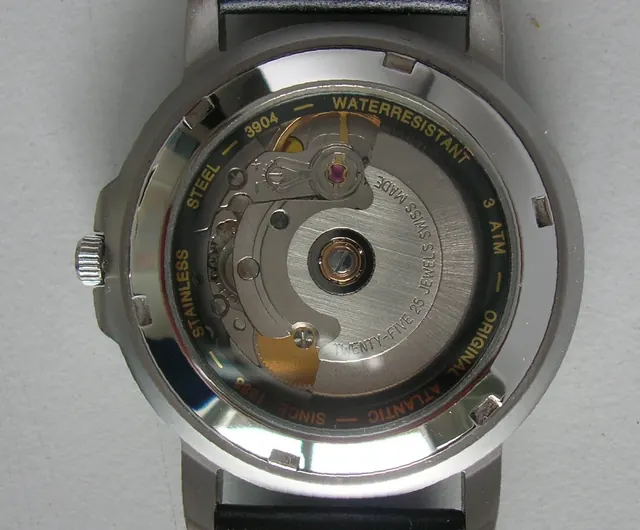
- Rotor and bridges marked 'Sellita' and 'SW200' (or SW200-1) — unless the watch brand has renamed or decorated the movement under its own calibre name.
- A layout almost identical to the ETA 2824-2: the same rotor shape, balance position and date mechanism.
- Brands often give it their own calibre names: the British Museum's TAG Heuer Aquaracer 'Calibre 5' is described as based on the SW200.
For collectors
A movement chosen for reliability and ease of service rather than rarity; the interest of a watch fitted with it lies in its design, case and finishing.
Versions and derivatives
| Calibre | Difference |
|---|---|
| SW200-1 | The revised version, with detail improvements and a slightly longer power reserve. |
| SW220 | Day-date version. |
| SW300 | A thinner, larger-diameter automatic in the same family. |
Compared with related calibres
| Calibre | Type | Frequency | Jewels | Power reserve | Diameter | Production |
|---|---|---|---|---|---|---|
| Sellita SW200-1 | Automatic | 28,800 vph (4 Hz) | 26 | c. 38–41 h | 25.6 mm (11½ lignes) | 2000s–present |
| ETA 2824-2 | Automatic | 28,800 vph (4 Hz) | 25 | c. 38 h (longer in later versions) | 25.6 mm (11½ lignes) | 1971 (2824), 2824-2 revision later |