
Calibre record · Automatic chronograph (modular)
Calibre 11 (Chronomatic)
One of the first three automatic chronograph movements, launched on 3 March 1969 by Heuer, Breitling and Hamilton-Büren: a Büren micro-rotor movement with a Dubois-Dépraz chronograph module, its crown on the left.
- Manufacturer
- Chronomatic group: Heuer-Leonidas, Breitling, Hamilton-Büren and Dubois-Dépraz
- Type
- Automatic chronograph (modular)
- Winding
- Automatic (micro-rotor)
- Production
- 1969–c. 1973 (Calibre 12 from 1971)
- Country
- Switzerland
- Diameter
- 31 mm (13¾ lignes)
- Height
- 7.7 mm
- Jewels
- 17
- Frequency
- 19,800 vph (2.75 Hz)
- Power reserve
- c. 42 h
- Oscillator / escapement
- Detached lever escapement
- Complications
- Cam-switched chronograph with 30-minute and 12-hour counters; date
Figures are those commonly published for the standard version; individual versions and grades differ. “Undocumented here” means the value has not yet been confirmed for this record.
How it is built
A modular construction. The base is Büren's thin automatic (calibre 1281), wound by a micro-rotor set into the movement rather than on top of it; a Dubois-Dépraz chronograph module mounted on the back of the movement adds the chronograph, switched by cams rather than a column wheel. Keeping the rotor inside the movement held the height to about 7.7 mm.
The movement's layout puts the crown on the left-hand side of the case, at 9 o'clock, with the two chronograph pushers on the right — the quickest way to recognise a Calibre 11 watch across a room.
Its sub-dials record 30 minutes and 12 hours; there is no running small-seconds hand.
History
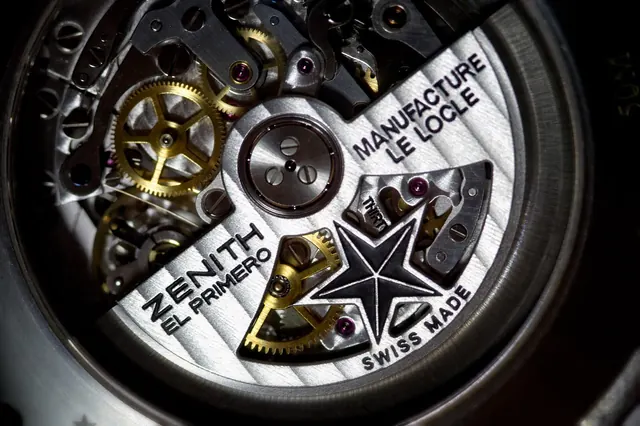
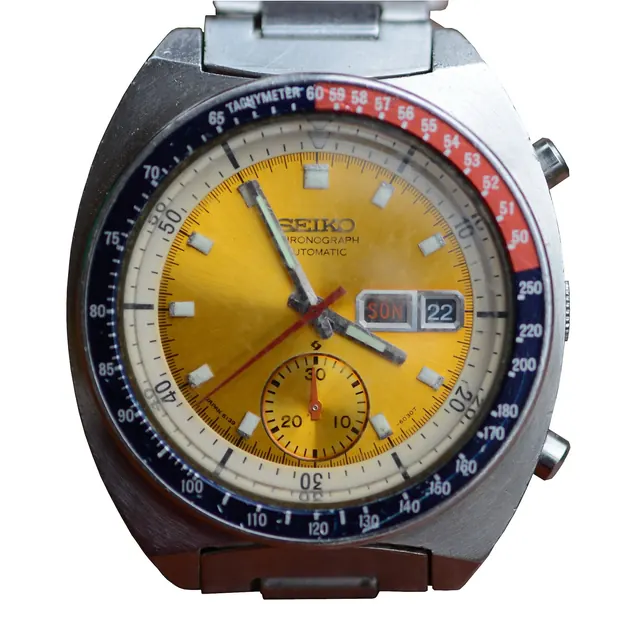
Code-named Project 99, the calibre was a joint venture of Heuer-Leonidas, Breitling, Hamilton-Büren and the chronograph specialist Dubois-Dépraz. Rather than design a new integrated movement, the group combined Büren's thin micro-rotor automatic (calibre 1281) with a Dubois-Dépraz chronograph module. Heuer, Breitling and Hamilton announced their 'Chronomatic' watches at simultaneous press conferences in Geneva and New York on 3 March 1969 and showed about 100 samples at the Basel fair in April. Zenith had shown its El Primero prototype in January, and Seiko's 6139 was being made in Japan the same spring, so which was 'first' depends on the definition. The improved Calibre 12 followed in 1971.
Watches fitted with it
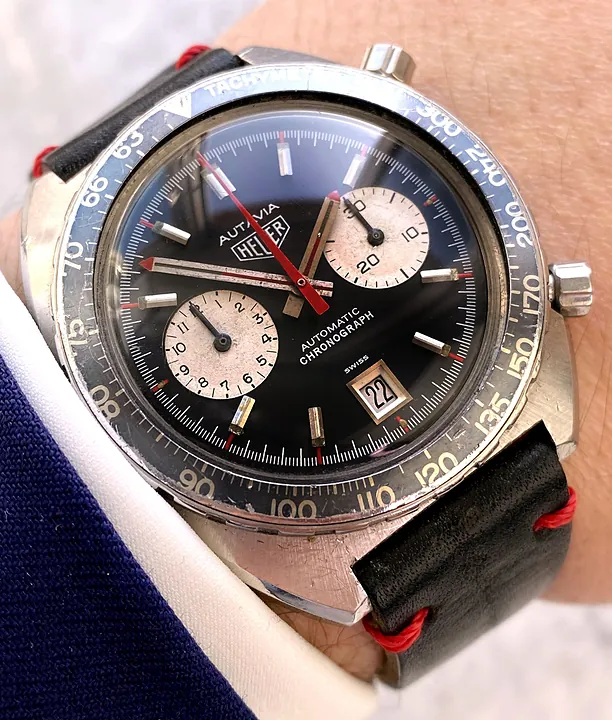
- Heuer Monaco ref. 1133, Autavia ref. 1163 and Carrera ref. 1153
- Breitling Navitimer Chrono-Matic ref. 1806 and Chrono-Matic ref. 2110
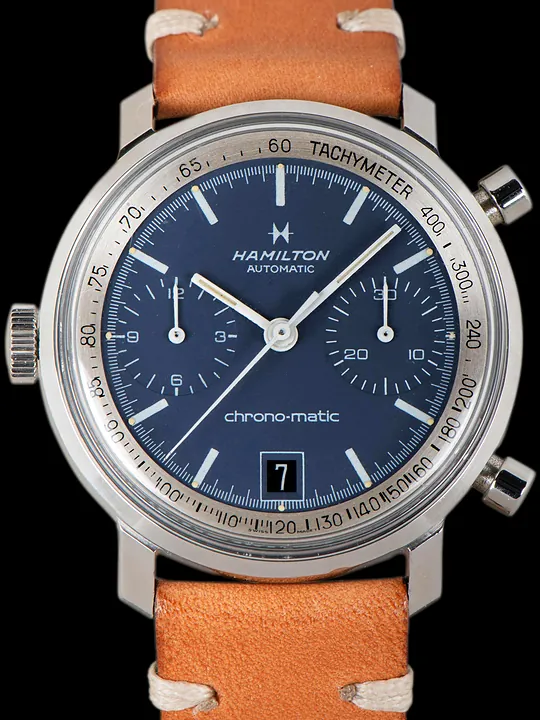
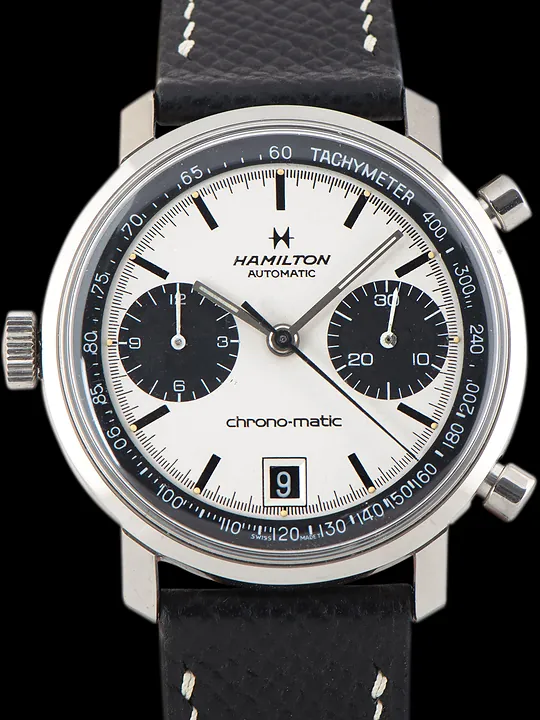
- Hamilton Chrono-matic and Büren chronographs
The numbers explained
- 19,800 vibrations per hour means the balance makes 5.5 beats (ticks) every second — 2.75 complete back-and-forth oscillations, or 2.75 Hz.
- A sweeping seconds hand therefore advances in 5.5 small steps per second.
- That is 475,200 beats a day. A watch that gains one second a day is out by about 1 part in 86,400 — roughly 11.6 parts per million.
- Faster balances resist knocks and changes of position better but wear their pivots and need fresh oil sooner.
Convert beat rates and daily error with the Atlas tools · See a balance and escapement in the lab
How to recognise it
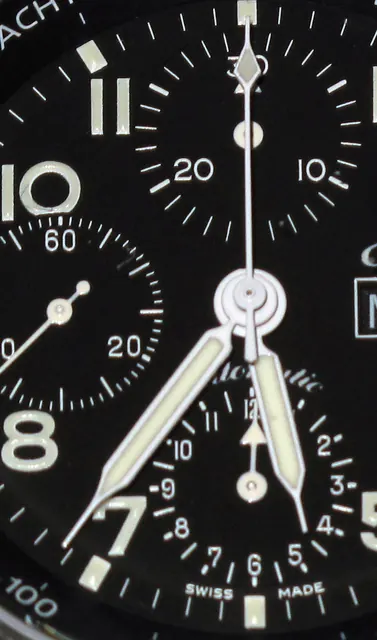
- Crown on the left, pushers on the right, and two sub-dials (minutes and hours) with no small seconds.
- 'Chrono-matic' or 'Chronomatic' on early Heuer, Breitling and Hamilton dials; 'Automatic Chronograph' on later ones.
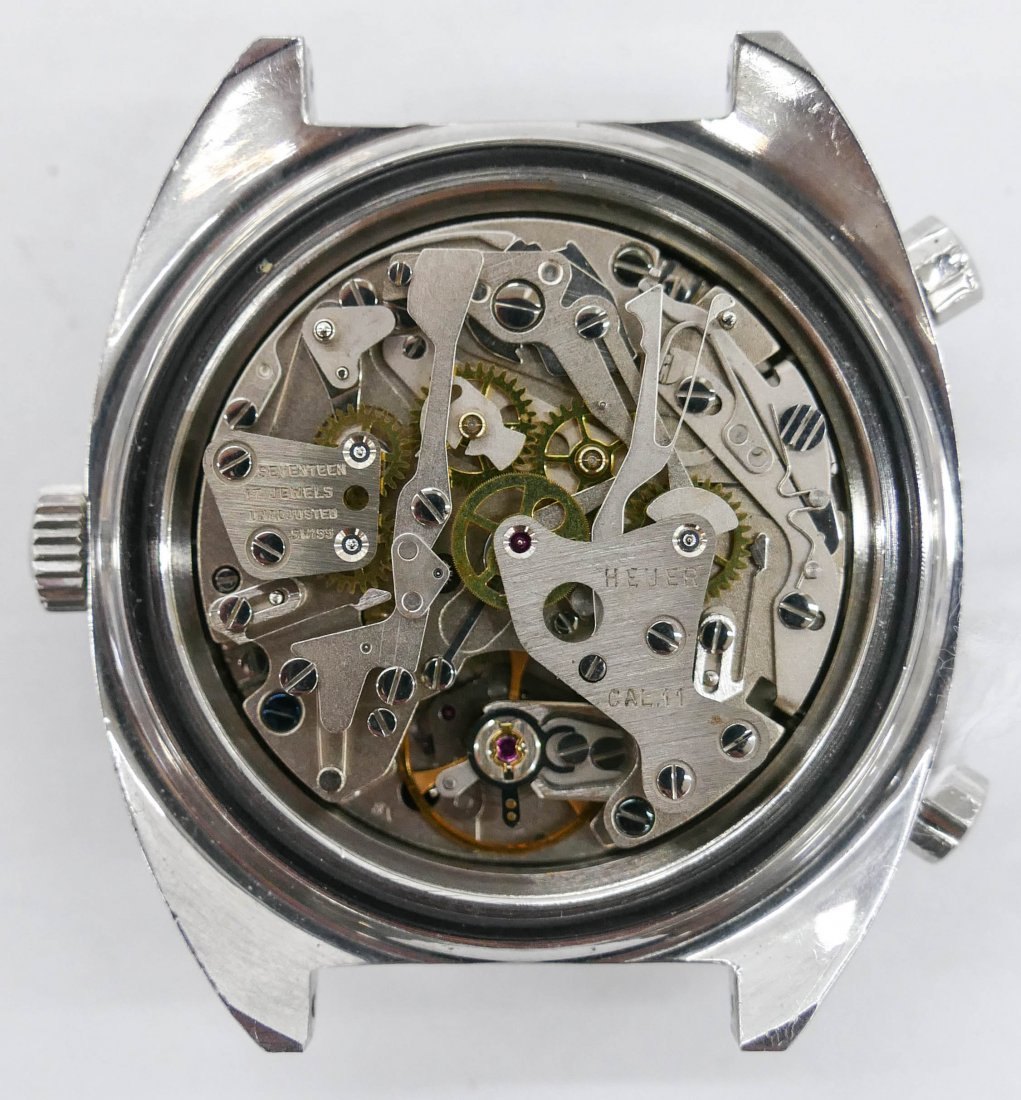
- Movement marked CAL. 11 (or 12) on the chronograph bridge, as in the photograph here.
For collectors
The calibre is closely tied to the Heuer Monaco worn by Steve McQueen in the 1971 film Le Mans, which keeps prices high. Early Calibre 11 movements had faults that the later 11-1 and 12 corrected, so ask which version the movement is and when it was last serviced by someone who knows modular chronographs.
Versions and derivatives
| Calibre | Difference |
|---|---|
| Calibre 12 | The improved successor introduced in 1971. |
| Calibre 14 | Adds a 24-hour hand for a second time zone (GMT). |
Compared with related calibres
| Calibre | Type | Frequency | Jewels | Power reserve | Diameter | Production |
|---|---|---|---|---|---|---|
| Calibre 11 (Chronomatic) | Automatic chronograph (modular) | 19,800 vph (2.75 Hz) | 17 | c. 42 h | 31 mm (13¾ lignes) | 1969–c. 1973 (Calibre 12 from 1971) |
| Zenith El Primero 3019 PHC | Automatic chronograph (integrated) | 36,000 vph (5 Hz) | 31 | c. 50 h | 30 mm (13 lignes) | 1969–present (later versions) |
| Seiko calibre 6139 | Automatic chronograph | 21,600 vph (3 Hz) | 21 (some versions 17) | Undocumented here | Undocumented here | 1969–late 1970s |
| Valjoux 7750 | Automatic chronograph | 28,800 vph (4 Hz) | 25 | c. 42–48 h | 30 mm (13¼ lignes) | 1974–present |
Mechanisms in this calibre
Related calibres
Related records in the catalogue
Records whose titles name this calibre or a model family that used it. Earlier or later examples of a model may contain a different calibre, so check each record's description for the movement actually fitted.
Wristwatches · 1960s
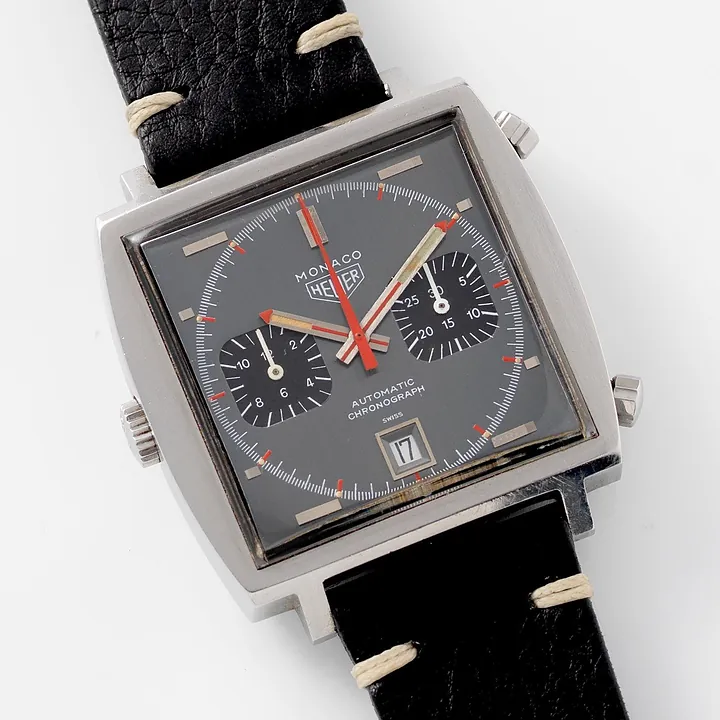
Heuer Monaco Ref 1133 Grey Dial, 1960s
Bulang & Sons (dealer), Copenhagen
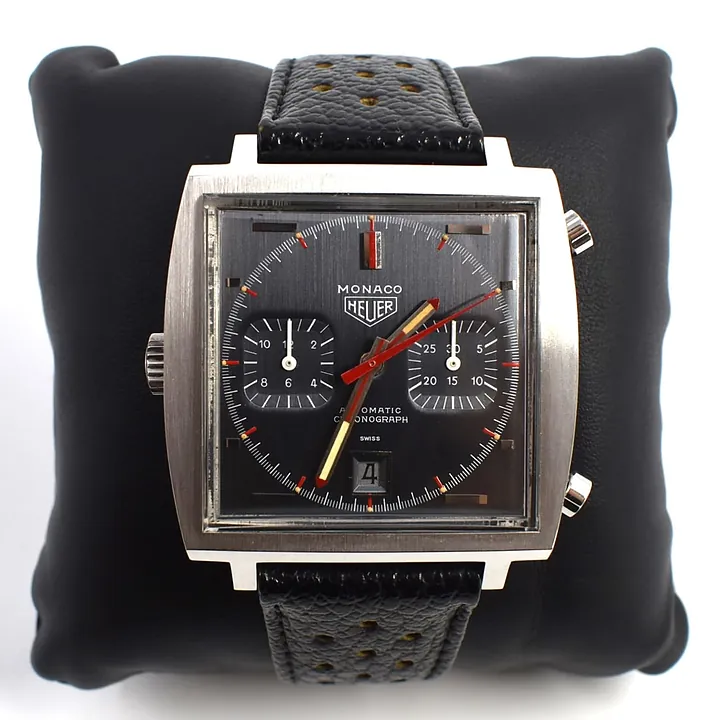
Wristwatches · c. 1970
Heuer Monaco Ref. 1133 'Steve McQueen' Automatic Chronograph, circa 1970, with TAG Heuer Service
LiveAuctioneers auction archive
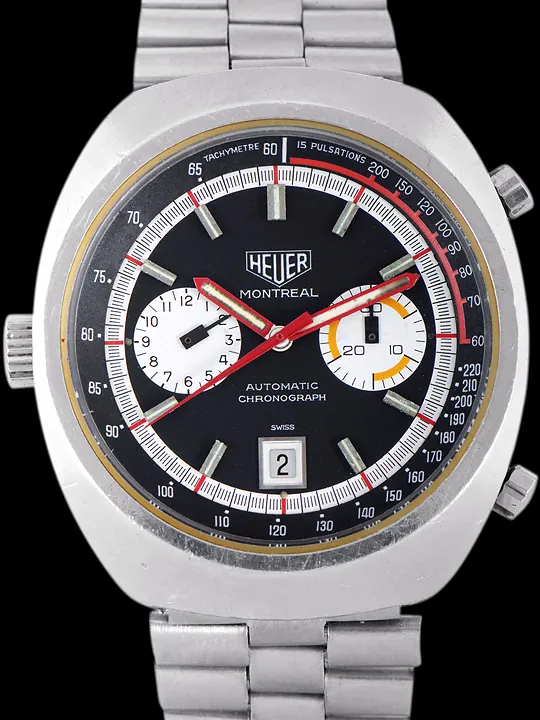
Wristwatches · 1970s
Heuer Montreal (Ref. 110.503) Black Dial 'Cal. 12', 1970s
Craft & Tailored (dealer), Los Angeles
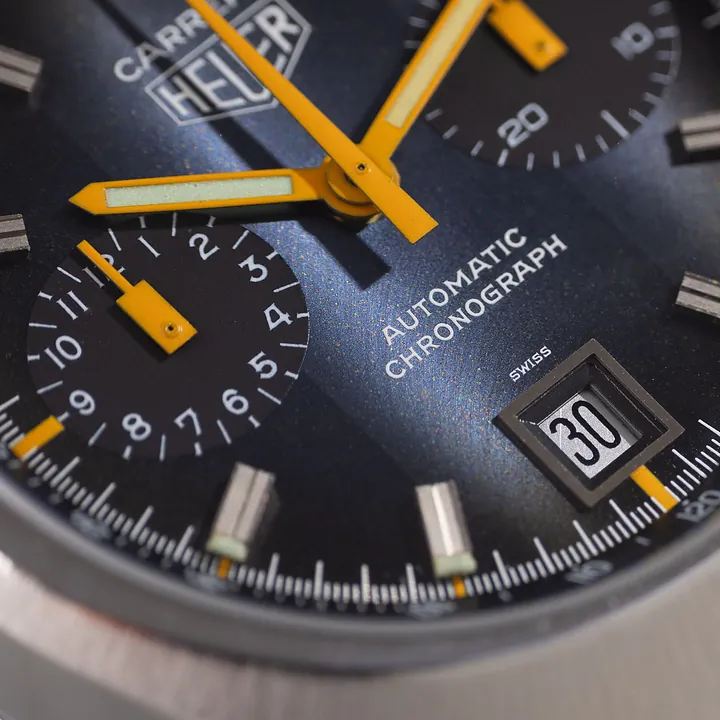
Wristwatches · 1970s
Heuer Carrera Chronograph Cal. 12 Ref. 110.573 with Rare “Automatic” Box, 1970s
Bulang & Sons (dealer), Copenhagen
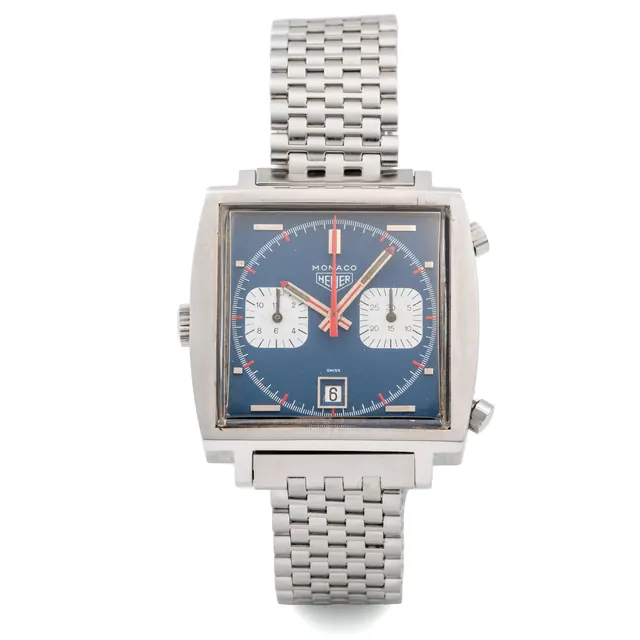
Wristwatches · c. 1972
Heuer wristwatch, ref. 1133, Monaco, circa 1972
Antiquorum auction archive, Geneva
Wristwatches · 1970
Heuer Autavia Chronograph Racing Unpolished Panda Dial, ref. 1163, 1970
Vintage Portfolio (dealer), Vienna
Wristwatches · 1969
Hamilton Chrono-Matic (Ref. 11002-3) Cal. 11, 1969
Craft & Tailored (dealer), Los Angeles
Wristwatches · 1969
Hamilton Chrono-Matic (Ref. 11002-3) Cal. 11, 1969
Craft & Tailored (dealer), Los Angeles