Clockmaker / author (family firm)
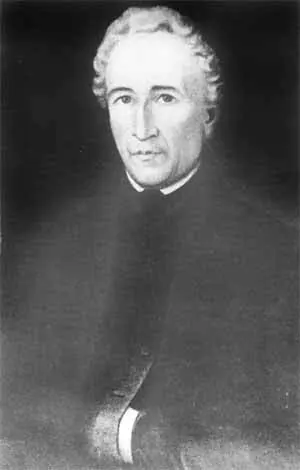
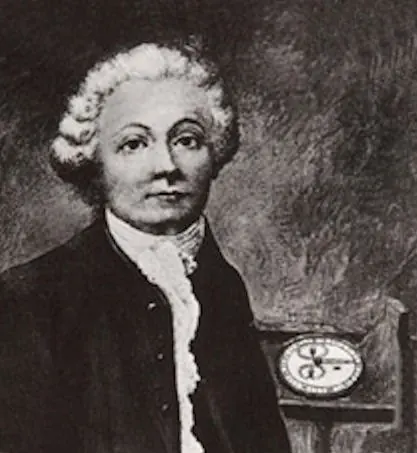
Jean-André Lepaute
Also recorded as: Lepaute, Jean-André · Jean André Lepaute · Lepaute · Jean-Baptiste Lepaute · Henri Lepaute · Henry Lepaute · Jean-Joseph Lepaute
Royal clockmaker, author of a Traité d'horlogerie (1755) and founder of a clockmaking dynasty.
Born in Thonne-la-Long in Lorraine, Jean-André Lepaute came to Paris around 1740, where he and his brother Jean-Baptiste built a business making turret clocks, regulators and fine mantel clocks; he became horloger du roi. His Traité d'horlogerie (1755) was prepared with help from the astronomer Jérôme Lalande. His wife, Nicole-Reine Lepaute, was an astronomer who worked with Clairaut and Lalande on the calculations that predicted the return of Halley's comet in 1759.
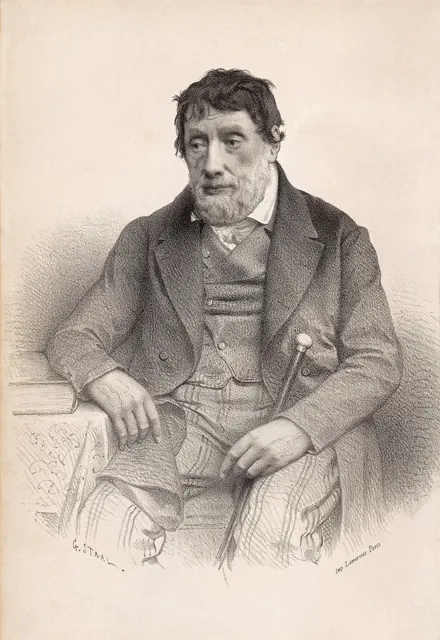
Nephews and their descendants carried the name into the 19th and 20th centuries, when firms trading as Henry-Lepaute made public, turret and electric clocks. Catalogue records signed Lepaute may therefore belong to different generations, and dates should be read with care.
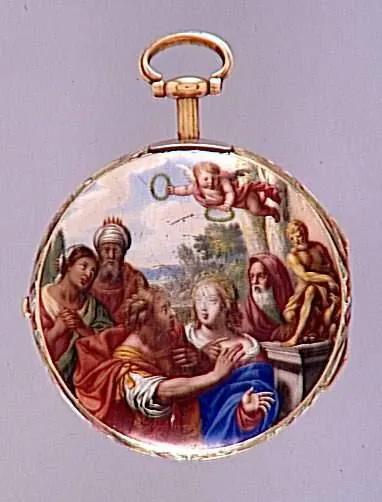
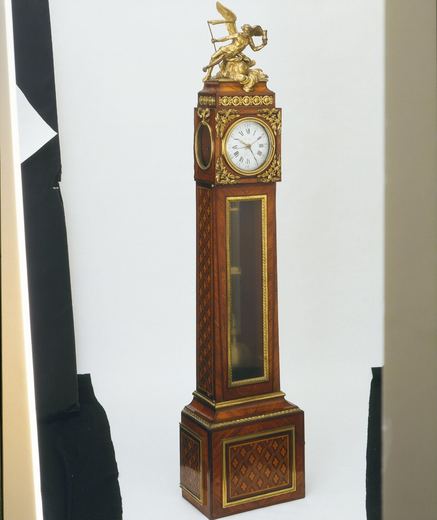
How to recognise the work: clocks are signed Lepaute, often with 'à Paris' or 'Horloger du Roi'. The same name was used by Jean-André, his brother Jean-Baptiste, their nephews Pierre Henry and Pierre-Basile Lepaute, and later family firms, so a 'Lepaute' clock should be dated from its style and movement before it is attributed to Jean-André; catalogue examples run from a mantel clock of about 1764–70 to a watch with date indicator of 1819–38.
He made his name with public clocks, at the Luxembourg Palace, the château de Bellevue and the château des Ternes, which earned him lodgings in the Luxembourg. He built a clock with all its wheels in one horizontal plane, an arrangement that made possible the revolving-band dials of Louis XVI urn and globe clocks, and the pin-wheel escapement is associated with him. His clock of 1772 at the École militaire in Paris still runs.
In 1753 the Lepaute brothers claimed an escapement invented by the young Pierre-Augustin Caron, later the playwright Beaumarchais, and the dispute went before the Académie des sciences. Jean-André's Traité d'horlogerie appeared in editions of 1755, 1760 and 1767, followed by a Description de plusieurs ouvrages d'horlogerie in 1764. When he retired in the mid-1770s Jean-Baptiste took over the workshop and built the equation clock of 1780 for the Hôtel de Ville and the clock of the Invalides; their nephew Joseph Lepaute Dagelet sailed as astronomer with Lapérouse.
- Country
- France (born Lorraine)
- City / centre
- Paris
- Life / active
- 1720–1789 (firm continued into the 20th century)
- Status
- Historical individual and family firm
- Key people
- Jean-André Lepaute; Nicole-Reine Lepaute (astronomer); Jean-Baptiste Lepaute (brother)
Innovations & specialities
- Traité d'horlogerie (1755)
- Turret clocks and regulators
- Pin-wheel escapement clocks
Timeline
- 1720Born at Thonne-la-Long, Lorraine
- 1748Marries the astronomer Nicole-Reine Étable
- 1753Escapement dispute with Beaumarchais
- 1755Traité d'horlogerie (further editions 1760, 1767)
- 1772Clock of the École militaire, Paris
- mid-1770sRetires; Jean-Baptiste takes over the workshop
- 1780Jean-Baptiste's equation clock for the Hôtel de Ville
- 1789Dies in Paris
Works by Jean-André Lepaute in the catalogue
Open in the catalogue →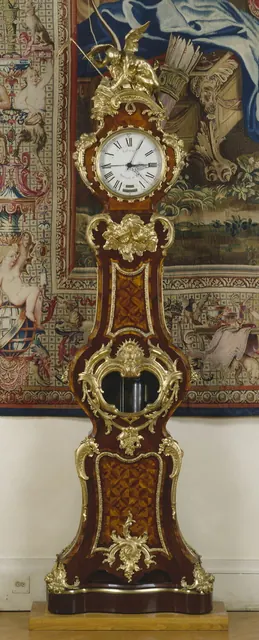
Clocks · 1735–1755
Regulator clock by Henri Lepaute, France, 1735–1755
Musée du Louvre, Paris
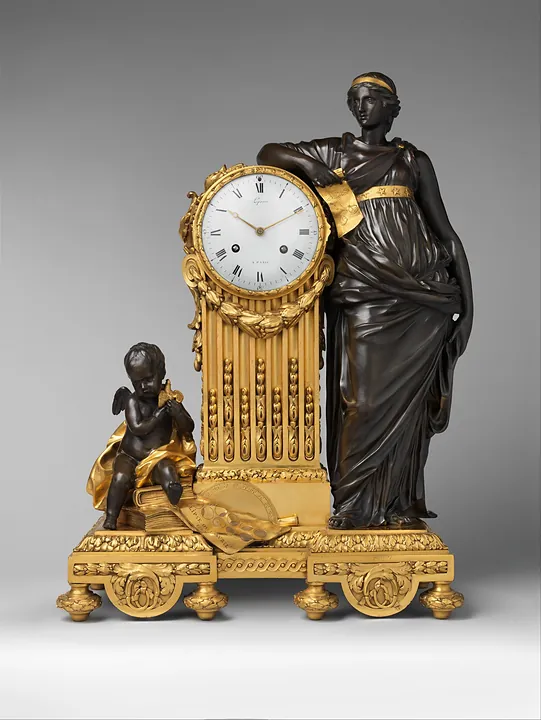
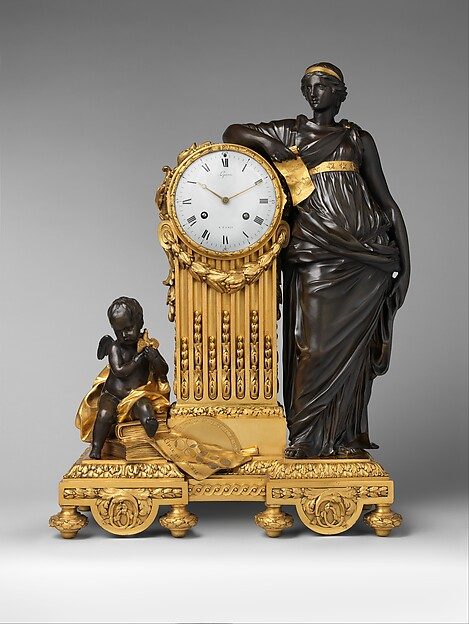
Clocks · c. 1764–70
Mantel clock by Jean-André Lepaute, France, c. 1764–70
The Metropolitan Museum of Art, New York
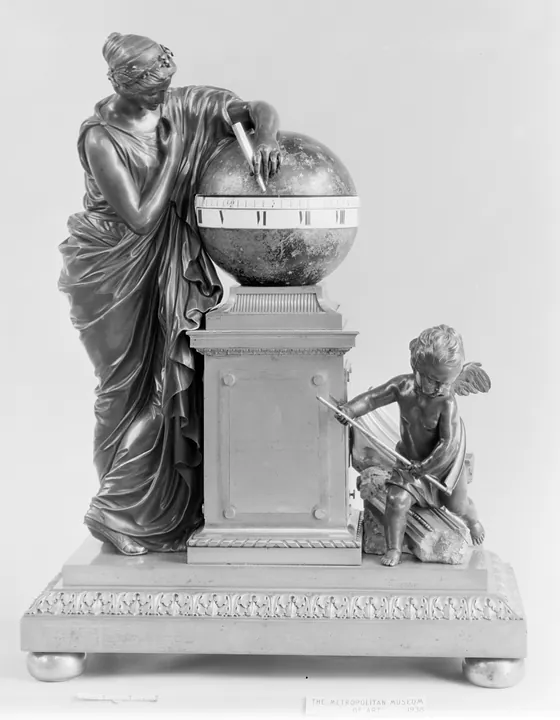
Clocks · c. 1766–70
Mantel clock ("Pendule Clio")
The Metropolitan Museum of Art, New York
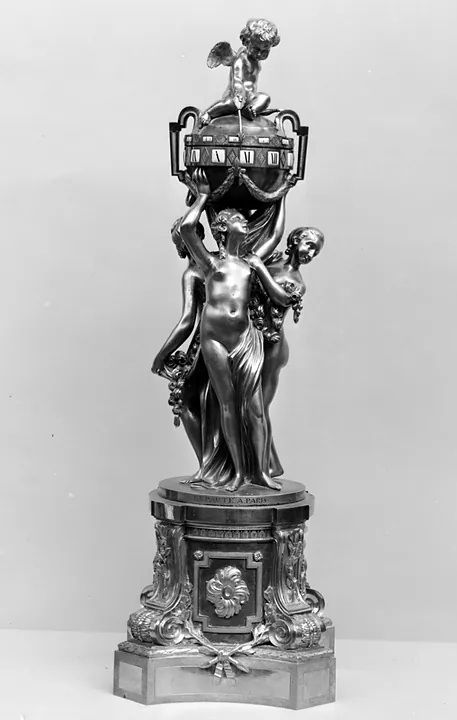
Clocks · 1770–80
Clock by Jean-André Lepaute, France, 1770–80
The Metropolitan Museum of Art, New York
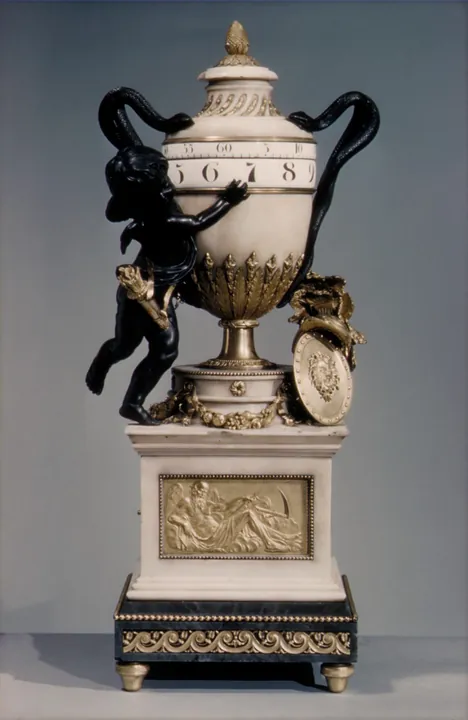
Clocks · c. 1775–80
Clock by Jean-Baptiste Lepaute, France, c. 1775–80
The Metropolitan Museum of Art, New York
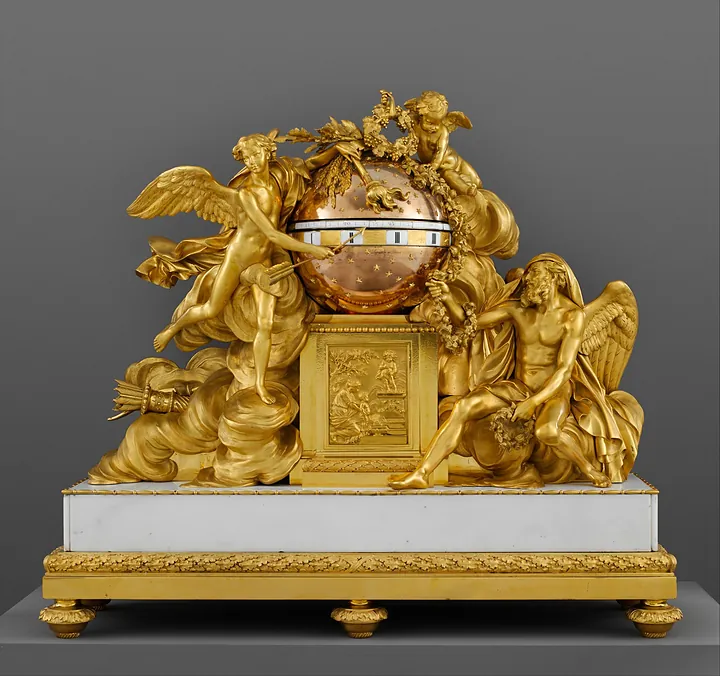
Clocks · c. 1780–90
The Triumph of Love over Time
The Metropolitan Museum of Art, New York
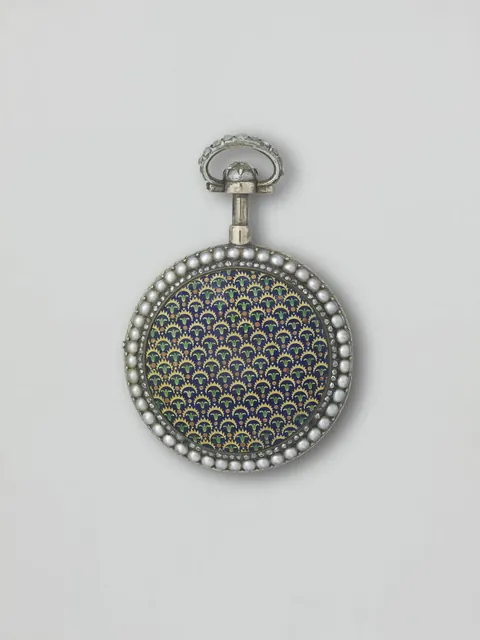
Pocket Watches · 1784–1789
Watch by Henri Lepaute, France, 1784–1789
Musée du Louvre, Paris
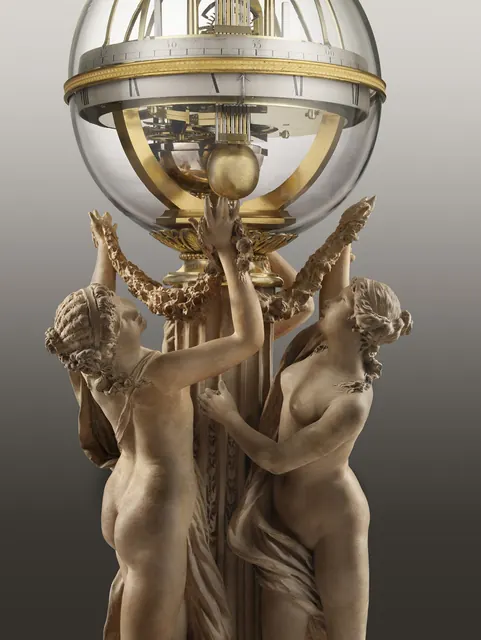
Clocks · 1788
Dance of Time
The Frick Collection
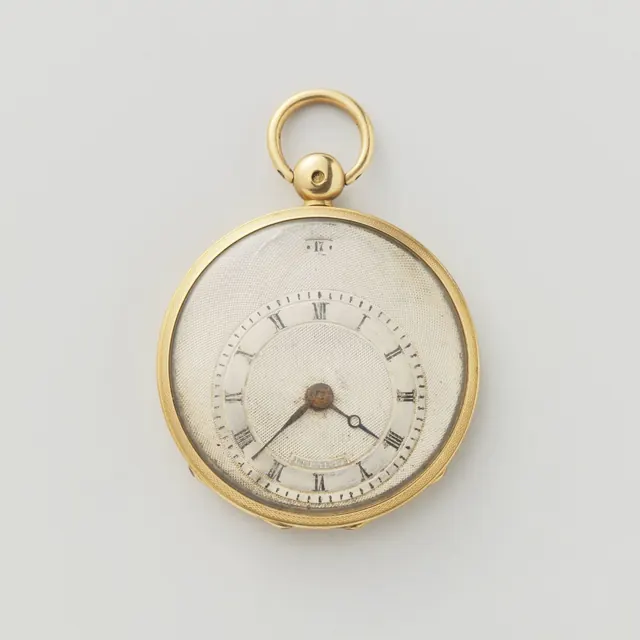
Pocket Watches · c. 1819 - c. 1838
Watch with Date Indicator
Rijksmuseum
Linked through the Atlas maker authority list, which reconciles the spellings used by different institutions. Attributions are as stated by each holding institution or auction house.
Read and see more
Where to see related work
- Palacio del Tiempo (La Atalaya Museums)
Jerez de la Frontera, Spain
Listed because the directory entry names Jean-André Lepaute; displays change, so check with the institution before visiting.