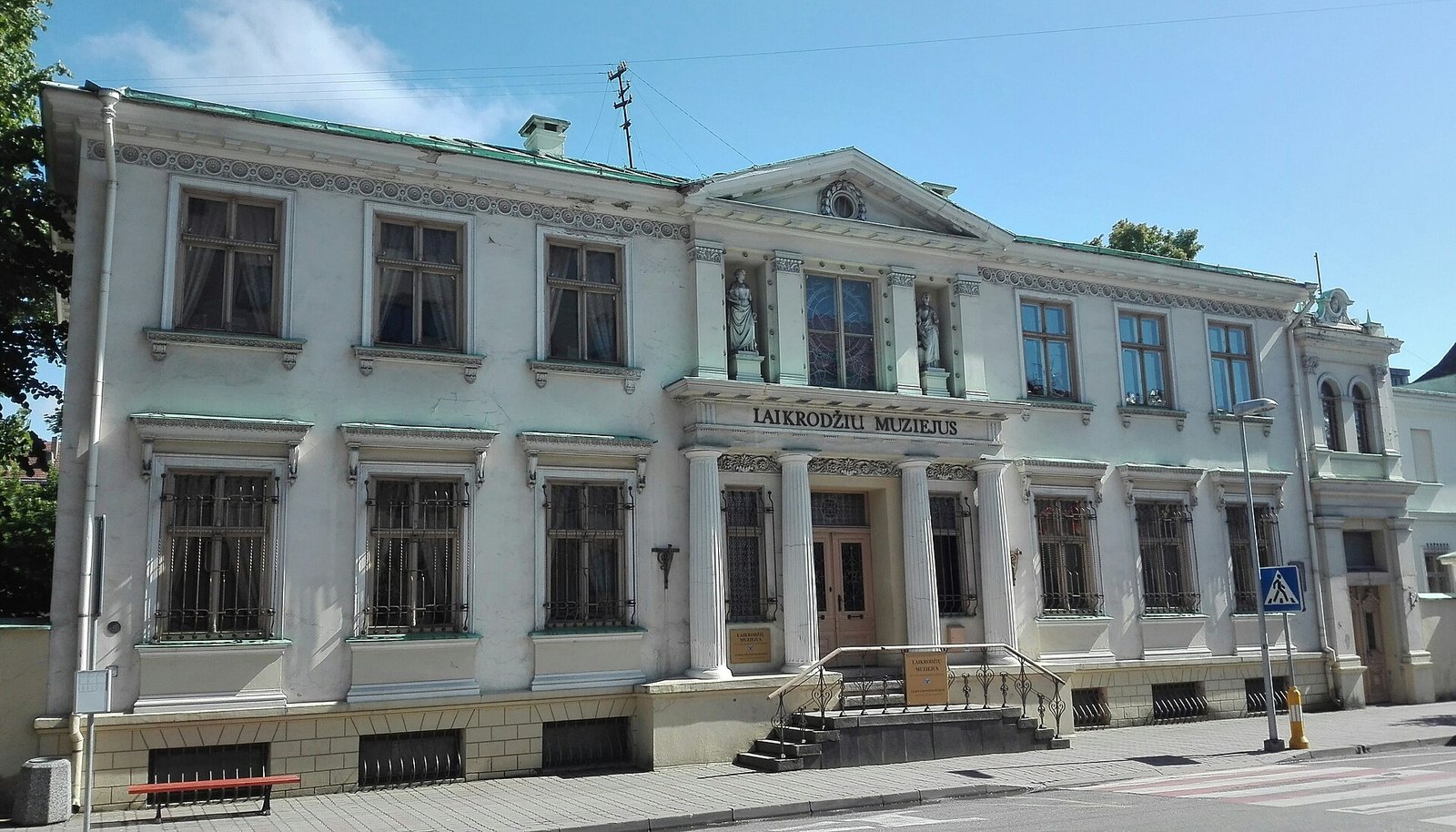
Museum
Klaipėda Clock Museum (Laikrodžių muziejus)
Klaipėda, Lithuania
Time-measuring principles, mechanical clocks from the 17th–20th centuries, and the changing styles of clock cases, with a courtyard sundial garden.
A branch of the Lithuanian National Museum of Art, the Clock Museum opened in 1984 in a restored 19th-century building on Liepų Street. Its two-part exhibition separates the history of clock construction from the evolution of decorative form, placing mechanisms beside the artistic traditions of the Renaissance, Baroque, Rococo and Art Nouveau.
- Type
- Museum
- Location
- Klaipėda, Lithuania
- Founded
- 1984
- Specialities
- Clock construction · European decorative clocks · Sundials
Opening hours, admission and accessibility change; please check the official website before visiting.
Why it matters for horology
Klaipėda's museum offers a useful distinction between how a clock works and how it looks. The first-floor exhibition follows time-measuring principles, while the second considers case design from the Renaissance to Art Nouveau. Studying them separately helps avoid dating an entire timepiece from ornament alone: mechanisms may have been replaced, and older decorative styles were revived. The museum's earlier timekeepers include models and reconstructions as well as originals, so a display of an ancient operating principle need not itself be an ancient artefact. Its sundial courtyard brings the subject outdoors, where the apparent movement of the sun can be compared with the regular hours of a mechanical clock. Lithuanian and wider European examples place local collecting within a much larger history of craft, science and decorative art.
Specialities
- Clock construction
- European decorative clocks
- Sundials
What to look for
- Construction and regulation
- Follow the progression from solar and interval-measuring devices to mechanical, electromechanical and electronic timekeepers; identify the energy source and regulator before comparing cases.
- Decorative styles
- Compare case materials, ornament and proportions across Renaissance, Baroque, Rococo and later examples. A style label is not necessarily a precise manufacturing date.
- Sundial courtyard
- Observe where the gnomon's shadow falls and compare the indication with civil time. Longitude, seasonal solar variation and daylight-saving conventions can all affect the comparison.