Museum
Finnish Museum of Horology and Jewellery Kruunu
Espoo, Finland
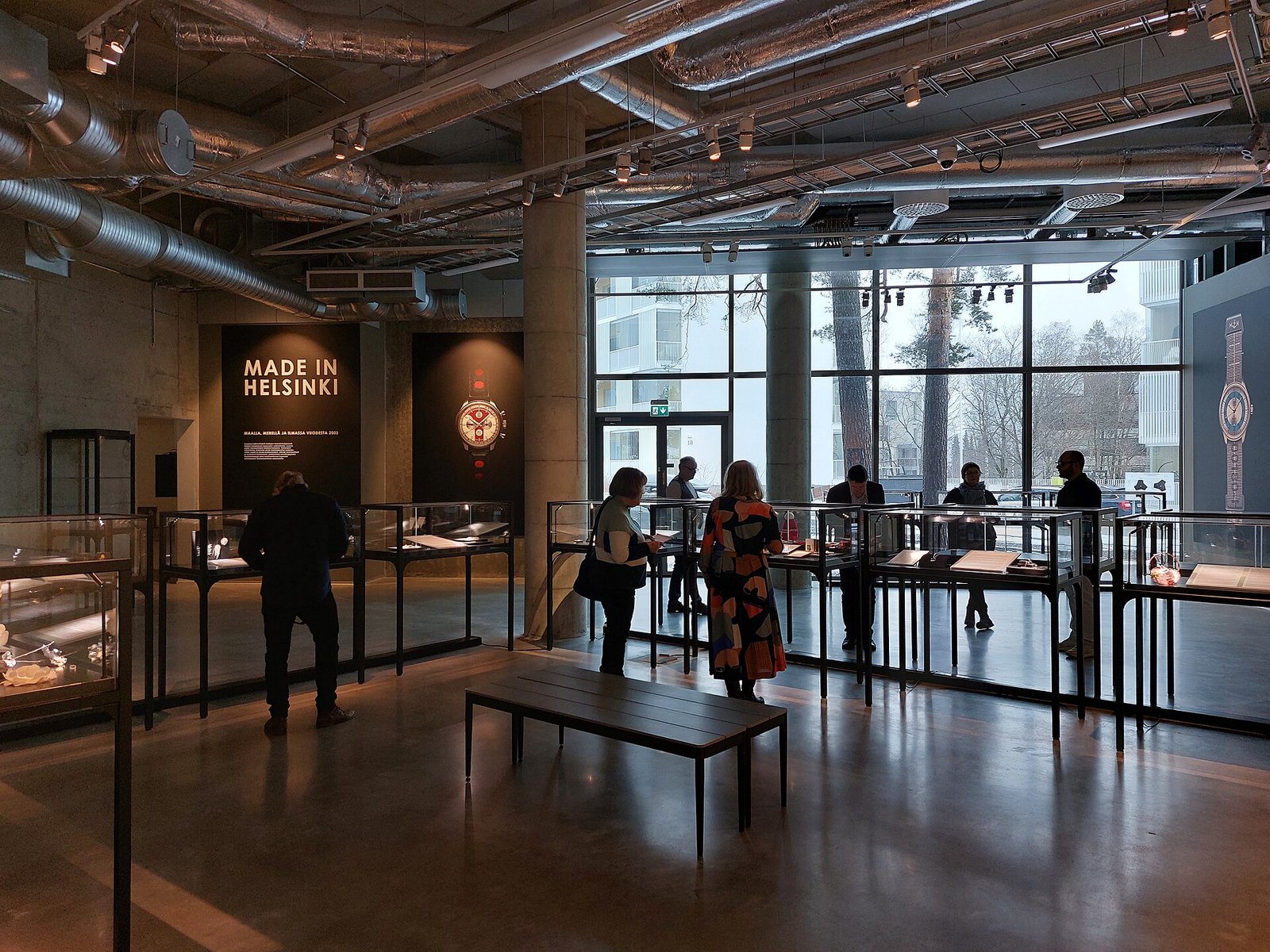
Finnish clockmaking, pocket watches, workshop heritage and jewellery, explored through changing exhibitions at Ahertajantie 3 in Tapiola.
The collection began in 1944 with Finland's watchmaking school in Lahti and followed the school to Espoo in 1959. After a period at the WeeGee Exhibition Centre, the museum moved to the neighbouring Kulttuuriloisto building and reopened as Kruunu in April 2022, extending its remit to jewellery and goldsmithing.
- Type
- Museum
- Location
- Espoo, Finland
- Founded
- 1944 (collection); 2022 (Kruunu premises)
- Specialities
- Finnish watchmaking · Horological craft · Jewellery and goldsmithing
- Official website
- www.museokruunu.fi/ (opens another website in a new tab)
Opening hours, admission and accessibility change; please check the official website before visiting.
Why it matters for horology
Kruunu's roots in a watchmaking school explain why tools, working methods and professional knowledge matter alongside finished objects. Donations from watchmakers formed a teaching collection in Lahti, and the museum's later moves followed the development of the school and Espoo's cultural institutions. The inclusion of jewellery in its renewed remit makes the shared skills of watchmakers and goldsmiths especially visible: precision metalworking, surface finishing and the handling of small components. The present exhibition address is Ahertajantie 3, not the museum's former premises inside WeeGee. Because Kruunu works through changing exhibitions, an object in the online collection is not necessarily on display during a particular visit. The digital catalogue is nevertheless useful for studying pocket watches, winding keys and the evidence of Finnish clockmaking trades.
Specialities
- Finnish watchmaking
- Horological craft
- Jewellery and goldsmithing
What to look for
- Finnish craft history
- Look for makers' names, workshop tools and documentary material that explain how watches were made, repaired and sold. A retailer's name is not automatically the movement manufacturer's identity.
- Watches and jewellery
- Compare watch-case work with jewellery techniques, paying attention to engraving, joining, polishing and the different purposes of decorative and functional metal parts.
- Changing exhibitions
- Check the museum's current programme before travelling. Collection photographs and earlier exhibition descriptions document holdings, not a promise that each piece remains in the current display.