
Wristwatches · Wristwatch
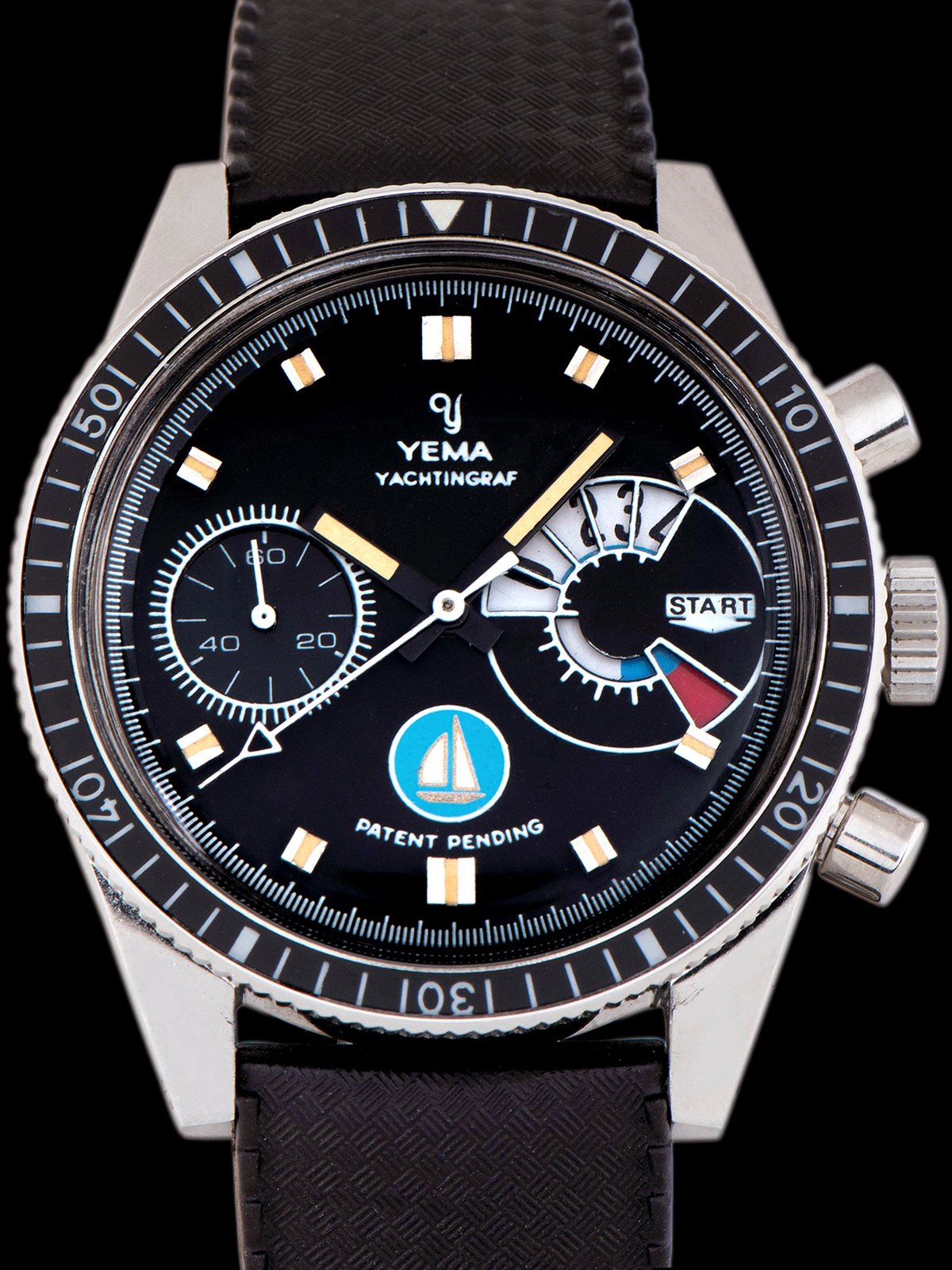
Yema Yachtingraf Régate (Ref. 5667370) "Blue Ship", 1970s
- Maker / attribution
- Yema (maker)
- Date
- 1970s
- Historical period
- Quartz Revolution (1969 – 1990)
- Country of origin
- Unrecorded in source
- Object type
- Wristwatch
- Stock no.
- YYG5667370
- Credit line
- Dealer listing, Craft & Tailored (YYG5667370)
- Catalogue title (original)
- 1970s Yema Yachtingraf Régate (Ref. 5667370) "Blue Ship" (English)
View the source record (dealer listing) ↗ (opens another website in a new tab)Suggest a correction
Record summary
Catalogued by Craft & Tailored (dealer), Los Angeles (stock number YYG5667370), this is a wristwatch by Yema, dated 1970s. The Atlas places it in the Quartz Revolution period (1969 – 1990) of its Wristwatches collection. The record is illustrated with 6 photographs.
Assembled from the source record's structured fields. Dates and attributions are given as the source states them; where a field is missing the Atlas leaves it blank rather than estimating.
Catalogue description
Dealer description — Craft & Tailored
From outer space, the racetrack, sailing, diving, and to the North Pole and back, Yema wristwatches were built to accompany adventurers from the very beginning. Founded in 1948, the Yema watch company saw early success and quickly became the best-selling French watch brand of the 1960s. The Yema Yachtingraf was introduced in 1966 for the sole purpose of regatta racing and features a highly visible red, white, and blue countdown timer within the right sub-register to track the critical five-minute starting sequence of a yacht race. The Yachtingraf eventually became the official watch of the French Sailing Federation and went on to accompany the French National Sailing Team during the 1972 Olympic Games. The example offered here is the highly coveted and exceptionally uncommon “Blue Ship” execution of the Yema Yachtingraf Régate, regarded by many collectors as the seventh and final evolution of the original non-digital Yachtingraf lineage. Distinguished by its oversized “Jumbo” straight lug case architecture and signature blue ship motif above 6 o’clock, this particular variant represents one of the rarest and most visually striking expressions of the Yachtingraf platform ever produced. The dial layout of the Yachtingraf Régate is equally as compelling as its case architecture, featuring a highly specialized regatta countdown display designed specifically for yacht racing applications. The multi-colored segmented register allows sailors to track the critical countdown period leading up to the start of a race, functioning as both a practical navigational instrument and one of the most visually distinctive chronograph displays of the era. Adding further visual depth are the unique dial “cutouts” integrated directly into the regatta countdown register itself, creating a layered, dimensional effect rarely seen in period chronographs. These apertures expose the rotating countdown disc beneath the dial surface, allowing the wearer to visually track the progression of elapsed countdown intervals in real time. The result is a dial execution that feels remarkably technical, playful, and purpose-built all at once, embodying the experimental spirit of late-1960s and early-1970s regatta chronograph design. Powering the watch is the modified Valjoux 7733S manual-wind chronograph movement, specifically adapted for regatta timing functionality. SPECS Stock # YYG5667370 Brand Yema Style Yachtingraf Model 5667370 Serial N/A Size Men's Material Stainless Steel Dial Matte Black Millimeters 38.5 Strap 2pc Rubber Tropic Strap CASE & BRACELET The straight lug case remains wonderfully well-preserved and unpolished, retaining its original factory finishing and sharp case geometry throughout. The original bakelite bezel remains flawless, showing no signs of cracking or degradation. The case retains its original unsigned crown and pump pushers. The case back retains all of its original factory engravings in full legible and deep condition. The watch comes supplied on a 2pc rubber tropic strap. DIAL & HANDS The original and rare “Blue Ship" dial remains in flawless condition, showing no visible marks, blemishes, or damage throughout. The tritium lume filled hour markers have achieved a vivid custard-custard patina and exhibit no degradation under UV light inspection. The original tritium hands match the dial almost perfectly with no degradation present under UV light inspection. The distinctive arrow-tipped center chronograph hand is also original to the watch, and is notably left unlumed from the factory to functionally increase the visibility of the hand against the technical regatta dial layout. ACCESSORIES
Historical context
Quartz Revolution (1969 – 1990)
Seiko's Astron begins mass quartz timekeeping; traditional industries contract sharply.
Quartz and digital watches transformed the market after 1969. Swiss employment collapsed, Japanese and Hong Kong production soared, and the Swatch (1983) helped the Swiss industry recover; mechanical watches survived as luxury goods.
Read the period in the timelineMore wristwatches from this periodEarlier: Modern Mechanical Horology
Atlas type guide
Wristwatches
Bracelet watches were worn by women from the early nineteenth century — Breguet made one for Caroline Murat, Queen of Naples, in 1810–12 — but the wristwatch only became a man's instrument with military use and aviation in the early twentieth century. Between the World Wars it overtook the pocket watch; the 1920s and 1930s brought rectangular Art Deco cases, water-resistant cases and the first automatic winding systems.
After 1945 the wristwatch became a carrier of identity — dress watches, sports and dive watches, chronographs, calendars — produced by Swiss, American, Japanese, German, Soviet and Chinese industries. The quartz revolution after 1969 and the mechanical renaissance since the 1990s, including the rise of independent watchmakers, complete the story.
What to look for
- The reference number (between the lugs or inside the case back) and serial number, the starting point for dating.
- The calibre: its maker and number are often stamped under the dial or on the bridge.
- Originality of dial, hands and crown — refinished ('redial') dials are common.
- Case material marks: 18K/750, 14K/585, stainless steel, gold-filled, plated.
Dating clues
- Wire-lug cases: before c. 1925.
- Water-resistant screw-down cases: from 1926.
- Quartz movements: from 1969; sapphire crystals widespread after c. 1980.
General guidance written by the Atlas editors about this kind of object. It is not a statement about this particular piece; for that, rely on the source record above and on physical examination.
Related records
Wristwatches · 1960s
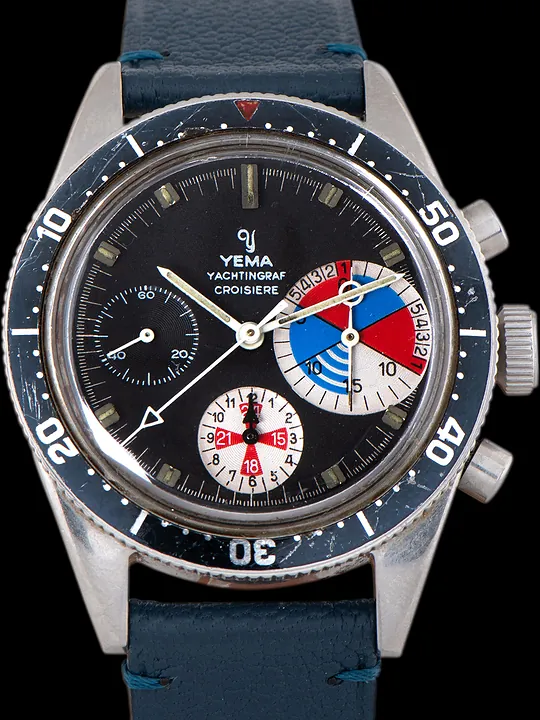
Yema Yachtingraf Croisière (Ref. 93012) "Big Eye", 1960s
Craft & Tailored (dealer), Los Angeles
Wristwatches · 1998
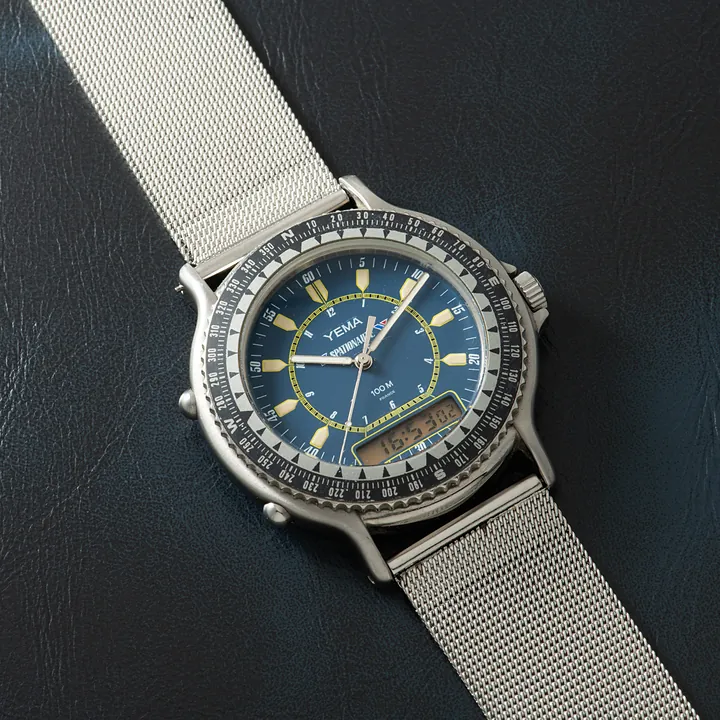
Yema Spationaute ISS, 1998
Analog/Shift (dealer), New York
Wristwatches · late 1960s
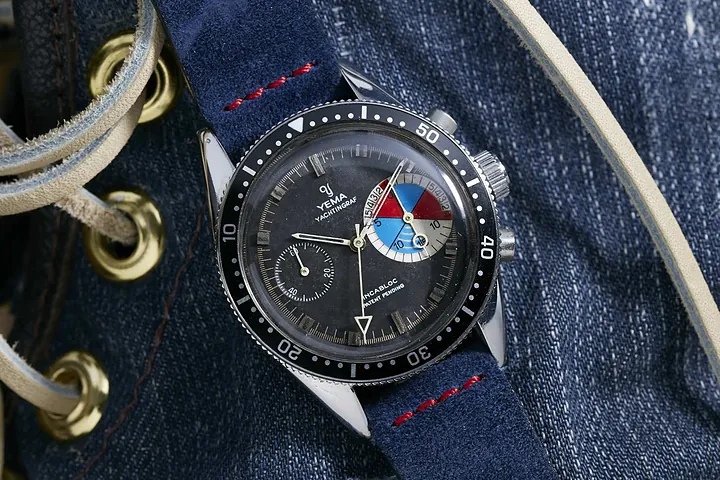
Yema Yachtingraf, late 1960s
Analog/Shift (dealer), New York
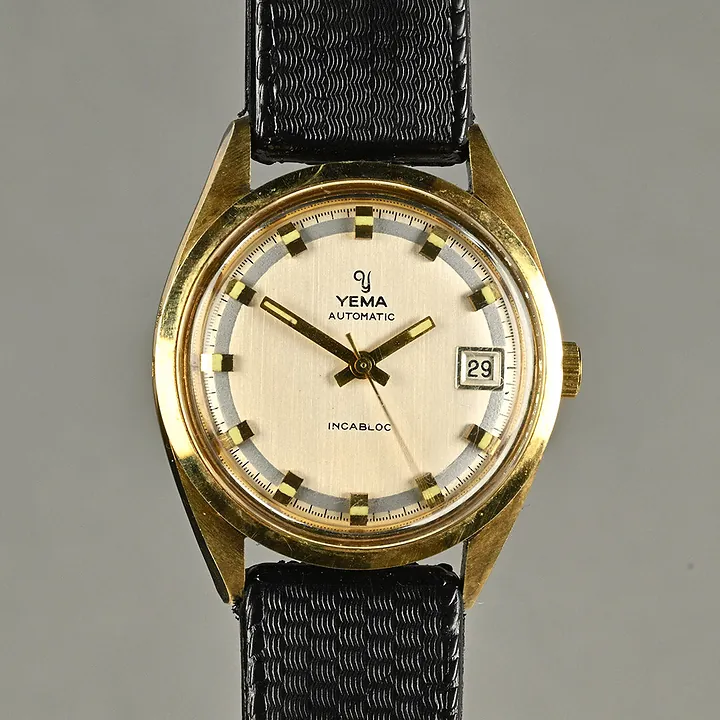
Wristwatches · c. 1970
Yema Automatic Date, Gold-Tone Case, Silver Dial, ref. 368307, circa 1970
Vintage Watch Specialist (dealer), United Kingdom

Wristwatches · 1970
Wristwatch by Heno, Switzerland, 1970
Museum Rotterdam
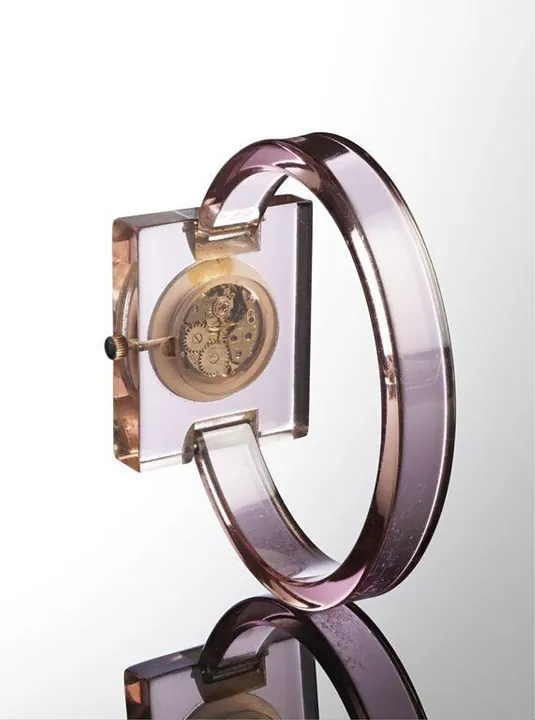
Wristwatches · 1970s
Wristwatch, plastic, by Gucci; Italy, 1970s.
Victoria and Albert Museum, London
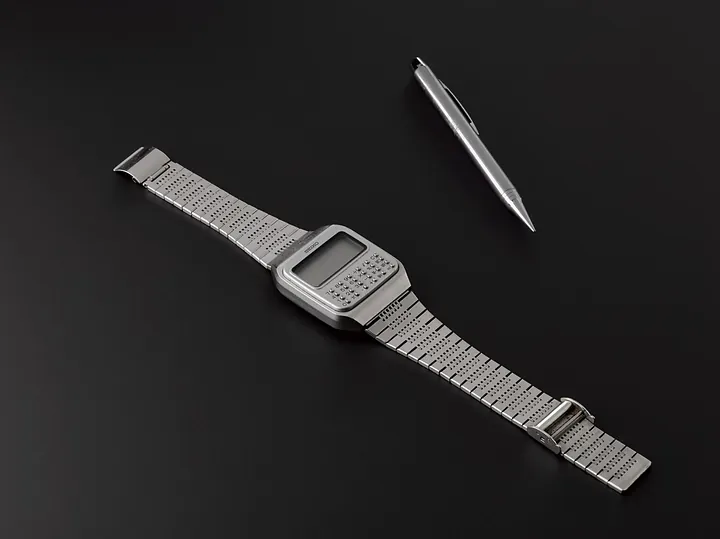
Wristwatches · 1978
Calculator wristwatch by Suwa Seikosha Co. Limited, Japan, 1978
Science Museum Group, London
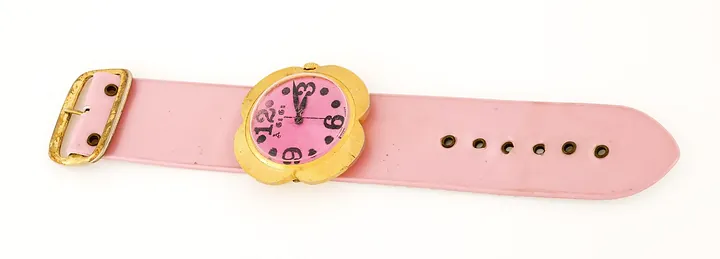
Wristwatches · 1980
Wristwatch, 1980 (no. 71413)
Museum Rotterdam