
Instruments · Water clock
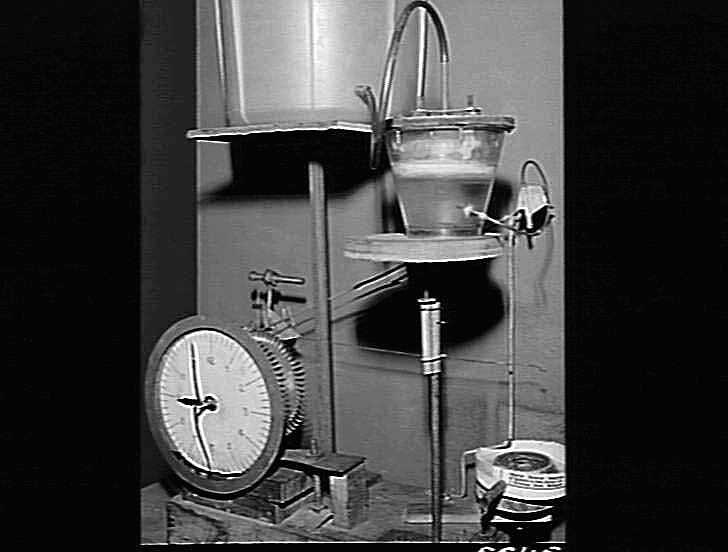
Water Clock - E.S. Nurse, Australia, 1968
- Maker / attribution
- Captain Edwin S. Nurse - Royal Australian Navy (RAN) (Maker)
- Date
- 1968
- Historical period
- Modern Mechanical Horology (1945 – 1969)
- Country of origin
- Unrecorded in source
- Place
- Heathmont, Greater Melbourne, Victoria, Australia
- Object type
- Water clock
- Holding institution
- Museums Victoria, Melbourne
- Accession / object no.
- ST 29857
- Catalogue title (original)
- Water Clock - E.S. Nurse, Australia, 1968 (English)
View the source record ↗ (opens another website in a new tab)Suggest a correction
Record summary
Held and catalogued by Museums Victoria, Melbourne (object number ST 29857), this is a water clock by Captain Edwin S. Nurse - Royal Australian Navy (RAN), made in Heathmont, Greater Melbourne, Victoria, Australia, dated 1968. The Atlas places it in the Modern Mechanical Horology period (1945 – 1969) of its Instruments collection. The record is illustrated with 5 photographs.
Assembled from the source record's structured fields. Dates and attributions are given as the source states them; where a field is missing the Atlas leaves it blank rather than estimating.
Catalogue description
Summary — Museums Victoria
Water clock designed and made by Captain Edwin S. Nurse, Heathmont, Victoria, Australia, 1968. Edwin Nurse retired from the Royal Australian Navy in 1956 after 40 years as a mechanical engineer. He spent his retirement inventing mechanical devices and described himself as a 'gadgeteer'. This home-made water-driven pendulum-controlled clock has been made from readily available materials, using hand tools and a soldering iron. The weight of the water carries the horizontal pendulum down, which then discards the water and springs back to its original position. The clock is not compensated for temperature and is accurate to approximately one minute per day. There are only three wheels, all of the same size with 60 teeth, cut from aluminium sheet with tin snips and a pair of pliers. The bearings for the wheel spindles and two cams are made from bent galvanized iron wire. A constant head of water to the 'dripping point' is maintained by a smaller 'constant level' tank, which is controlled by a float.
Physical description — Museums Victoria
A large plastic container is connected by a rubber tube to a constant level reservoir that delivers a drop of water to the end of a horizontal pendulum. The pendulum falls and moves a cog attached to the second hand. Two other cogs and ratchets operate the minute and hour hands. The water drop falls into an outlet container so the pendulum rises again.
Significance — Museums Victoria
This is a unique water driven clock invented by Captain Edwin S. Nurse, R.A.N. (Retired) of Heathmont, Victoria. As far as can be ascertained this method of drive and the mechanism are unlike anything else in the world. The clock is operated by a pendulum which is driven by drops of water. (This pendulum picks up a drop of water on its arm and this extra weight provides the power to operate the clock.) The energy of the swinging pendulum is transmitted by means of a ratchet operating on a toothed wheel. The gear train of the clock is very simple, consisting of three wheels of sixty teeth each mounted on co-axial shafts connected to the hands,. A cam on the back of the second wheel operates on a ratchet to move the minute hand one division each revolution of the second hand. Five cams on the minute wheel operate a ratchet to drive the hour hand (at its correct speed). To reduce friction the pendulum bearings are of the rolling type, the wire rolling (not rubbing) on its supports. A feature of this clock is that it may be made in any home by a suitably skilled person equipped with a soldering iron, tin-snips and a pair of pliers. Captain Nurse designed the clock with this in mind using easily obtained materials. The wheels are cut from aluminium sheet and the teeth twisted through ninety degrees by hand using pliers. Much of the mechanism is cut from wire. The rate of water flow is adjusted to provide, as nearly as possible, one water drop for each pendulum swing. This flow is adjusted by setting the height of a valve-controlled constant level reservoir to provide the correct head of water above the drop nozzle. The constant level reservoir is fed from the bulk reservoir above the clock. When the water drop has completed its function it is collected by surface tension force exerted by the water in the discharge reservoir lower down. Although the construction appears to be rough it is accurate to one minute per day. It uses about two and a quarter litres of water a day.
Provenance
Loan & Subsequent Bequest from Captain E. S. Nurse RAN (retired), Aug 1972
Historical context
Modern Mechanical Horology (1945 – 1969)
Tool watches for divers, pilots and astronauts; electric watches anticipate the electronic age.
Electronic instruments, quartz frequency standards and the first atomic clocks transformed precision timing in laboratories and broadcasting.
Read the period in the timelineMore instruments from this periodEarlier: Golden Age of Mechanical Watchmaking
Atlas type guide
Water, fire and incense clocks
Before the mechanical clock, intervals and hours were measured by flow and combustion. Outflow and inflow water clocks were used in Egypt, Mesopotamia, Greece, China and the Islamic world; Chinese and Japanese incense clocks burned powdered incense along a maze-like path; oil-lamp clocks with graduated glass reservoirs were popular in German-speaking Europe in the seventeenth and eighteenth centuries.
These timekeepers needed constant correction and could not keep the hour automatically for long periods, but they underpinned temple ritual, legal procedure, astronomy and the earliest monumental astronomical clocks such as Su Song's clock tower (1090s) and al-Jazari's designs (1206).
What to look for
- Graduated vessels or glass reservoirs with hour scales.
- Incense trays with stencils for laying the powder trail.
- Pewter oil-lamp clocks with a glass reservoir marked in Roman numerals.
Dating clues
- Oil-lamp clocks are mostly eighteenth century and often reproduced later.
- Incense clocks were made in China and Japan into the twentieth century.
General guidance written by the Atlas editors about this kind of object. It is not a statement about this particular piece; for that, rely on the source record above and on physical examination.
Read next:Su Song's astronomical clock tower
Related records
Instruments · 1930–1960
Electronically wound triple-pole changeover time-switch, type MWDGPS, by Venner Limited, New Malden, Kingston-upon-Thames, London, England, 1930–1960.
Science Museum Group, London
Instruments · 1940–1976
'Meridian' watch timer, by Walker Electronics, Newark-on-Trent, Nottinghamshire, England, 1940–1976.
Science Museum Group, London
Instruments · 1940–1980
Clockwork timer used by renal dialysis patients to time blood clotting reaction when adding heparin to blood for dialysis
Science Museum Group, London
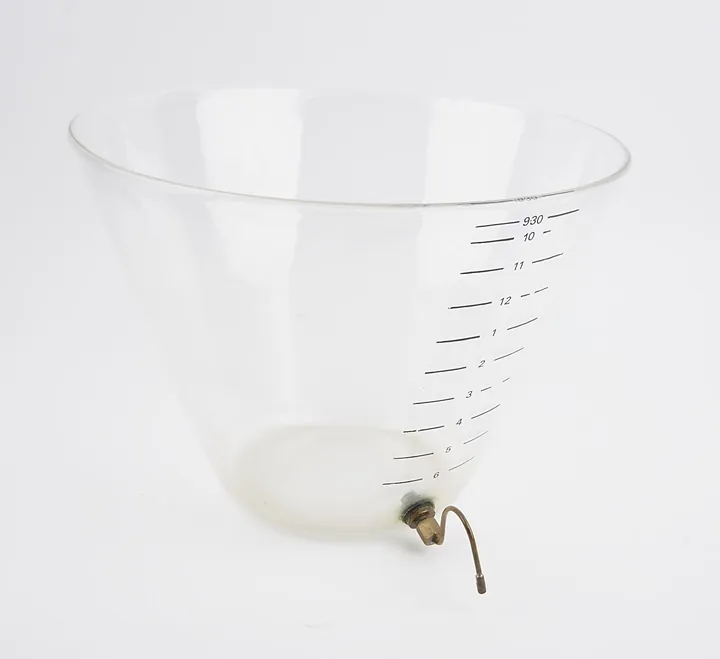
Instruments · 1940–1965
Glass bowl in the shape of an ancient Egyptian water-clock, 1940–1965
Science Museum Group, London
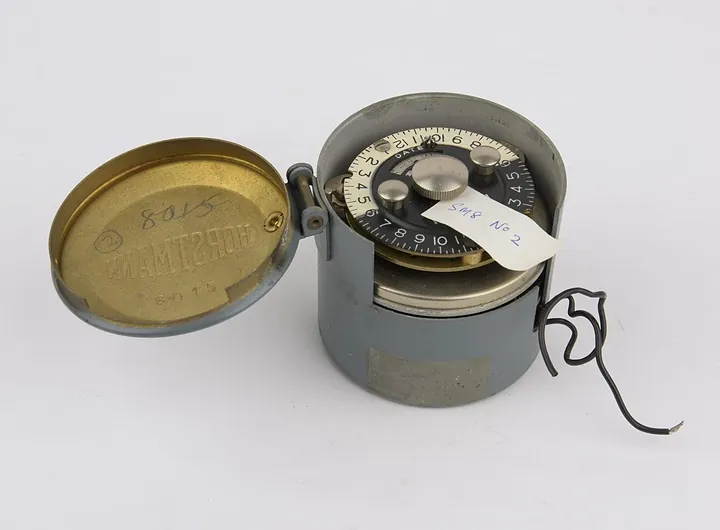
Instruments · 1940–1974
Stopwatch / timer by Horstmann Gear Co. Ltd., England, 1940–1974
Science Museum Group, London
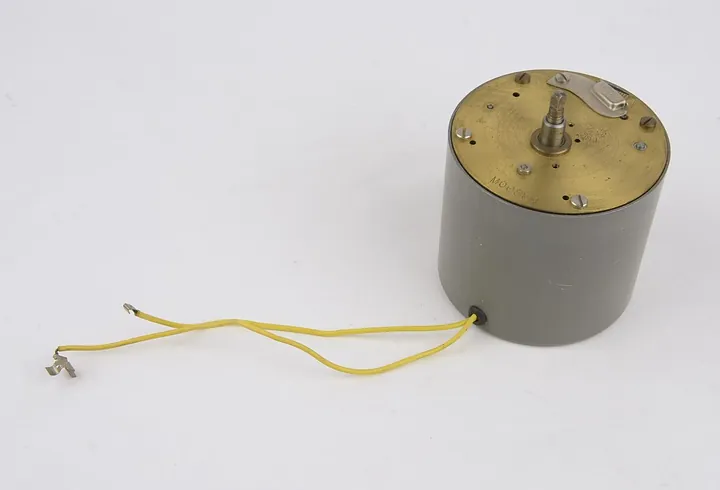
Instruments · 1940–1974
Stopwatch / timer by Horstmann Gear Co. Ltd., England, 1940–1974
Science Museum Group, London
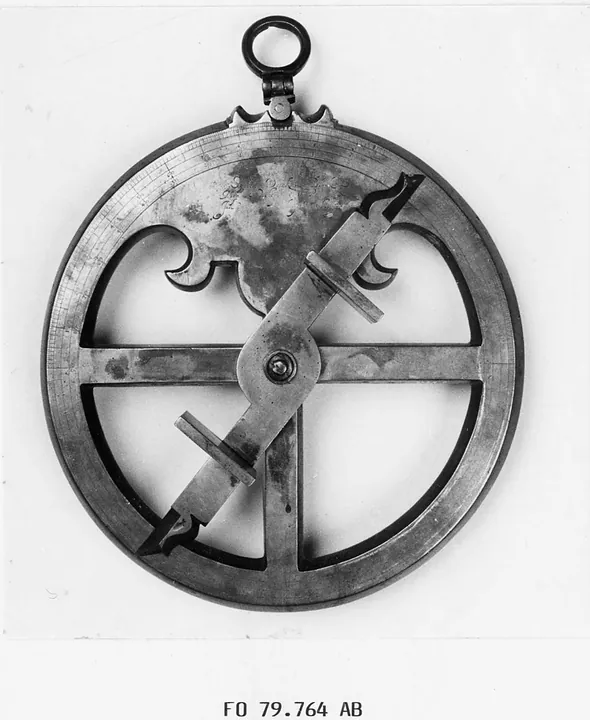
Instruments · 1945
Astrolabe by Olsson, Gillis, SHM, Sweden, 1945
National Maritime Museum
Instruments · 1945–1955 (reproduction of an original of 350–250 BCE)
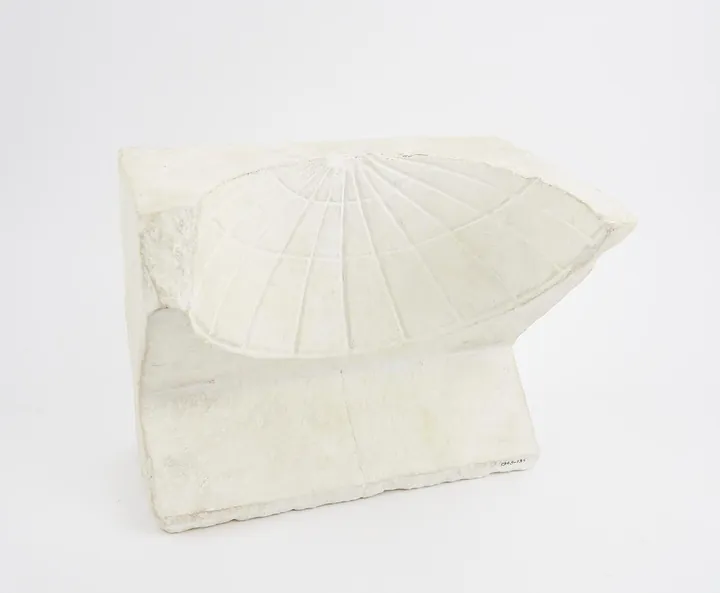
Reproduction sundial by the British Museum, England, 1945–1955, after an original of 350–250 BCE
Science Museum Group, London