
Pocket Watches · Watch
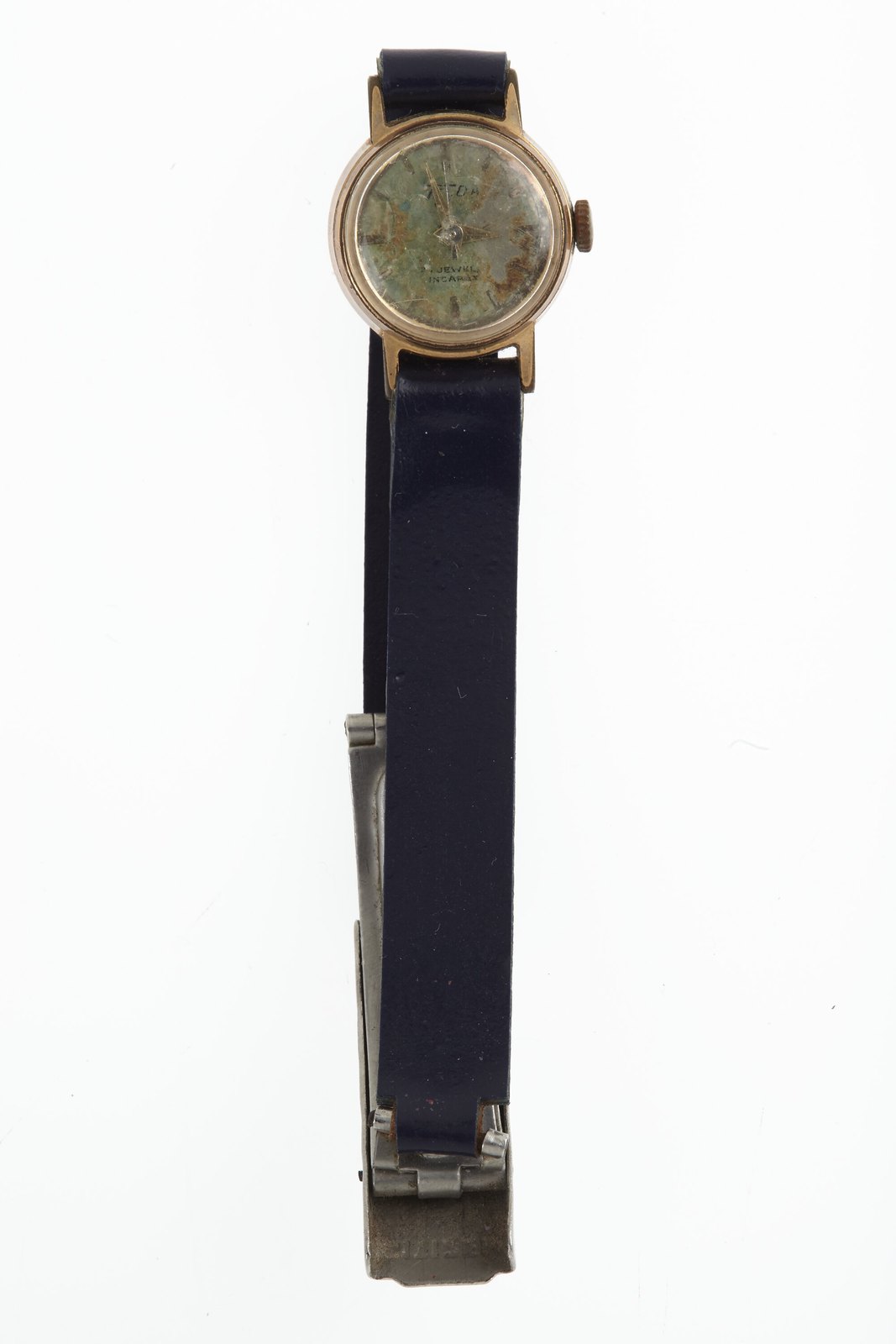
Watch - Telda Brand, Women's, Cuc Lam, Vietnam, c. 1968
- Maker / attribution
- Unrecorded in source
- Date
- c. 1968
- Historical period
- Modern Mechanical Horology (1945 – 1969)
- Country of origin
- Unrecorded in source
- Object type
- Watch
- Dimensions
- 0.9 cm (Length), 1 cm (Width), 8.8 cm (Height); 88 mm (Length), 9 mm (Width)
- Holding institution
- Museums Victoria, Melbourne
- Accession / object no.
- HT 557
- Catalogue title (original)
- Watch - Telda Brand, Women's, Cuc Lam, Vietnam, circa 1968 (English)
View the source record ↗ (opens another website in a new tab)Suggest a correction
Record summary
Held and catalogued by Museums Victoria, Melbourne (object number HT 557), this is a watch, dated c. 1968. The Atlas places it in the Modern Mechanical Horology period (1945 – 1969) of its Pocket Watches collection. Recorded dimensions: 0.9 cm (Length), 1 cm (Width), 8.8 cm (Height); 88 mm (Length), 9 mm (Width). The record is illustrated with 3 photographs.
Assembled from the source record's structured fields. Dates and attributions are given as the source states them; where a field is missing the Atlas leaves it blank rather than estimating.
Catalogue description
Summary — Museums Victoria
TELDA women's watch belonging to Cuc Lam, a Vietnamese refugee. The watch was given to her as a keepsake by her older sister when she passed her school exams. It was one of the few mementos Cuc brought with her to Australia. Cuc escaped from Vietnam in May 1978, with her husband. They spent time in a refugee camp in Malaysia before being granted refugee status by the Australian Government.
Physical description — Museums Victoria
Small, round, golden ladies watch with stainless-steel back, black plastic wristband and metal clasp.
Significance — Museums Victoria
Statement of Historical Significance: This collection demonstrates the risk and desperation involved in the refugee experience. It is extremely rare to acquire objects from refugees, as by the very nature of the experience, people carry little if anything with them, and what they do is usually lost or thrown away. It helps tell the story of Vietnamese immigration, which has played a significant part in the history of immigration to Australia, and assists in representing the period post 1975, when Australia's new political and social policies of multiculturalism were being implemented. This collection also provides further insights into life in one of Melbourne's principal migrant hostels - Midway in Maribyrnong. Finally the collection traces a life beyond the immediate refugee and settlement experience to demonstrate how migrants find their way in a new country, establish lives and assume leadership roles in their local communities.
Inscriptions & marks
Text: TELDA/21 Jewels/Incaray. Reverse: Stainless-steel back /Antimagnetic/Incabloc/TELDA 15033A.
Provenance
Donation from Mrs Cuc Lam, 15 Oct 2001
Historical context
Modern Mechanical Horology (1945 – 1969)
Tool watches for divers, pilots and astronauts; electric watches anticipate the electronic age.
After 1945 the pocket watch became a niche product — presentation and railway watches, inexpensive pin-lever watches, and commemorative pieces — while most innovation moved to the wrist.
Read the period in the timelineMore pocket watches from this periodEarlier: Golden Age of Mechanical Watchmaking
Atlas type guide
Pocket watches
The pocket watch was the dominant personal timekeeper from the late seventeenth century until the First World War. Its development tracks the history of the escapement: verge watches with fusees until the late eighteenth century; Thomas Mudge's lever escapement (c. 1755) and the cylinder escapement popularised by George Graham and later by Swiss makers; and the Swiss and English lever watches of the nineteenth century. Lépine's bar-bridge calibre and keyless winding made watches thinner and easier to use.
Industrialisation transformed the trade: American factories such as Waltham (from 1850) and Elgin produced interchangeable parts by machine, and Swiss makers responded with their own mechanisation after the 1876 Philadelphia Exhibition. By 1900 a reliable watch was affordable to millions; the finest makers continued to produce complications and precision watches.
What to look for
- The escapement: verge (crown wheel), cylinder, duplex, English or Swiss lever.
- Key winding (a square arbor in dial or back) or keyless crown winding.
- Signatures and serial numbers on the movement, dial and inside case back.
- Hallmarks, case maker's marks and gold or silver standards stamped in the case.
- Dial material: enamel, silver, gold, later printed metal.
Dating clues
- Verge watches dominate before c. 1800; cylinder watches c. 1770–1900; lever watches after c. 1820.
- Keyless winding: increasingly common after c. 1860.
- Manufacturer serial number lists exist for Waltham, Elgin, Longines, Omega, Patek Philippe and others.
General guidance written by the Atlas editors about this kind of object. It is not a statement about this particular piece; for that, rely on the source record above and on physical examination.
Read next:Verge escapementDetached lever escapementFuseeIdentification Centre
Related records
Pocket Watches · 1934–1962
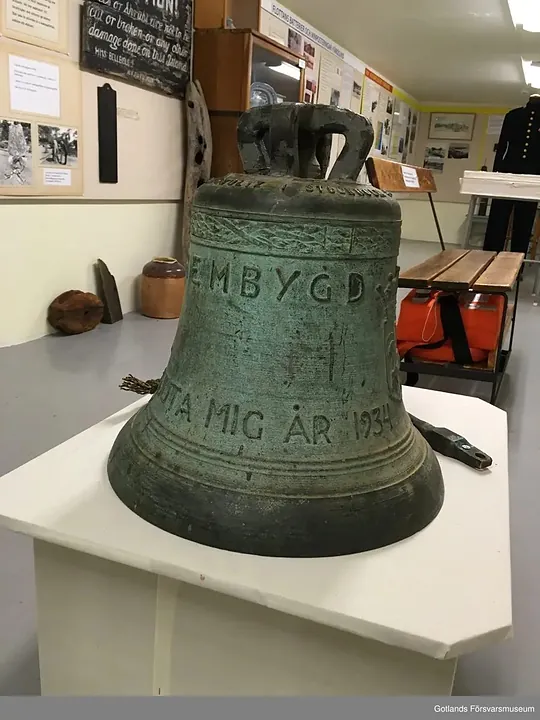
Pocket watch, Sweden, 1934–1962
Gotland Defense Museum
Pocket Watches · c. 1945
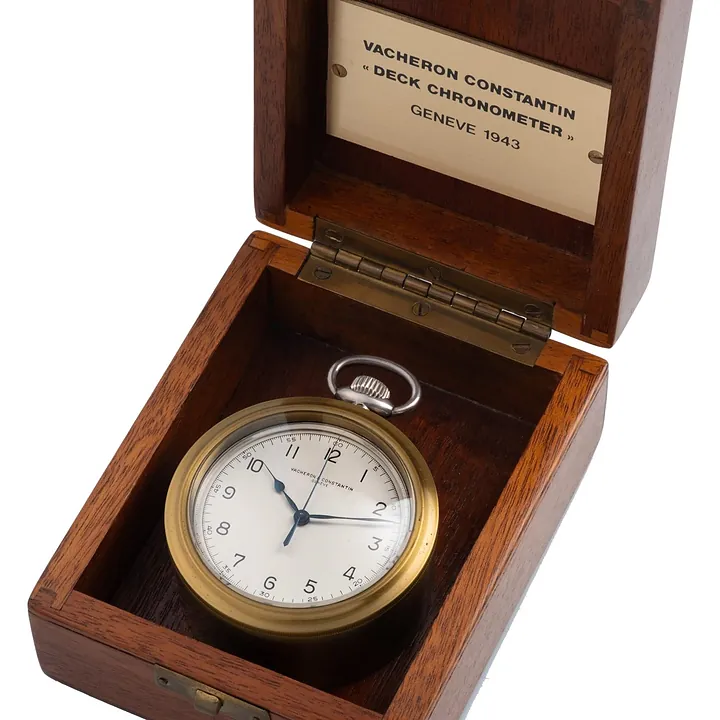
Vacheron Constantin pocket chronometer, c. 1945
Antiquorum auction archive, Geneva
Pocket Watches · c. 1945
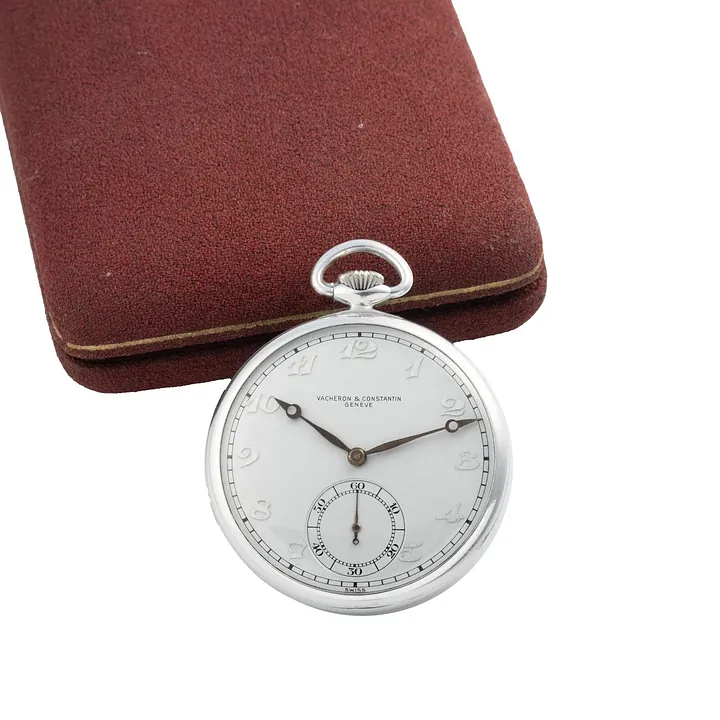
Vacheron Constantin watch, c. 1945
Antiquorum auction archive, Geneva
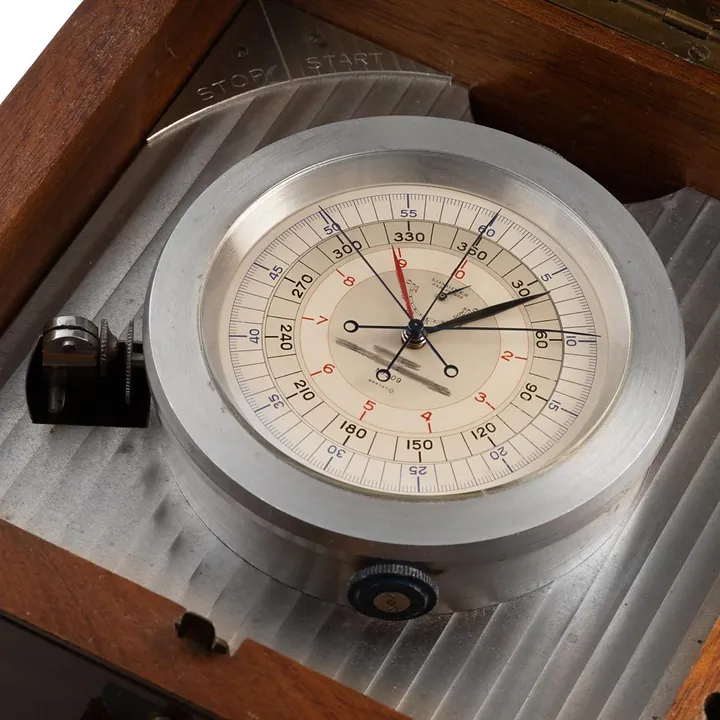
Pocket Watches · Sold to Longines France in January 1946
Longines Siderograph, ref. 5397, Sold to Longines France in January 1946
Antiquorum auction archive, Geneva
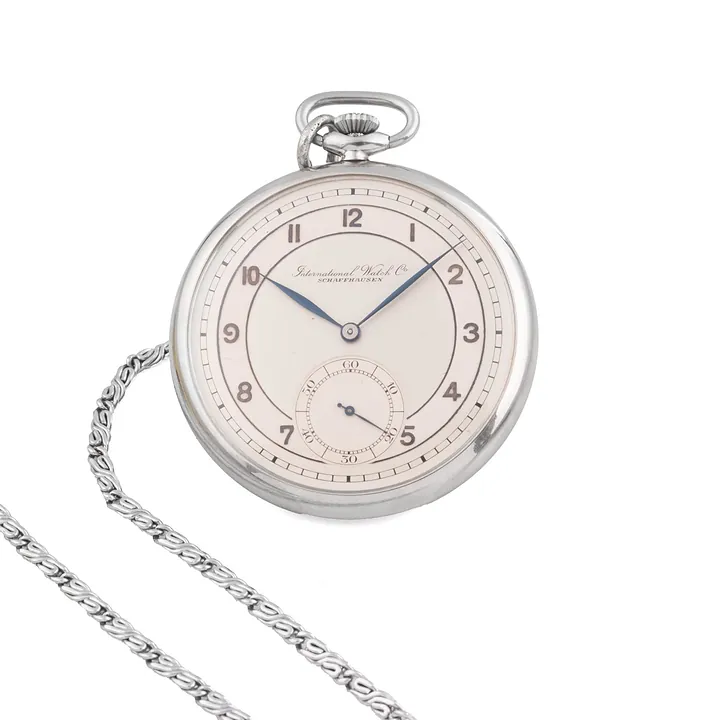
Pocket Watches · c. 1950
IWC Pocket Watch, c. 1950
Antiquorum auction archive, Geneva
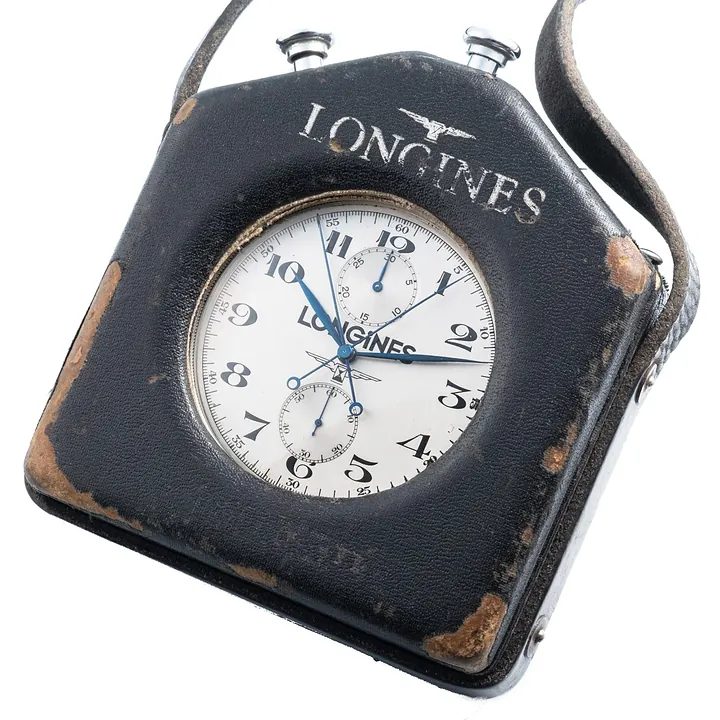
Pocket Watches · c. 1950
Longines pocket watch, ref. 4507, c. 1950
Antiquorum auction archive, Geneva
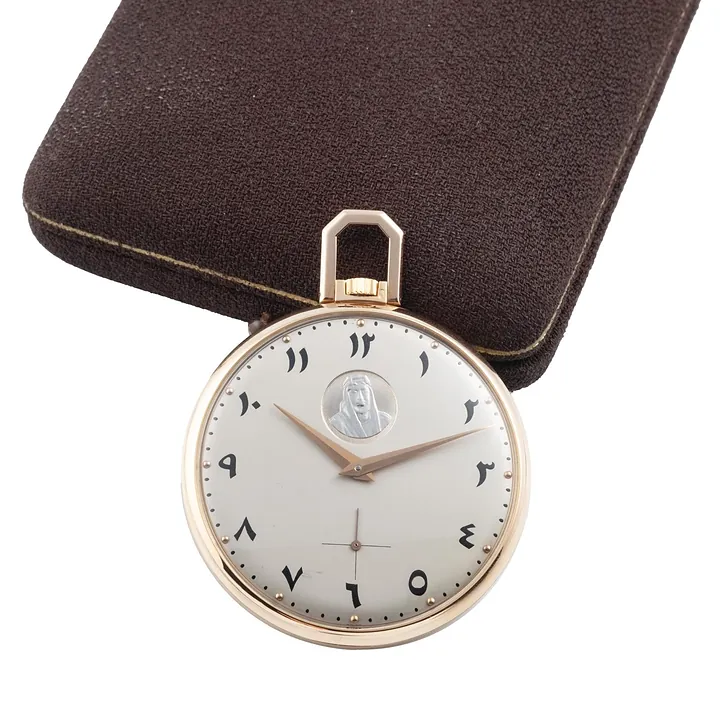
Pocket Watches · c. 1950s
Universal Genève pocket watch, ref. 11746 3/ 11746 1, c. 1950s
Antiquorum auction archive, Geneva
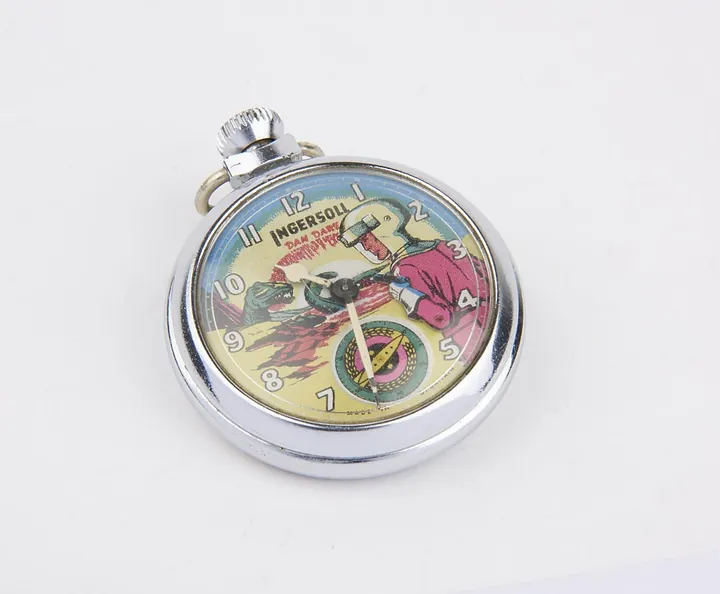
Pocket Watches · 1953
Pocket watch by Ingersoll Limited, England, 1953
Science Museum Group, London