
Pocket Watches · Watch
Watch by H K, Germany, 1550–1575
- Maker / attribution
- H K (Horloger)
- Date
- 1550–1575
- Historical period
- Renaissance Horology (1400 – 1600)
- Country of origin
- Germany
- Place
- Allemagne, Germany
- Object type
- Watch
- Materials / technique
- steel, brass
- Dimensions
- height 2,5 cm; diameter 6,7 cm
- Holding institution
- Musée du Louvre, Paris
- Accession / object no.
- MRR 242
- Credit line
- Musée du Louvre, Département des Objets d'art du Moyen Age, de la Renaissance et des temps modernes
- Catalogue title (original)
- Montre de forme "tambour" (French)
View the source record ↗ (opens another website in a new tab)Suggest a correction
Record summary
Held and catalogued by Musée du Louvre, Paris (object number MRR 242), this is a watch by H K, made in Allemagne, Germany, dated 1550–1575. The Atlas places it in the Renaissance Horology period (1400 – 1600) of its Pocket Watches collection. Materials and techniques recorded by the source: steel, brass. Recorded dimensions: height 2,5 cm; diameter 6,7 cm. The record is illustrated with 6 photographs.
Assembled from the source record's structured fields. Dates and attributions are given as the source states them; where a field is missing the Atlas leaves it blank rather than estimating.
Catalogue description
Catalogue description — Musée du Louvre (French)
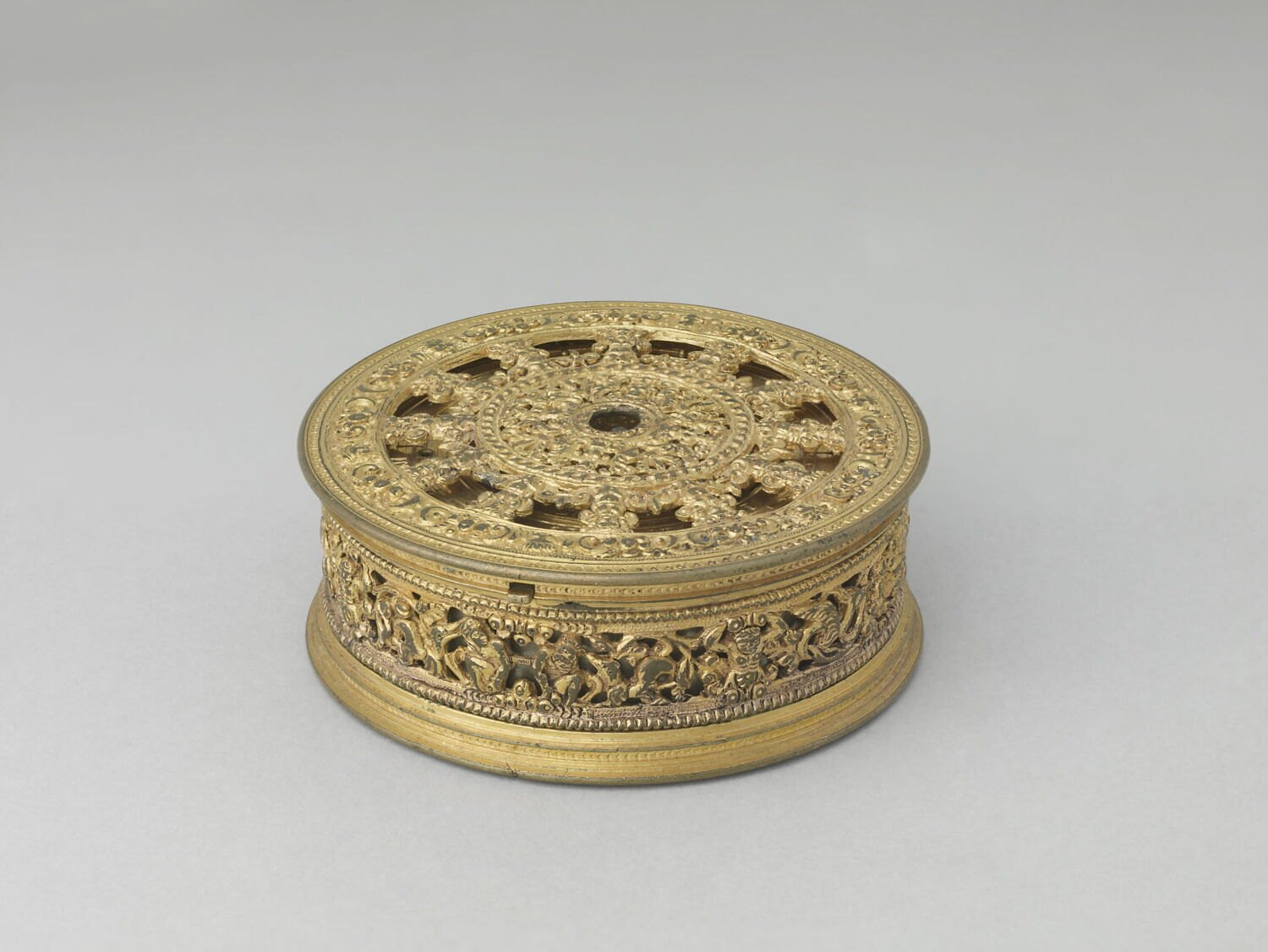
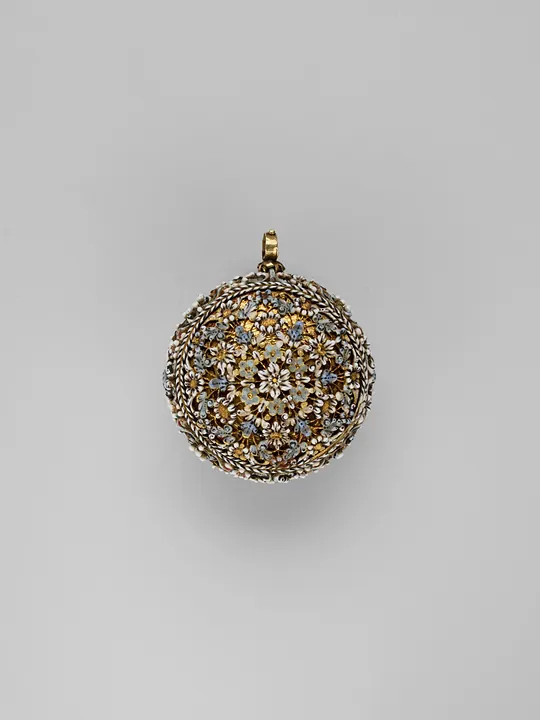
Montre de forme "tambour", boîtier moulé, ciselé et partiellement ajouré. Fond décoré de grotesques rayonnants, parmi les rinceaux, des têtes d'animaux et des termes. Frise de rinceaux peuplés de personnages et d'animaux sur la carrure. Couvercle du cadran orné d'une rosace centrale, de quatre frises concentriques, présentant douze guichets séparés par des caryatides laissant voir des chiffres romains et arabes. Au centre du cadran, un cercle mobile à chiffres arabes gravé de rinceaux indiquant l'heure du réveil. Mouvement transformé au XVIIIe s. par un coq rond et un balancier à ressort-spiral-réglat. Muni d'un stackfreed, échappement à roue de rencontre et une sonnerie au passage. Une main désigne un cercle numéroté correspondant à la roue de compte permettant de régler les coups de sonnerie si celle-ci est décalée par rapport à l'heure. Timbe fixé dans le fond de la boîte ; ressorts-moteurs apparents.
Shown in the original language of the source catalogue. An editor-reviewed English translation has not yet been published; we do not publish machine translations as authoritative text.
Dating and period as catalogued (French)
Epoque / période : François II (1559-1560) (Occident->Renaissance->dynastie des Valois-Angoulême) ; Charles IX (1560-1574) (Occident->Renaissance->dynastie des Valois-Angoulême) · · Date de création/fabrication : 1550 - 1575
Shown in the original language of the source catalogue. An editor-reviewed English translation has not yet been published; we do not publish machine translations as authoritative text.
Materials and techniques as catalogued (French)
Matériau : acier · Matériau : laiton
Shown in the original language of the source catalogue. An editor-reviewed English translation has not yet been published; we do not publish machine translations as authoritative text.
Inscriptions & marks
Poinçon : ; sur le mouvement : monogramme HK
Provenance
Collection Pierre Révoil (1776-1842). Achat en 1828
Historical context
Renaissance Horology (1400 – 1600)
Spring power makes clocks portable; Nuremberg and Augsburg produce the first watches; the Prague Orloj is built.
The first portable spring-driven timepieces were made in southern Germany, France and Italy. They had iron or brass verge movements with a foliot or small balance and a stackfreed or fusee, indicated hours only, and were worn as pendants — luxury objects more than precise instruments.
Read the period in the timelineMore pocket watches from this periodEarlier: Medieval Period
Atlas type guide
Early spring-driven watches
Portable spring-driven timepieces appeared in southern Germany, France and Italy in the early sixteenth century; Peter Henlein of Nuremberg is traditionally credited, although the historical record is complex. These early watches were worn as pendants or carried, had iron or brass movements with a verge escapement and a foliot or small balance, and used a stackfreed or fusee to equalise spring force. They indicated hours only and were notoriously inaccurate.
From the later sixteenth century watches were made in Blois, Paris, Geneva, London and Augsburg in oval, octagonal, cruciform, skull and other 'form' cases of rock crystal, gilt brass, silver and enamel. They were jewellery and status objects as much as timekeepers.
What to look for
- A single hour hand and often a touch-pin hour ring for feeling the time.
- Stackfreed (a cam and spring) instead of a fusee on German watches.
- Pierced and engraved cocks over the balance, fine gut fusee lines.
- Rock-crystal, enamelled or engraved form cases.
Dating clues
- Drum-shaped German watches: c. 1530–1580.
- Oval and form watches: c. 1580–1650.
- Before c. 1675 there is no balance spring; watches can vary by many minutes a day.
General guidance written by the Atlas editors about this kind of object. It is not a statement about this particular piece; for that, rely on the source record above and on physical examination.
Related records
Pocket Watches · c. 1550
Watch by Leopold Reicheneder, c. 1550
The Metropolitan Museum of Art, New York
Pocket Watches · Second half of the sixteenth century
Watch with gilt brass case, German, second half of the sixteenth century
Victoria and Albert Museum, London
Pocket Watches · c. 1560
Watch by Hans Grüber, Germany, c. 1560
Victoria and Albert Museum, London
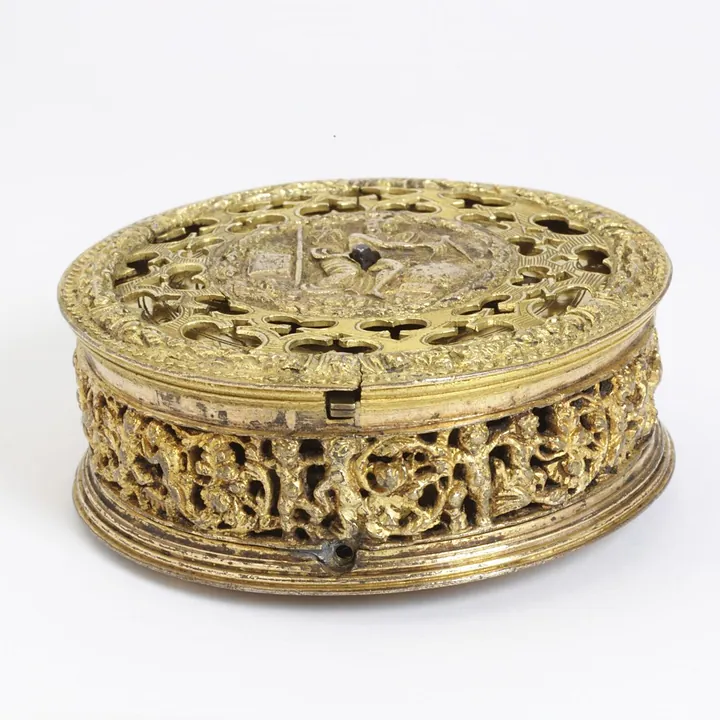
Pocket Watches · 1560-70
Watch, brass case, cast and gilded, German, 1560-70
Victoria and Albert Museum, London
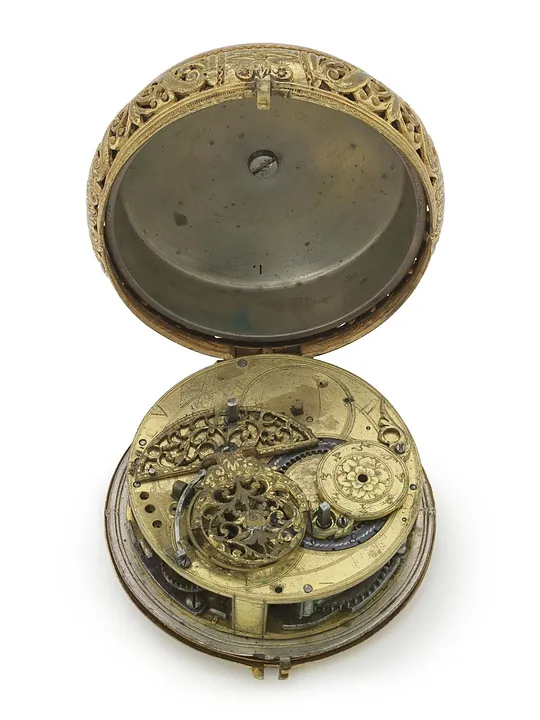
Pocket Watches · 1580
Pocket watch, Germany, 1580
Science Museum Group, London
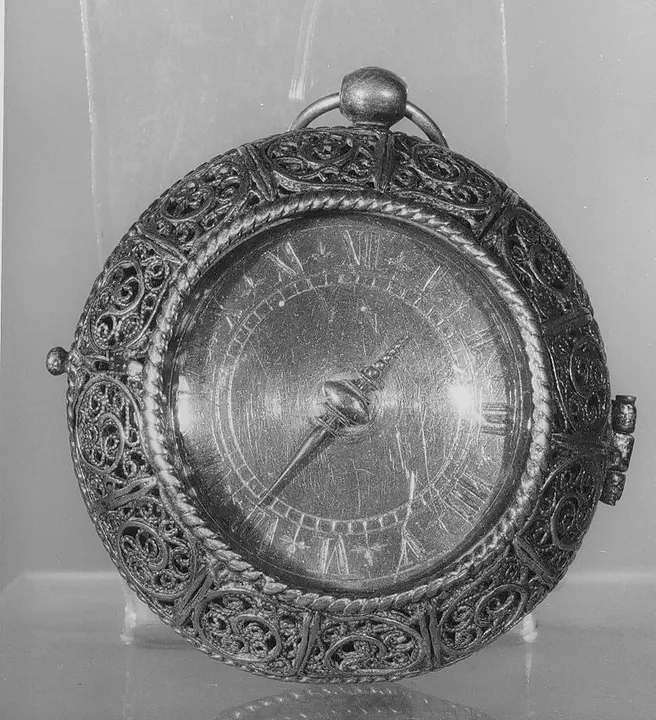
Pocket Watches · 1500–1599
Pocket watch by Charle Voulu, Belgium, 1500–1599
Royal Institute for Cultural Heritage
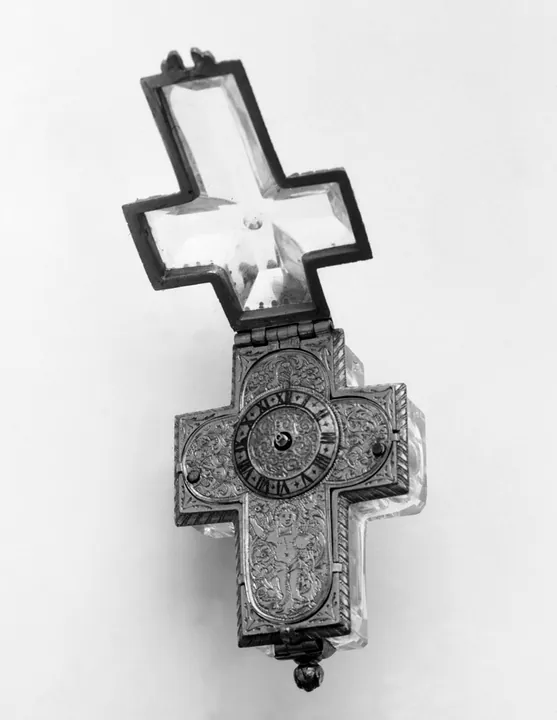
Pocket Watches · possibly 16th century
Watch by A.R., possibly 16th century
The Metropolitan Museum of Art, New York
Pocket Watches · 16th century
Watch by Nicolas Bernard, France, 16th century
The Metropolitan Museum of Art, New York