
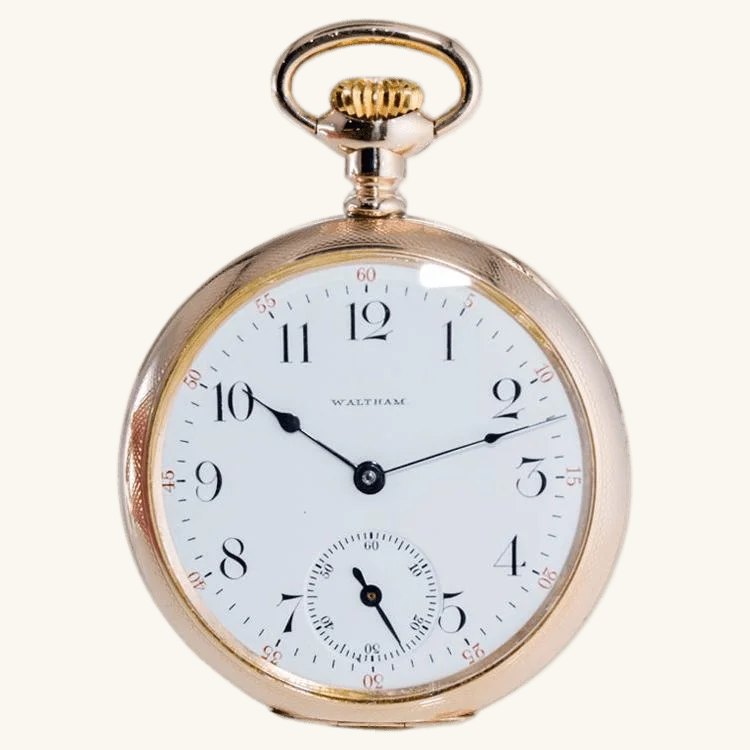
Pocket Watches · Pocket watch
Waltham Yellow Gold Filled Art Nouveau Hunters Case Pocket Watch, 1905
- Maker / attribution
- Waltham (maker)
- Date
- 1905
- Historical period
- Golden Age of Mechanical Watchmaking (1900 – 1945)
- Country of origin
- United States
- Object type
- Pocket watch
- Materials / technique
- gold
- Dealer
- WatchMuseum.org shop
- Stock no.
- Product 1981
- Credit line
- Dealer listing, WatchMuseum.org shop (product 1981)
- Catalogue title (original)
- Waltham Yellow Gold Filled Art Nouveau Hunters Case Pocket Watch (English)
View the source record (dealer listing) ↗ (opens another website in a new tab)Suggest a correction
Record summary
Catalogued by WatchMuseum.org shop (stock number Product 1981), this is a pocket watch by Waltham, made in United States, dated 1905. The Atlas places it in the Golden Age of Mechanical Watchmaking period (1900 – 1945) of its Pocket Watches collection. Materials and techniques recorded by the source: gold. The record is illustrated with 6 photographs.
Assembled from the source record's structured fields. Dates and attributions are given as the source states them; where a field is missing the Atlas leaves it blank rather than estimating.
Catalogue description
Dealer description — WatchMuseum.org shop
The Waltham Yellow Gold Filled Art Nouveau Hunters Case Pocket Watch from 1905 is a remarkable testament to the craftsmanship and innovation of the Waltham Watch Company, an American watch manufacturing giant established in 1850 in Roxbury, Massachusetts. Renowned for being the first American firm to mass-produce watches using interchangeable parts, Waltham revolutionized the watchmaking industry by making high-quality, affordable timepieces accessible to a broader audience. This particular pocket watch, encased in exquisite yellow gold and designed in the elegant Art Nouveau style, embodies the rich heritage and meticulous artistry that defined Waltham’s creations. The company’s pioneering efforts in industrialization and mass production not only disrupted the traditional handcrafted watch industry but also played a significant role during the American Civil War by supplying reliable timepieces to The Army. As Waltham’s reputation soared throughout the 19th century, the company relocated to Waltham, Massachusetts in 1885, rebranding itself as the American Waltham Watch Company and solidifying its status as a global leader in watchmaking. This 1905 pocket watch is not just a functional timepiece but a piece of history, reflecting the legacy of a company that transformed the global watch market and left an indelible mark on the art of horology. The Waltham Watch Company was an American watch manufacturing powerhouse founded in 1850 in Roxbury, Massachusetts. It was the first American company to produce watches on a mass scale using interchangeable parts. Their traditionally crafted timepieces gained a reputation for quality and affordability, quickly becoming popular among consumers. Waltham’s success had a pivotal role in transforming the global watch market, promoting the concepts of “industrialization” and “mass-produced” items. The rise of Waltham watches challenged the traditional “cottage” industry approach, where watches were individually handcrafted. During the American Civil War, Waltham provided watches for The Army, further expanding its reputation and reach. Their popularity continued throughout the 19th century, and in 1885 the company moved to Waltham, Massachusetts while rebranding to the American Waltham Watch Company. The company achieved global recognition as major presenters at the 1893 World’s Columbian Exposition in Chicago, where their exhibition showcased not just their timepieces but also the machinery that enabled their mass production. One impressive outcome of Waltham’s exhibition was the inspiration it sparked in Swiss watchmakers. They came, saw, and understood that the dearth of mass-production methods would lead to their industry becoming outdated. Furthermore, they intended to purchase Waltham high-grade movements to learn from them. They didn’t think it was necessary to have their acquired movements adjusted as the Waltham director implied. However, after checking them back in Switzerland, they were taken aback by the quality and precision. Therefore, they eventually decided to buy some of the Waltham’s machinery to create more precise moving parts for watches that were also more affordable. This led to the founding of the International Watch Company in a small town in Switzerland, Schaffhausen, which remains in business to this day. Throughout history, Waltham remained a prominent supplier to the military, providing not only watches but also navigational, automotive, aviation, and nautical equipment through WWI, WWII, and the Korean War. However, the company faced a series of financial challenges in the 1920s, with departments competing for contracts, meaning some produced enough watch parts to last up to 20 years. The company underwent several restructurings, but ultimately closed its doors in 1957. Although the Waltham Watch Company is no longer in existence, its legacy lives on. Collectors and enthusiasts highly value Waltham watches, and the company’s manufacturing prowess set a new standard and continues to influence American manufacturing to this day. Creator: Waltham Watch Company Style: Art Nouveau Place of Origin: United States Period: 1900-1909 Date of Manufacture: 1905-1906 Condition: Good
Historical context
Golden Age of Mechanical Watchmaking (1900 – 1945)
The wristwatch displaces the pocket watch; waterproof cases, self-winding and grand complications.
The pocket watch reached technical maturity and then began to give way to the wristwatch after the First World War. Complicated watches for collectors such as Henry Graves Jr. and James Ward Packard, railroad watches, and slim Art Deco dress watches are characteristic.
Read the period in the timelineMore pocket watches from this periodEarlier: Industrial Revolution
Atlas type guide
Hunter, half-hunter and open-face watches
In the nineteenth century the pocket watch case settled into a few standard forms. The hunter (French savonnette) has a hinged front lid protecting the crystal — reputedly for riders who could not risk broken glass — and is opened by pressing the crown or a push-piece. The half-hunter has a small window in the lid so the hands can be read when closed. The open-face (lépine) watch has no front cover, with the crown at 12; hunters normally carry the crown at 3.
Case types also changed with winding: key-wound watches gave way to keyless (stem-wound) mechanisms after Adrien Philippe's and others' designs of the 1840s, with pendant setting or lever setting.
What to look for
- Crown position relative to the seconds dial: at 3 for hunters, at 12 for open-face watches.
- Spring-loaded front cover with a push-piece in the pendant.
- Half-hunter chapter ring enamelled on the lid.
- Key holes in the inner dome (cuvette) versus keyless winding.
Dating clues
- Keyless winding spread after c. 1850 and became standard by c. 1890.
- English hallmarks inside gold and silver cases give the year of assay.
General guidance written by the Atlas editors about this kind of object. It is not a statement about this particular piece; for that, rely on the source record above and on physical examination.
Read next:Detached lever escapement
Related records

Pocket Watches · 1910s
Pocket watch by Waltham, United States, 1910s
Suomen Urheilumuseo
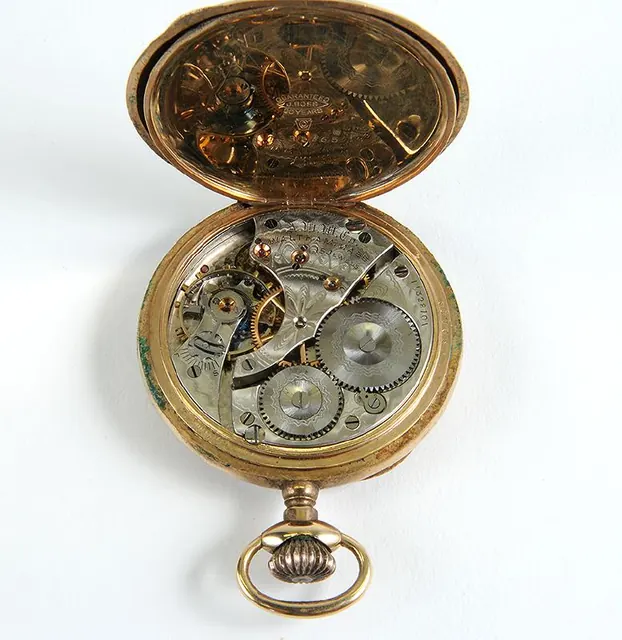
Pocket Watches · 1902
Pocket watch by Waltham, United States, 1902
Turun kaupunginmuseo
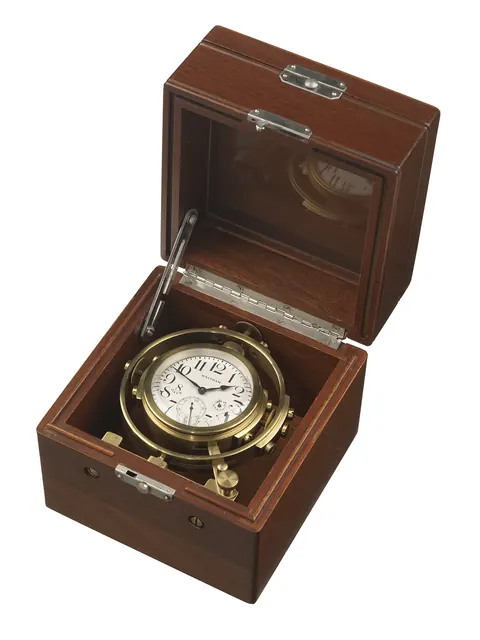
Instruments · c.1938
Marine chronometer watch no. 30683313 by Waltham
Royal Museums Greenwich
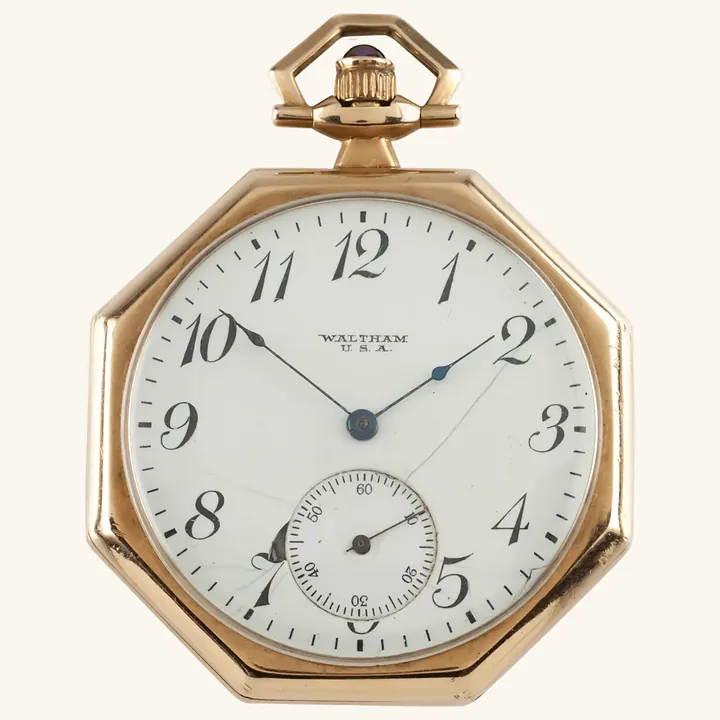
Pocket Watches · 1917
Waltham Octagon14 Karat Pocket Watch Jewel, 1917
WatchMuseum.org shop
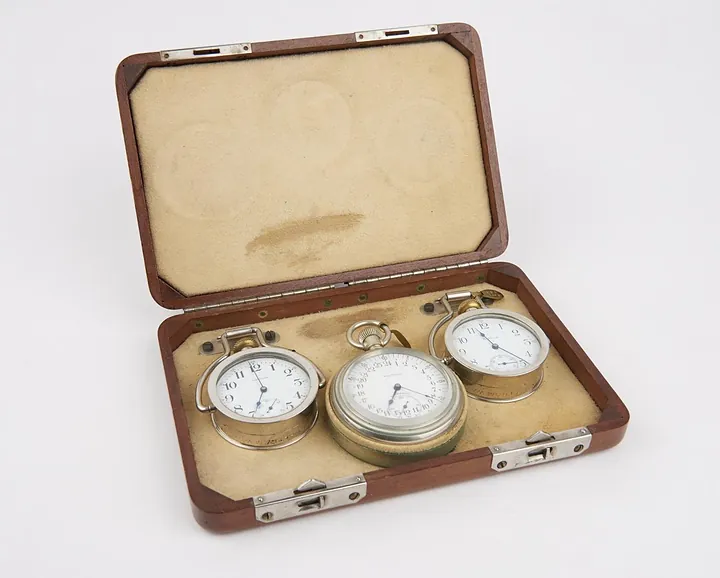
Pocket Watches · c. 1900
Pocket watch by American Waltham Watch Company, United States, c. 1900
Science Museum Group, London
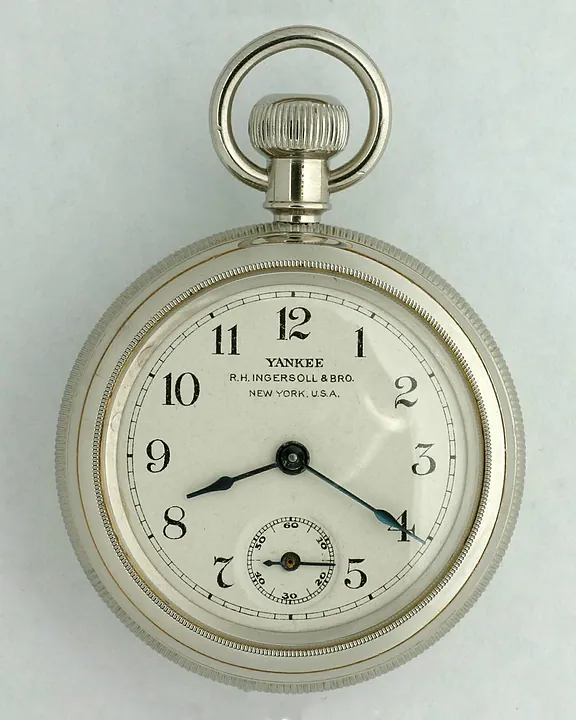
Pocket Watches · c. 1900
Pocket watch by Robt. H. und Bro. Ingersoll, United States, c. 1900
German Clock Museum
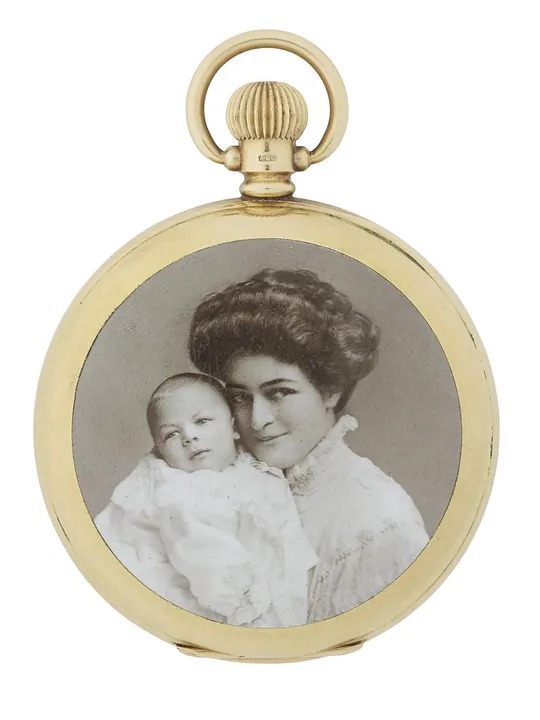
Pocket Watches · 1904
Pocket watch by American Waltham Watch Company and Dennison Watch Case Co, United States, 1904
Science Museum Group, London
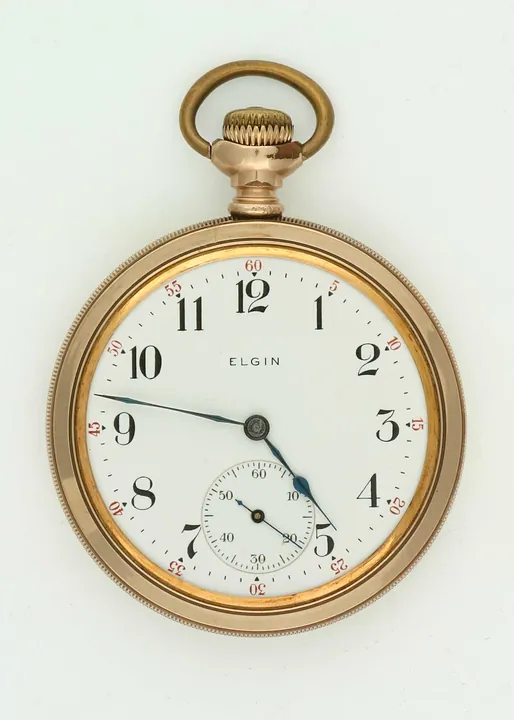
Pocket Watches · c. 1905
Pocket watch by Brooklyn Watch Case Co. B. W. C., United States, c. 1905
German Clock Museum