
Pocket Watches · Pocket watch
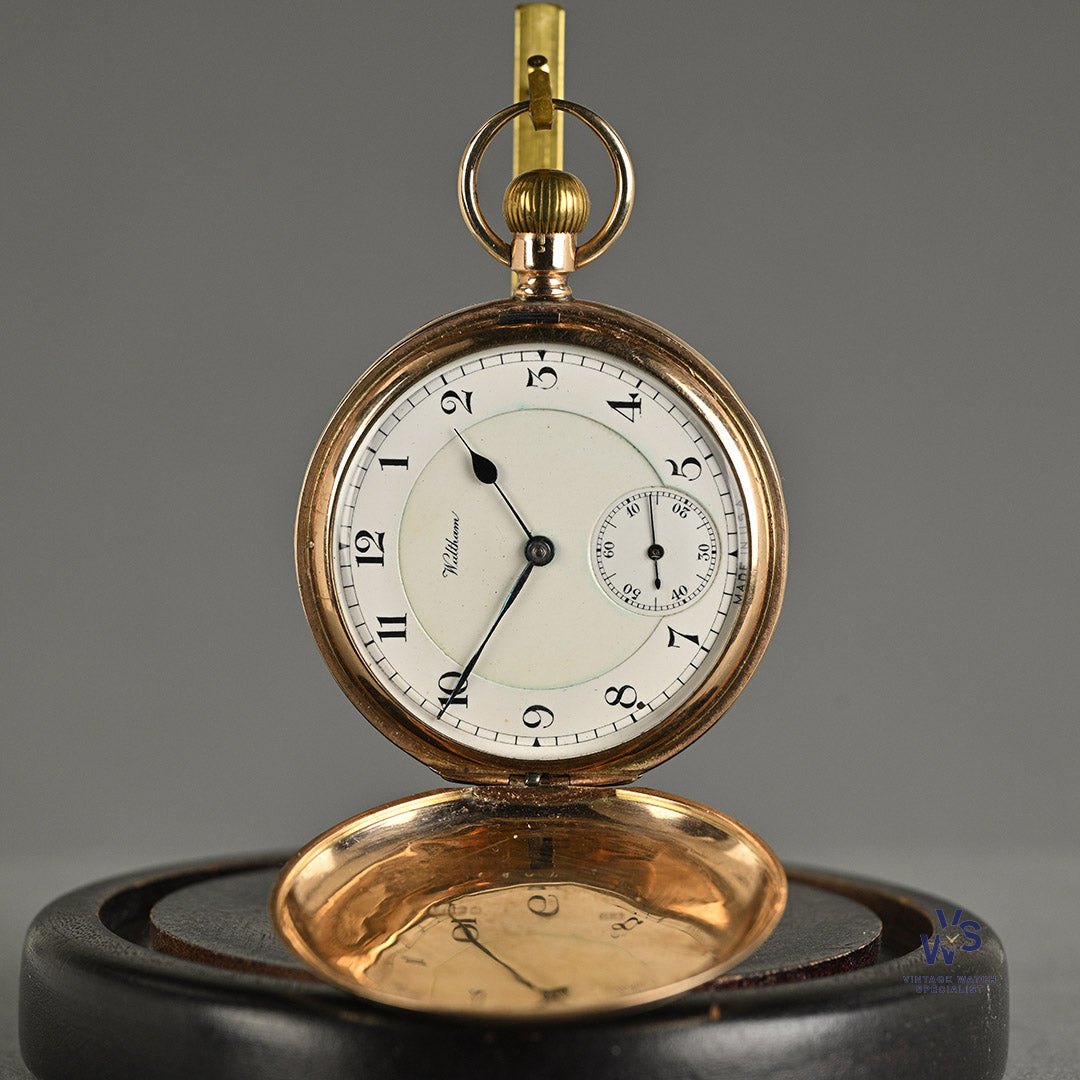
Waltham 9k Gold Hunter Pocket Watch, Condition, circa 1883
- Maker / attribution
- Waltham (maker)
- Date
- c. 1883
- Historical period
- Industrial Revolution (1850 – 1900)
- Country of origin
- United States
- Object type
- Pocket watch
- Materials / technique
- gold
- Stock no.
- vws4224cs
- Credit line
- Dealer listing, Vintage Watch Specialist (vws4224cs)
- Catalogue title (original)
- Waltham 9k Gold Hunter Pocket Watch - Beautiful Condition - c.1883 (English)
View the source record (dealer listing) ↗ (opens another website in a new tab)Suggest a correction
Record summary
Catalogued by Vintage Watch Specialist (dealer), United Kingdom (stock number vws4224cs), this is a pocket watch by Waltham, made in United States, dated c. 1883. The Atlas places it in the Industrial Revolution period (1850 – 1900) of its Pocket Watches collection. Materials and techniques recorded by the source: gold. The record is illustrated with 6 photographs.
Assembled from the source record's structured fields. Dates and attributions are given as the source states them; where a field is missing the Atlas leaves it blank rather than estimating.
Catalogue description
Dealer description — Vintage Watch Specialist
A beautifully preserved nineteenth-century Waltham pocket watch with elegant and unblemished white dial and 9k gold case. Founded in Massachusetts in 1850, Waltham Watch Company became one of the most important names in American horology. The brand revolutionised watchmaking through mass production techniques that allowed interchangeable parts and consistent quality on a large scale. Waltham supplied watches to railroad workers, military personnel and civilians alike, earning a reputation for reliability and precision. Today, vintage Waltham watches are admired for their historical significance, robust engineering and classic early twentieth-century styling. What's on Offer Pocket watches like this Waltham offer a fascinating glimpse into the golden age of watchmaking, when precision timekeeping was an essential part of everyday life. Waltham became one of America’s most respected manufacturers, pioneering mass-produced watches with reliable interchangeable parts. Their watches were trusted by railway workers, travellers and businessmen alike. This beautifully preserved 9k gold example captures that late nineteenth-century craftsmanship perfectly, combining elegant Victorian styling with classic mechanical charm. This Waltham pocket watch is a beautifully elegant late nineteenth-century piece housed in a 9k gold case hallmarked .375 and dating to circa 1883. The clean white dial with classic black Arabic numerals gives the watch a refined and understated appearance, while the subsidiary seconds register adds traditional pocket watch character. The slim blued hands pair beautifully with the warm tone of the case, creating a timeless aesthetic that still feels sophisticated today. The condition is particularly impressive considering the age and material of the case. As expected with gold, there are light marks and signs of gentle wear from handling over the years, but overall it presents exceptionally well for a watch approaching 150 years old. The dial remains clean and highly legible, and the watch is accompanied by a presentation box, making it a superb collector’s piece or heirloom-quality gift.
Historical context
Industrial Revolution (1850 – 1900)
American interchangeable-parts manufacture; railroad time standards; Swiss and German factory systems.
Machine production with interchangeable parts, pioneered by Waltham (1850s) and adopted by Elgin, Longines, Omega and others, made reliable lever watches widely affordable. Keyless winding became standard, railroad watch standards were introduced (1890s), and Swiss and American industries competed globally.
Read the period in the timelineMore pocket watches from this periodEarlier: Precision & Scientific Horology
Atlas type guide
Hunter, half-hunter and open-face watches
In the nineteenth century the pocket watch case settled into a few standard forms. The hunter (French savonnette) has a hinged front lid protecting the crystal — reputedly for riders who could not risk broken glass — and is opened by pressing the crown or a push-piece. The half-hunter has a small window in the lid so the hands can be read when closed. The open-face (lépine) watch has no front cover, with the crown at 12; hunters normally carry the crown at 3.
Case types also changed with winding: key-wound watches gave way to keyless (stem-wound) mechanisms after Adrien Philippe's and others' designs of the 1840s, with pendant setting or lever setting.
What to look for
- Crown position relative to the seconds dial: at 3 for hunters, at 12 for open-face watches.
- Spring-loaded front cover with a push-piece in the pendant.
- Half-hunter chapter ring enamelled on the lid.
- Key holes in the inner dome (cuvette) versus keyless winding.
Dating clues
- Keyless winding spread after c. 1850 and became standard by c. 1890.
- English hallmarks inside gold and silver cases give the year of assay.
General guidance written by the Atlas editors about this kind of object. It is not a statement about this particular piece; for that, rely on the source record above and on physical examination.
Read next:Detached lever escapement
Related records
Pocket Watches · 1910s
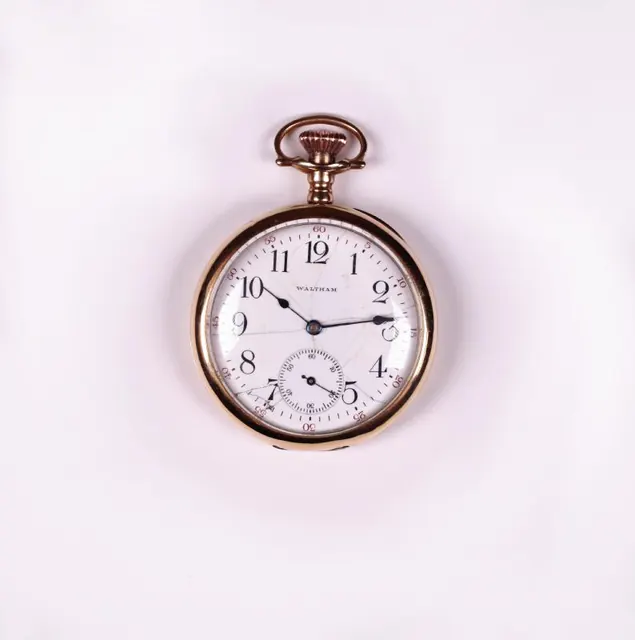
Pocket watch by Waltham, United States, 1910s
Suomen Urheilumuseo
Pocket Watches · 1902
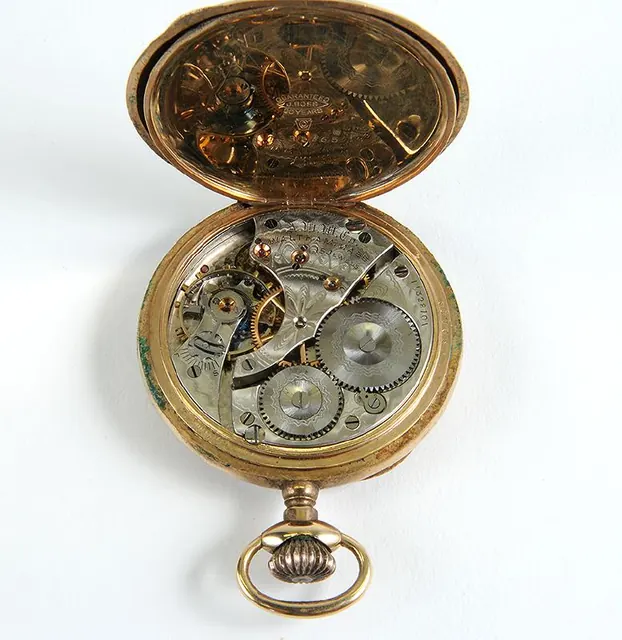
Pocket watch by Waltham, United States, 1902
Turun kaupunginmuseo
Instruments · c.1938
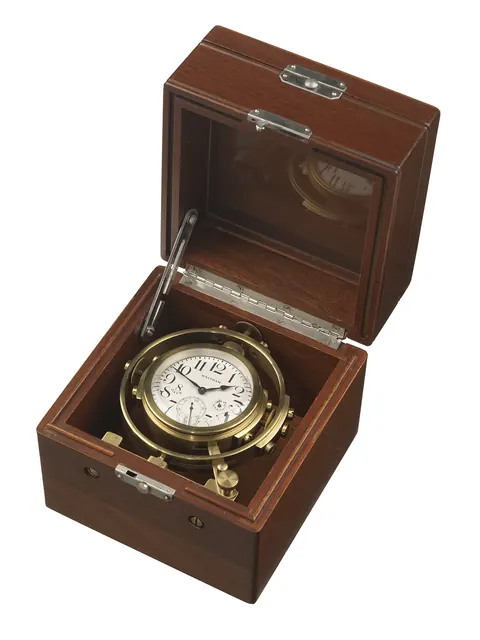
Marine chronometer watch no. 30683313 by Waltham
Royal Museums Greenwich
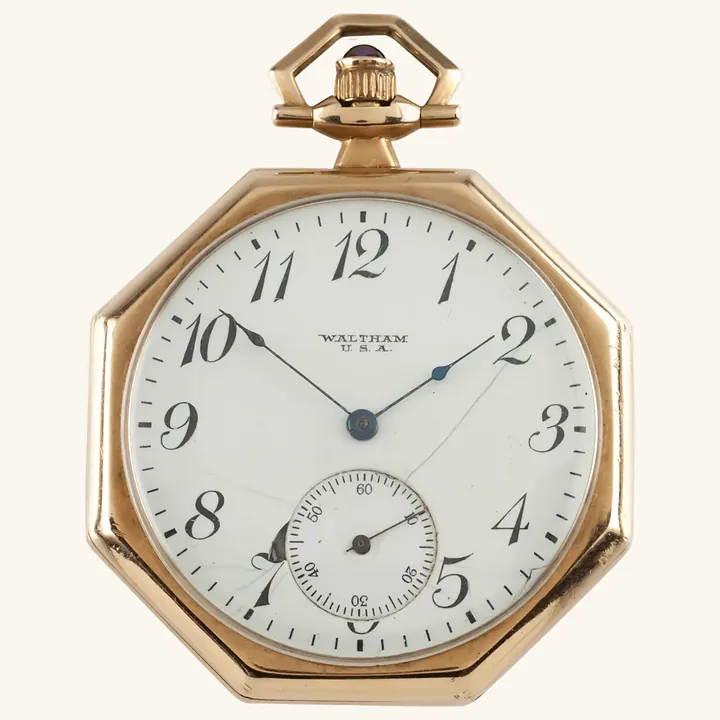
Pocket Watches · 1917
Waltham Octagon14 Karat Pocket Watch Jewel, 1917
WatchMuseum.org shop
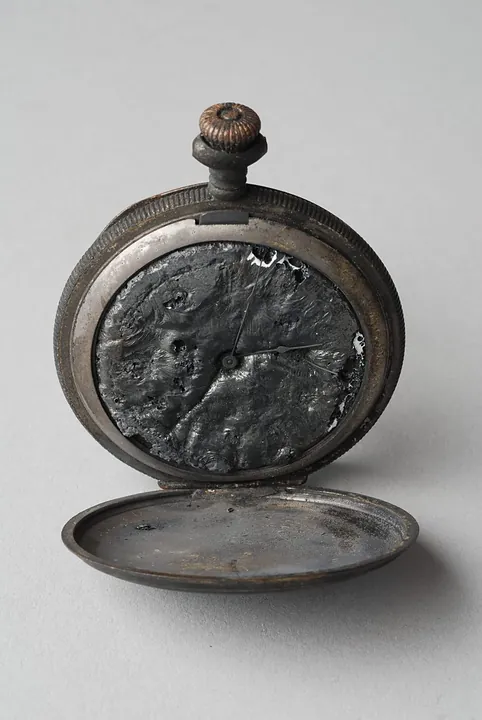
Pocket Watches · 1850
Pocket watch by Standard Watch, United States, 1850
Museum Rotterdam
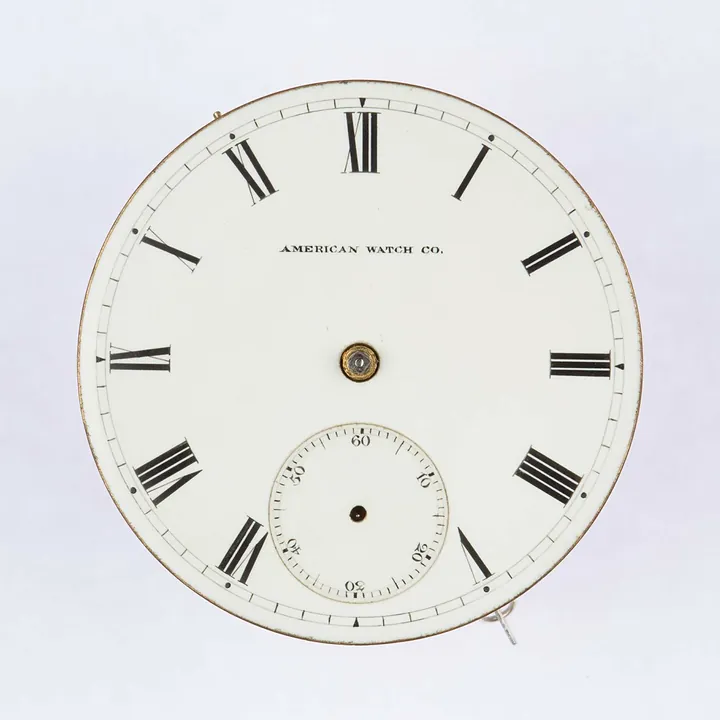
Pocket Watches · 1877
Pocket watch by Waltham A. W. W. Co., United States, 1877
German Clock Museum
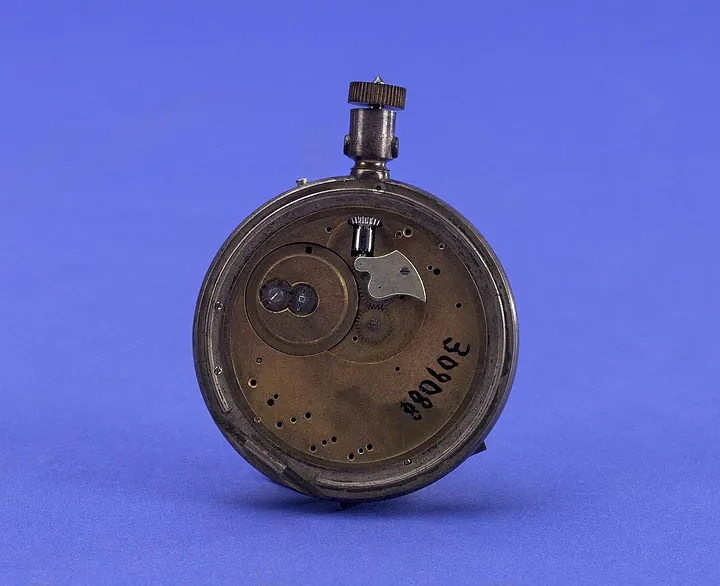
Pocket Watches · 1879
Watch by P. H. Gontard, United States, 1879
National Museum of American History, Smithsonian Institution, Washington DC
Pocket Watches · c. 1882
Pocket watch, United States, c. 1882
German Clock Museum