Clocks · Wall clock
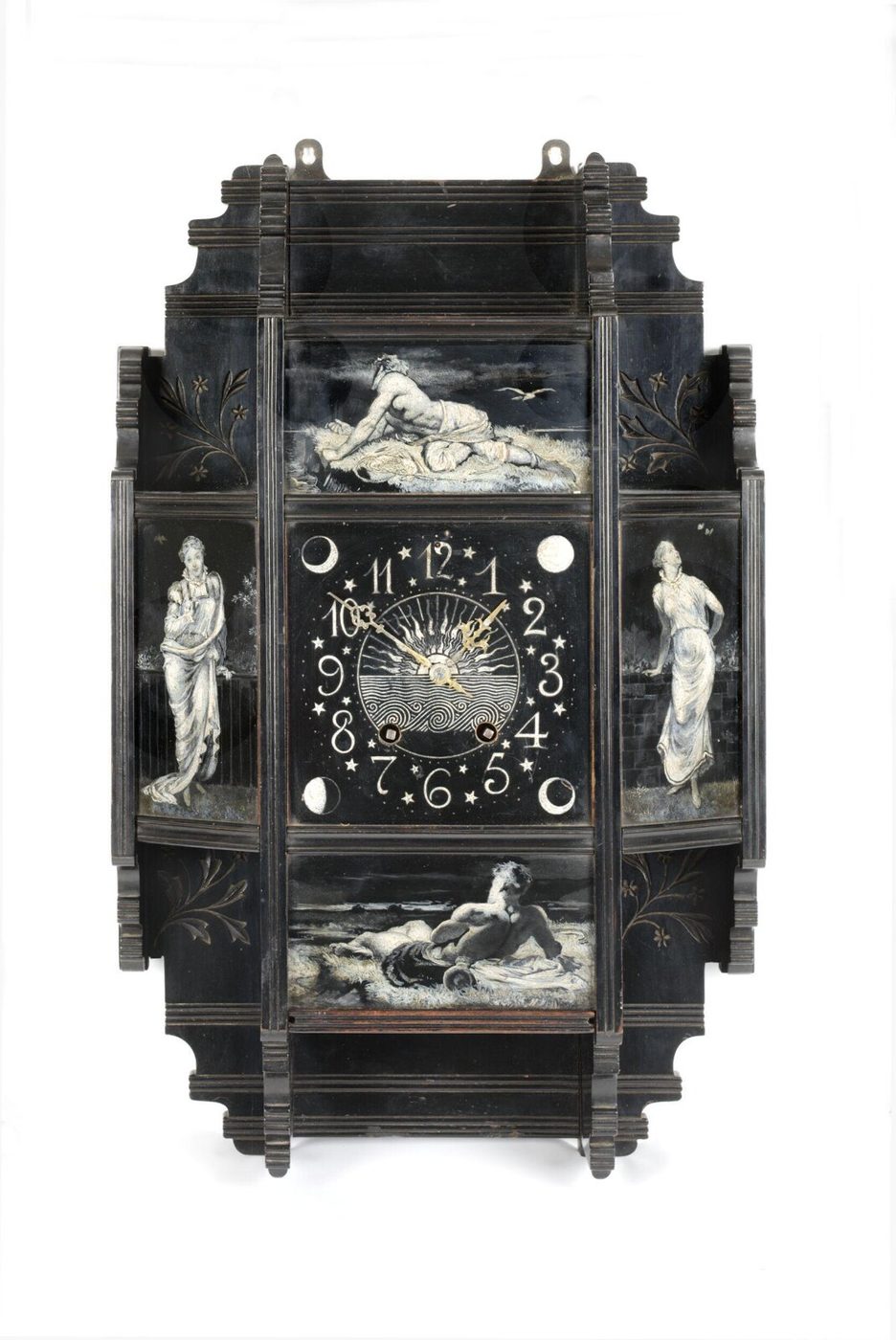
Wall clock of ebonised wood, painted en grisaille , signed 'Lewis F Day 1879'. Designed by Lewis F. Day, British 1879
- Maker / attribution
- Lewis Foreman Day (designer)
- Date
- 1879
- Historical period
- Industrial Revolution (1850 – 1900)
- Country of origin
- England
- Place
- London
- Object type
- Wall clock
- Materials / technique
- Mahogany, ebonised and painted en grisaille
- Dimensions
- Height: 60 cm; Width: 38 cm; Depth: 15 cm
- Holding institution
- Victoria and Albert Museum, London
- Accession / object no.
- W.27-2008
Record summary
Held and catalogued by Victoria and Albert Museum, London (object number W.27-2008), this is a wall clock by Lewis Foreman Day, made in London, England, dated 1879. The Atlas places it in the Industrial Revolution period (1850 – 1900) of its Clocks collection. Materials and techniques recorded by the source: Mahogany, ebonised and painted en grisaille. Recorded dimensions: Height: 60 cm; Width: 38 cm; Depth: 15 cm. The record is illustrated with 4 photographs.
Assembled from the source record's structured fields. Dates and attributions are given as the source states them; where a field is missing the Atlas leaves it blank rather than estimating.
Catalogue description
V&A — Summary
Lewis F. Day, the writer and critic, was also a commercial designer, working on commission for manufacturers of wallpapers, textiles, tiles, ceramics, furniture and clocks. Most of his clocks were intended to stand on shelves or brackets, but he designed this clock to hang on a wall. The figure of the shepherd below the clock face and that of the fowler, or hunter of wild birds, above, are from Day's series of designs showing country trades, which he also used for tiles. The two female figures may represent Moonlight on the left and Sunlight on the right. Their draped gowns, the Japanese-inspired decoration on the centre of the clock face, and the design of the ebonised case, are characteristic of the Aesthetic style, very fashionable in 1879 when the clock was made.
V&A — Physical description
Wall mounted clock, the central projecting section with the clock face painted with a sunrise or sunset over the ocean, four quarters of the moon and stars; either side of the clock face is an upright panel of a female figure in a draped gown; above and below the clock face are oblong panels with male recument figures, 'The Fowler' above the face and 'The Shepherd' below; incised decoration and shaped mouldings frame the clock face and figures.
V&A — Historical context
Day's figurative and decorative designs were used for tiles, for ceramics and as decorative panels for furniture and clocks. His series of panels showing different country trades or occupations included 'The Woodman', 'The Husbandman', 'The Angler', and 'The Fisherman' as well as 'The Fowler' and 'The Shepherd' on this clock. Day's designs for these two male figures on the clock were illustrated in a periodical, The Architect , vol. 17, 1877, p. 230, with the female figure on the right of the clock face which was described as 'Looking'. However, Day's designs were sufficiently versatile for him to use the two female figures on the clock face for his designs for a pair of vases shown at the Paris Exhibition in 1878 by Howell & James. The figure looking up was described as 'Sunlight' and the figure looking down as 'Moonlight'.
V&A — Object history
This wall clock, signed and dated 1879, is one of two known examples of this design by Day. He designed many small clocks intended to stand on brackets or shelves but this appears to be his only design for a wall clock. The maker of the clock is not known but many of Day's clock designs were retailed by Howell & James of Regent Street, London, who may have included this wall clock among their stock. The male figure above the clock face depicts 'The Fowler', or wild-fowler, and that below shows 'The Shepherd'. The two female figures may represent 'Sunlight' on the right of the clock face and 'Moonlight' on the left, based on contemporary descriptions of similar figures Day designed for a pair of vases shown at the Paris Exhibition of 1878. The other example of this wall clock, sold by Blairman & Sons to a private collector in New York in 2007, has a different arrangement of the figures, with 'The Shepherd' at the top and 'The Fowler' at the bottom. The female figures are also reversed. The figure of 'The Shepherd' is monogrammed with Day's initials.
Inscriptions & marks
Lewis F Day 1879
Historical context
Industrial Revolution (1850 – 1900)
American interchangeable-parts manufacture; railroad time standards; Swiss and German factory systems.
Factory production transformed the clock into an everyday object. American makers (Seth Thomas, Ansonia, Waterbury) and German factories (Junghans, Gustav Becker, Lenzkirch) sold millions of shelf, wall and alarm clocks worldwide; France produced standardised Paris movements and carriage clocks; electric time distribution began.
Read the period in the timelineMore clocks from this periodEarlier: Precision & Scientific Horology
Atlas type guide
Regulators, wall and Vienna clocks
A regulator is a precision pendulum clock used as a time standard in observatories, workshops and railway offices. Typical features are a deadbeat or Graham escapement, a temperature-compensated pendulum (mercury jar, gridiron or later invar), maintaining power and a regulator dial that separates hours, minutes and seconds. George Graham's deadbeat escapement (c. 1715) and his mercury pendulum, together with Harrison's gridiron, set the pattern for two centuries.
Wall clocks span a much wider range: the elegant Viennese Laterndluhr and Dachluhr of the Biedermeier period, the Dutch stoelklok and staartklok, English 'dial' clocks used in schools, offices and railway stations, and mass-produced spring and weight wall clocks from Germany (Gustav Becker, Junghans, Kienzle) and America.
What to look for
- Deadbeat escapement and compensated pendulum (gridiron rods, mercury jar or wood rod).
- A regulator dial with a large central minute hand and separate hour and seconds dials.
- Vienna regulators: glazed cases, slender pendulum, small weights, enamel two-piece dials.
- German factory trademarks stamped on the backplate (e.g. Gustav Becker anchor and crown, Junghans star).
Dating clues
- Graham-type deadbeat regulators: from c. 1720.
- Viennese Laterndluhr: c. 1800–1850.
- German factory 'Vienna-style' regulators: c. 1870–1930; Gustav Becker serial numbers allow close dating.
General guidance written by the Atlas editors about this kind of object. It is not a statement about this particular piece; for that, rely on the source record above and on physical examination.
Related records
Clocks · ca. 1880
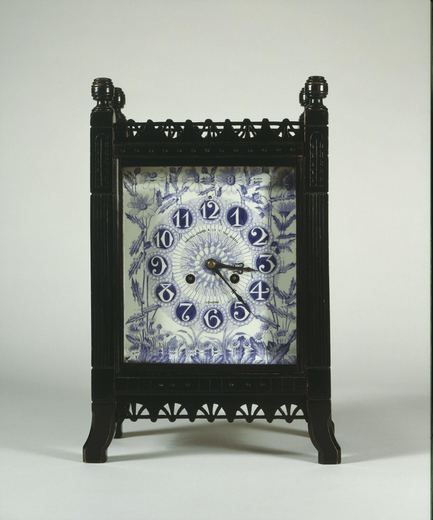
Clock by Lewis Foreman Day, England, ca. 1880
Victoria and Albert Museum, London
Clocks · 1830-1870
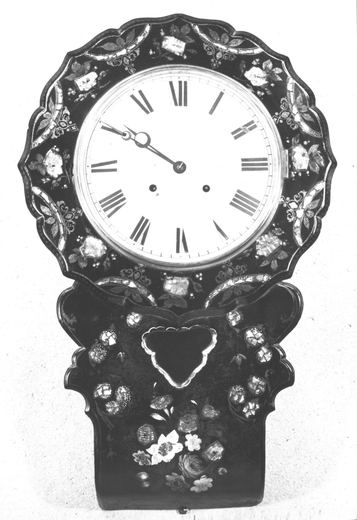
Wall clock in a papier mâché case with painted decoration. English, mid 19th century.
Victoria and Albert Museum, London
Clocks · 1840-1900
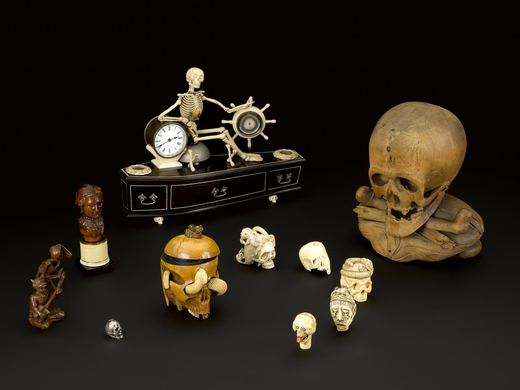
Alarm clock, mounted on model of coffin with skeleton, probably English, 1840-1900
Science Museum Group, London
Clocks · 1840-1880
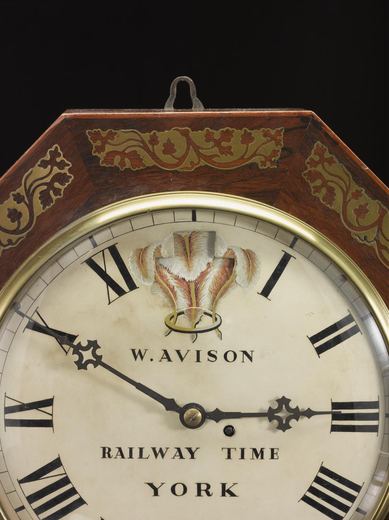
Wall Clock in octagonal case with Prince of Wales Feathers above makers name "W. Avison, Railway Time, York", made by William Avison, England, 1840-1880.
Science Museum Group, London
Clocks · 1843-1884
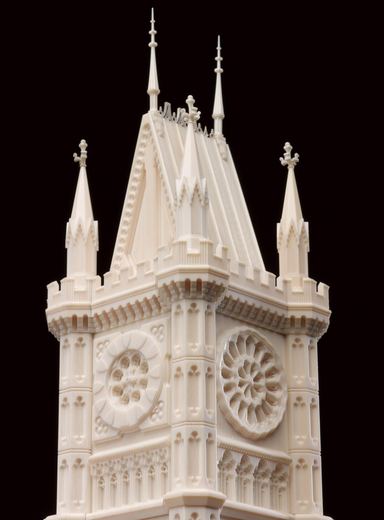
One ivory gothic clock tower & travelling case, by Holtzapffel and Company, London, England, 1843-1884
Science Museum Group, London
Clocks · 1845-1855
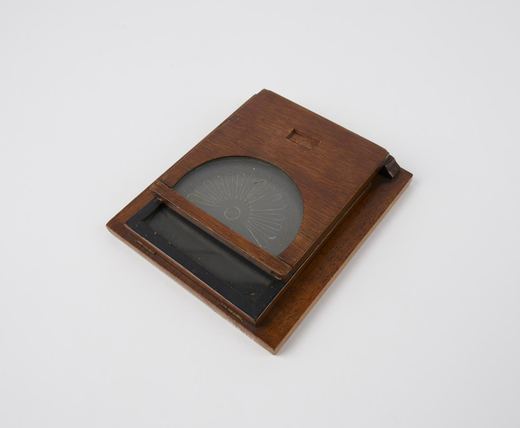
Clock by Darker, W. H., England, 1845-1855
Science Museum Group, London
Clocks · 1845-1855
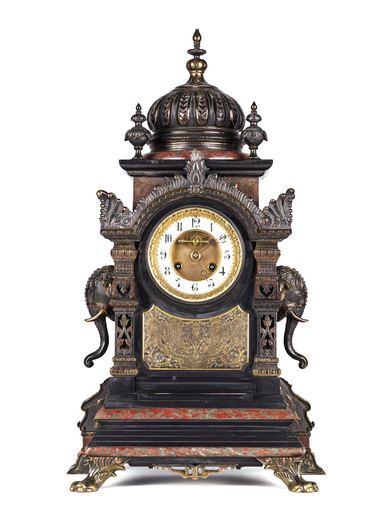
Clock, England, 1845-1855
Science Museum Group, London
Clocks · 1845-1855
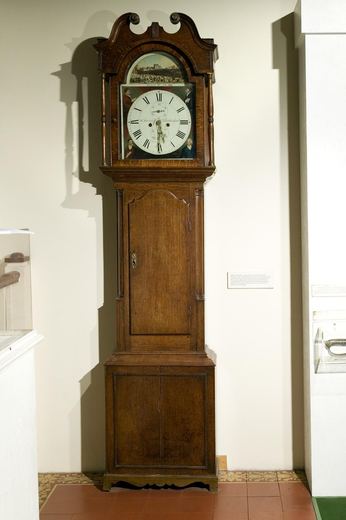
Longcase clock commemorating the Peterloo Massacre of 1819, made by W. Stancliffe, Barkisland.
Science Museum Group, London