
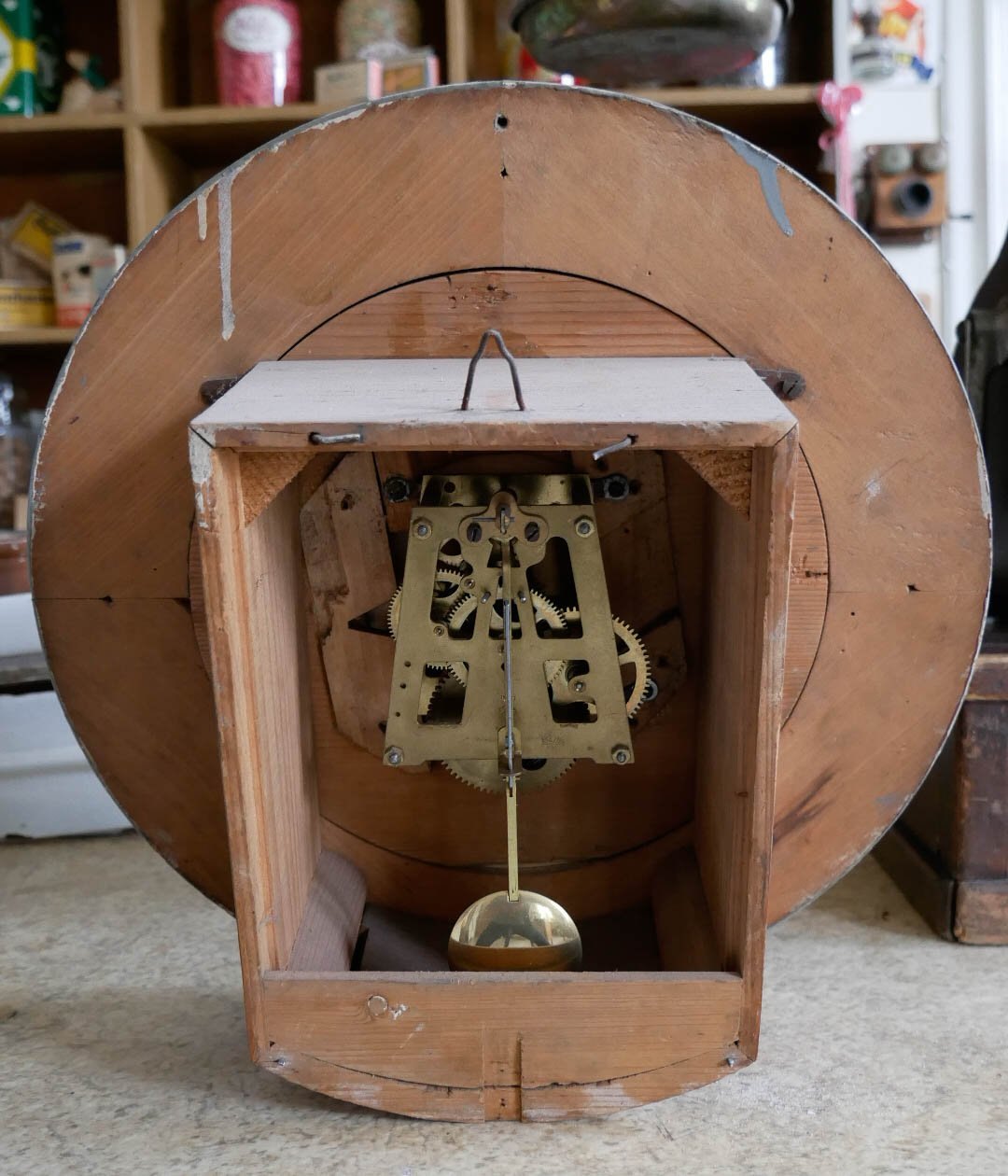
Movements & Components · Wall clock
Wall clock, 1930–1950
- Maker / attribution
- Unrecorded in source
- Date
- 1930–1950
- Historical period
- Golden Age of Mechanical Watchmaking (1900 – 1945)
- Country of origin
- Unrecorded in source
- Object type
- Wall clock
- Materials / technique
- Holz, Messing, Glas
- Holding institution
- Heimathaus Borghorst
- Accession / object no.
- 2026-0181
- Credit line
- Heimathaus Borghorst
- Catalogue title (original)
- Bahnhofsuhr oder Dienstuhr (häufig auch als Ösen-Wanduhr bezeichnet), (German)
View the source record ↗ (opens another website in a new tab)Suggest a correction
Record summary
Held and catalogued by Heimathaus Borghorst (object number 2026-0181), this is a wall clock, dated 1930–1950. The Atlas places it in the Golden Age of Mechanical Watchmaking period (1900 – 1945) of its Movements & Components collection. Materials and techniques recorded by the source: Holz, Messing, Glas. The record is illustrated with 6 photographs.
Assembled from the source record's structured fields. Dates and attributions are given as the source states them; where a field is missing the Atlas leaves it blank rather than estimating.
Catalogue description
Catalogue description from Heimathaus Borghorst (German)
Das ist eine antike Bahnhofsuhr oder Dienstuhr (häufig auch als Ösen-Wanduhr bezeichnet), die vermutlich aus der ersten Hälfte des 20. Jahrhunderts stammt. Hier sind die Details zu dem Objekt: 1. Das Zifferblatt und Design Typ: Klassische mechanische Wanduhr. Besonderheit: Das Zifferblatt zeigt neben den großen Zahlen (1–12) auch die kleinen Zahlen von 13 bis 24 am äußeren Rand. Diese 24-Stunden-Zählung wurde in Deutschland offiziell 1927 eingeführt, was ein guter Hinweis auf das Alter ist (ca. 1930er bis 1950er Jahre). Gehäuse: Ein schlichtes, funktionales Holzgehäuse mit grauem Schutzanstrich. Solche Uhren hingen oft in Amtsstuben, Bahnhöfen oder Schulen. 2. Das Uhrwerk (Rückansicht) Bauart: Es handelt sich um ein massives Pfeilerwerk aus Messing. Hemmung: Man sieht oben die Ankerhemmung, die das Pendel in Schwingung hält. Pendel: Das kurze Pendel mit der runden Messinglinse steuert den Takt der Uhr. Antrieb: die Uhr wird mechanisch betrieben. Auf der Vorderseite sieht man unter der Achse der Zeiger ein kleines Loch – dort wird der Aufziehschlüssel angesetzt, um die Feder zu spannen. 3. Zustand Die Uhr hat eine schöne Patina, weist aber deutliche Gebrauchsspuren auf (z. B. einen horizontalen Riss im Holzrahmen/Zifferblattbereich). Das Werk wirkt auf den ersten Blick vollständig, könnte aber nach der langen Zeit verharzt sein (altes Öl wird zäh), weshalb sie vielleicht nicht mehr läuft.
Shown in the original language of the source catalogue. An editor-reviewed English translation has not yet been published; we do not publish machine translations as authoritative text.
Historical context
Golden Age of Mechanical Watchmaking (1900 – 1945)
The wristwatch displaces the pocket watch; waterproof cases, self-winding and grand complications.
Precision lever movements, electric clock mechanisms and new alloys (invar, elinvar) characterised the period.
Read the period in the timelineMore movements & components from this periodEarlier: Industrial Revolution
Atlas type guide
Clock and watch movements
The movement is the mechanism of a clock or watch, without its case and dial. It consists of the power source (weight or mainspring in its barrel, sometimes with a fusee), the going train of wheels and pinions, the escapement and oscillator, the motion work that drives the hands, and in many cases additional trains for striking or complications.
From the eighteenth century watch movements were increasingly produced in stages: Swiss and French ébauche makers supplied rough movements that finishers, repasseurs and retailers completed and signed. Calibre numbers — first used systematically by American and Swiss factories in the nineteenth century — make it possible to identify movements, find spare parts and date watches.
What to look for
- Plate and bridge layout: full plate, three-quarter plate, Lépine bar calibre, bridges and cocks.
- Jewel count and whether jewels are set in chatons or rubbed in.
- Signatures, calibre and serial numbers on the plate or under the dial.
- Finishing: Geneva stripes (Côtes de Genève), perlage, bevelled edges, blued screws.
- Fusee and chain, going barrel, or electrical components.
Dating clues
- Full-plate English movements dominate before c. 1850; three-quarter plate and Lépine calibres after.
- Jewelled movements spread after Facio and Debaufre's patent of 1704, mainly in English work until c. 1800.
- Calibre numbers and factory serials allow close dating for industrial production after c. 1850.
General guidance written by the Atlas editors about this kind of object. It is not a statement about this particular piece; for that, rely on the source record above and on physical examination.
Read next:FuseeVerge escapement
Related records
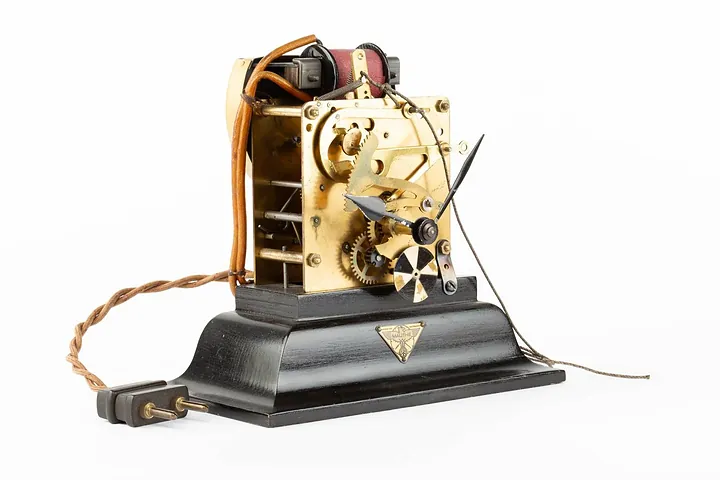
Movements & Components · 1900–1999
Clock movement by Friedrich Mauthe, Germany, 1900–1999 (no. 59468)
German Clock Museum
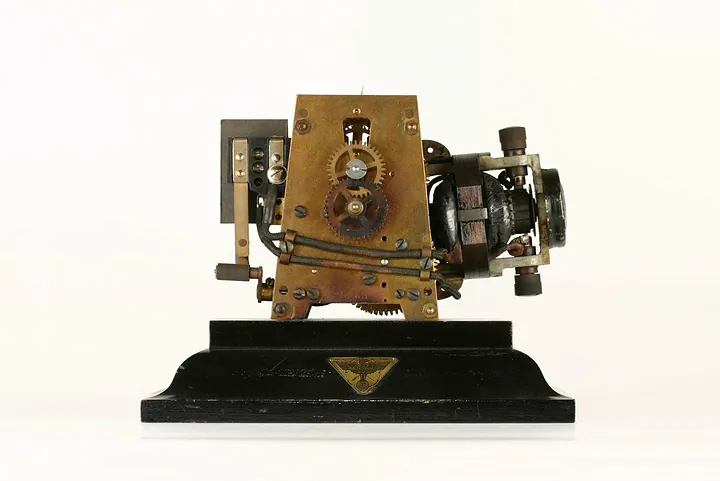
Movements & Components · 1900–1999
Clock movement by Friedrich Mauthe, Germany, 1900–1999 (no. 59469)
German Clock Museum
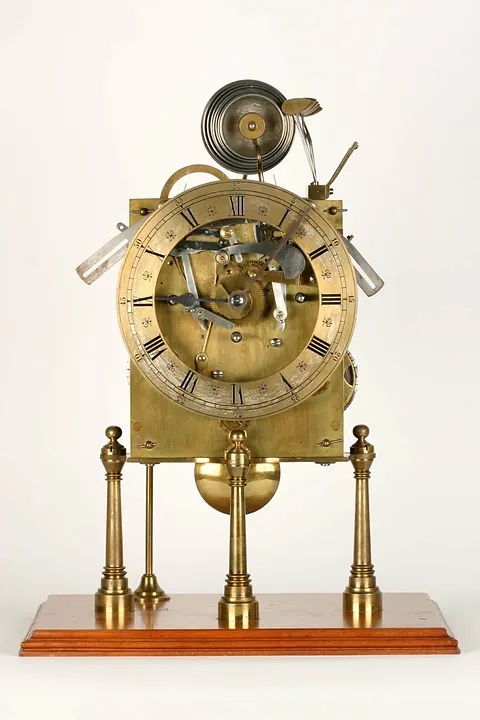
Movements & Components · c. 1900
Clock movement by Mathias Bäuerle, Germany, c. 1900
German Clock Museum
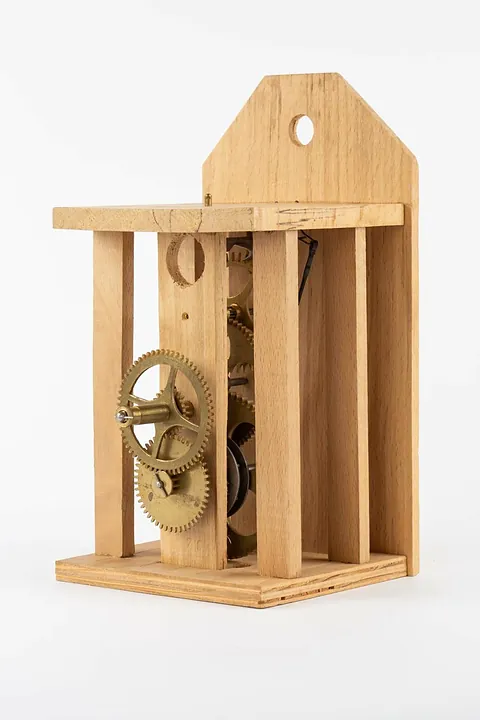
Movements & Components · 1900–1999
Clock movement, Germany, 1900–1999 (no. 59377)
German Clock Museum
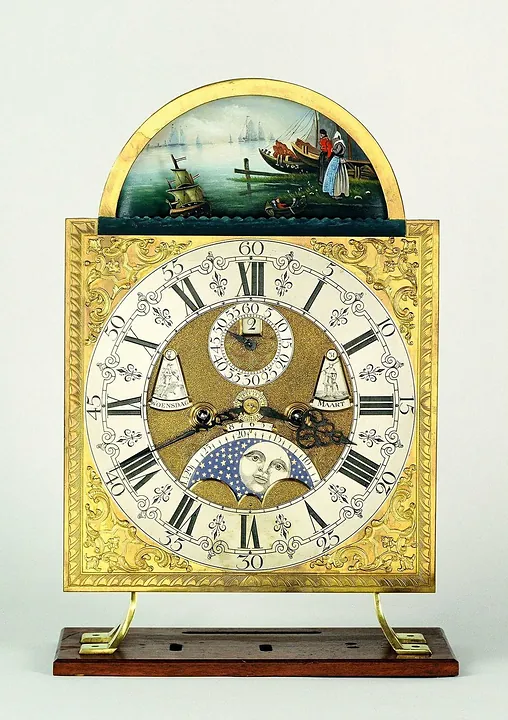
Movements & Components · 1905
Clock movement by Lorenz Furtwängler Söhne, Germany, 1905
German Clock Museum
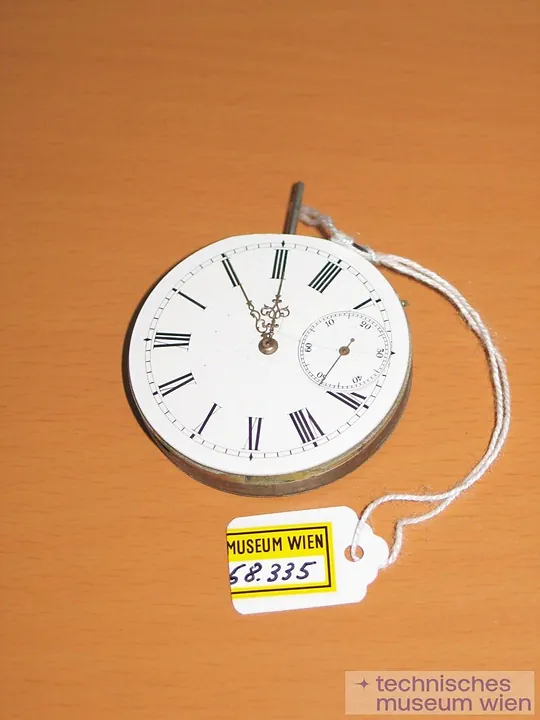
Movements & Components · 1907
Clock movement, Germany, 1907
Vienna Museum of Science and Technology
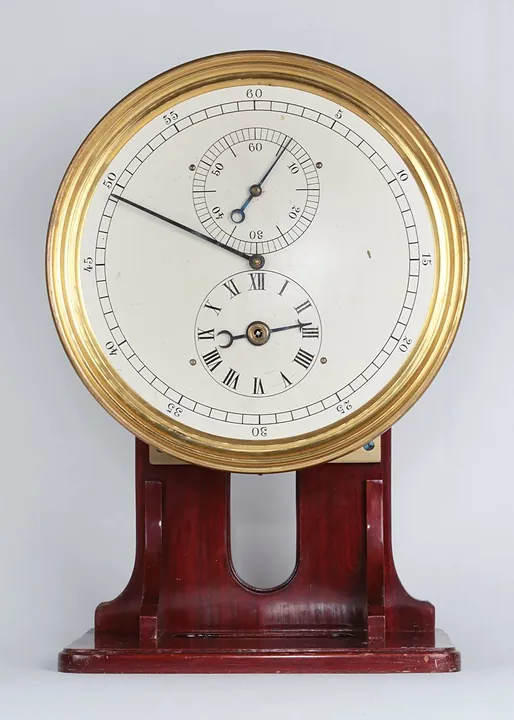
Movements & Components · 1909
Clock movement by A. G. für Uhrenfabrikation Lenzkirch, Germany, 1909
German Clock Museum
Movements & Components · 1935
Clock movement by Clemens Riefler, Germany, 1935
German Clock Museum