
Pocket Watches · Pocket watch
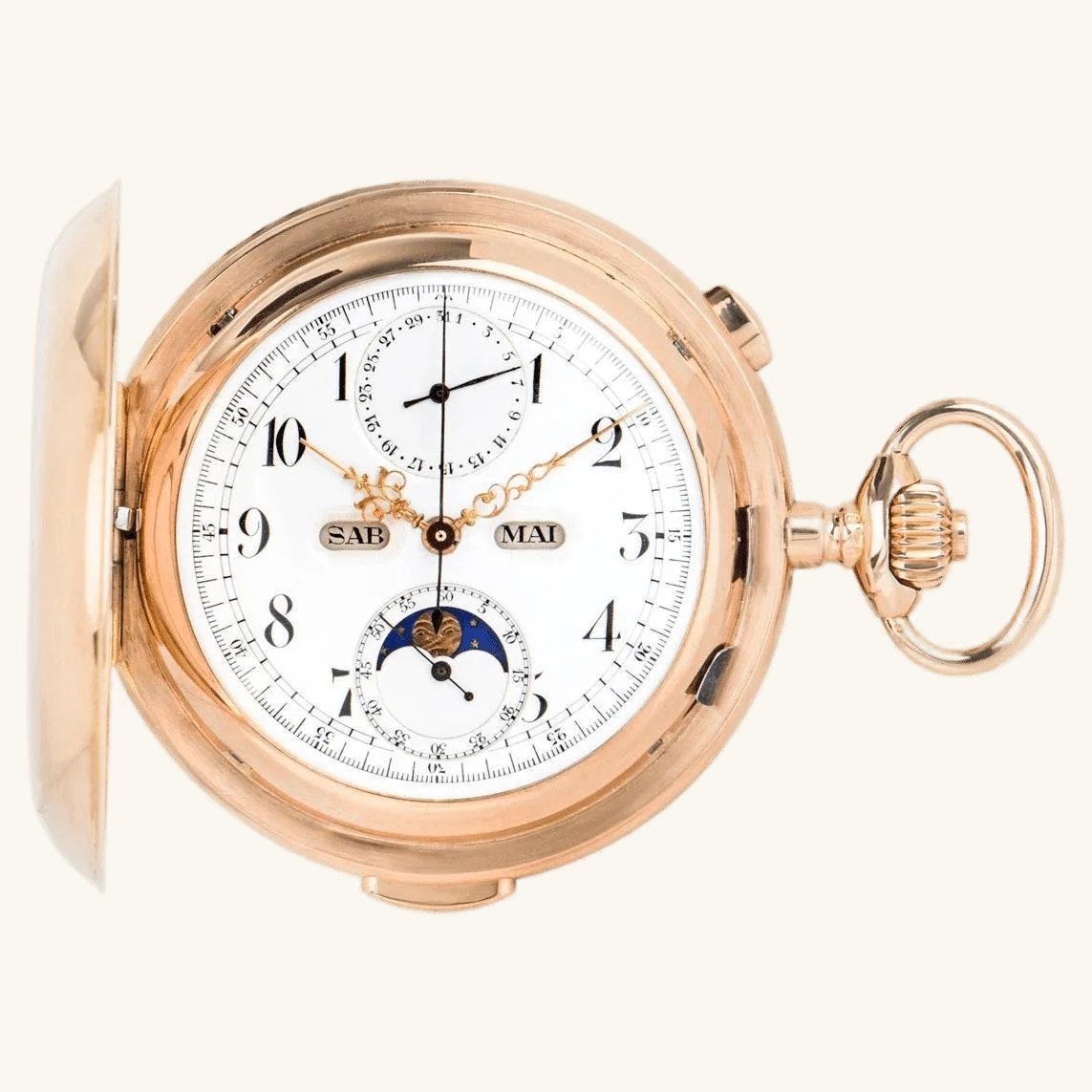
Volta 18ct Rose Gold Calendar Minute Chronograph Pocket Watch
- Maker / attribution
- Unrecorded in source
- Date
- 18th century
- Historical period
- Early Modern Horology (1600 – 1750)
- Country of origin
- Unrecorded in source
- Object type
- Pocket watch
- Materials / technique
- gold
- Dealer
- WatchMuseum.org shop
- Stock no.
- Product 3880
- Credit line
- Dealer listing, WatchMuseum.org shop (product 3880)
- Catalogue title (original)
- Volta 18ct Rose Gold Calendar Minute Chronograph Pocket Watch (English)
View the source record (dealer listing) ↗ (opens another website in a new tab)Suggest a correction
Record summary
Catalogued by WatchMuseum.org shop (stock number Product 3880), this is a pocket watch, dated 18th century. The Atlas places it in the Early Modern Horology period (1600 – 1750) of its Pocket Watches collection. Materials and techniques recorded by the source: gold. The record is illustrated with 6 photographs.
Assembled from the source record's structured fields. Dates and attributions are given as the source states them; where a field is missing the Atlas leaves it blank rather than estimating.
Catalogue description
Dealer description — WatchMuseum.org shop
Step back in time with the Volta 18ct Rose Gold Calendar Minute Chronograph Pocket Watch, an extraordinary timepiece from the 1880s that epitomizes the craftsmanship and elegance of the 18th century. This exquisite pocket watch, crafted from 18ct rose gold, features a minute repeater calendar chronograph with a full hunter keyless lever, making it a true marvel of horological engineering. The white enamel dial, adorned with Arabic numerals and an outer minute track for the chronograph hand, is beautifully complemented by Fleur des Lis hands. It also includes apertures for the Day, Month, and Lunar Cycle, as well as sub-dials for the date and seconds hand, ensuring that every detail is meticulously displayed. The Swiss hallmarked full hunter case boasts intricate engine-turned engraving, a vacant cartouche, and strategically placed repeater and chronograph buttons. Inside, the inner cuvette is signed by Volta and proudly details the movement’s accolades from prestigious exhibitions in Paris, Chicago, and Milan. The fully jeweled keyless lever movement showcases the chronograph workings on the back plate, with visible hammers that chime the hours, quarters, and minutes. Adding a unique touch, the Day and Month are written in Portuguese, indicating that this masterpiece was likely intended for the Brazilian market. With a case diameter of 55 mm and a condition rated as good, this pocket watch is not just a timekeeper but a piece of history, reflecting the opulence and precision of its era. This is an exquisite Volta pocket watch from the 1880s that boasts of an 18ct rose gold minute repeater calendar chronograph full hunter keyless lever. The white enamel dial features Arabic numerals and an outer minute track for the chronograph hand, complemented by Fleur des Lis hands. The dial has apertures for the Day Month and Lunar Cycle and sub dials for the date and seconds hand. The full hunter case is Swiss hallmarked and boasts of engine turned engraving, a vacant cartouche, and a repeater button at six and a chronograph button at two. The inner cuvette is also signed Volta and has a detailed description of the movement that won several medals of Honor in Paris, Chicago, and Milan. The fully jeweled keyless lever movement has the chronograph workings on the back plate, with hammers visibly chiming the Hours Quarters and Minutes. Interestingly, the Day and Month are written in Portuguese, suggesting that the watch was intended for the Brazilian Market. Case Material: 18k Gold,Rose Gold Case Dimensions: Diameter: 55 mm (2.17 in) Period: 18th Century Date of Manufacture: 18th Century Condition: Good
Historical context
Early Modern Horology (1600 – 1750)
Huygens' pendulum and balance spring transform accuracy; English makers develop the anchor and deadbeat escapements.
The balance spring (c. 1675) improved watches dramatically and introduced the minute hand. English pair-cased verge watches with pierced balance cocks and French oignons were typical; enamel painting at Blois and Geneva, and the repeating watch (1680s), made watches objects of great refinement.
Read the period in the timelineMore pocket watches from this periodEarlier: Renaissance Horology
Atlas type guide
Chronographs and split-seconds watches
A chronograph is a watch with an additional seconds hand that can be started, stopped and returned to zero independently of the timekeeping. Louis Moinet built an early example in 1816 and Nicolas Rieussec a recording 'chronographe' in 1821; Adolphe Nicole's heart-shaped reset cam (patented 1862) made the modern return-to-zero possible. Split-seconds (rattrapante) chronographs add a second hand that can be stopped for intermediate times; flyback chronographs restart instantly.
Chronographs were essential tools for doctors (pulsometer scales), artillery (telemeter), engineers and sport. In wristwatches, Valjoux, Venus, Lemania and later the automatic chronographs of 1969 (Zenith El Primero, the Chronomatic Calibre 11 group and Seiko 6139) are milestones.
What to look for
- Push-pieces on the case band or a single button in the crown (monopusher).
- Subsidiary registers for minutes and hours; tachymeter, telemeter or pulsometer scales.
- Column wheel versus cam control visible in the movement.
- Calibre markings of specialist makers (Valjoux, Lemania, Venus, Landeron).
Dating clues
- Pocket chronographs with heart cam reset: after 1862.
- Wrist chronographs: from c. 1910; two-button designs from the 1930s.
- Automatic chronographs: from 1969.
General guidance written by the Atlas editors about this kind of object. It is not a statement about this particular piece; for that, rely on the source record above and on physical examination.
Read next:Flyback chronographChronograph
Related records
Pocket Watches · 1600–1699
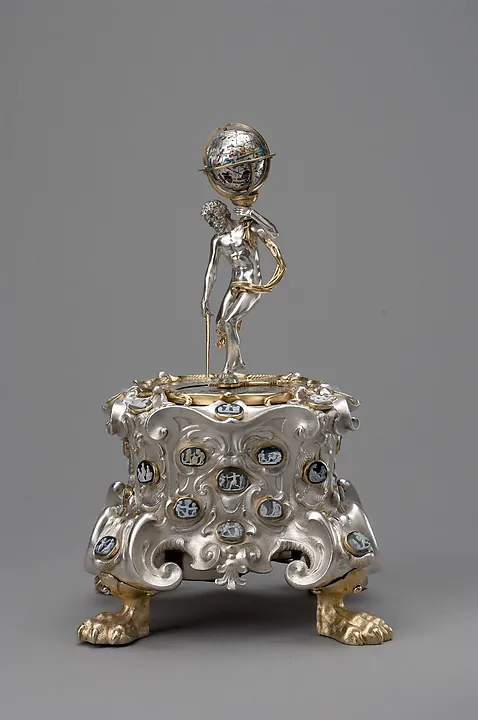
Pocket watch by Georg Ernst, Germany, 1600–1699
Fine Arts Museum Vienna
Pocket Watches · c. 1600
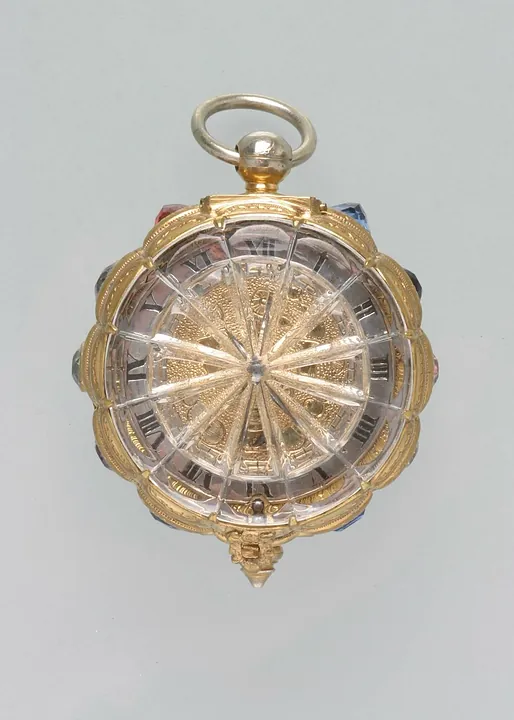
Pocket watch by Balthasar de Paep, Belgium, c. 1600
German Clock Museum
Pocket Watches · c. 1600
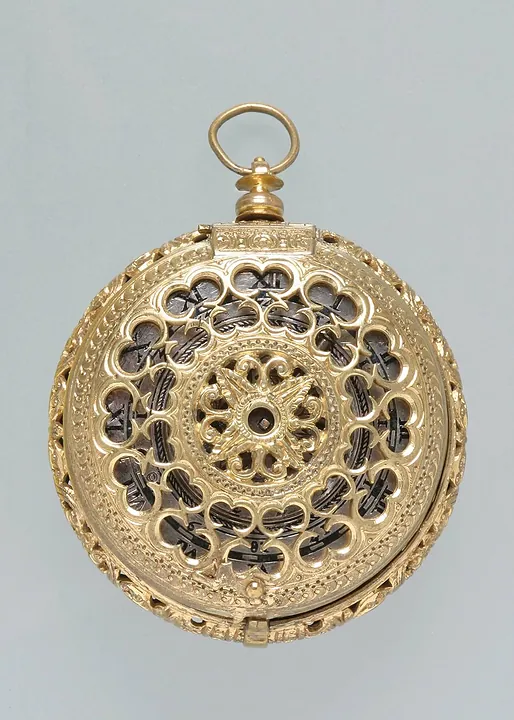
Pocket watch by Hans Reinboldt, France, c. 1600
German Clock Museum
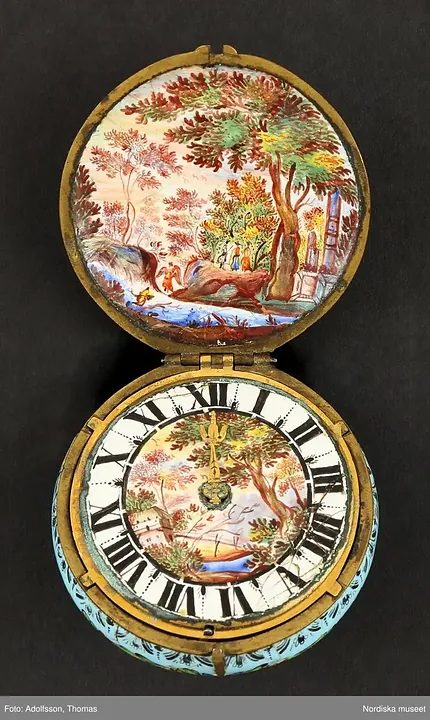
Pocket Watches · 1600–1699
Pocket watch by Johan Etmiller, Germany, 1600–1699
Nordic Museum Foundation
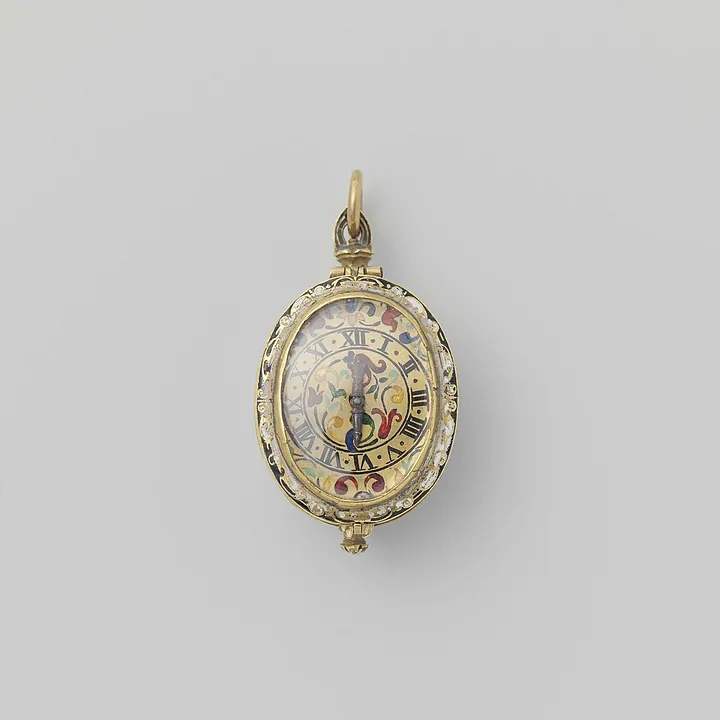
Pocket Watches · 1600
Pocket watch, France, 1600
Rijksmuseum
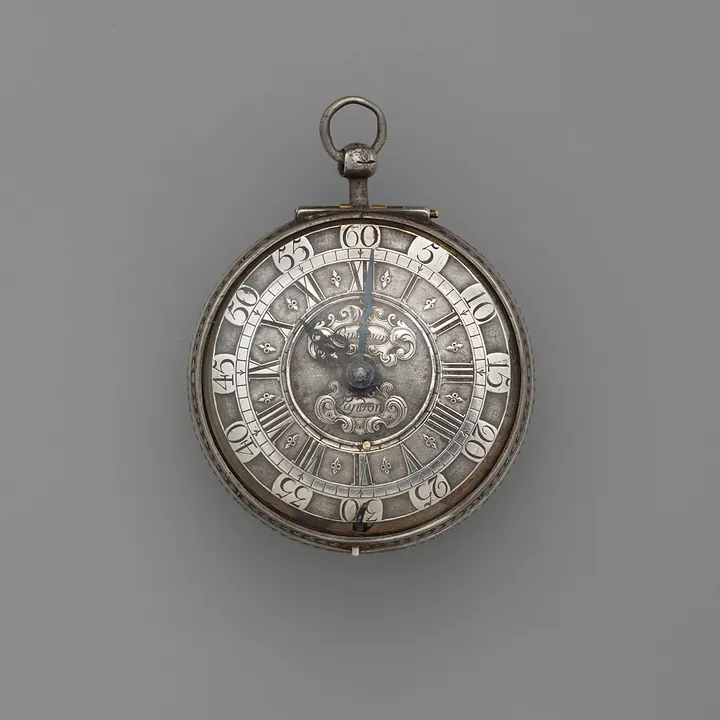
Pocket Watches · 17th century
Watch by John Bushman, England, 17th century
The Metropolitan Museum of Art, New York
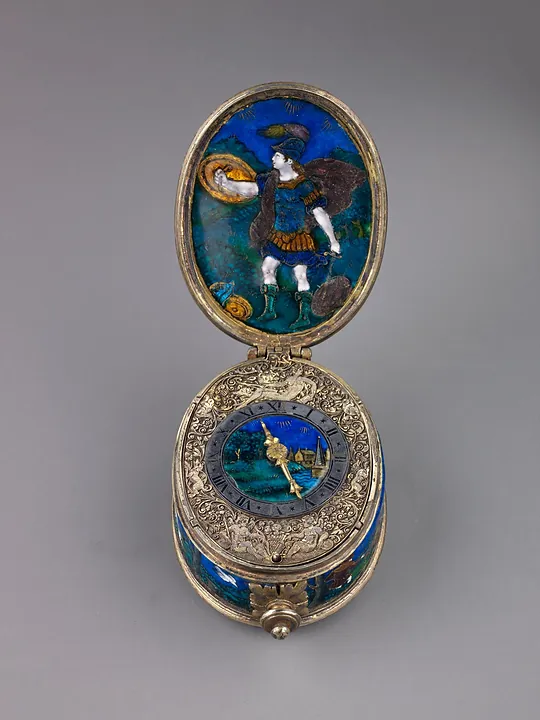
Pocket Watches · first quarter of 17th century
Watch by Suzanne de Court, France, first quarter of 17th century
The Metropolitan Museum of Art, New York
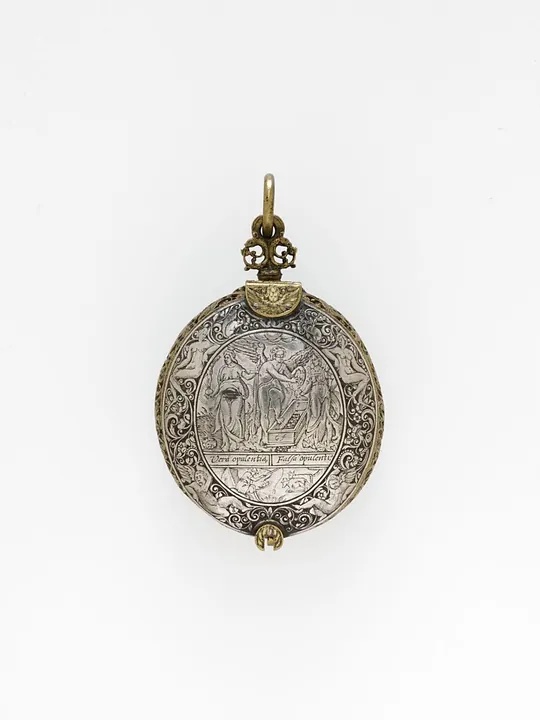
Pocket Watches · early 17th century
Watch of engraved and pierced silver and gilt brass, signed 'Noel Hubert A Rouen', France, early 17th century
Victoria and Albert Museum, London