
Wristwatches · Wristwatch
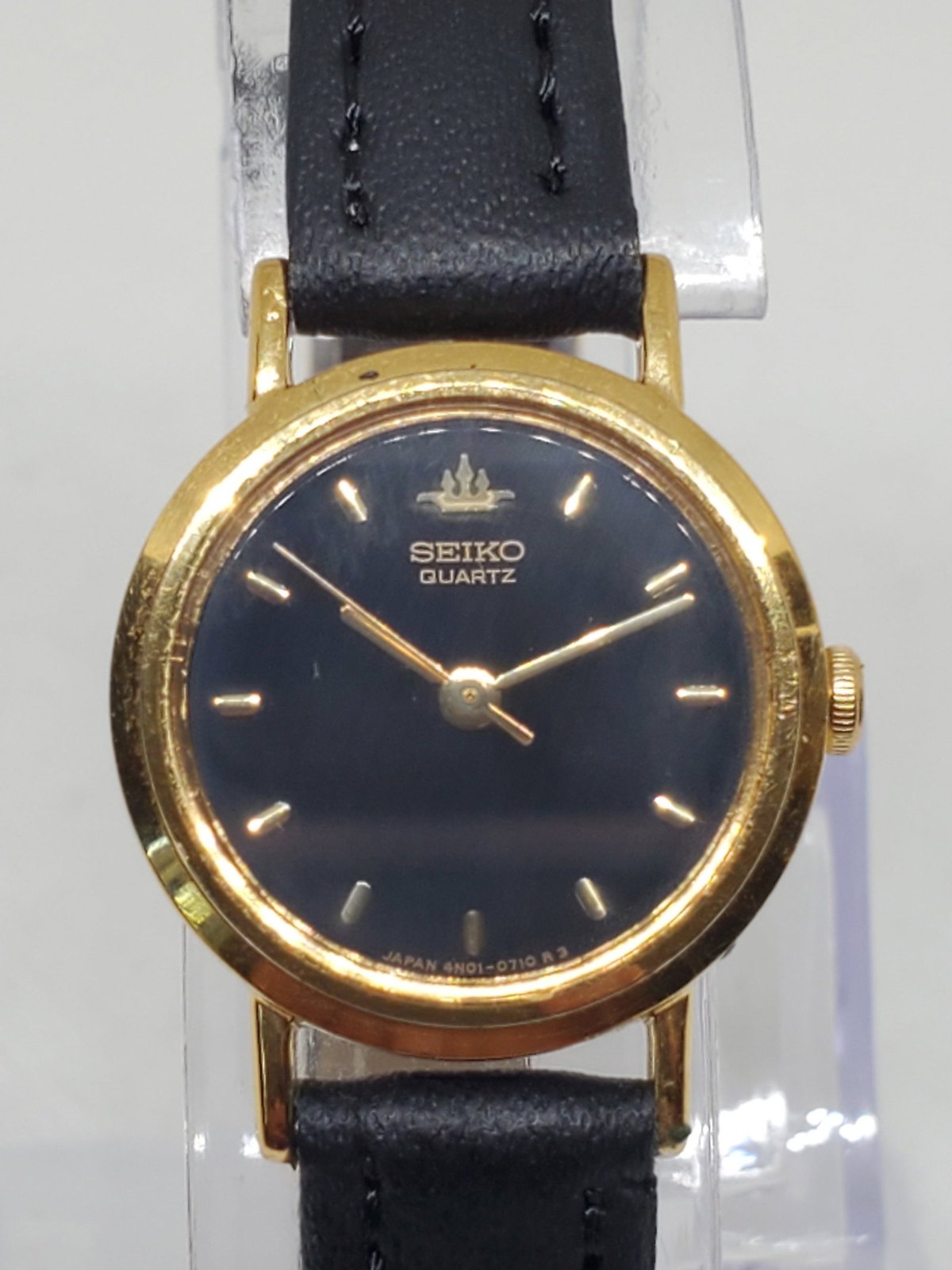
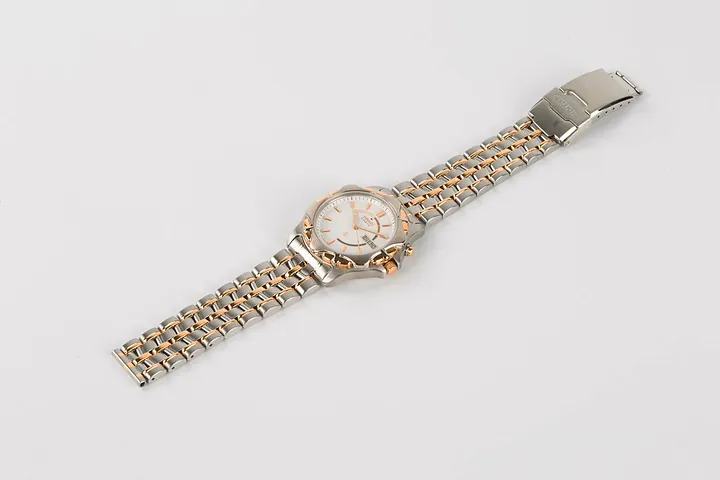
Vintage Seiko 4N01 0300 Quartz Gold Plated Black Dial Dress Watch Japan, circa 1991 to 1993
- Maker / attribution
- Seiko (maker)
- Date
- c. 1991
- Historical period
- Mechanical Renaissance (1990 – 2010)
- Country of origin
- Japan
- Object type
- Wristwatch
- Materials / technique
- quartz
- Auction house
- LiveAuctioneers auction archive
- Lot
- Item 220049743
- Credit line
- Auction lot record: lot 43, Warriors of Time XIX, Aionios (2025), via LiveAuctioneers
- Catalogue title (original)
- Vintage Seiko 4N01 0300 Quartz Gold Plated Black Dial Dress Watch Japan, circa 1991 to 1993 (English)
View the source record (auction lot) ↗ (opens another website in a new tab)Suggest a correction
Record summary
Catalogued by LiveAuctioneers auction archive (lot Item 220049743), this is a wristwatch by Seiko, made in Japan, dated c. 1991. The Atlas places it in the Mechanical Renaissance period (1990 – 2010) of its Wristwatches collection. Materials and techniques recorded by the source: quartz. The record is illustrated with 4 photographs.
Assembled from the source record's structured fields. Dates and attributions are given as the source states them; where a field is missing the Atlas leaves it blank rather than estimating.
Catalogue description
Lot description — Aionios
This elegant Seiko 4N01 0300 Quartz watch showcases the timeless refinement that defines the Seiko brand. Featuring a gold plated round case paired with a deep black dial and gold tone hour markers, it delivers a minimalist and luxurious aesthetic perfect for formal occasions or everyday sophistication. The precision quartz movement ensures reliable timekeeping, while the leather bracelet (6??) provides comfort and style. With its 20mm case, this compact dress watch exemplifies Seiko?s dedication to craftsmanship and durability. Founded by Kintar? Hattori in 1881 in Tokyo, Japan, Seiko has been a leader in watchmaking innovation ? from creating Japan?s first wristwatch to pioneering the quartz revolution that reshaped horology. This model reflects that same legacy of quality, offering both elegance and longevity for collectors and enthusiasts alike. Condition: in operation, minimal signs of wear. Reference Number: AW1570
Historical context
Mechanical Renaissance (1990 – 2010)
Mechanical watches return as cultural objects; independent watchmaking flourishes.
Mechanical watches returned as cultural and luxury objects. Complications, tourbillons and new materials proliferated; independent watchmakers such as George Daniels, F.P. Journe and Philippe Dufour revived artisanal watchmaking; collecting vintage watches became a major field.
Read the period in the timelineMore wristwatches from this periodEarlier: Quartz Revolution
Atlas type guide
Quartz, digital and electronic watches
Electronic watches arrived in three steps. The Hamilton Electric 500 (1957) was the first battery-powered wristwatch, still with a balance; Bulova's Accutron (1960) used a tuning fork. On 25 December 1969 Seiko released the Astron 35SQ, the first quartz wristwatch, closely followed by the Swiss Beta 21 group. In 1972 Hamilton's Pulsar introduced the LED digital watch, and LCD displays soon made digital watches cheap.
The 'Quartz Crisis' that followed devastated the Swiss mechanical industry, which lost two-thirds of its workforce between 1970 and 1984 before recovering with the Swatch (1983) and the luxury mechanical revival. Solar, radio-controlled, kinetic and connected smartwatches continue the electronic line.
What to look for
- Battery hatch in the case back and calibre markings with 'Quartz' or a crystal frequency.
- Display technology: LED (red, push-button) versus LCD (always-on).
- Tuning-fork hum and a smoothly sweeping seconds hand on Accutrons.
- Model and reference numbers, often printed on the back.
Dating clues
- Electric balance watches: from 1957.
- Tuning-fork watches: 1960–c. 1977.
- Quartz analogue: from December 1969; LED digital: 1972–c. 1978; LCD from 1973.
General guidance written by the Atlas editors about this kind of object. It is not a statement about this particular piece; for that, rely on the source record above and on physical examination.
Read next:Seiko calibre 35A (Astron)
Related records
Wristwatches · 1967
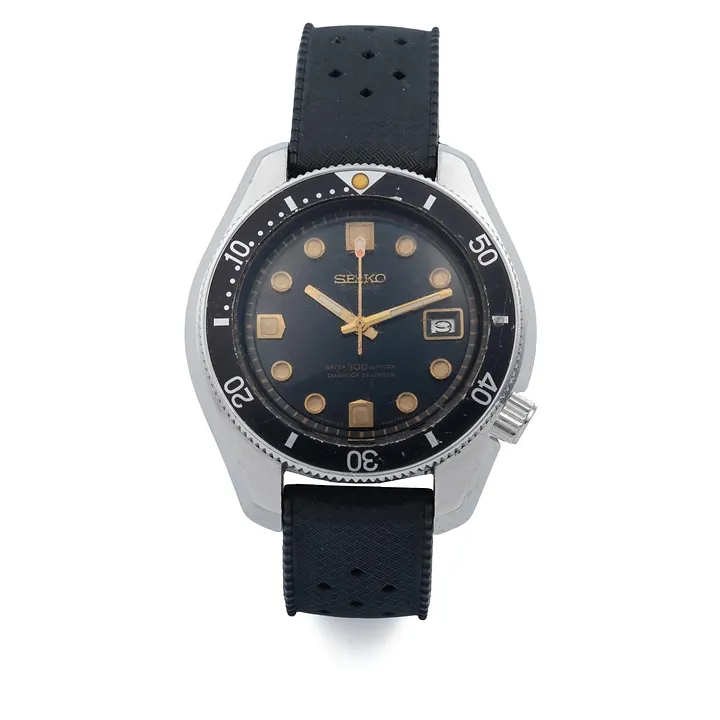
Seiko 300 M, ref. 6215-7000, 1967
Antiquorum auction archive, Geneva
Wristwatches · 1967
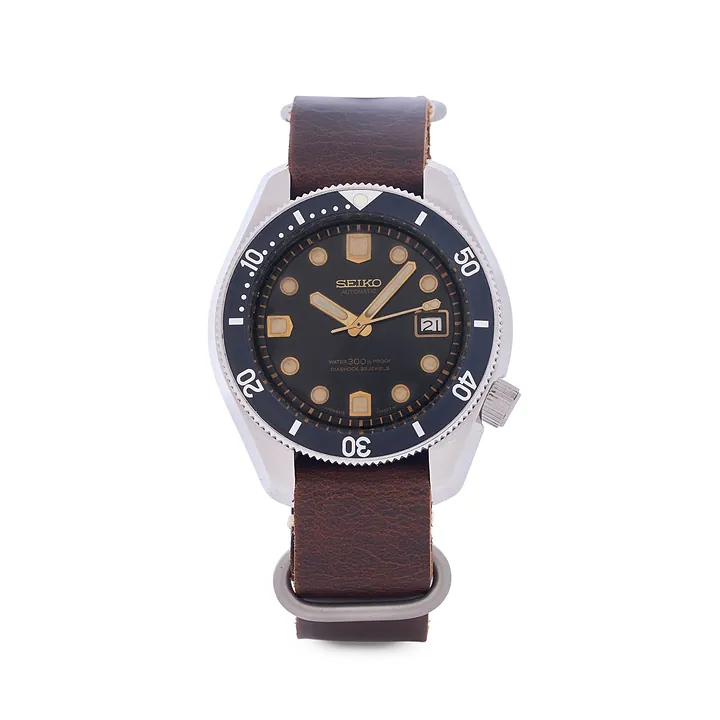
Seiko 300 Meter Diver, ref. 6215-7000, 1967
Antiquorum auction archive, Geneva
Wristwatches · c. 1968
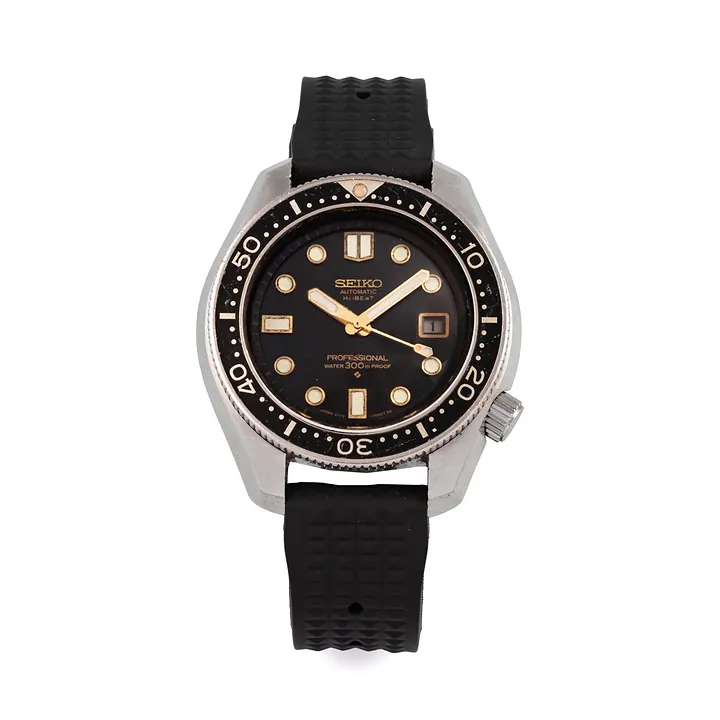
Seiko Hi-Beat, ref. 6159-7000, c. 1968
Antiquorum auction archive, Geneva
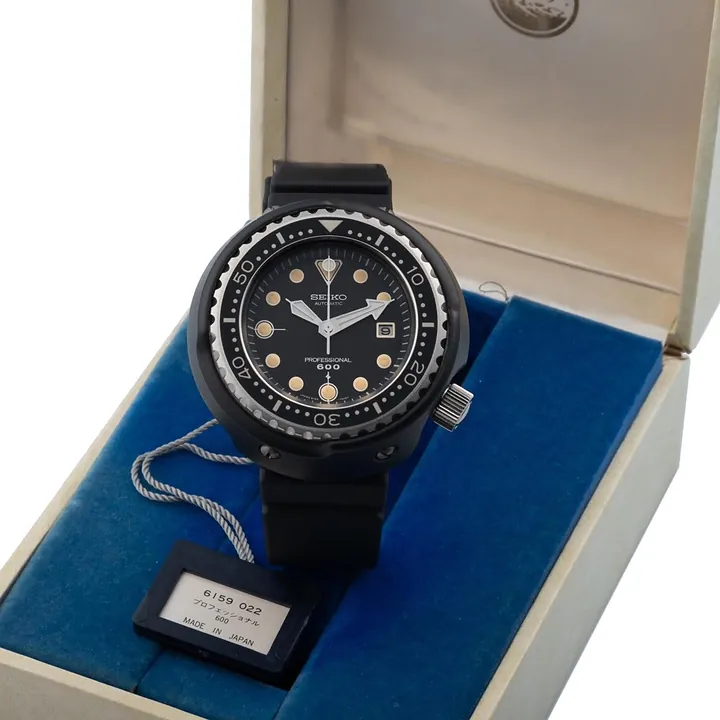
Wristwatches · 1975
Seiko Tuna Professional 600, ref. 6159-7010, 1975
Antiquorum auction archive, Geneva
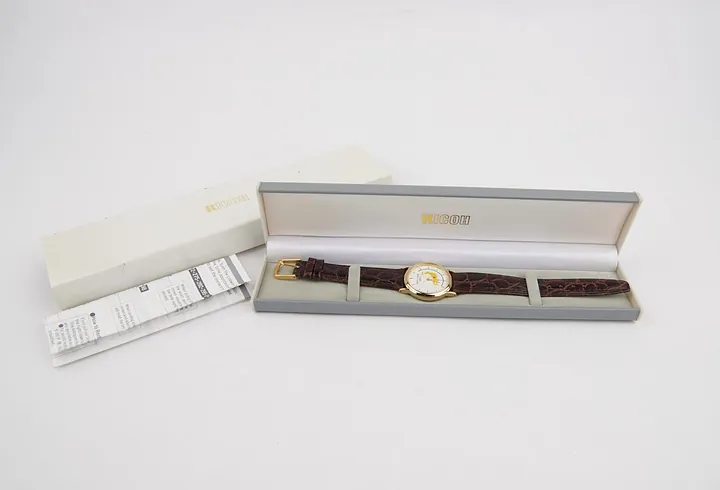
Wristwatches · 1990–1996
Wristwatch by Ricoh Elemex Corporation, Japan, 1990–1996
Science Museum Group, London
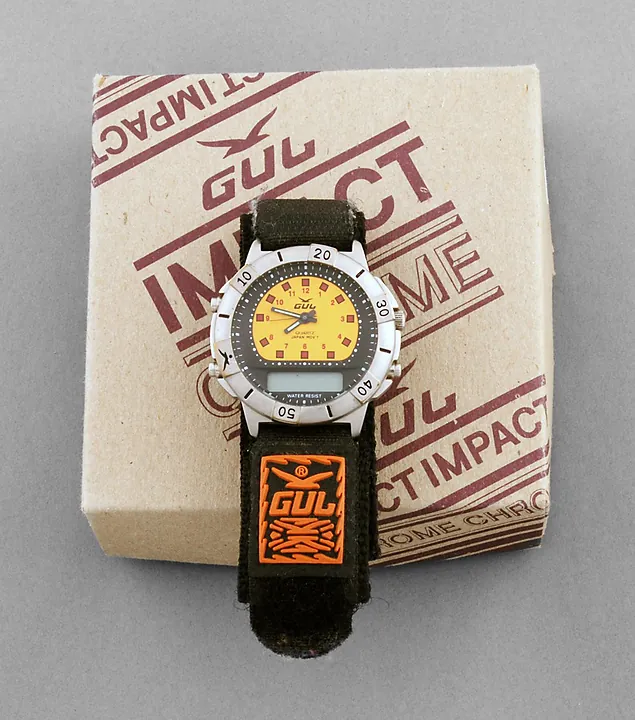
Wristwatches · 1990
Wristwatch, Japan, 1990
Blekinge Museum
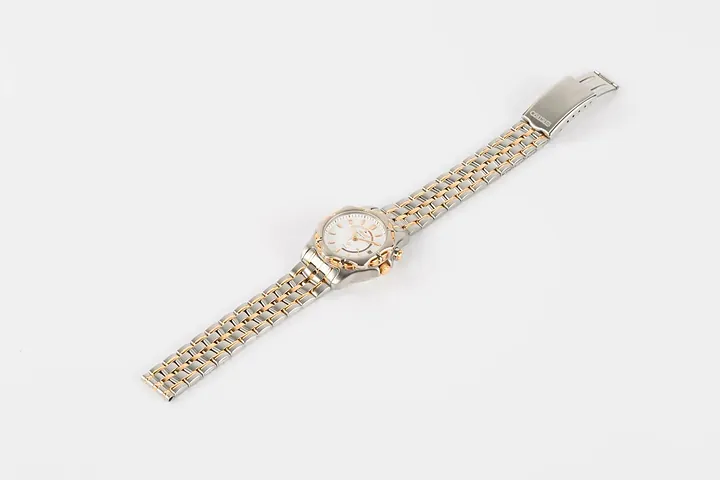
Wristwatches · 1995
Wristwatch, Japan, 1995 (no. 57932)
German Clock Museum
Wristwatches · 1995
Wristwatch, Japan, 1995 (no. 57933)
German Clock Museum