
Wristwatches · Wristwatch
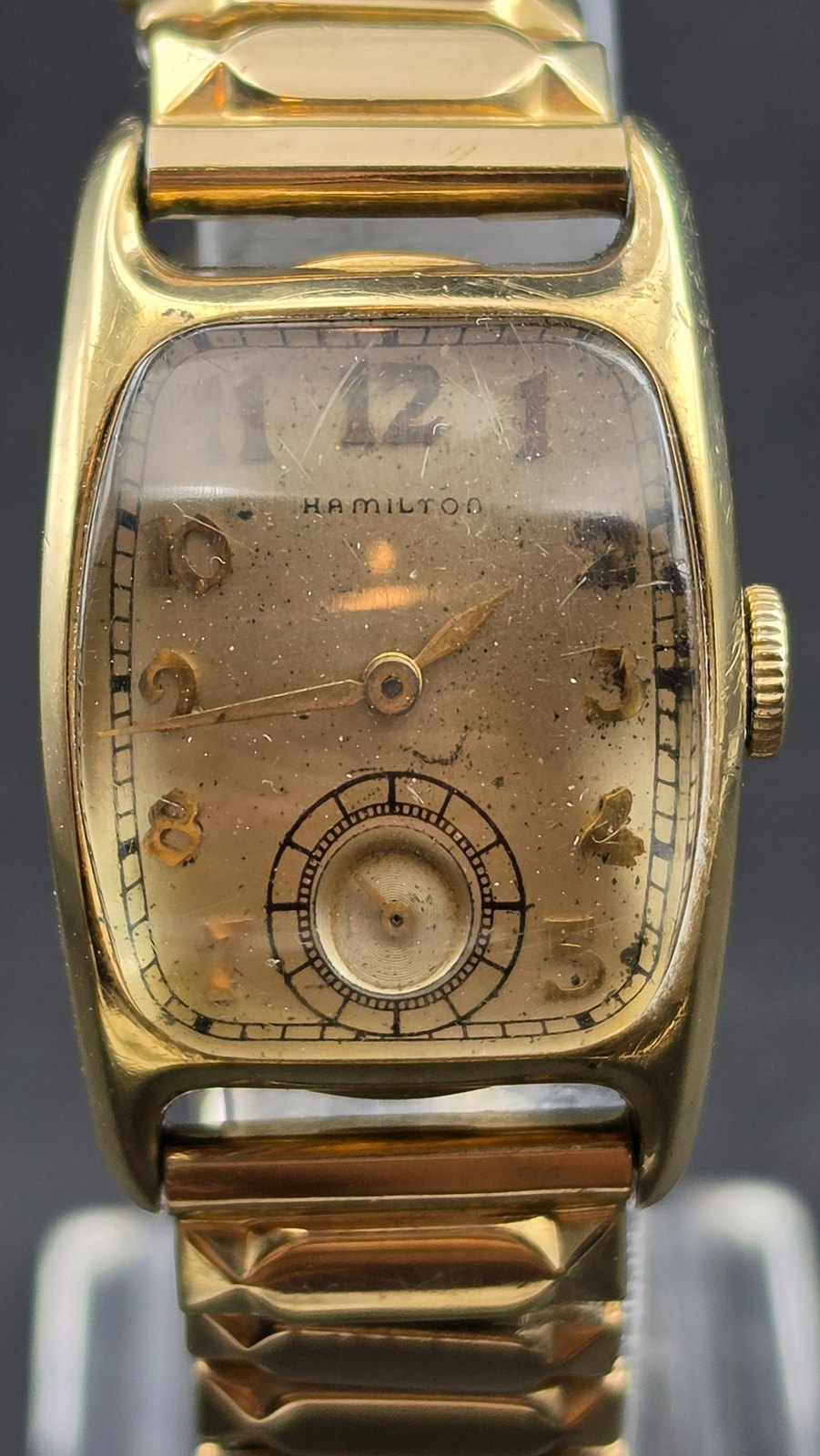
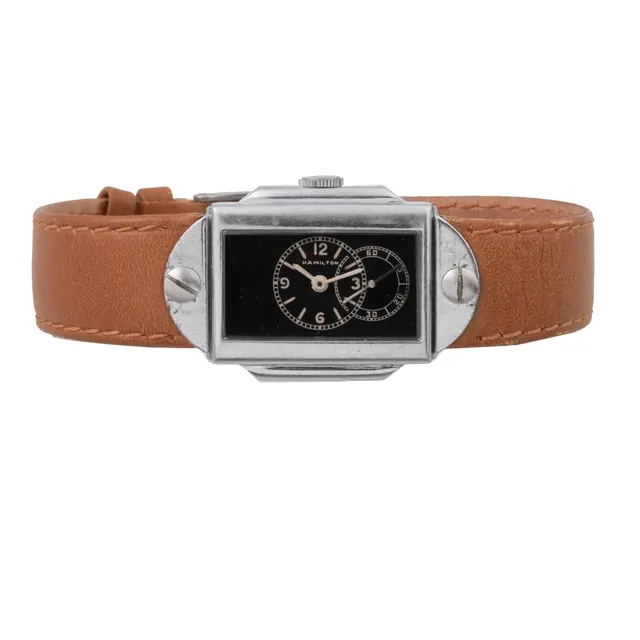
Vintage circa 1944 Hamilton Lester 14K Gold Filled Wristwatch Caliber 982 19 Jewels
- Maker / attribution
- Hamilton (maker)
- Date
- c. 1944
- Historical period
- Golden Age of Mechanical Watchmaking (1900 – 1945)
- Country of origin
- Switzerland
- Object type
- Wristwatch
- Auction house
- LiveAuctioneers auction archive
- Lot
- Item 237533932
- Credit line
- Auction lot record: lot 402, EXCLUSIVE WATCHES AND POCKET WATCHES 13, Sphere Auctions LLC (2026), via LiveAuctioneers
- Catalogue title (original)
- Vintage circa 1944 Hamilton Lester 14K Gold Filled Wristwatch Caliber 982 19 Jewels (English)
View the source record (auction lot) ↗ (opens another website in a new tab)Suggest a correction
Record summary
Catalogued by LiveAuctioneers auction archive (lot Item 237533932), this is a wristwatch by Hamilton, made in Switzerland, dated c. 1944. The Atlas places it in the Golden Age of Mechanical Watchmaking period (1900 – 1945) of its Wristwatches collection. The record is illustrated with 4 photographs.
Assembled from the source record's structured fields. Dates and attributions are given as the source states them; where a field is missing the Atlas leaves it blank rather than estimating.
Catalogue description
Lot description — Sphere Auctions LLC
This is a vintage Hamilton "Lester" wristwatch, a scarce Art Deco model from Hamilton's American-made lineup, dating to approximately 1944 based on the case and movement serial numbers. The rectangular tonneau style case is 14K gold filled and stamped inside the case back HAMILTON W CO LANCASTER PA 14K GOLDFILLED S351640, with a domed acrylic crystal typical of the Lester model. The case measures approximately 22.86mm across at its widest point. The dial is signed Hamilton at the top with Arabic numerals and a sub seconds register at the 6 position. The numerals show typical age related wear to the gold paint and there is scattered spotting across the dial surface. The manual wind movement is signed Hamilton USA, 19 Jewels, grade 982, serial number J259633. The watch is currently fitted with a later Speidel expansion bracelet marked Speidel 1/20 10K G F Tops SS Pat 2515817, a gold filled top expansion band that is not the watch's original strap. The case back shows a small split at one edge along with a faint handwritten repair note dated 8-75, indicating past service work. The watch is running.This is a vintage mechanical wristwatch. As with all mechanical watches of this age, long term accuracy cannot be guaranteed and occasional servicing may be needed to maintain reliable performance.
Historical context
Golden Age of Mechanical Watchmaking (1900 – 1945)
The wristwatch displaces the pocket watch; waterproof cases, self-winding and grand complications.
The wristwatch overtook the pocket watch. Military use in the First World War, aviation, water-resistant cases (1926), automatic winding (1923–31), rectangular Art Deco designs and early chronographs and calendars defined the period.
Read the period in the timelineMore wristwatches from this periodEarlier: Industrial Revolution
Atlas type guide
Wristwatches
Bracelet watches were worn by women from the early nineteenth century — Breguet made one for Caroline Murat, Queen of Naples, in 1810–12 — but the wristwatch only became a man's instrument with military use and aviation in the early twentieth century. Between the World Wars it overtook the pocket watch; the 1920s and 1930s brought rectangular Art Deco cases, water-resistant cases and the first automatic winding systems.
After 1945 the wristwatch became a carrier of identity — dress watches, sports and dive watches, chronographs, calendars — produced by Swiss, American, Japanese, German, Soviet and Chinese industries. The quartz revolution after 1969 and the mechanical renaissance since the 1990s, including the rise of independent watchmakers, complete the story.
What to look for
- The reference number (between the lugs or inside the case back) and serial number, the starting point for dating.
- The calibre: its maker and number are often stamped under the dial or on the bridge.
- Originality of dial, hands and crown — refinished ('redial') dials are common.
- Case material marks: 18K/750, 14K/585, stainless steel, gold-filled, plated.
Dating clues
- Wire-lug cases: before c. 1925.
- Water-resistant screw-down cases: from 1926.
- Quartz movements: from 1969; sapphire crystals widespread after c. 1980.
General guidance written by the Atlas editors about this kind of object. It is not a statement about this particular piece; for that, rely on the source record above and on physical examination.
Related records
Pocket Watches · c. 1943
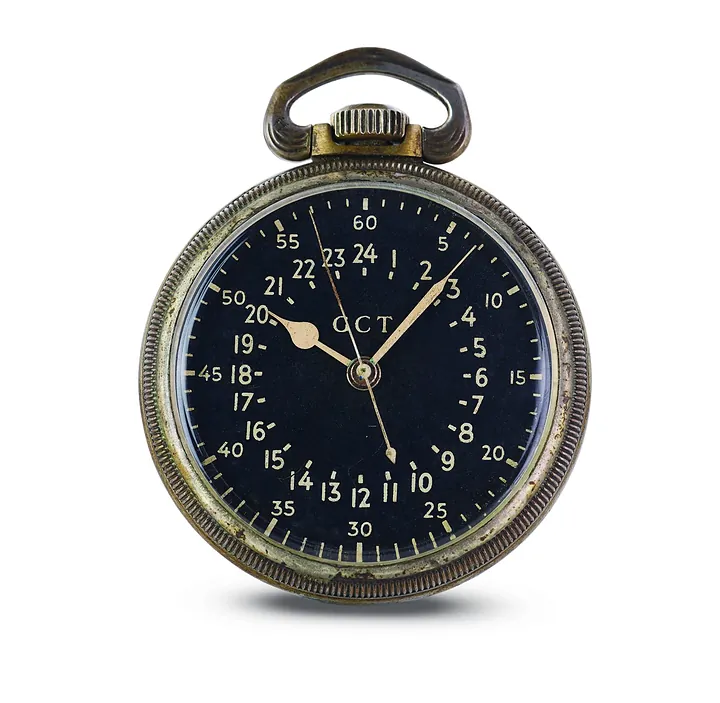
Hamilton 4992B, GCT Navigation U.S Air Force, c. 1943
Antiquorum auction archive, Geneva
Wristwatches · c. 1940s
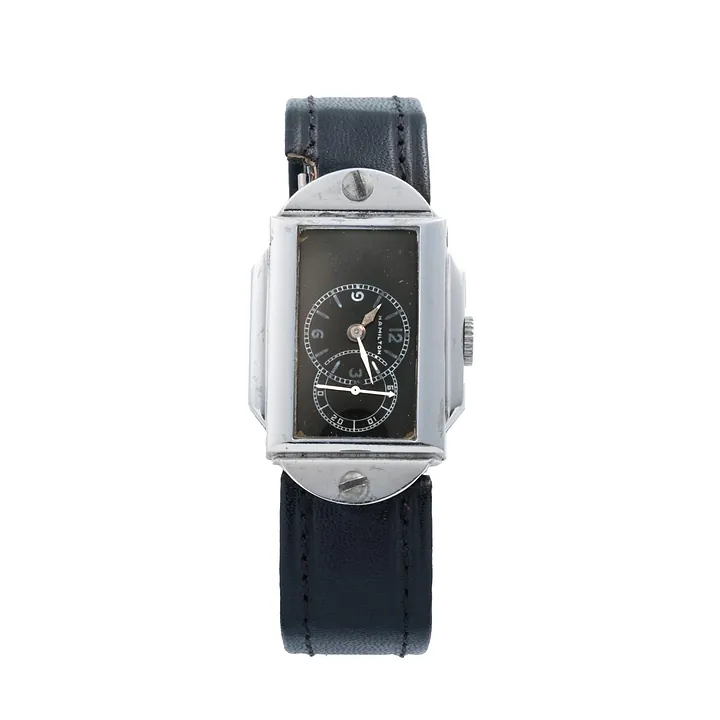
Hamilton Bomb Timer, c. 1940s
Antiquorum auction archive, Geneva
Wristwatches · originally sold in February 2025 (per the lot record)
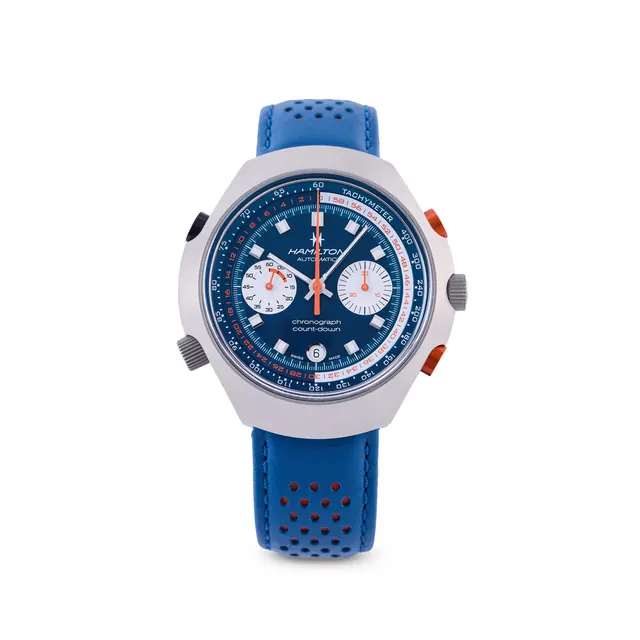
Hamilton wristwatch, ref. H51606640, American Classic Chrono-Matic 50 Limited Edition, originally sold in February 2025 (per the lot record)
Antiquorum auction archive, Geneva
Wristwatches · c. 1940s
Hamilton wristwatch, Bomb Timer Watch, circa 1940's
Antiquorum auction archive, Geneva

Wristwatches · 1931
Rolex 'Oyster Perpetual' rotor self-winding wrist-watch, lever escapement, in steel case with glass in back, Montres Rolex SA, Geneva, Switzerland, 1931
Science Museum Group, London

Wristwatches · 1900–1999
Wristwatch by Certina, Switzerland, 1900–1999
Nordic Museum Foundation

Wristwatches · 1900–1999
Wristwatch by Omega, Västerås, 1900–1999
Nordic Museum Foundation

Wristwatches · 1900–1999
Wristwatch by Universal, Switzerland, 1900–1999
Nordic Museum Foundation