
Wristwatches · Wristwatch
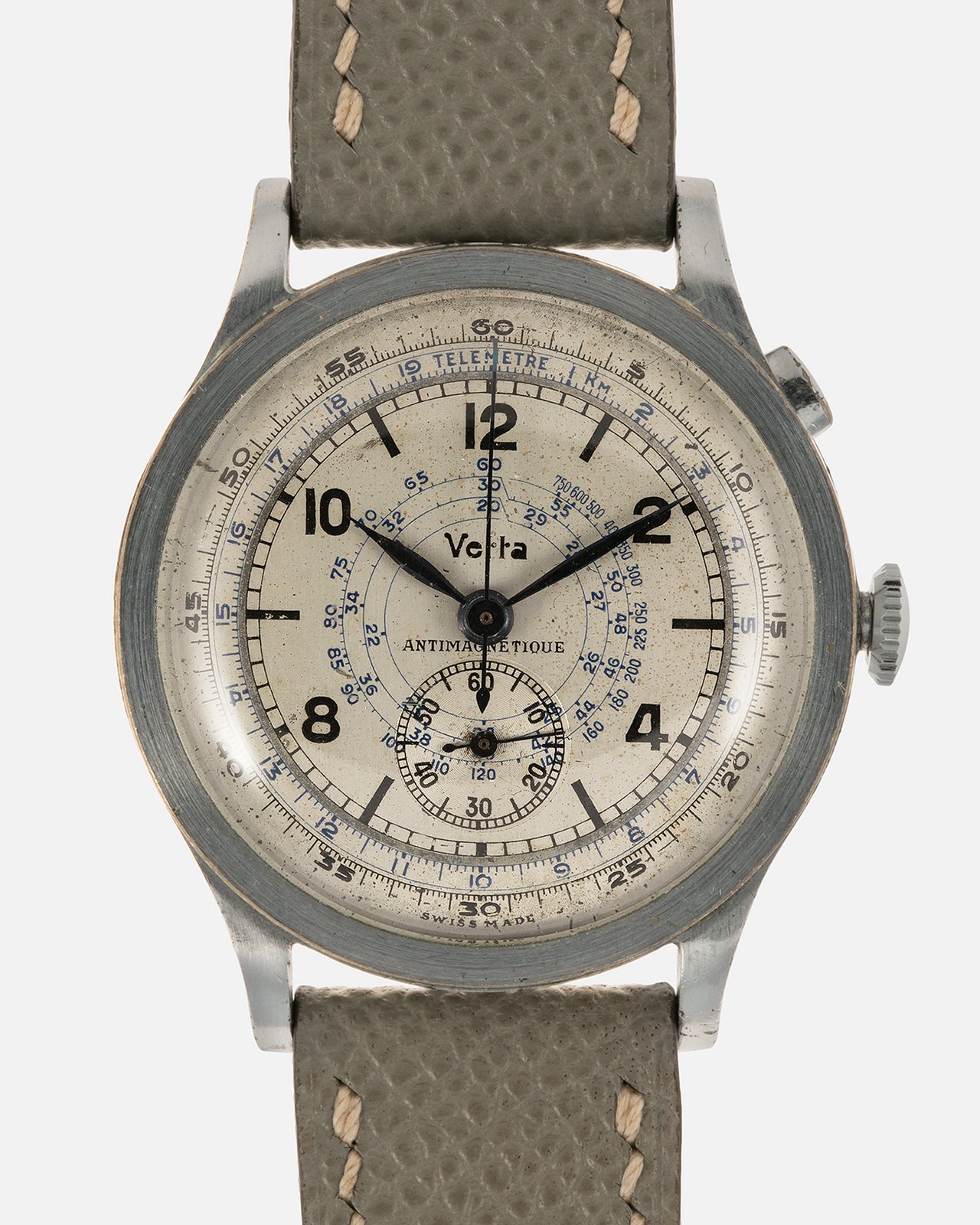
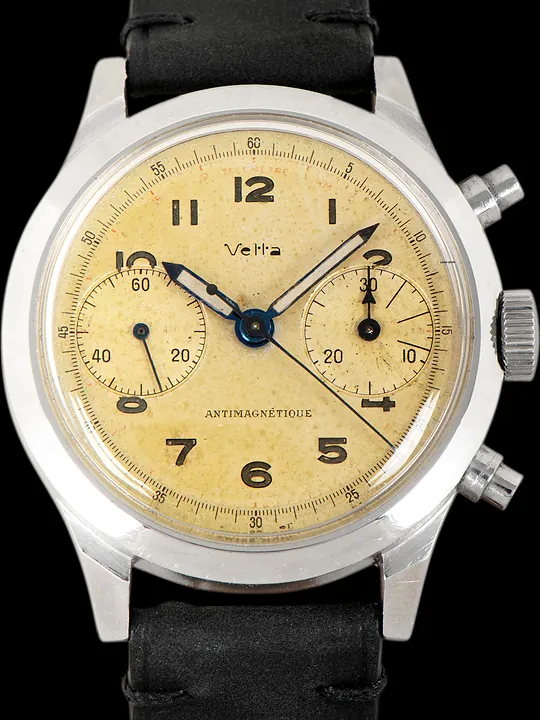
Vetta Monopusher Chronograph Sector Dial, 1930s
- Maker / attribution
- Vetta (maker)
- Date
- 1930s
- Historical period
- Golden Age of Mechanical Watchmaking (1900 – 1945)
- Country of origin
- Unrecorded in source
- Object type
- Wristwatch
- Dimensions
- Case 37 mm
- Stock no.
- Product 7363750297687
- Credit line
- Dealer listing, S.Song Watches (product 7363750297687)
- Catalogue title (original)
- Vetta Monopusher Chronograph Sector Dial (English)
View the source record (dealer listing) ↗ (opens another website in a new tab)Suggest a correction
Record summary
Catalogued by S.Song Watches (dealer), Seattle (stock number Product 7363750297687), this is a wristwatch by Vetta, dated 1930s. The Atlas places it in the Golden Age of Mechanical Watchmaking period (1900 – 1945) of its Wristwatches collection. Recorded dimensions: Case 37 mm. The record is illustrated with 6 photographs.
Assembled from the source record's structured fields. Dates and attributions are given as the source states them; where a field is missing the Atlas leaves it blank rather than estimating.
Catalogue description
Dealer description — S.Song Watches
To be completely honest, vintage Vetta is a territory I've never explored in depth. But that’s the beauty of vintage watches, right? There's always more to discover. This Vetta monopusher chronograph is one such revelation for me. While I’ve always known that the brand made some interesting multi-scale chronographs in the past, seeing a rare example of a monopusher chronograph like this has been quite an eye-opener for me. For those unaware, Vetta was originally named ‘Wyler.’ The brand was known for producing timepieces with specially engineered components, such as the ‘Incaflex balance,’ which enhanced the shock resistance and overall durability of their movements. The name ‘Vetta’ emerged in the 1930s when Wyler began distributing watches in Italy under the name ‘Wyler-Vetta,’ later shortening it for marketing purposes. The watch features a well-proportioned 37mm x 12.5mm nickel-chrome, anti-magnetic case, which was considered quite substantial for its era. When viewed from the side, the case has a profile reminiscent of the edge of a coin. Thanks to its two pairs of slightly downturned lugs, it is also very wearable. The true highlight of this vintage piece is its stunning sector dial, which remains relatively well-preserved despite its age. This configuration is particularly intriguing, as it pairs beautifully with the intricate multi-scale chronograph layout. The dial is complemented by a set of blued steel hands and alternating numerals in the centre, creating a visually compelling combination. All in all, I really like how it looks and feels on my wrist. Despite its vintage styling, the case size and profile resemble some of the modern case designs we see today, making it quite wearable by today’s standards. Eventually, like many other brands, the brand couldn't overcome the challenges of the quartz crisis and became just another name with a storied history that would change hands over time. While they do still produce watches today, their modern offerings are a far cry from what they once produced. That said, one thing remains clear: at almost 100 years old, this particularly rare example has withstood the test of time and is a handsome timepiece that provides a nostalgic glimpse into the brand's glory days. It's no wonder collectors often prefer Vetta's offerings over those of its parent company—the vibrant dial colours, intricate multi-scales, and overall design come together beautifully.
Historical context
Golden Age of Mechanical Watchmaking (1900 – 1945)
The wristwatch displaces the pocket watch; waterproof cases, self-winding and grand complications.
The wristwatch overtook the pocket watch. Military use in the First World War, aviation, water-resistant cases (1926), automatic winding (1923–31), rectangular Art Deco designs and early chronographs and calendars defined the period.
Read the period in the timelineMore wristwatches from this periodEarlier: Industrial Revolution
Atlas type guide
Chronographs and split-seconds watches
A chronograph is a watch with an additional seconds hand that can be started, stopped and returned to zero independently of the timekeeping. Louis Moinet built an early example in 1816 and Nicolas Rieussec a recording 'chronographe' in 1821; Adolphe Nicole's heart-shaped reset cam (patented 1862) made the modern return-to-zero possible. Split-seconds (rattrapante) chronographs add a second hand that can be stopped for intermediate times; flyback chronographs restart instantly.
Chronographs were essential tools for doctors (pulsometer scales), artillery (telemeter), engineers and sport. In wristwatches, Valjoux, Venus, Lemania and later the automatic chronographs of 1969 (Zenith El Primero, the Chronomatic Calibre 11 group and Seiko 6139) are milestones.
What to look for
- Push-pieces on the case band or a single button in the crown (monopusher).
- Subsidiary registers for minutes and hours; tachymeter, telemeter or pulsometer scales.
- Column wheel versus cam control visible in the movement.
- Calibre markings of specialist makers (Valjoux, Lemania, Venus, Landeron).
Dating clues
- Pocket chronographs with heart cam reset: after 1862.
- Wrist chronographs: from c. 1910; two-button designs from the 1930s.
- Automatic chronographs: from 1969.
General guidance written by the Atlas editors about this kind of object. It is not a statement about this particular piece; for that, rely on the source record above and on physical examination.
Read next:Flyback chronographChronograph
Related records
Wristwatches · 1940s
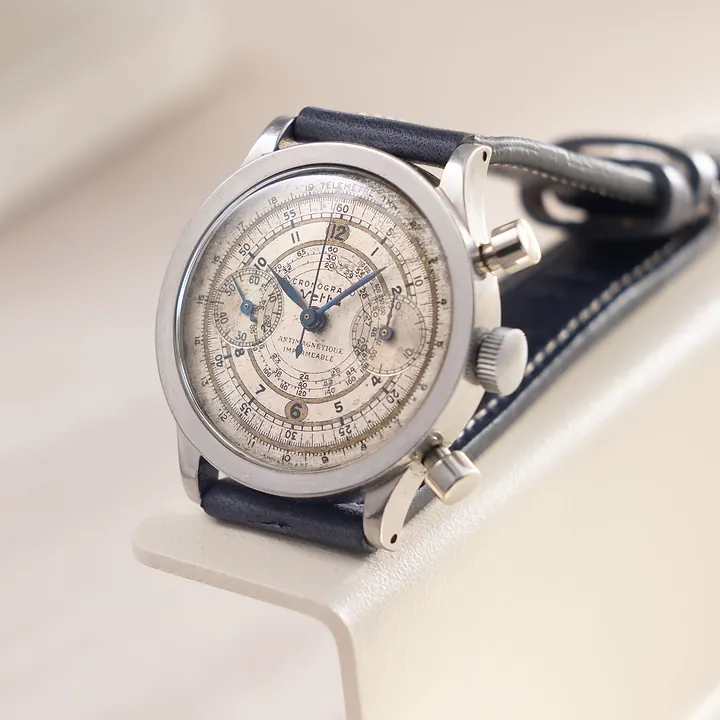
Vetta Oversized Chronograph Two-Tone Telemeter Dial First Series, 1940s
Bulang & Sons (dealer), Copenhagen
Wristwatches · 1940s
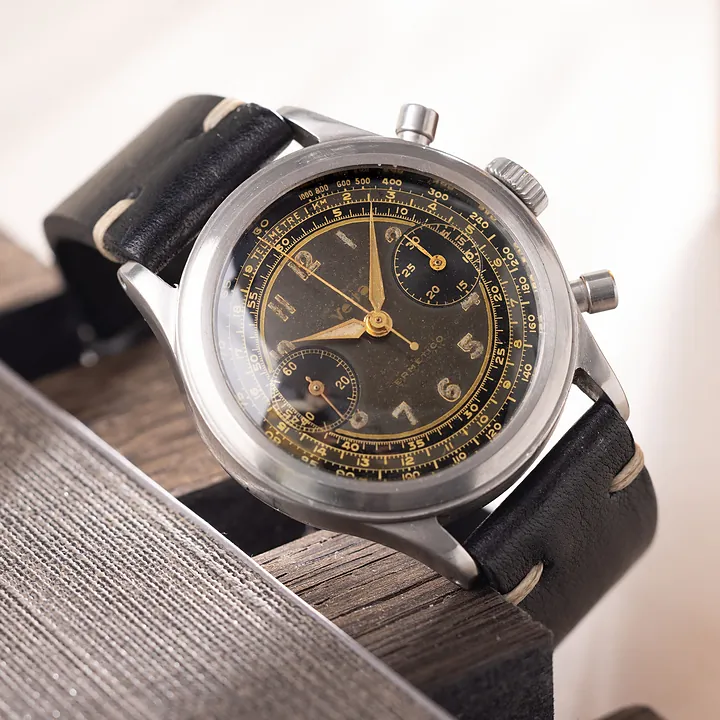
Vetta Ermetico Oversized Waterproof Chronograph Grey Dial Ref 5347, 1940s
Bulang & Sons (dealer), Copenhagen
Wristwatches · 1940s
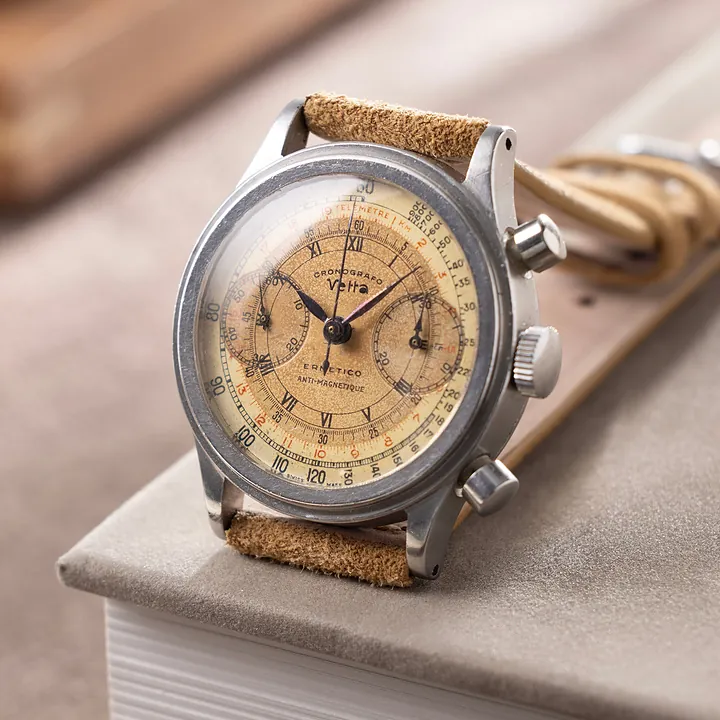
Vetta Ermetico Oversized Step Case Waterproof Chronograph, 1940s
Bulang & Sons (dealer), Copenhagen
Wristwatches · 1940s
Vetta Chronograph "Spillmann Case" W/ Reverse Pushers, 1940s
Craft & Tailored (dealer), Los Angeles
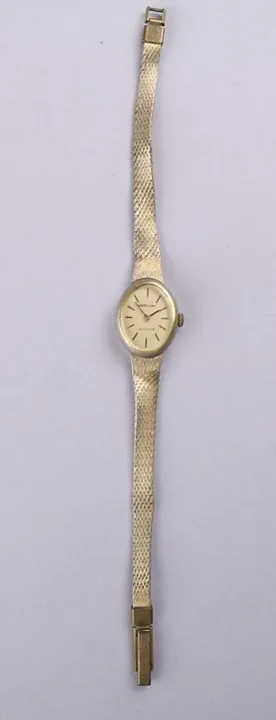
Wristwatches · 1900–1999
Wristwatch by Mercury, 1900–1999
Modemuseum Hasselt
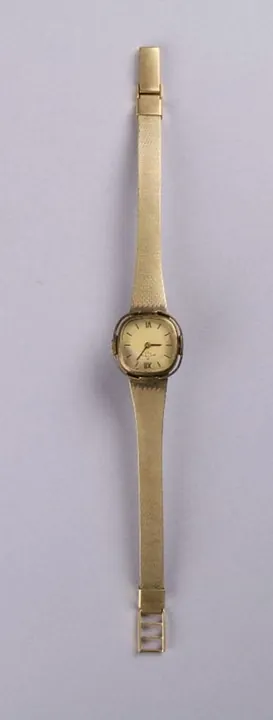
Wristwatches · 1900–1999
Wristwatch by Nutrix, 1900–1999
Modemuseum Hasselt
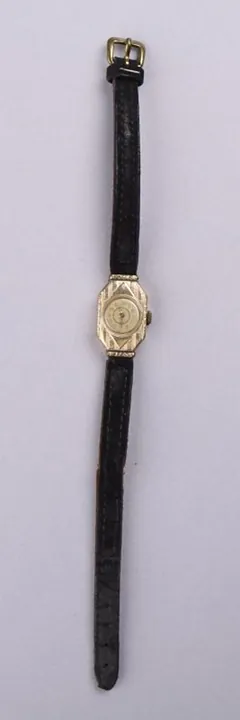
Wristwatches · 1920
Wristwatch, 1920
Modemuseum Hasselt

Wristwatches · 1931
Rolex 'Oyster Perpetual' rotor self-winding wrist-watch, lever escapement, in steel case with glass in back, Montres Rolex SA, Geneva, Switzerland, 1931
Science Museum Group, London