
Wristwatches · Wristwatch
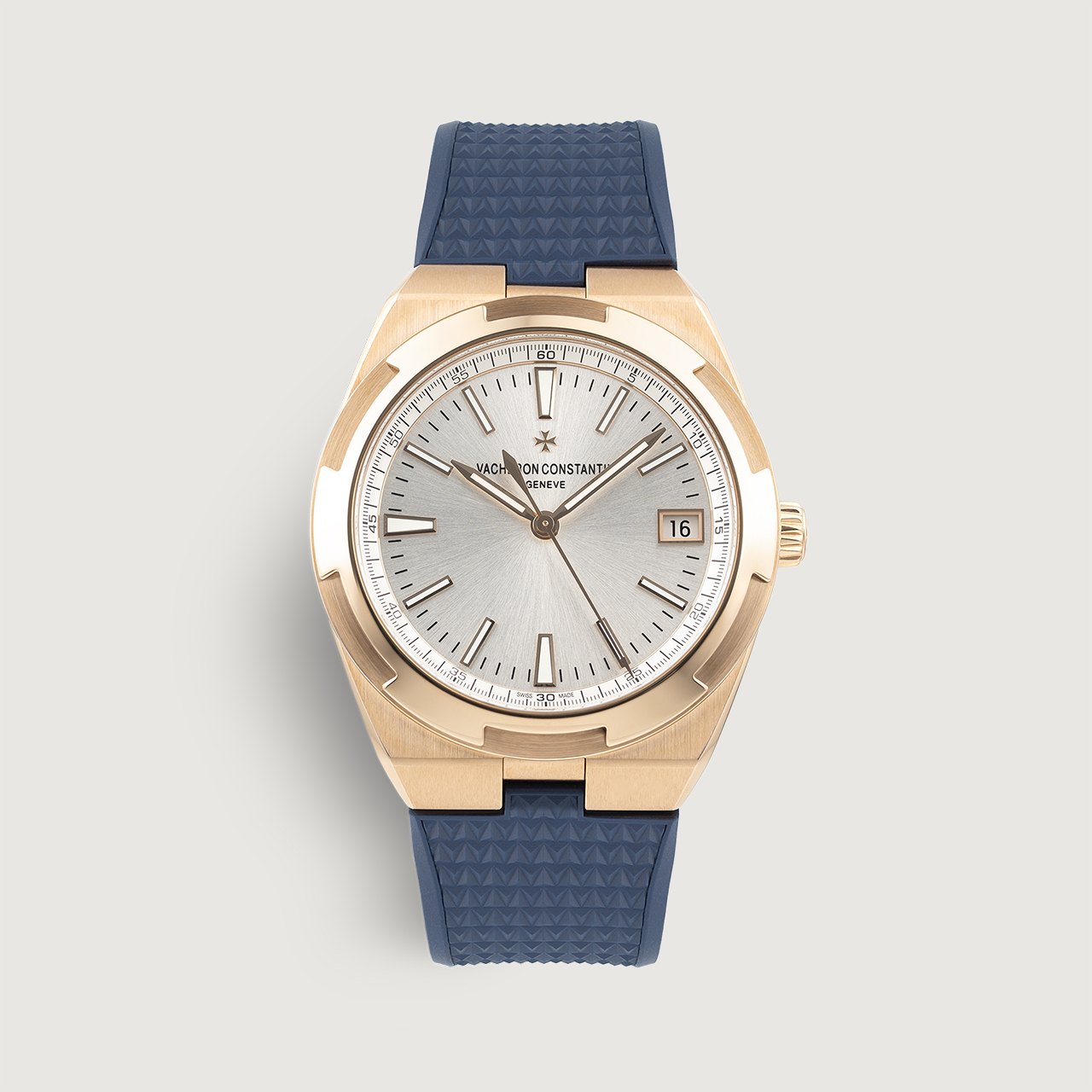
Vacheron Constantin Overseas, ref. 4500V, 2022
- Maker / attribution
- Vacheron Constantin (maker)
- Date
- 2022
- Historical period
- Contemporary Horology (2010 – Present)
- Country of origin
- Switzerland
- Object type
- Wristwatch
- Dimensions
- Diameter 41 mm
- Stock no.
- CUR2
- Credit line
- Dealer listing, Watches of Knightsbridge (CUR2)
- Catalogue title (original)
- Vacheron Constantin Overseas 4500V (English)
View the source record (dealer listing) ↗ (opens another website in a new tab)Suggest a correction
Record summary
Catalogued by Watches of Knightsbridge (dealer), London (stock number CUR2), this is a wristwatch by Vacheron Constantin, made in Switzerland, dated 2022. The Atlas places it in the Contemporary Horology period (2010 – Present) of its Wristwatches collection. Recorded dimensions: Diameter 41 mm. The record is illustrated with 6 photographs.
Assembled from the source record's structured fields. Dates and attributions are given as the source states them; where a field is missing the Atlas leaves it blank rather than estimating.
Catalogue description
Dealer description — Watches of Knightsbridge
Known as one of the “holy trinity” of luxury sports watch, the Vacheron Constantin Overseas competes with the Audemars Piguet Royal Oak and Patek Philippe Nautilus in terms of craftsmanship, quality, and engineering. The Overseas has always been a timepiece that wasn’t designed to be a sports watch but more of a casual/leisure, timepiece. Released in 1996 the Overseas was a revival of Vacheron’s first luxury sports watch: the 222 – made in honour to celebrate the brands 222nd anniversary in 1977. Of course, over the years the Overseas has evolved and is now in it 3rd and current evolution. This latest generation first debuted in 2016, featuring some aesthetic design elements from previous generations while also featuring contemporary niceties and luxuries that Vacheron has pioneered. The new design features flowing lines and delicate finishes, giving the new Overseas model a more seemingly timeless appearance but one that is still very modern. Featuring satin-brushed finishing along the majority of its 41mm x 11mm 18-carat pink-gold case which is overall excellent condition, the Overseas’ polished sides and Maltese cross bezel complete the iconic look. The rounded, polished and satin-finished opening dips towards a refined dial topped by a sapphire crystal glare-proofed on both sides. It features a silver sunburst dial with a date window at 6 o’clock. The screwed-down case back fitted with a sapphire crystal reveals cal. 5500 movement with a 22K gold oscillating weight adorned with a wind rose, a universal symbol indicating the cardinal points for travellers, and adorned with sandblasted, polished and finely grained finishes.
Specifications — Watches of Knightsbridge
Reference: 4500V; Movement: Self-Winding Calibre 5100; Case diameter: 41mm; Bracelet/strap: Vacheron Constantin Blue Rubber Strap /w Pink-Gold Deployant Buckle
Historical context
Contemporary Horology (2010 – Present)
Silicon components, connected watches, optical-lattice research clocks and a thriving independent scene.
Smartwatches became the world's best-selling watches, while mechanical watchmaking focuses on craft, innovation (silicon components, new escapements) and independent makers.
Read the period in the timelineMore wristwatches from this periodEarlier: Mechanical Renaissance
Atlas type guide
Wristwatches
Bracelet watches were worn by women from the early nineteenth century — Breguet made one for Caroline Murat, Queen of Naples, in 1810–12 — but the wristwatch only became a man's instrument with military use and aviation in the early twentieth century. Between the World Wars it overtook the pocket watch; the 1920s and 1930s brought rectangular Art Deco cases, water-resistant cases and the first automatic winding systems.
After 1945 the wristwatch became a carrier of identity — dress watches, sports and dive watches, chronographs, calendars — produced by Swiss, American, Japanese, German, Soviet and Chinese industries. The quartz revolution after 1969 and the mechanical renaissance since the 1990s, including the rise of independent watchmakers, complete the story.
What to look for
- The reference number (between the lugs or inside the case back) and serial number, the starting point for dating.
- The calibre: its maker and number are often stamped under the dial or on the bridge.
- Originality of dial, hands and crown — refinished ('redial') dials are common.
- Case material marks: 18K/750, 14K/585, stainless steel, gold-filled, plated.
Dating clues
- Wire-lug cases: before c. 1925.
- Water-resistant screw-down cases: from 1926.
- Quartz movements: from 1969; sapphire crystals widespread after c. 1980.
General guidance written by the Atlas editors about this kind of object. It is not a statement about this particular piece; for that, rely on the source record above and on physical examination.
Related records
Pocket Watches · c. 1896
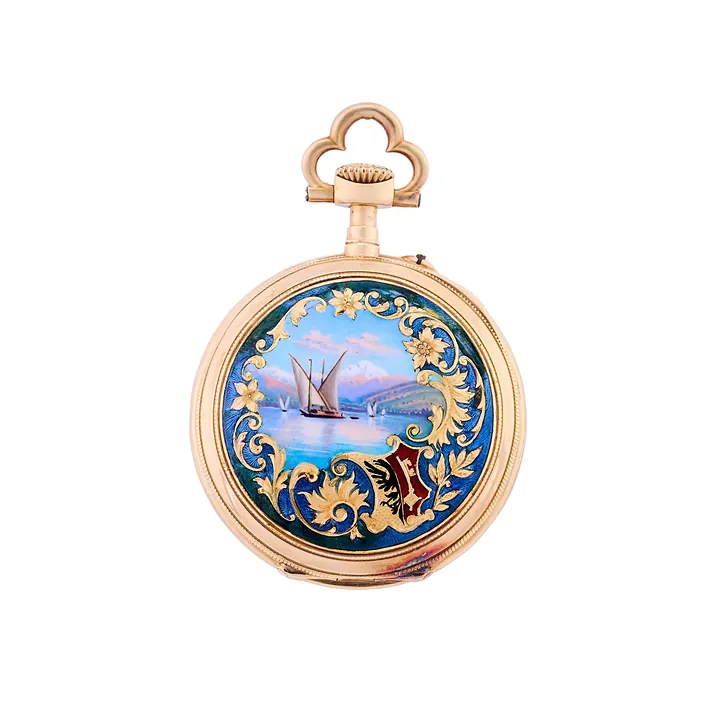
Vacheron Constantin “grand TIR de L’exposition Nationale, Genève 1896, c. 1896
Antiquorum auction archive, Geneva
Pocket Watches · c. 1940
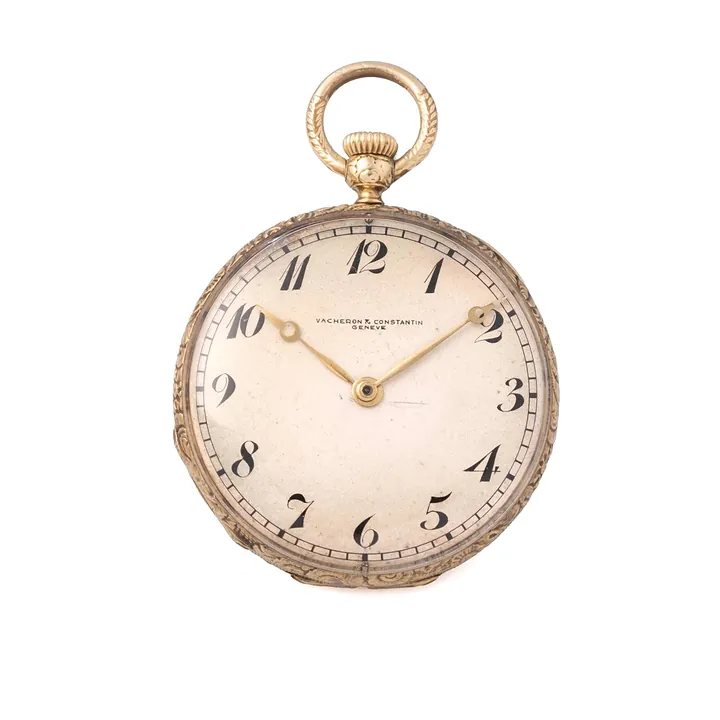
Vacheron Constantin pocket watch, ref. 345, c. 1940
Antiquorum auction archive, Geneva
Pocket Watches · c. 1945
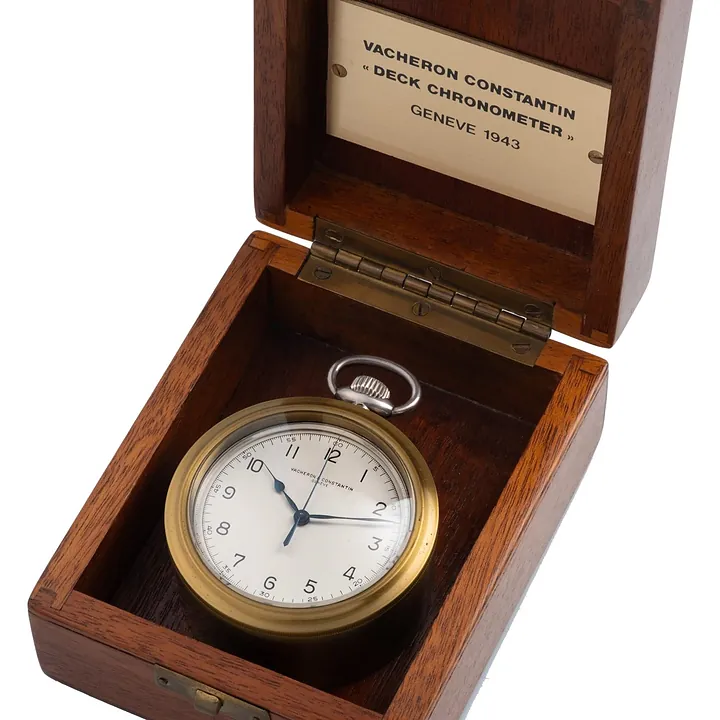
Vacheron Constantin pocket chronometer, c. 1945
Antiquorum auction archive, Geneva
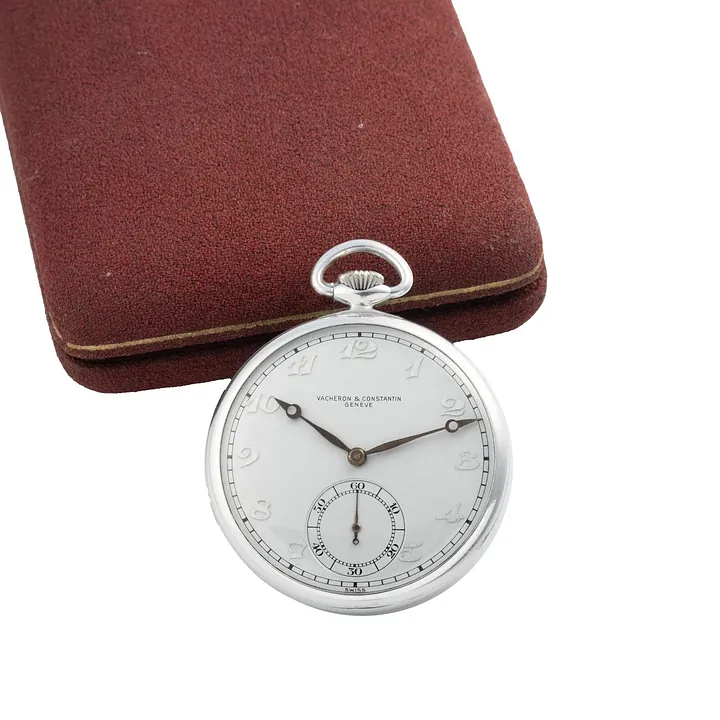
Pocket Watches · c. 1945
Vacheron Constantin watch, c. 1945
Antiquorum auction archive, Geneva

Wristwatches · c. 2010s
Breguet Type XXI, ref. 3810, c. 2010s (Antiquorum Lot 381-24)
Antiquorum auction archive, Geneva

Wristwatches · c. 2010s
Breguet Type XXI, ref. 3810, c. 2010s (Antiquorum Lot 386-229)
Antiquorum auction archive, Geneva

Wristwatches · Sold in September 2010
Breitling Cosmonaute, ref. A 22322, Sold in September 2010
Antiquorum auction archive, Geneva

Wristwatches · c. 2010
Corum Bubble Chrono, ref. 396.150.20, c. 2010
Antiquorum auction archive, Geneva