
Wristwatches · Wristwatch
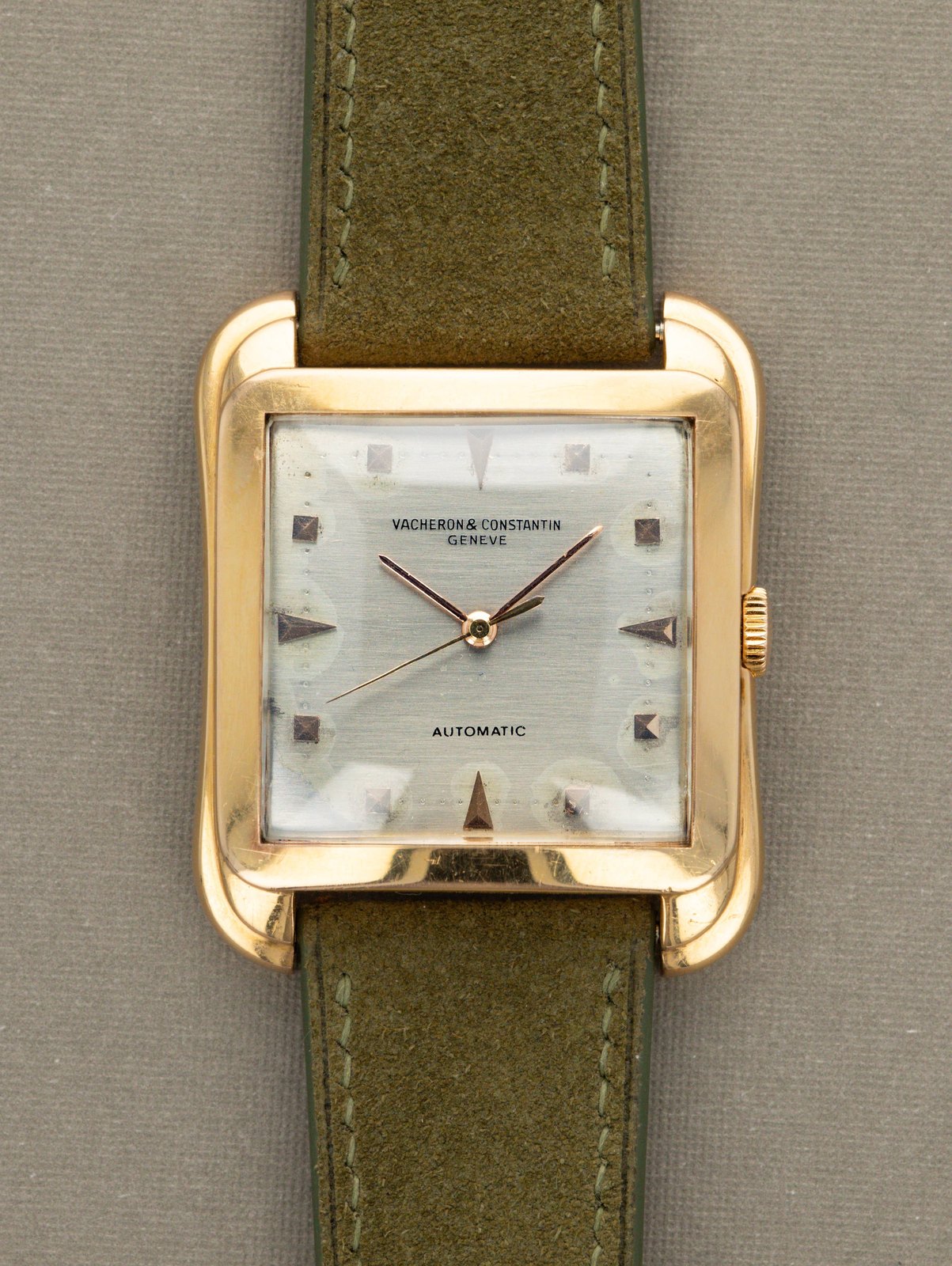
Vacheron Constantin 'Cioccolatone' Dress Watch, 'Jumbo' Automatic
- Maker / attribution
- Vacheron Constantin (maker)
- Date
- c. 1950s
- Historical period
- Modern Mechanical Horology (1945 – 1969)
- Country of origin
- Switzerland
- Object type
- Wristwatch
- Dimensions
- Case 35 mm
- Stock no.
- OC2735
- Credit line
- Dealer listing, Oliver & Clarke (OC2735)
- Catalogue title (original)
- Vacheron Constantin 'Cioccolatone' Dress Watch - 'Jumbo' Automatic (English)
View the source record (dealer listing) ↗ (opens another website in a new tab)Suggest a correction
Record summary
Catalogued by Oliver & Clarke (dealer), United Kingdom (stock number OC2735), this is a wristwatch by Vacheron Constantin, made in Switzerland, dated c. 1950s. The Atlas places it in the Modern Mechanical Horology period (1945 – 1969) of its Wristwatches collection. Recorded dimensions: Case 35 mm. The record is illustrated with 6 photographs.
Assembled from the source record's structured fields. Dates and attributions are given as the source states them; where a field is missing the Atlas leaves it blank rather than estimating.
Catalogue description
Dealer description — Oliver & Clarke
Vacheron Constantin can trace its roots back to 1755 and along with only a handful of other brands, is credited as one of the oldest manufacturers of mechanical clocks, pocket-watches, and of course, watches. In fact, Vacheron enjoys the prestige as the oldest continually operating manufacturer that still operates today. Vacheron is also a member of what has become known as The Holy Trinity , along with Patek Philippe and Audemars Piguet. All three of these manufactures have very different identities and focus areas within the industry, with VC generally regarded as the technical innovator. And despite a bevy of both technical and mechanical firsts, including the most complicated watch ever at the time of writing this, VC remains the lesser known name of the three in the broader watch community and certainly least understood. The piece that we have here dates to circa 1950s and is known to collectors as a 'Cioccolatone' for its unique shape, this 'stepped' case yellow gold dress watch comes in at approximately 35mm x 43mm — a simply massive size for the era! It's unique rounded-rectangular case retains defined bevels and correct finishing throughout and shows normal signs of wear for its age. The crown at the 3 o'clock position is partially recessed and matches the case nicely. Inside, it's Vacheron-ness continues, with an incredibly dynamic dial. Silver in color, it features a horizontally 'brushed' finishing with applied 'stud' and 'dart' indices and a matching 'pencil' handset. Furthermore, this eccentric piece is powered by Vacheron's very first automatic-winding movement: the Calibre 477/1 with a 'bumper' mechanism. This piece is quintessentially mid-century Vacheron: heavy on details and beautiful execution. The small details on the dial and intricacies of the case require a closer look to really be appreciated, and lets be honest, that is exactly what Swiss watchmaking is all about.
Historical context
Modern Mechanical Horology (1945 – 1969)
Tool watches for divers, pilots and astronauts; electric watches anticipate the electronic age.
The classic era of the mechanical wristwatch: dive watches, chronographs for motor racing and space flight, GMT watches for jet travel, slim dress watches, automatic calendars, and the rise of Japanese manufacturers alongside Swiss, American, German and Soviet industries.
Read the period in the timelineMore wristwatches from this periodEarlier: Golden Age of Mechanical Watchmaking
Atlas type guide
Automatic (self-winding) watches
Self-winding watches use the wearer's motion to wind the mainspring. Abraham-Louis Perrelet and Breguet made 'perpétuelle' pocket watches with oscillating weights in the late eighteenth century, but the principle only became practical in the wristwatch. John Harwood patented a bumper automatic in 1923; Rolex's Perpetual rotor (1931) winding in one direction, and later bidirectional rotors (Eterna, Felsa Bidynator), established the modern form. Micro-rotors (Universal Genève, Buren) and peripheral rotors made automatic watches thinner.
What to look for
- A semicircular rotor turning 360° over the movement, or a 'bumper' weight that rebounds between springs.
- 'Automatic', 'Perpetual' or 'Self-winding' on the dial.
- A sealed screw-back case, since automatic watches are wound less often by the crown.
Dating clues
- Bumper automatics: 1923–c. 1955.
- Full rotors: from 1931 (Rolex); widespread after c. 1950.
- Micro-rotors: from 1954–1958.
General guidance written by the Atlas editors about this kind of object. It is not a statement about this particular piece; for that, rely on the source record above and on physical examination.
Related records
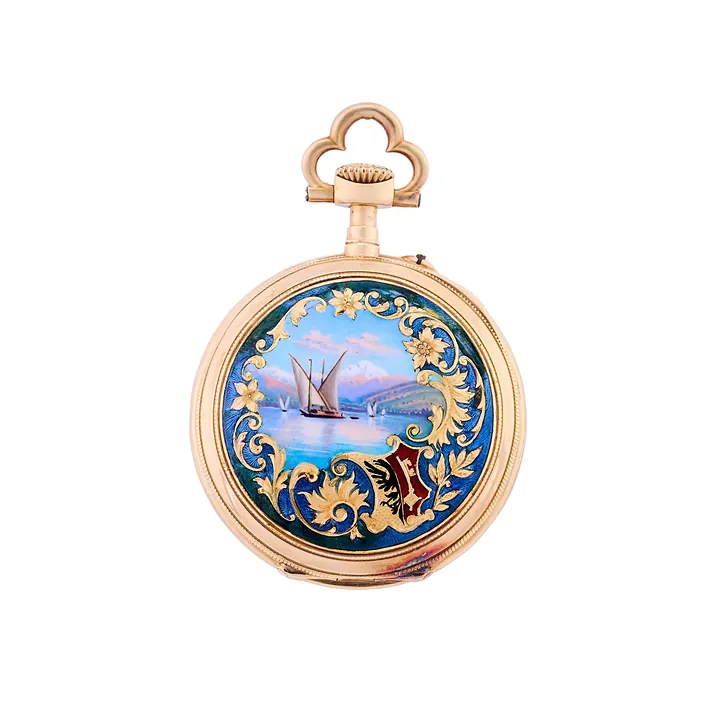
Pocket Watches · c. 1896
Vacheron Constantin “grand TIR de L’exposition Nationale, Genève 1896, c. 1896
Antiquorum auction archive, Geneva
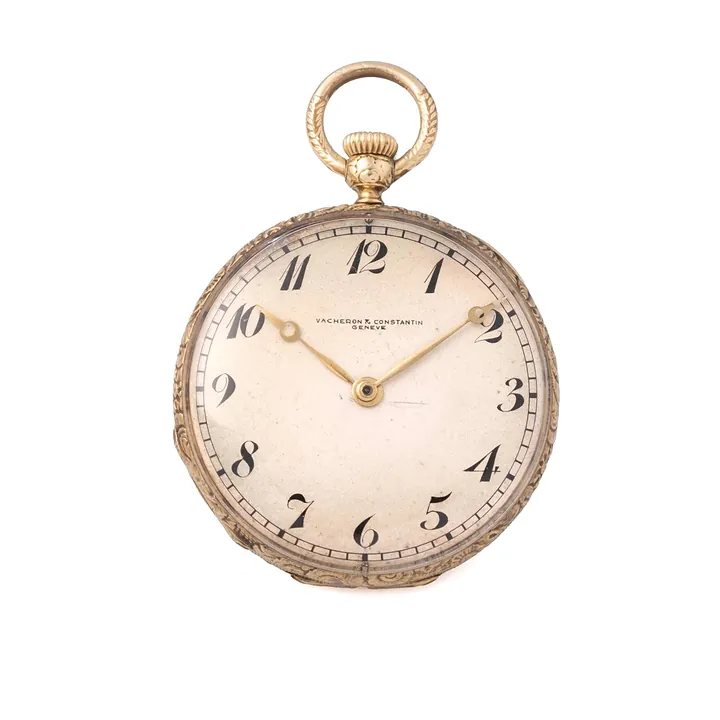
Pocket Watches · c. 1940
Vacheron Constantin pocket watch, ref. 345, c. 1940
Antiquorum auction archive, Geneva
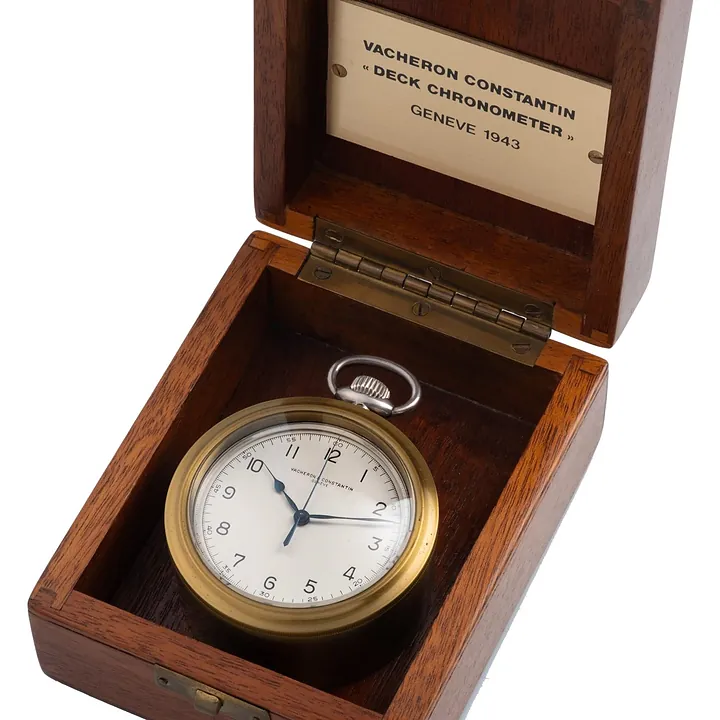
Pocket Watches · c. 1945
Vacheron Constantin pocket chronometer, c. 1945
Antiquorum auction archive, Geneva
Pocket Watches · c. 1945
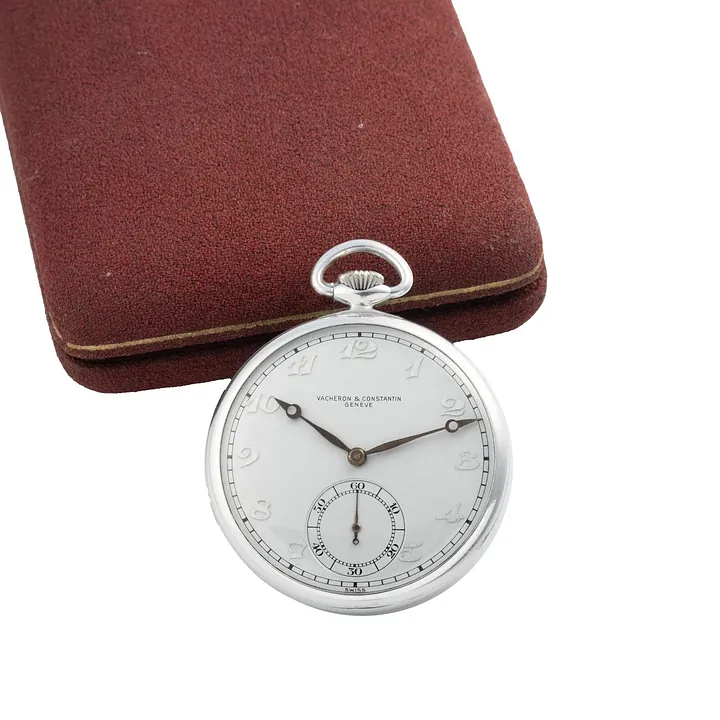
Vacheron Constantin watch, c. 1945
Antiquorum auction archive, Geneva

Wristwatches · 1945
Wristwatch by Eterna, 1945
Museum Rotterdam

Wristwatches · c. 1945
Breitling Premier, ref. 790, c. 1945
Antiquorum auction archive, Geneva

Wristwatches · c. 1945
Universal Genève Uni-Compax, ref. 22492, c. 1945
Antiquorum auction archive, Geneva

Wristwatches · c. 1950s
Baume & Mercier wristwatch, c. 1950s
Antiquorum auction archive, Geneva