
Wristwatches · Wristwatch
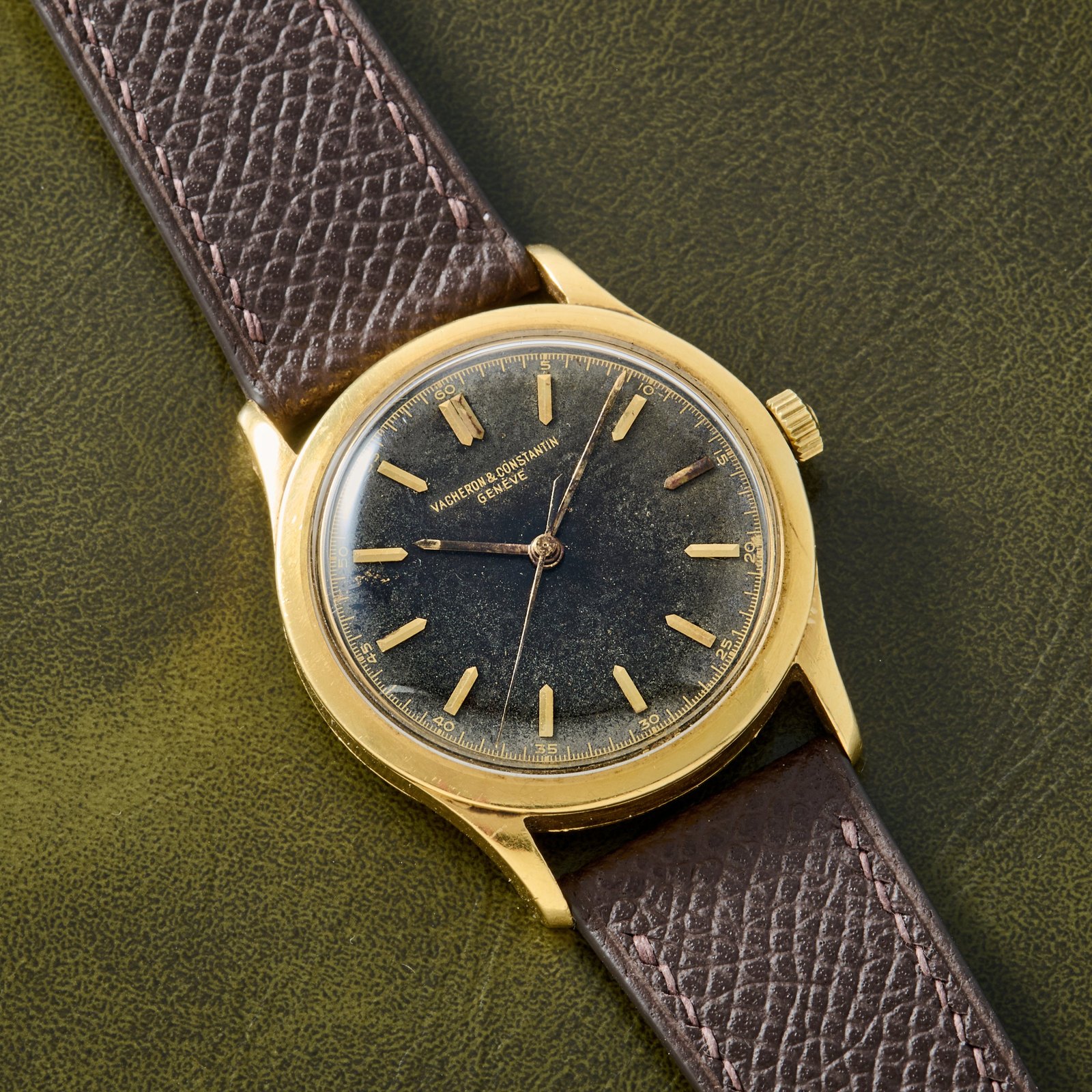
Vacheron Constantin 'Calatrava', 1950s
- Maker / attribution
- Vacheron Constantin (maker)
- Date
- 1950s
- Historical period
- Modern Mechanical Horology (1945 – 1969)
- Country of origin
- Switzerland
- Object type
- Wristwatch
- Stock no.
- 40992786
- Credit line
- Dealer listing, Analog/Shift (40992786)
- Catalogue title (original)
- Vacheron Constantin 'Calatrava' (English)
View the source record (dealer listing) ↗ (opens another website in a new tab)Suggest a correction
Record summary
Catalogued by Analog/Shift (dealer), New York (stock number 40992786), this is a wristwatch by Vacheron Constantin, made in Switzerland, dated 1950s. The Atlas places it in the Modern Mechanical Horology period (1945 – 1969) of its Wristwatches collection. The record is illustrated with 6 photographs.
Assembled from the source record's structured fields. Dates and attributions are given as the source states them; where a field is missing the Atlas leaves it blank rather than estimating.
Catalogue description
Dealer description — Analog/Shift
Simple doesn’t have to mean boring—and this vintage Vacheron Constantin Genève is a masterclass in understatement done right. As one third of the so-called Holy Trinity of Swiss watchmaking, Vacheron Constantin has long operated with a quieter confidence than its peers. While the brand is rightly celebrated for ultra-high complications, its mid-century time-only watches may be its most honest expression of taste: impeccably proportioned, beautifully finished, and utterly uninterested in shouting for attention. This example, dating to the 1950s–60s, captures that spirit perfectly. Housed in a warm yellow gold case with elegant lugs and a gently domed acrylic crystal, it wears exactly as a proper dress watch should—slim, discreet, and balanced on the wrist. The black dial shows honest vintage character, with applied gold indices, a matching handset, and the restrained Genève signature quietly reinforcing its pedigree. Nothing extra, nothing missing. The name, coloration, and patina indicate that this watch has STYLE. Inside beats a Vacheron Constantin automatic caliber, finished to the manufacture’s exacting mid-century standards. Slim, refined, and mechanically elegant, it represents the moment when automatic winding was becoming the norm for everyday luxury watches—without sacrificing finesse. Smooth in operation and built for longevity, it’s the kind of movement that quietly reinforces why Vacheron has long belonged at the very top of Swiss watchmaking. Fitted to a simple grey leather strap that lets the watch speak for itself, this is a piece for someone who’s already past the logo-driven phase of collecting. Elegant without being precious, historic without being fragile, and endlessly wearable. A true insider’s dress watch from one of the greatest names in horology—and one that proves restraint is often the most luxurious choice of all.
Historical context
Modern Mechanical Horology (1945 – 1969)
Tool watches for divers, pilots and astronauts; electric watches anticipate the electronic age.
The classic era of the mechanical wristwatch: dive watches, chronographs for motor racing and space flight, GMT watches for jet travel, slim dress watches, automatic calendars, and the rise of Japanese manufacturers alongside Swiss, American, German and Soviet industries.
Read the period in the timelineMore wristwatches from this periodEarlier: Golden Age of Mechanical Watchmaking
Atlas type guide
Wristwatches
Bracelet watches were worn by women from the early nineteenth century — Breguet made one for Caroline Murat, Queen of Naples, in 1810–12 — but the wristwatch only became a man's instrument with military use and aviation in the early twentieth century. Between the World Wars it overtook the pocket watch; the 1920s and 1930s brought rectangular Art Deco cases, water-resistant cases and the first automatic winding systems.
After 1945 the wristwatch became a carrier of identity — dress watches, sports and dive watches, chronographs, calendars — produced by Swiss, American, Japanese, German, Soviet and Chinese industries. The quartz revolution after 1969 and the mechanical renaissance since the 1990s, including the rise of independent watchmakers, complete the story.
What to look for
- The reference number (between the lugs or inside the case back) and serial number, the starting point for dating.
- The calibre: its maker and number are often stamped under the dial or on the bridge.
- Originality of dial, hands and crown — refinished ('redial') dials are common.
- Case material marks: 18K/750, 14K/585, stainless steel, gold-filled, plated.
Dating clues
- Wire-lug cases: before c. 1925.
- Water-resistant screw-down cases: from 1926.
- Quartz movements: from 1969; sapphire crystals widespread after c. 1980.
General guidance written by the Atlas editors about this kind of object. It is not a statement about this particular piece; for that, rely on the source record above and on physical examination.
Related records
Pocket Watches · c. 1896
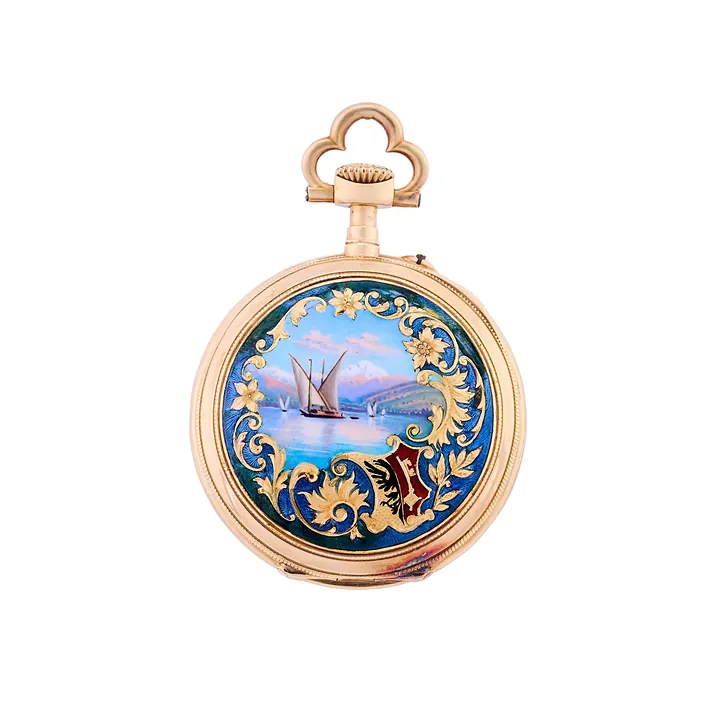
Vacheron Constantin “grand TIR de L’exposition Nationale, Genève 1896, c. 1896
Antiquorum auction archive, Geneva
Pocket Watches · c. 1940
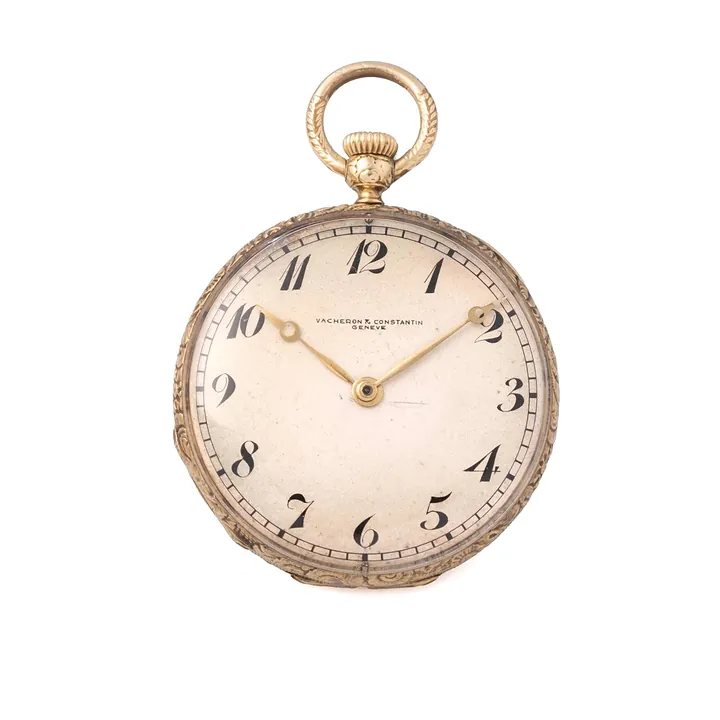
Vacheron Constantin pocket watch, ref. 345, c. 1940
Antiquorum auction archive, Geneva
Pocket Watches · c. 1945
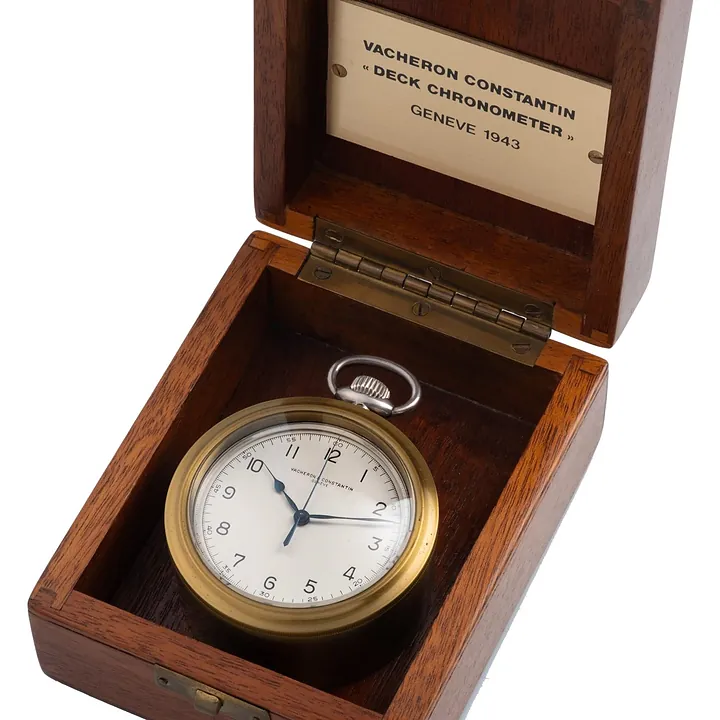
Vacheron Constantin pocket chronometer, c. 1945
Antiquorum auction archive, Geneva
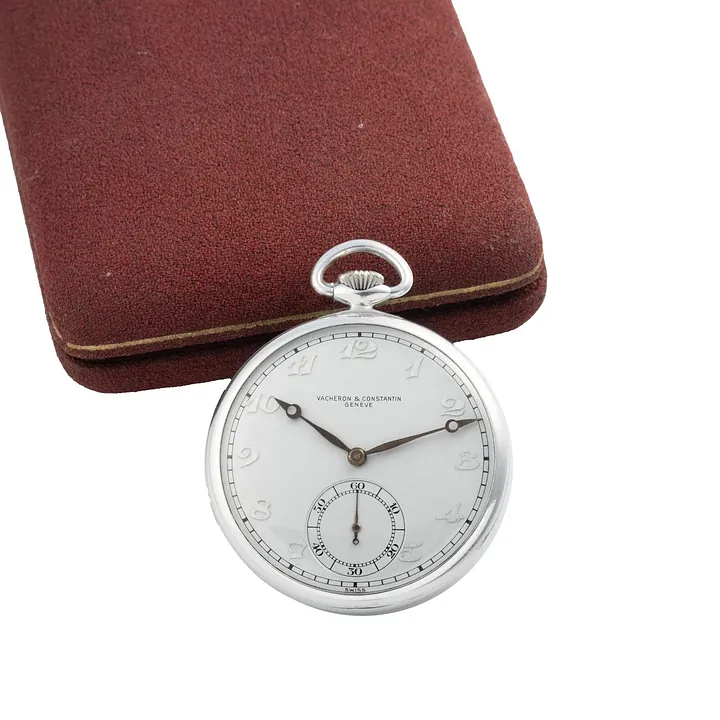
Pocket Watches · c. 1945
Vacheron Constantin watch, c. 1945
Antiquorum auction archive, Geneva

Wristwatches · 1945
Wristwatch by Eterna, 1945
Museum Rotterdam

Wristwatches · c. 1945
Breitling Premier, ref. 790, c. 1945
Antiquorum auction archive, Geneva

Wristwatches · c. 1945
Universal Genève Uni-Compax, ref. 22492, c. 1945
Antiquorum auction archive, Geneva

Wristwatches · c. 1950s
Baume & Mercier wristwatch, c. 1950s
Antiquorum auction archive, Geneva