
Wristwatches · Wristwatch
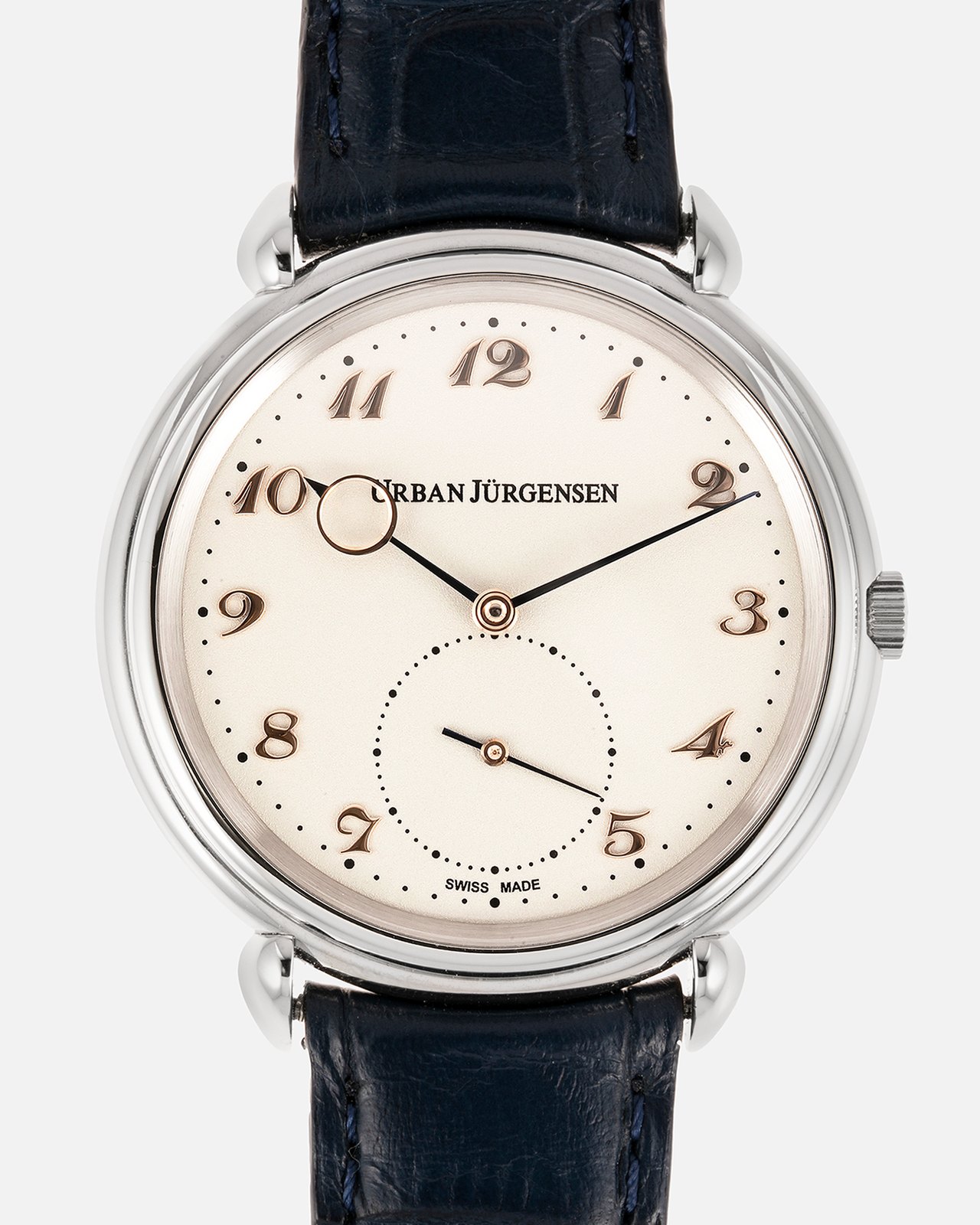
Urban Jurgensen Big 8 'Japan Edition', 2020
- Maker / attribution
- Urban Jürgensen (maker)
- Date
- 2020
- Historical period
- Contemporary Horology (2010 – Present)
- Country of origin
- Japan
- Object type
- Wristwatch
- Dimensions
- Case 40 mm
- Stock no.
- Product 6799312060503
- Credit line
- Dealer listing, S.Song Watches (product 6799312060503)
- Catalogue title (original)
- Urban Jurgensen Big 8 'Japan Edition' (English)
View the source record (dealer listing) ↗ (opens another website in a new tab)Suggest a correction
Record summary
Catalogued by S.Song Watches (dealer), Seattle (stock number Product 6799312060503), this is a wristwatch by Urban Jürgensen, made in Japan, dated 2020. The Atlas places it in the Contemporary Horology period (2010 – Present) of its Wristwatches collection. Recorded dimensions: Case 40 mm. The record is illustrated with 6 photographs.
Assembled from the source record's structured fields. Dates and attributions are given as the source states them; where a field is missing the Atlas leaves it blank rather than estimating.
Catalogue description
Dealer description — S.Song Watches
A deeply respected name in the world of watchmaking, Urban Jürgensen traces its roots back as far as 1773. While the brand is filled with historical prestige, mystique and wonder, its modern counterpart arose in the late 1970s when the legendary Peter Baumberger was permitted to sign his watches as Jürgensen & Sønner, later going on to buy the brand in 1985 and develop it into the brand as we know today. Made of stainless steel, the Big 8 Japan Edition swaps Urban Jürgensen Big 8's typical precious metal case design in lieu of a modern, and frankly, more desirable stainless steel construction. Featuring beautifully soldered-on teardrop lugs and a stunning stepped bezel design, the Big 8's 40mm round case speaks to Urban Jürgensen's classically vintage-inspired design language and aesthetic whilst maintaining an approachable case size for modern wrists. Perhaps the most striking aspect of its overall design, the Big 8 Japan Edition features a stunning silver grenage dial (or g rené dial), which is one of Urban Jürgensen ’s dial-making specialties. Grenage dials originate from the late 1800s, however, this technique is rarely utilized these days in watchmaking, or should I say, it is rarely used in the way Urban Jürgensen does. This is due to the fact that there are much more technically efficient techniques today that can be used to achieve a similar result. That being said, the end result we see here is a dial that looks discreetly elegant and reveals a lot of detail upon closer inspection. In my books, that alone makes the watch so much more desirable and collectible. Either way, the Big 8 Japan edition is packed full of character and authenticity- it features a unique combination of several design elements that makes the Big 8 special. The beautiful observatory-styled hands are meticulously heat-blued, turned, and polished by hand. Additionally, there is a hand-pressed gold ring at the tip of the steel hour hand for added legibility. Along the outer perimeter of the dial, you will also find Breguet-styled numerals which lends the watch a touch of elegance and distinctiveness. All things considered, this dial is very balanced looking with a fascinating blend of textures and impeccable craftsmanship – all signatures of a high-end watchmaker that obsessively cares about their watches. Powered by the Frederic Piguet cal. 1160, the Big 8 Japan edition maintains a relatively slim 10.5mm case thickness and a fantastic exhibition of fine watchmaking through its sapphire caseback. Featuring a 21-carat yellow gold winding rotor and high-end finishing throughout, this movement beats away at 28,800 beats per hour and 48 hours of power reserve. One thing to point out, which I usually wouldn’t do, is just how fantastic Urban Jürgensen's packaging is. Usually, it is all about the watches, but it must be said that the brand has hit the mark when it comes to how they present their watches. With a beautifully finished inner wooden lacquer box that is reminiscent of the independent revolution of the ’90s (Think Dubuis, Roth, Journe, etc.) and an outer cardboard box with a beautiful ink splatter pattern accented by hints of gold leaf, everything from the color profile to the box size and materials used are just spot on. Modern watch packaging can get so boring and at times tacky- it is lovely to see that Urban Jürgensen cares where most others won’t. I’ll let the photos do the talking. Bravo. Ultimately, this Big 8 Japan edition from Urban Jürgensen is a work of art. I have to say though, Urban Jürgensen's watches are somewhat on a very different playing field in comparison to many other independent watchmakers- they emanate a very mysterious yet unique aura that seems invisible to many but greatly appreciated by true watch aficionados and connoisseurs alike.
Historical context
Contemporary Horology (2010 – Present)
Silicon components, connected watches, optical-lattice research clocks and a thriving independent scene.
Smartwatches became the world's best-selling watches, while mechanical watchmaking focuses on craft, innovation (silicon components, new escapements) and independent makers.
Read the period in the timelineMore wristwatches from this periodEarlier: Mechanical Renaissance
Atlas type guide
Wristwatches
Bracelet watches were worn by women from the early nineteenth century — Breguet made one for Caroline Murat, Queen of Naples, in 1810–12 — but the wristwatch only became a man's instrument with military use and aviation in the early twentieth century. Between the World Wars it overtook the pocket watch; the 1920s and 1930s brought rectangular Art Deco cases, water-resistant cases and the first automatic winding systems.
After 1945 the wristwatch became a carrier of identity — dress watches, sports and dive watches, chronographs, calendars — produced by Swiss, American, Japanese, German, Soviet and Chinese industries. The quartz revolution after 1969 and the mechanical renaissance since the 1990s, including the rise of independent watchmakers, complete the story.
What to look for
- The reference number (between the lugs or inside the case back) and serial number, the starting point for dating.
- The calibre: its maker and number are often stamped under the dial or on the bridge.
- Originality of dial, hands and crown — refinished ('redial') dials are common.
- Case material marks: 18K/750, 14K/585, stainless steel, gold-filled, plated.
Dating clues
- Wire-lug cases: before c. 1925.
- Water-resistant screw-down cases: from 1926.
- Quartz movements: from 1969; sapphire crystals widespread after c. 1980.
General guidance written by the Atlas editors about this kind of object. It is not a statement about this particular piece; for that, rely on the source record above and on physical examination.
Related records
Wristwatches · c. 1999
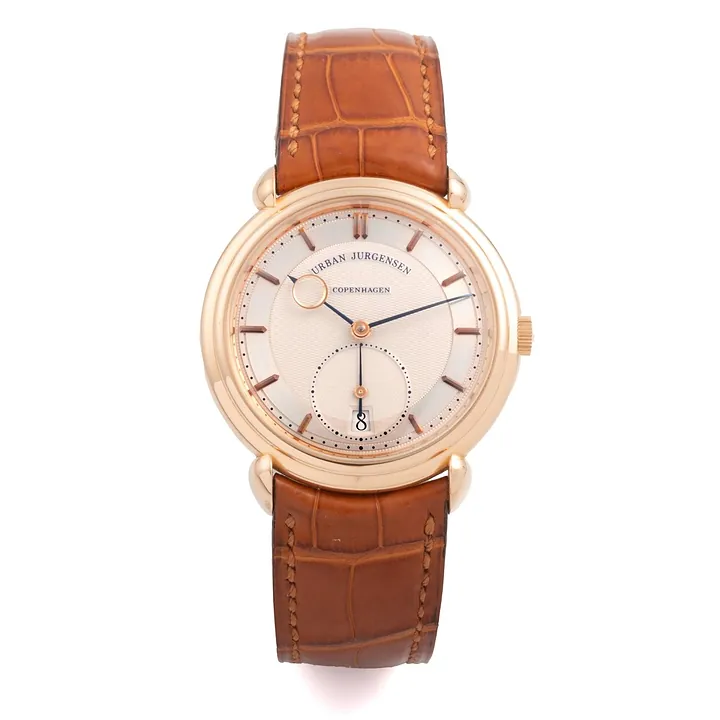
Urban Jürgensen wristwatch, ref. 8, c. 1999
Antiquorum auction archive, Geneva
Pocket Watches · c. 1810-1820
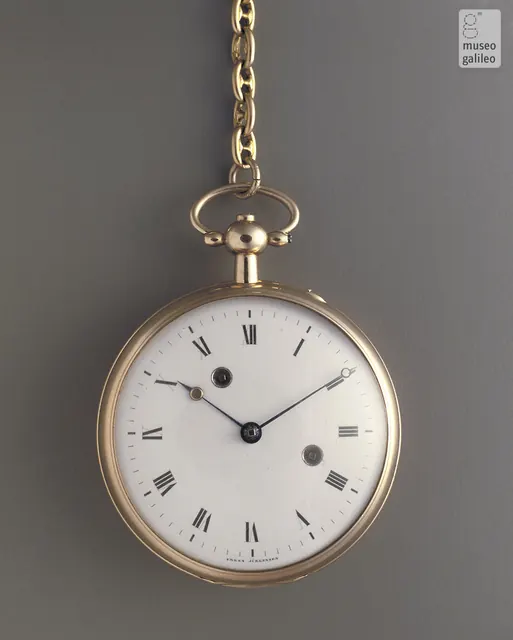
Watch by Urban Jürgensen, c. 1810-1820
Museo Galileo, Florence
Wristwatches · 2020
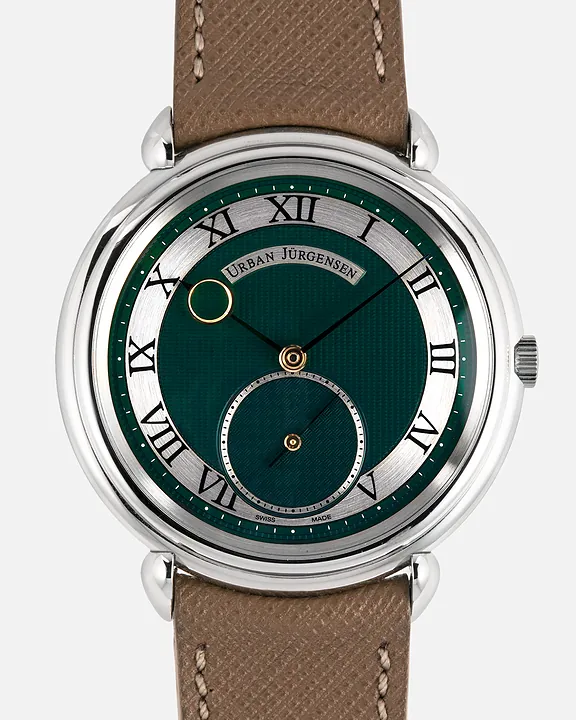
Urban Jurgensen Big 8 London Edition, 2020
S.Song Watches (dealer), Seattle
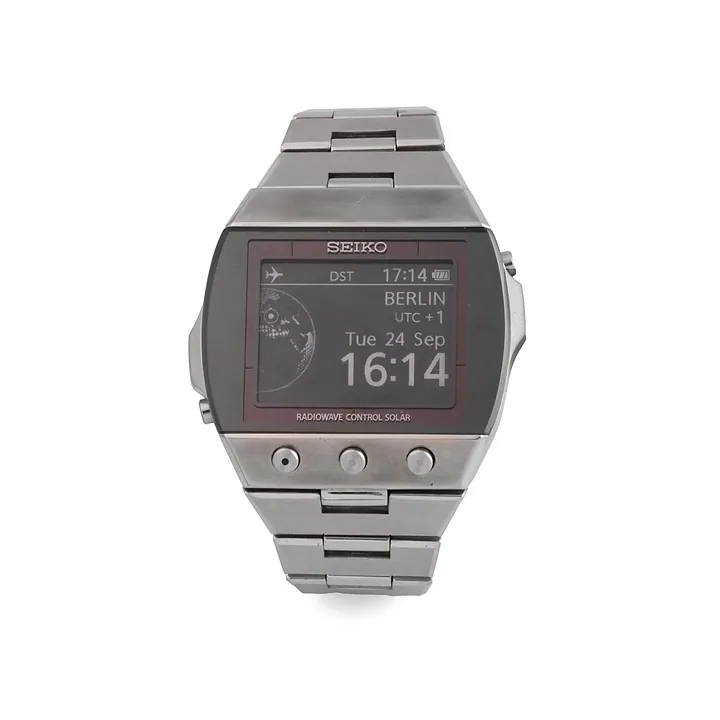
Wristwatches · Sold in 2011
Seiko Brights Spirit, ref. S770, Sold in 2011
Antiquorum auction archive, Geneva
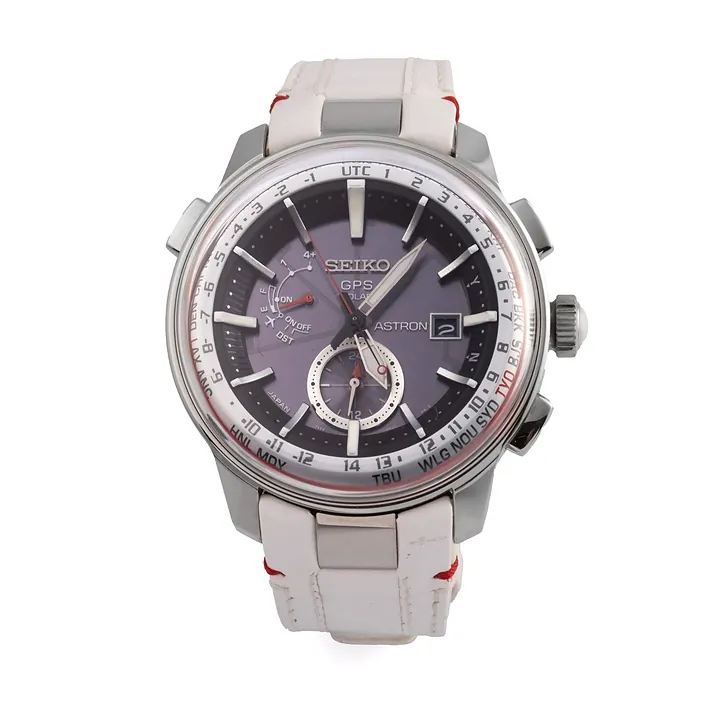
Wristwatches · originally sold in 2014 (per the lot record)
Seiko Astron GPS Solar, ref. SBXA045, originally sold in 2014
Antiquorum auction archive, Geneva
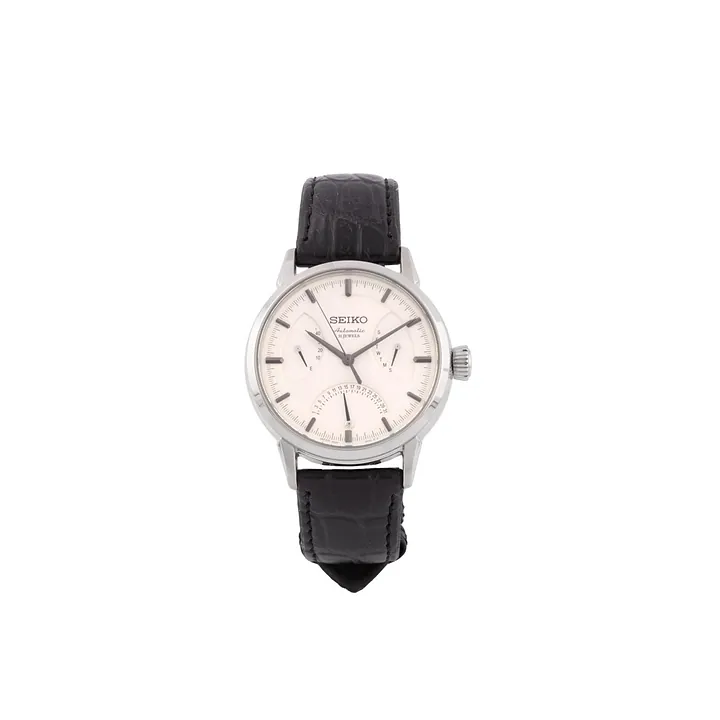
Wristwatches · c. 2015
Seiko Presage, c. 2015
Antiquorum auction archive, Geneva
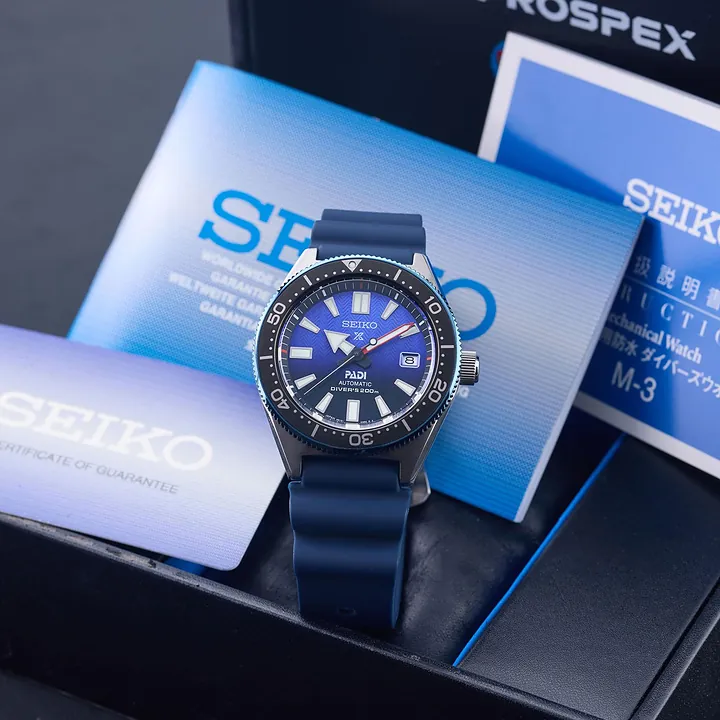
Wristwatches · originally sold in 2018 (per the lot record)
Seiko Prospex Padi Special Edition, ref. SBDC055, originally sold in 2018
Antiquorum auction archive, Geneva
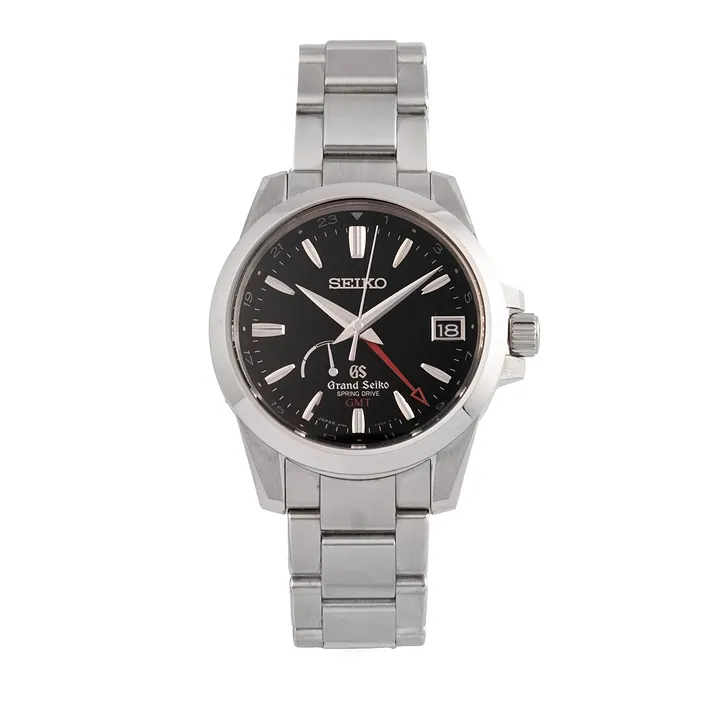
Wristwatches · c. 2020s
Grand Seiko Spring Drive GMT, ref. 9R66-0AE0, c. 2020s
Antiquorum auction archive, Geneva