
Wristwatches · Wristwatch
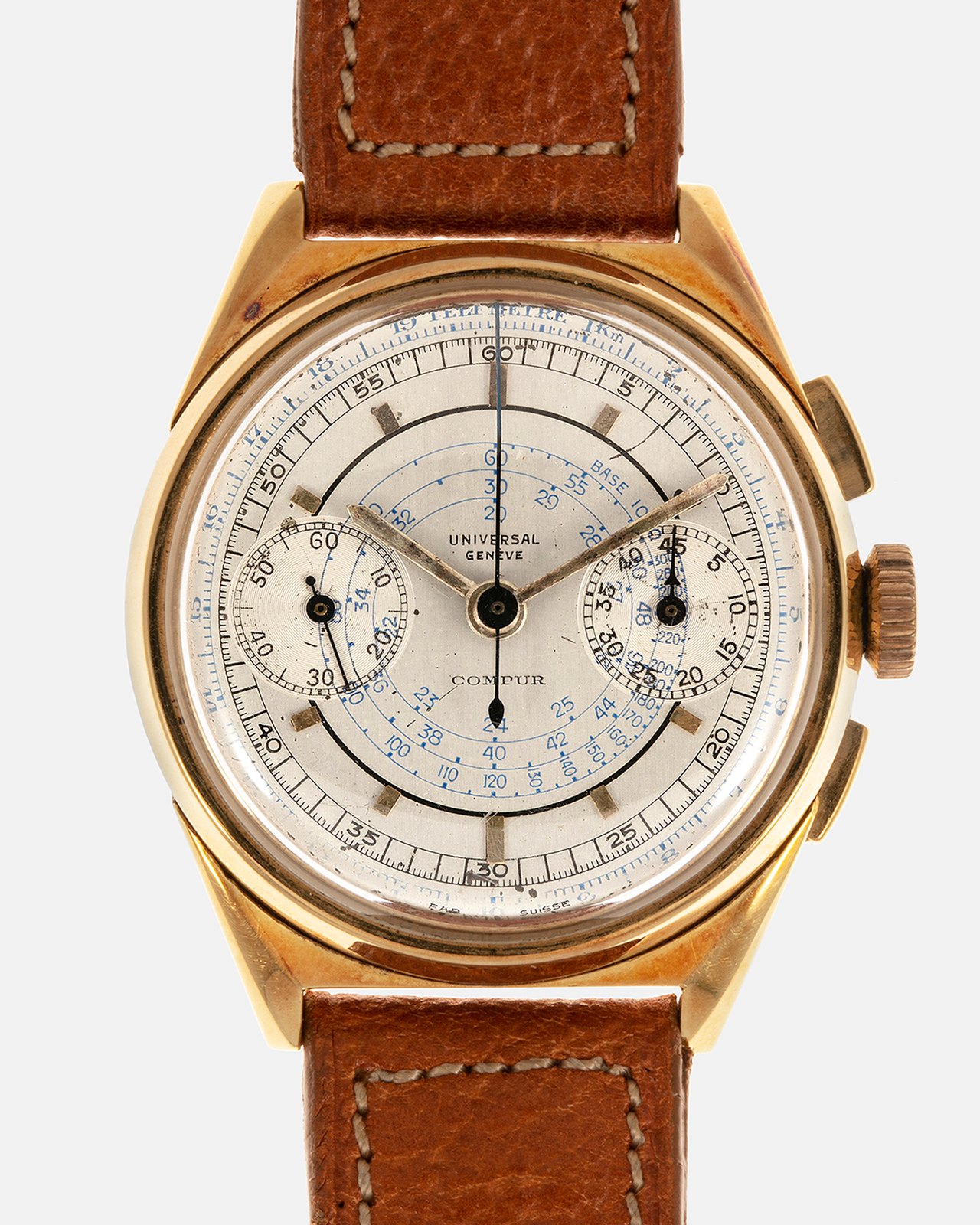
Universal Genève Compur Colonial Style Case Jeanneret, 1930s
- Maker / attribution
- Universal (maker)
- Date
- 1930s
- Historical period
- Golden Age of Mechanical Watchmaking (1900 – 1945)
- Country of origin
- Switzerland
- Object type
- Wristwatch
- Dimensions
- Case 34 mm
- Stock no.
- Product 7276080463959
- Credit line
- Dealer listing, S.Song Watches (product 7276080463959)
- Catalogue title (original)
- Universal Genève Compur Colonial Style Case Jeanneret (English)
View the source record (dealer listing) ↗ (opens another website in a new tab)Suggest a correction
Record summary
Catalogued by S.Song Watches (dealer), Seattle (stock number Product 7276080463959), this is a wristwatch by Universal, made in Switzerland, dated 1930s. The Atlas places it in the Golden Age of Mechanical Watchmaking period (1900 – 1945) of its Wristwatches collection. Recorded dimensions: Case 34 mm. The record is illustrated with 6 photographs.
Assembled from the source record's structured fields. Dates and attributions are given as the source states them; where a field is missing the Atlas leaves it blank rather than estimating.
Catalogue description
Dealer description — S.Song Watches
Founded in Le Locle in 1894, Universal Genève established itself from its earliest days as a manufacturer of in-house movements of exceptional quality. They were also famed for making elegant and complicated wristwatches back in their heyday- becoming known as a more accessible alternative to Patek Philippe. Not only that, but the brand has a longstanding heritage of producing exceptional chronographs with a lineage that can be traced back to as early as 1927. One such example is the Compur. First released by Universal Genève in the early 1930s when wristwatches were starting to become mainstream, the Compur was the brand’s first ‘modern’ chronograph and cemented its position as the premier chronograph manufacturer in Switzerland. This particular example we have on offer here houses the manual-winding Universal Genève Cal. 285 and comes in a 34mm ‘Colonial’ style case, which is a rarity for the era it was produced in. Speaking of rarity (and while we’re on the topic), colonial-style cases are among the rarest and most interesting finds in the world of vintage Universal Genève collecting. Introduced in the mid-1930s as Universal Genève's first attempt at creating a climate-proof chronograph, these cases were produced for only a very short time. This rarity is further heightened by the fact that this particular Universal Genève was crafted by the renowned case maker Henri Jeanneret in Peseux, as indicated by the ‘Hammerhead 166’ engraving found beneath the caseback. Back then, it was common practice for brands to outsource their case-making processes, with one of the most collectable Universal Genève cases being those made by Spillman. In a similar vein, while more under the radar, Jeanneret cases are incredibly difficult to come by and are made distinctive by its dual-faceted angular lugs, giving the watch a very nice on-wrist presence. Turning to its dial, this particular Compur boasts a striking and distinctive dial design with applied gold baton as hour markers, a set of hands in similar styling, a seconds sub-dial on the left and a 45-minute counter on the right. Adding to the overall aesthetic, the dial also showcases a minute track in black, a telemeter scale as well as a chronograph hand in blue, which provides some nice visual contrast against the watch's yellow-gold tones. Indeed, the Compur model had a relatively short production run in Universal Genève's catalogue of horological offerings, and even more so with those that come fitted with Colonial-style cases. It was eventually succeeded by the Compax, which debuted in the latter half of the 1930s and gradually replaced the Compur from 1940 onwards. Consequently, early examples of the Compur, especially ones like the one we have here with this particular case configuration, have become exceptionally scarce and arduous to source. Overall, this Compur can be described as a horological time capsule, preserving the essence of a bygone era and serving as a testament to Universal Genève's exceptional technical capabilities during its prime. To be able to offer this extraordinary example on our site today is a true delight for us.
Historical context
Golden Age of Mechanical Watchmaking (1900 – 1945)
The wristwatch displaces the pocket watch; waterproof cases, self-winding and grand complications.
The wristwatch overtook the pocket watch. Military use in the First World War, aviation, water-resistant cases (1926), automatic winding (1923–31), rectangular Art Deco designs and early chronographs and calendars defined the period.
Read the period in the timelineMore wristwatches from this periodEarlier: Industrial Revolution
Atlas type guide
Wristwatches
Bracelet watches were worn by women from the early nineteenth century — Breguet made one for Caroline Murat, Queen of Naples, in 1810–12 — but the wristwatch only became a man's instrument with military use and aviation in the early twentieth century. Between the World Wars it overtook the pocket watch; the 1920s and 1930s brought rectangular Art Deco cases, water-resistant cases and the first automatic winding systems.
After 1945 the wristwatch became a carrier of identity — dress watches, sports and dive watches, chronographs, calendars — produced by Swiss, American, Japanese, German, Soviet and Chinese industries. The quartz revolution after 1969 and the mechanical renaissance since the 1990s, including the rise of independent watchmakers, complete the story.
What to look for
- The reference number (between the lugs or inside the case back) and serial number, the starting point for dating.
- The calibre: its maker and number are often stamped under the dial or on the bridge.
- Originality of dial, hands and crown — refinished ('redial') dials are common.
- Case material marks: 18K/750, 14K/585, stainless steel, gold-filled, plated.
Dating clues
- Wire-lug cases: before c. 1925.
- Water-resistant screw-down cases: from 1926.
- Quartz movements: from 1969; sapphire crystals widespread after c. 1980.
General guidance written by the Atlas editors about this kind of object. It is not a statement about this particular piece; for that, rely on the source record above and on physical examination.
Related records

Wristwatches · 1900–1999
Wristwatch by Universal, Switzerland, 1900–1999
Nordic Museum Foundation

Wristwatches · 1960–1986
'Tri-Compax' calendar chronograph wristwatch in gold case, by Universal, Geneva, Switzerland, 1960–1986.
Science Museum Group, London
Pocket Watches · c. 1930
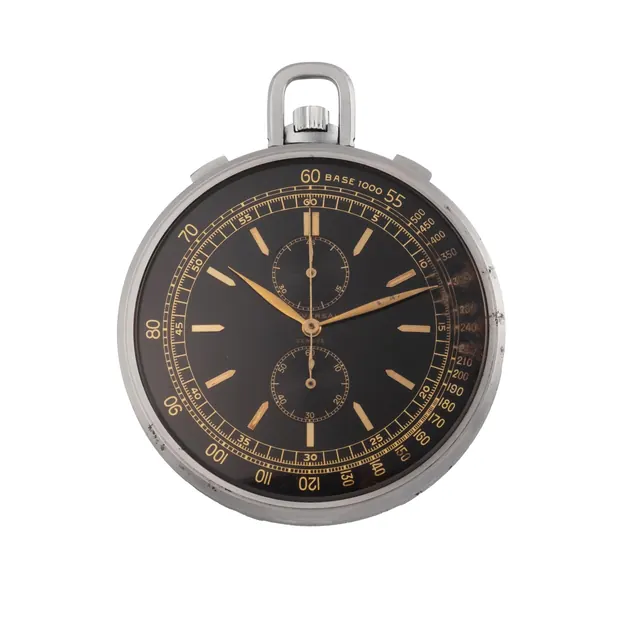
Universal pocket watch, Chronograph with Black Dial, circa 1930
Antiquorum auction archive, Geneva
Wristwatches · c. 1950s
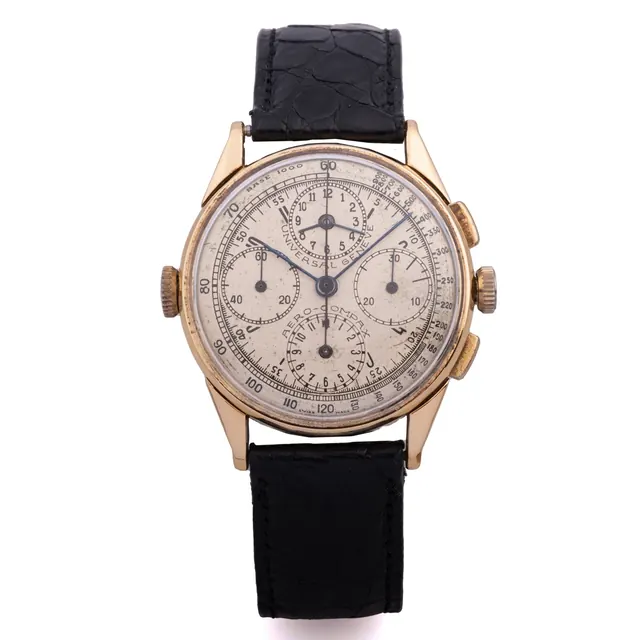
Universal wristwatch, ref. 12508, Aero-Compax, circa 1950's
Antiquorum auction archive, Geneva

Wristwatches · 1931
Rolex 'Oyster Perpetual' rotor self-winding wrist-watch, lever escapement, in steel case with glass in back, Montres Rolex SA, Geneva, Switzerland, 1931
Science Museum Group, London

Wristwatches · 1900–1999
Wristwatch by Certina, Switzerland, 1900–1999
Nordic Museum Foundation

Wristwatches · 1900–1999
Wristwatch by Omega, Västerås, 1900–1999
Nordic Museum Foundation
Wristwatches · c. 1900
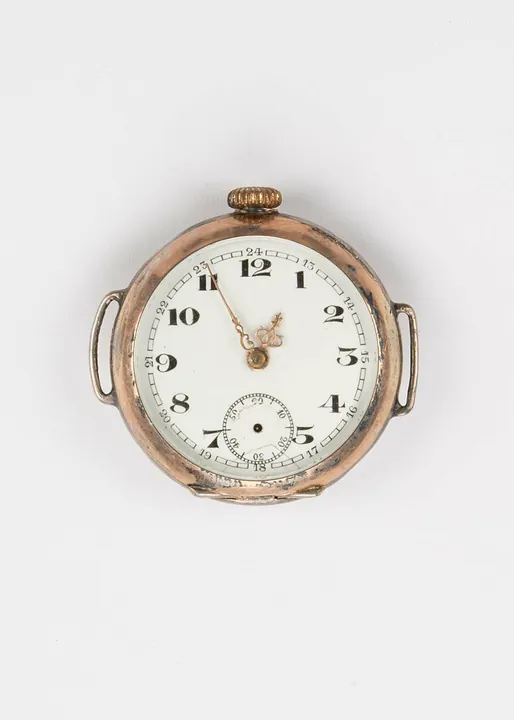
Wristwatch, probably Switzerland, c. 1900 (no. 57124)
German Clock Museum