
Wristwatches · Wristwatch
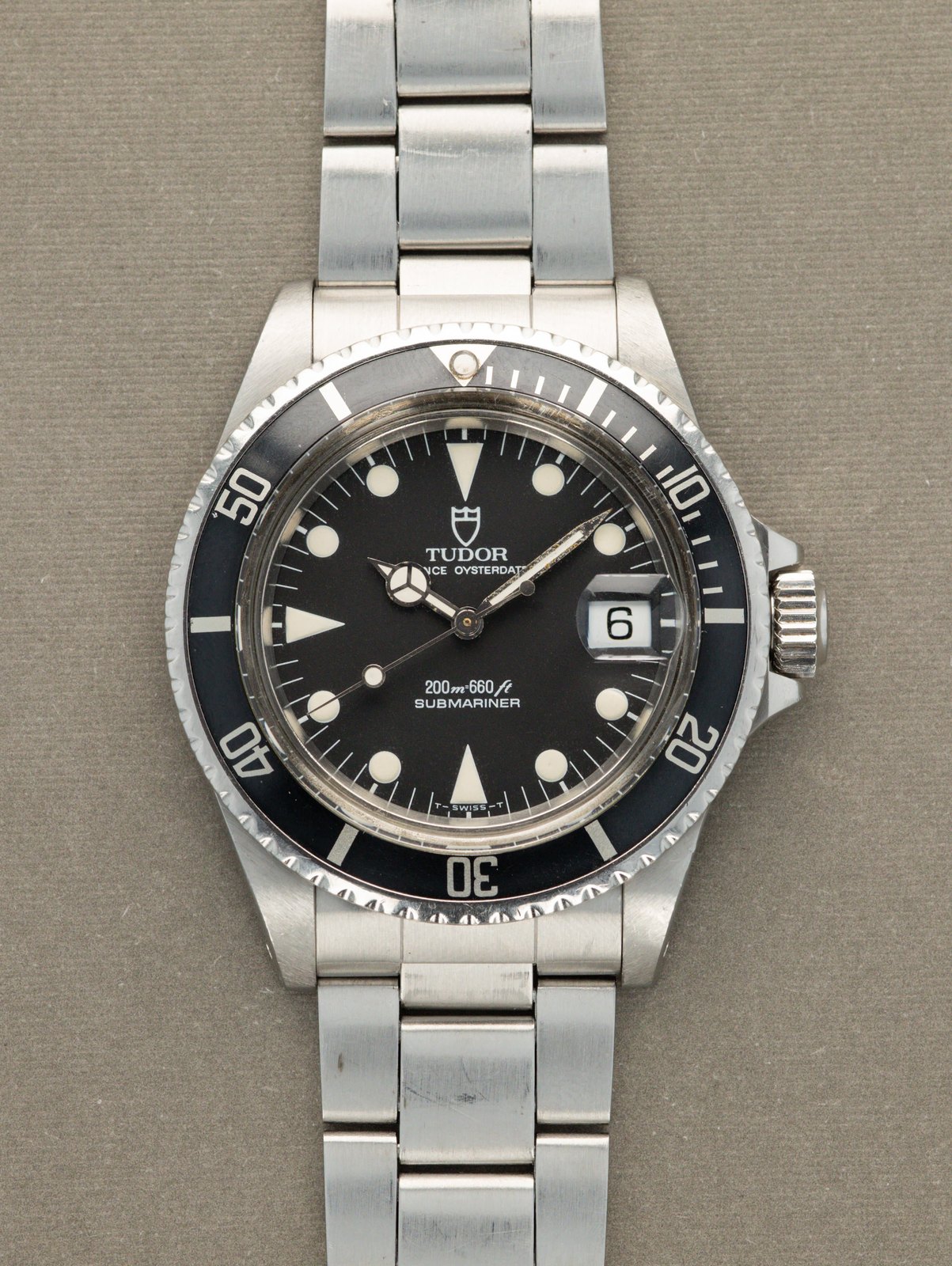
Tudor Submariner Date ref. 79090
- Maker / attribution
- Tudor (maker)
- Date
- c. 1993
- Historical period
- Mechanical Renaissance (1990 – 2010)
- Country of origin
- Switzerland
- Object type
- Wristwatch
- Stock no.
- OC2351
- Credit line
- Dealer listing, Oliver & Clarke (OC2351)
- Catalogue title (original)
- Tudor Submariner Date Ref. 79090 - Unpolished (English)
View the source record (dealer listing) ↗ (opens another website in a new tab)Suggest a correction
Record summary
Catalogued by Oliver & Clarke (dealer), United Kingdom (stock number OC2351), this is a wristwatch by Tudor, made in Switzerland, dated c. 1993. The Atlas places it in the Mechanical Renaissance period (1990 – 2010) of its Wristwatches collection. The record is illustrated with 6 photographs.
Assembled from the source record's structured fields. Dates and attributions are given as the source states them; where a field is missing the Atlas leaves it blank rather than estimating.
Catalogue description
Dealer description — Oliver & Clarke
The Submariner, namely those produced by Rolex, has long been considered the cream of the crop when it comes to watch collecting as a whole. Possibly the most iconic watch ever produced, the Submariner has long standing utilitarian roots that span decades, and everyone who’s anyone has been spotted wearing one. However, if you look deeper into the Submariner line, you may find a less known but just as incredible model manufactured by Tudor. These pieces are not only more unique and rare than the traditional Submariner, but offer much greater value. Designed as a replacement for the quintessential Tudor ‘Snowflake’ Submariners, the References 76100 and 79090 is in many collectors eyes, the last great vintage Tudor Submariner. These pieces all had matte dials with Tritium plots and matching Tritium-filled handsets, cases with lug-holes, acrylic crystals, and folded-link Oyster bracelets. In many ways, This is all stuff that we see in Rolex and Tudor models as early as the 1960s, but were produced well-into the 1990s! This particular example dates to circa 1993 and remains in fantastic overall condition. It comes to us with an unpolished case showing normal, honest wear with clear factory finishing on the top of the lugs and crisp chamfers on the edges. It exhibits just one notable impression on the bottom left lug profile. The matte black dial inside is in virtually flawless condition, with its Tritium plots beginning to change to a light ivory color. The handset shows signs of light oxidation with lightly patinated Tritium that matches the dial. It comes fitted to a correct folded-link Oyster bracelet with a Tudor signed fliplock clasp with diving extension. The caseback even retains its caseback sticker! These Tudor Subs of the mid 1980s into the mid 1990s not only present great value next to their Rolex cousins, but are very interesting in that they offer nearly all the feel of a Rolex Submariner Date dating back to the 1960s — with the charm of an acrylic crystal, a matte dial, and even a folded-link bracelet — for only a fraction of the entry cost. Sounds pretty good doesn't it?
Historical context
Mechanical Renaissance (1990 – 2010)
Mechanical watches return as cultural objects; independent watchmaking flourishes.
Mechanical watches returned as cultural and luxury objects. Complications, tourbillons and new materials proliferated; independent watchmakers such as George Daniels, F.P. Journe and Philippe Dufour revived artisanal watchmaking; collecting vintage watches became a major field.
Read the period in the timelineMore wristwatches from this periodEarlier: Quartz Revolution
Atlas type guide
Dive and water-resistant watches
Keeping water and dust out of a wristwatch was a long-standing challenge. Rolex's screw-down Oyster case (1926) and Omega's Marine (1932) were landmarks; in the early 1950s Blancpain's Fifty Fathoms and Rolex's Submariner defined the professional dive watch with rotating bezels for timing dives, luminous dials and high water resistance. The ISO 6425 standard (1982) later codified what a 'diver's watch' must do.
Dive watches became icons of post-war design and exploration, and their evolution — helium escape valves, ceramic bezels, saturation-diving depth ratings — records the history of underwater work.
What to look for
- Unidirectional or bidirectional rotating bezel with minute markings.
- Screw-down crown and case back; depth rating printed on the dial.
- Luminous hands and markers (radium before c. 1960, tritium c. 1960–1998, then Super-LumiNova).
- Reference numbers on the case between the lugs or inside the back.
Dating clues
- Screw-down Oyster cases: from 1926.
- Professional dive watches: from 1953.
- Tritium 'T' marks on dials: c. 1960–1998.
General guidance written by the Atlas editors about this kind of object. It is not a statement about this particular piece; for that, rely on the source record above and on physical examination.
Related records
Wristwatches · c. 1973
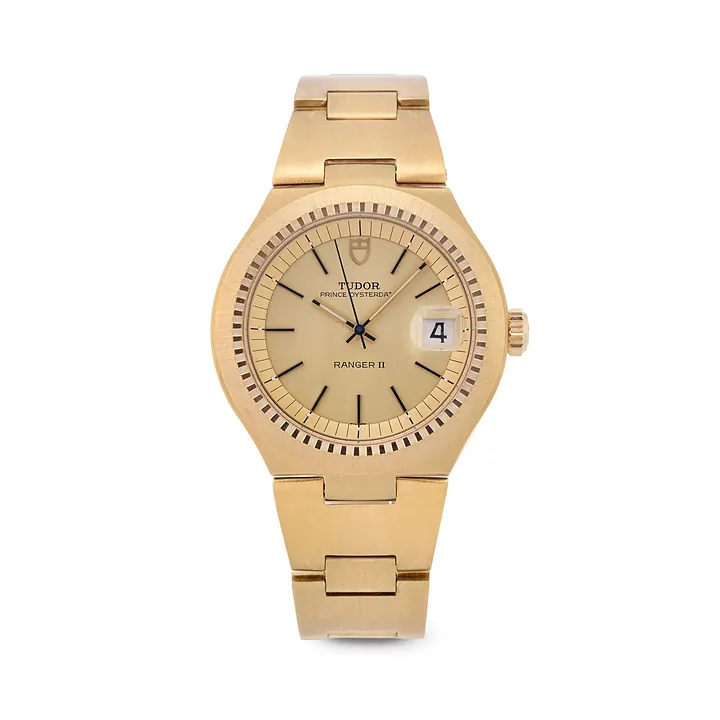
Tudor Prince Oysterdate Ranger II, ref. 9101/1, c. 1973
Antiquorum auction archive, Geneva
Wristwatches · c. 1973
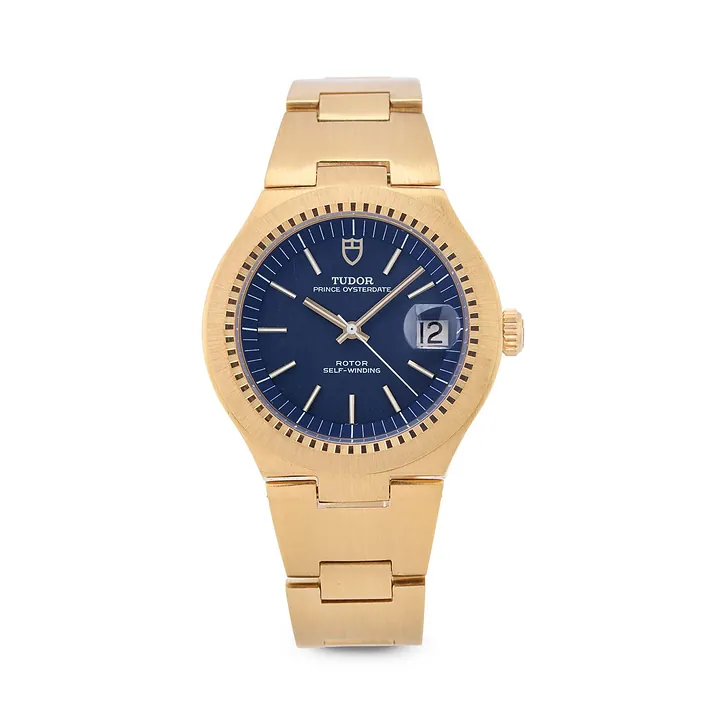
Tudor Prince Oysterdate, ref. 9101/1, c. 1973 (Antiquorum Lot 389-114)
Antiquorum auction archive, Geneva
Wristwatches · c. 1973
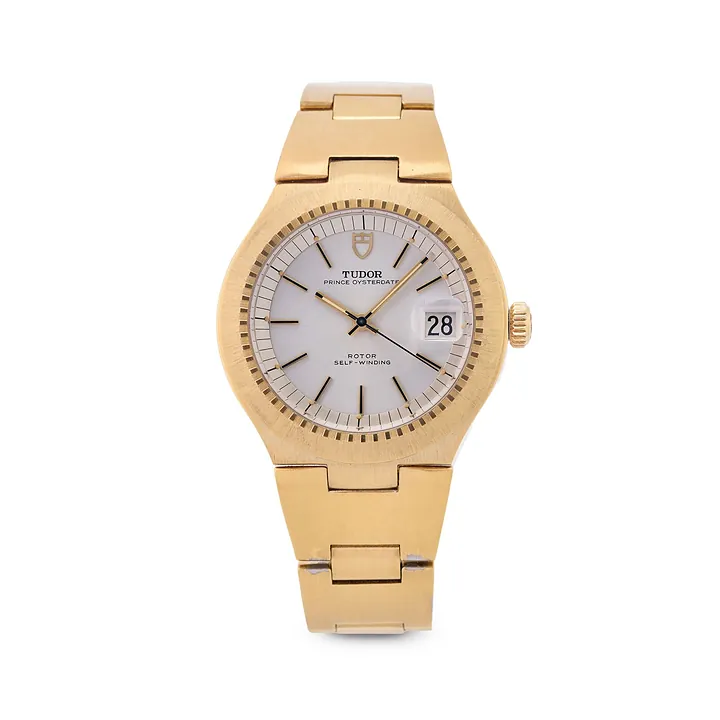
Tudor Prince Oysterdate, ref. 9101/1, c. 1973 (Antiquorum Lot 389-115)
Antiquorum auction archive, Geneva
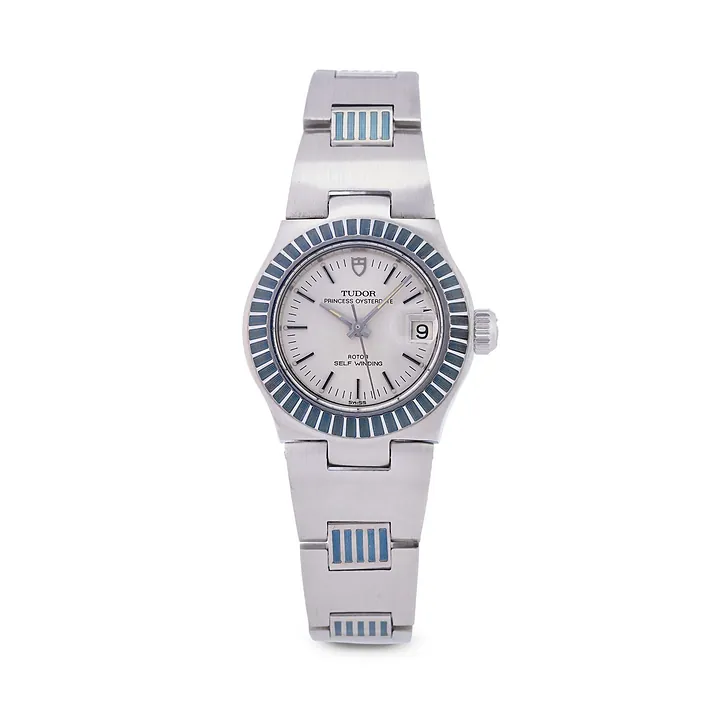
Wristwatches · c. 1974
Tudor Princess Oysterdate, ref. 9311/0, c. 1974
Antiquorum auction archive, Geneva

Wristwatches · 2008
Wristwatch by Breitling?, 2008
Museum Rotterdam

Wristwatches · c. 1990s
Audemars Piguet Bamboo, c. 1990s
Antiquorum auction archive, Geneva

Wristwatches · c. 1990
Audemars Piguet Huitieme Perpetual Calendar, ref. 25696PT, c. 1990
Antiquorum auction archive, Geneva

Wristwatches · c. 1990
Breitling Chronomat, ref. b13050.1, c. 1990
Antiquorum auction archive, Geneva