
Wristwatches · Wristwatch
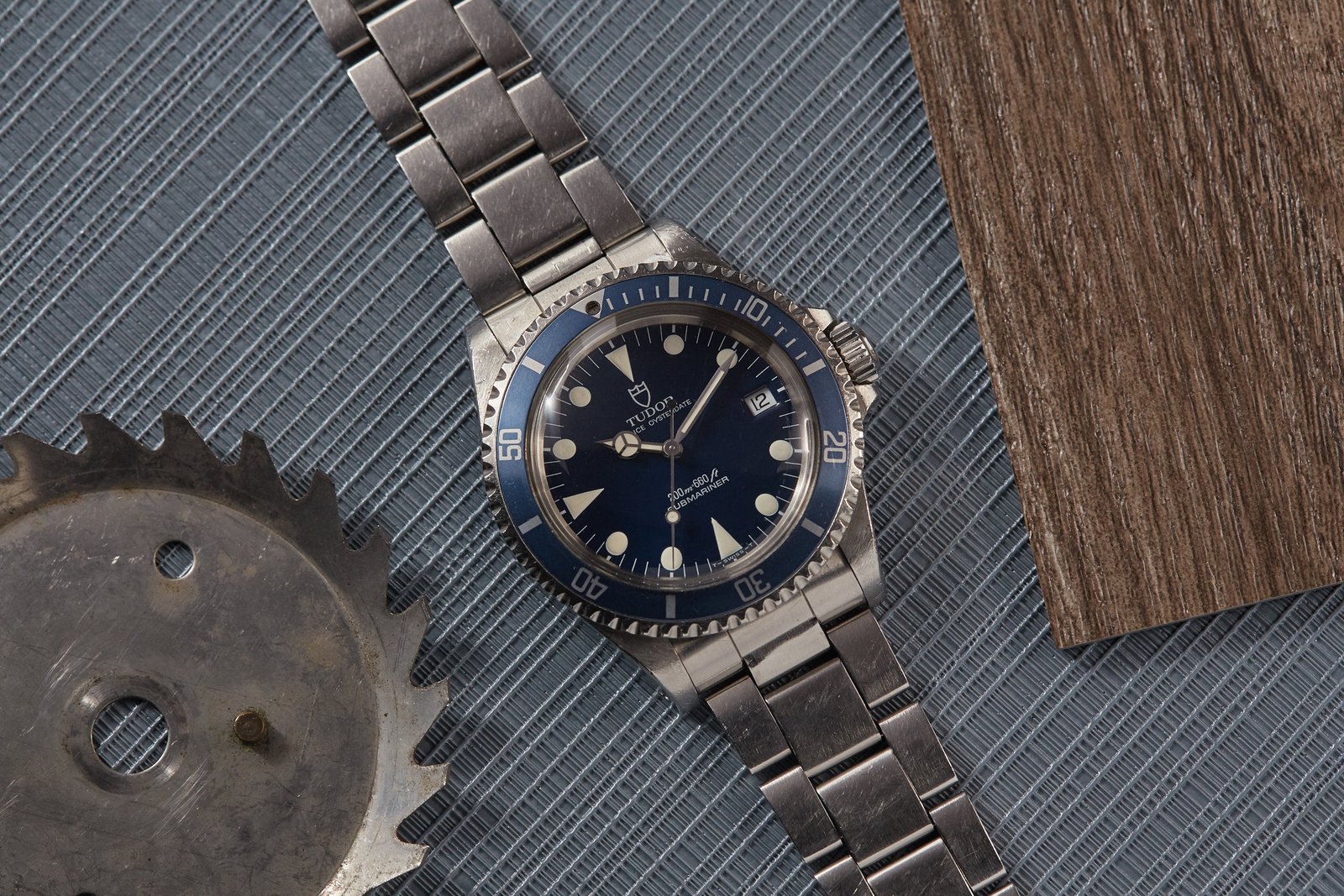
Tudor Submariner Date, 1990s
- Maker / attribution
- Tudor (maker)
- Date
- 1990s
- Historical period
- Mechanical Renaissance (1990 – 2010)
- Country of origin
- Switzerland
- Object type
- Wristwatch
- Stock no.
- Product 4377036488791
- Credit line
- Dealer listing, Analog/Shift (product 4377036488791)
- Catalogue title (original)
- Tudor Submariner Date (English)
View the source record (dealer listing) ↗ (opens another website in a new tab)Suggest a correction
Record summary
Catalogued by Analog/Shift (dealer), New York (stock number Product 4377036488791), this is a wristwatch by Tudor, made in Switzerland, dated 1990s. The Atlas places it in the Mechanical Renaissance period (1990 – 2010) of its Wristwatches collection. The record is illustrated with 6 photographs.
Assembled from the source record's structured fields. Dates and attributions are given as the source states them; where a field is missing the Atlas leaves it blank rather than estimating.
Catalogue description
Dealer description — Analog/Shift
Why We Love It Tudor Subs offer a distinctive flavor of "The Same...But Completely Different!" We've long appreciated the subtle variations -- and the tremendous value proposition -- that Tudor offers when compared to their Rolex siblings. This particular Reference 79090 dates to the 1990s and ticks all the neo-vintage boxes that are sure to be the next big thing. Lightly patinated tritium luminous material, a folded link bracelet with Tudor-signed clasp, and a lightly faded blue bezel insert round out the package. Featuring classic case proportions and fitted with a domed acrylic crystal in place of the usual cyclops-magnified (although we can swap it back upon request, this is quite simply a lovely package. Trust us, these are going places! The Story Tudor first began producing its Submariner in the 1950s. In its earliest iterations, the Tudor Submariner was nearly identical to its Rolex compatriot, with black dials, Mercedes hands, and hour markers that alternated between long triangles at the poles and round plots everywhere else. However, it wasn’t long before the look of the Tudor Submariner began to shift and change. For nearly two decades, the Tudor “Snowflake” (Reference 7016) was the model that defined the Tudor Submariner, with its distinctive triangular hour markers and hands… but the Snowflake was not the be-all, end-all of Tudor Subs. With the 79090, Tudor returned the Submariner to its roots. The Mercedes hands returned, along with circular hour plots and elongated triangular hour markers at the Poles. As the last of the Tudor Subs, collectors are now turning to the Reference 79090 as what it is—a classic.
Historical context
Mechanical Renaissance (1990 – 2010)
Mechanical watches return as cultural objects; independent watchmaking flourishes.
Mechanical watches returned as cultural and luxury objects. Complications, tourbillons and new materials proliferated; independent watchmakers such as George Daniels, F.P. Journe and Philippe Dufour revived artisanal watchmaking; collecting vintage watches became a major field.
Read the period in the timelineMore wristwatches from this periodEarlier: Quartz Revolution
Atlas type guide
Dive and water-resistant watches
Keeping water and dust out of a wristwatch was a long-standing challenge. Rolex's screw-down Oyster case (1926) and Omega's Marine (1932) were landmarks; in the early 1950s Blancpain's Fifty Fathoms and Rolex's Submariner defined the professional dive watch with rotating bezels for timing dives, luminous dials and high water resistance. The ISO 6425 standard (1982) later codified what a 'diver's watch' must do.
Dive watches became icons of post-war design and exploration, and their evolution — helium escape valves, ceramic bezels, saturation-diving depth ratings — records the history of underwater work.
What to look for
- Unidirectional or bidirectional rotating bezel with minute markings.
- Screw-down crown and case back; depth rating printed on the dial.
- Luminous hands and markers (radium before c. 1960, tritium c. 1960–1998, then Super-LumiNova).
- Reference numbers on the case between the lugs or inside the back.
Dating clues
- Screw-down Oyster cases: from 1926.
- Professional dive watches: from 1953.
- Tritium 'T' marks on dials: c. 1960–1998.
General guidance written by the Atlas editors about this kind of object. It is not a statement about this particular piece; for that, rely on the source record above and on physical examination.
Related records
Wristwatches · c. 1973
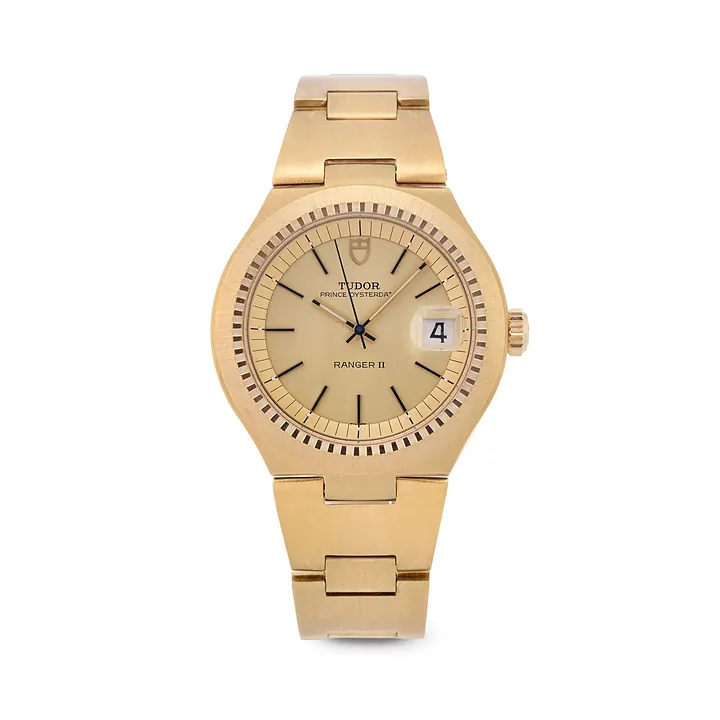
Tudor Prince Oysterdate Ranger II, ref. 9101/1, c. 1973
Antiquorum auction archive, Geneva
Wristwatches · c. 1973
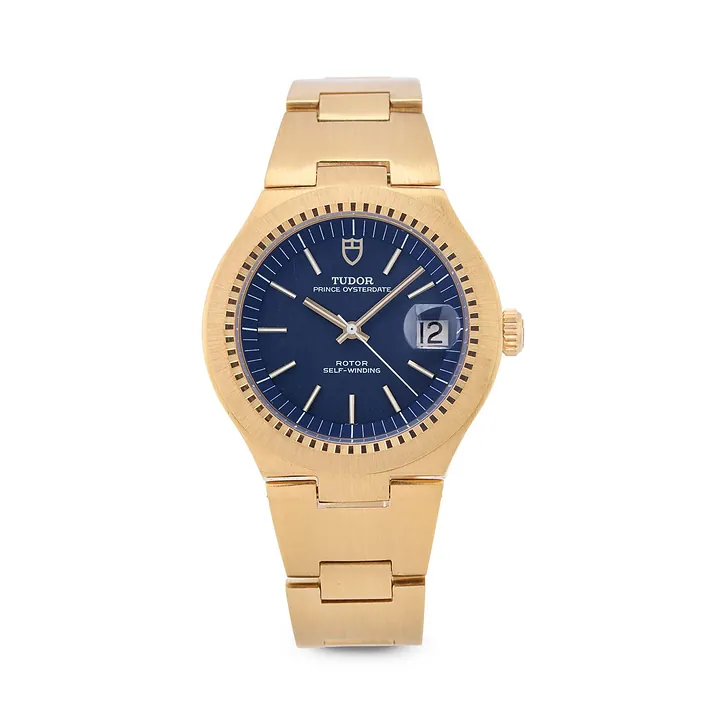
Tudor Prince Oysterdate, ref. 9101/1, c. 1973 (Antiquorum Lot 389-114)
Antiquorum auction archive, Geneva
Wristwatches · c. 1973
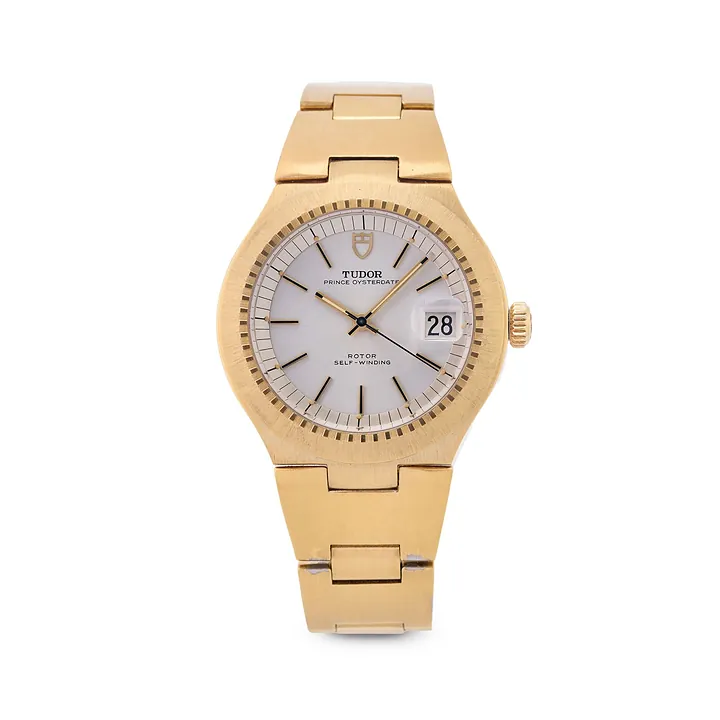
Tudor Prince Oysterdate, ref. 9101/1, c. 1973 (Antiquorum Lot 389-115)
Antiquorum auction archive, Geneva
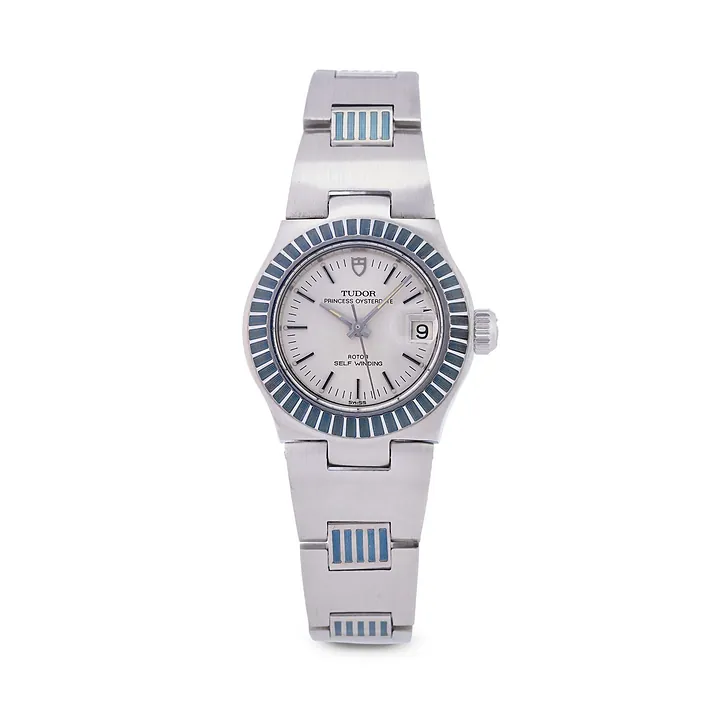
Wristwatches · c. 1974
Tudor Princess Oysterdate, ref. 9311/0, c. 1974
Antiquorum auction archive, Geneva

Wristwatches · 2008
Wristwatch by Breitling?, 2008
Museum Rotterdam

Wristwatches · c. 1990s
Audemars Piguet Bamboo, c. 1990s
Antiquorum auction archive, Geneva

Wristwatches · c. 1990
Audemars Piguet Huitieme Perpetual Calendar, ref. 25696PT, c. 1990
Antiquorum auction archive, Geneva

Wristwatches · c. 1990
Breitling Chronomat, ref. b13050.1, c. 1990
Antiquorum auction archive, Geneva