
Wristwatches · Wristwatch
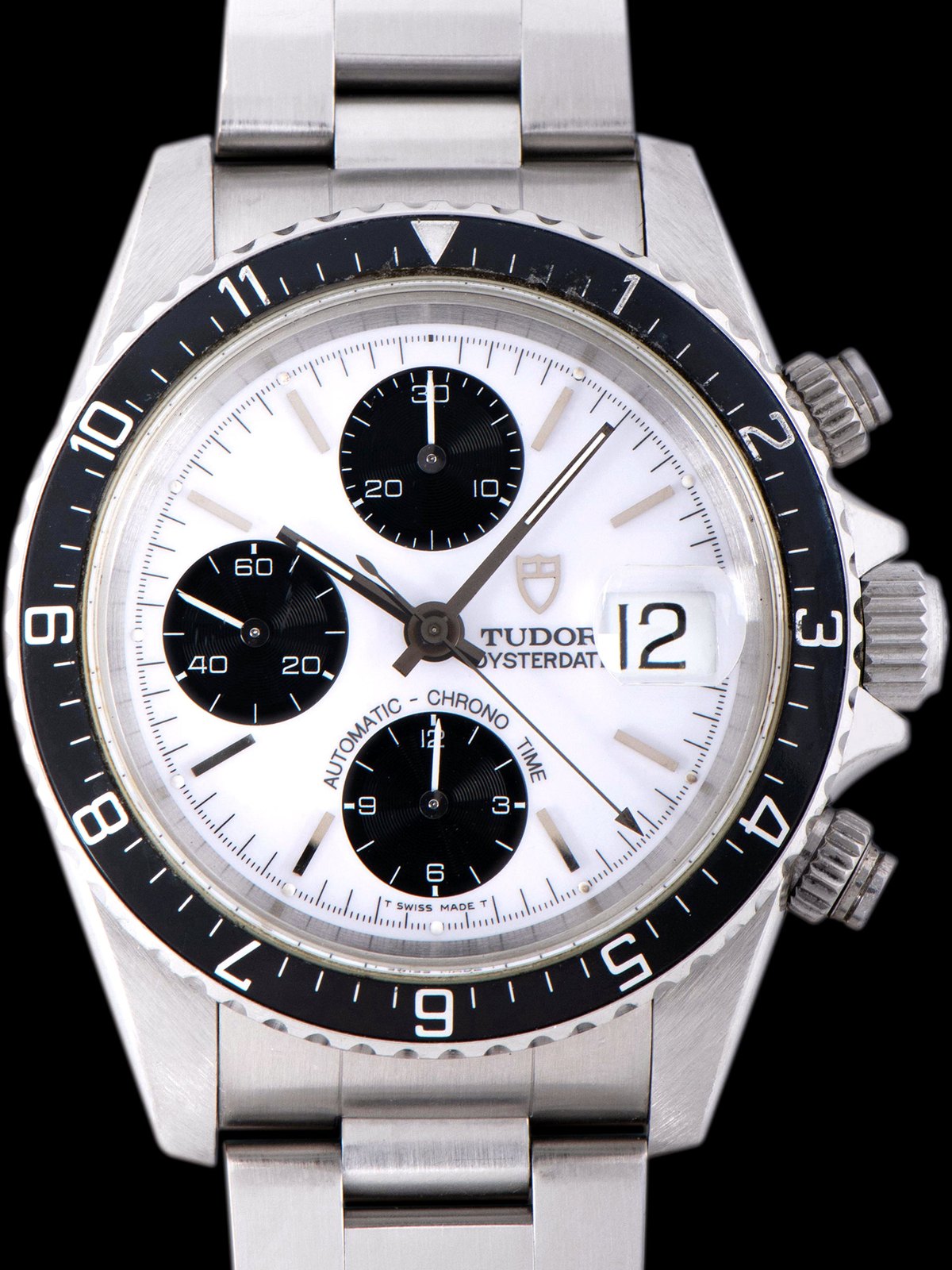
Tudor "Small Block" Chronograph (Ref. 79270) White Dial, 1995
- Maker / attribution
- Tudor (maker)
- Date
- 1995
- Historical period
- Mechanical Renaissance (1990 – 2010)
- Country of origin
- Switzerland
- Object type
- Wristwatch
- Stock no.
- TSB79270
- Credit line
- Dealer listing, Craft & Tailored (TSB79270)
- Catalogue title (original)
- 1995 Tudor "Small Block" Chronograph (Ref. 79270) White Dial W/ Box & Papers (English)
View the source record (dealer listing) ↗ (opens another website in a new tab)Suggest a correction
Record summary
Catalogued by Craft & Tailored (dealer), Los Angeles (stock number TSB79270), this is a wristwatch by Tudor, made in Switzerland, dated 1995. The Atlas places it in the Mechanical Renaissance period (1990 – 2010) of its Wristwatches collection. The record is illustrated with 6 photographs.
Assembled from the source record's structured fields. Dates and attributions are given as the source states them; where a field is missing the Atlas leaves it blank rather than estimating.
Catalogue description
Dealer description — Craft & Tailored
Tudor's long history of iconic chronographs continues into the late nineties with their next generation of chronographs. During this time period, Tudor was entering into a new era as a stand-alone watch company. Tudor's separation from Rolex becomes more evident as we see fewer components signed Rolex, and more with the Tudor logo instead. This is an excellent transitional timepiece, that would make a great start to a collection or be a resilient daily driver. Featuring locking pushers and a sapphire crystal that make the watch more durable and water-resistant. All while retaining its original tritium lume, bridging the gap between modern and vintage horology. SPECS Stock # TSB79270 Brand Tudor Style "Small Block" Chronograph Model 79270 Serial B6XXXXX Size Men's Material Stainless Steel Dial White Millimeters 40 Bracelet Tudor 78400 Oyster Bracelet W/ 605 End Pieces CASE & BRACELET The excellent case retains crisp and thick lugs that appear to have only seen very gentle polishing in the past with light signs of previous use present. The bidirectional rotating bezel exhibits very gentle age and wear and is in excellent overall condition. The case retains its original Rolex signed trip-lock crown. The case back retains all of its original factory engravings in deep and crisp condition. The original Tudor 78400 Oyster bracelet with 605 end pieces retains 10 links on the bracelet that show minimal stretch from use and will fit up to a 6 3/4 inch wrist. The bracelet comes with 3 additional links as well. DIAL & HANDS The glossy white dial with black sub-dials is flawless, showing no blemishes or signs of aging. The tritium lume plots exhibit no degradation under UV light inspection and feature a bright white color with the 4 and 5 o'clock plots showing a slightly darker color. The original tritium hands match the dial perfectly and exhibit no degradation under UV light inspection. ACCESSORIES The watch comes complete with its inner and outer boxes, Tudor guarantee paper, and booklets. The watch is keeping time, but the service history is unknown. A movement service can be provided upon request.
Historical context
Mechanical Renaissance (1990 – 2010)
Mechanical watches return as cultural objects; independent watchmaking flourishes.
Mechanical watches returned as cultural and luxury objects. Complications, tourbillons and new materials proliferated; independent watchmakers such as George Daniels, F.P. Journe and Philippe Dufour revived artisanal watchmaking; collecting vintage watches became a major field.
Read the period in the timelineMore wristwatches from this periodEarlier: Quartz Revolution
Atlas type guide
Chronographs and split-seconds watches
A chronograph is a watch with an additional seconds hand that can be started, stopped and returned to zero independently of the timekeeping. Louis Moinet built an early example in 1816 and Nicolas Rieussec a recording 'chronographe' in 1821; Adolphe Nicole's heart-shaped reset cam (patented 1862) made the modern return-to-zero possible. Split-seconds (rattrapante) chronographs add a second hand that can be stopped for intermediate times; flyback chronographs restart instantly.
Chronographs were essential tools for doctors (pulsometer scales), artillery (telemeter), engineers and sport. In wristwatches, Valjoux, Venus, Lemania and later the automatic chronographs of 1969 (Zenith El Primero, the Chronomatic Calibre 11 group and Seiko 6139) are milestones.
What to look for
- Push-pieces on the case band or a single button in the crown (monopusher).
- Subsidiary registers for minutes and hours; tachymeter, telemeter or pulsometer scales.
- Column wheel versus cam control visible in the movement.
- Calibre markings of specialist makers (Valjoux, Lemania, Venus, Landeron).
Dating clues
- Pocket chronographs with heart cam reset: after 1862.
- Wrist chronographs: from c. 1910; two-button designs from the 1930s.
- Automatic chronographs: from 1969.
General guidance written by the Atlas editors about this kind of object. It is not a statement about this particular piece; for that, rely on the source record above and on physical examination.
Read next:Flyback chronographChronograph
Related records
Wristwatches · c. 1973
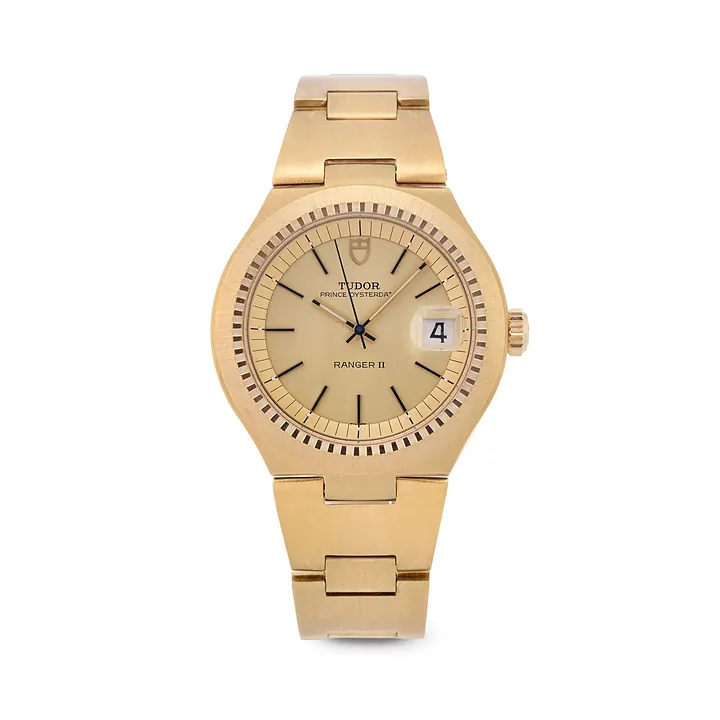
Tudor Prince Oysterdate Ranger II, ref. 9101/1, c. 1973
Antiquorum auction archive, Geneva
Wristwatches · c. 1973
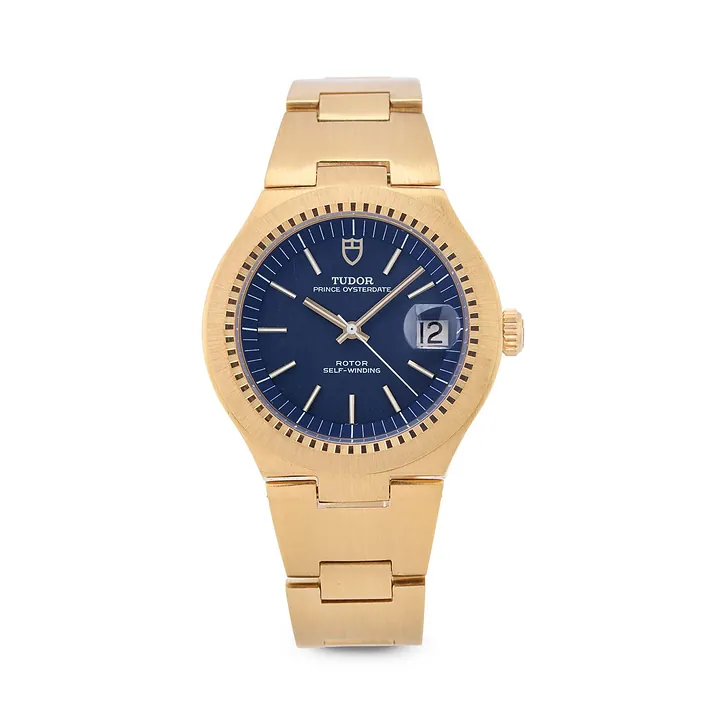
Tudor Prince Oysterdate, ref. 9101/1, c. 1973 (Antiquorum Lot 389-114)
Antiquorum auction archive, Geneva
Wristwatches · c. 1973
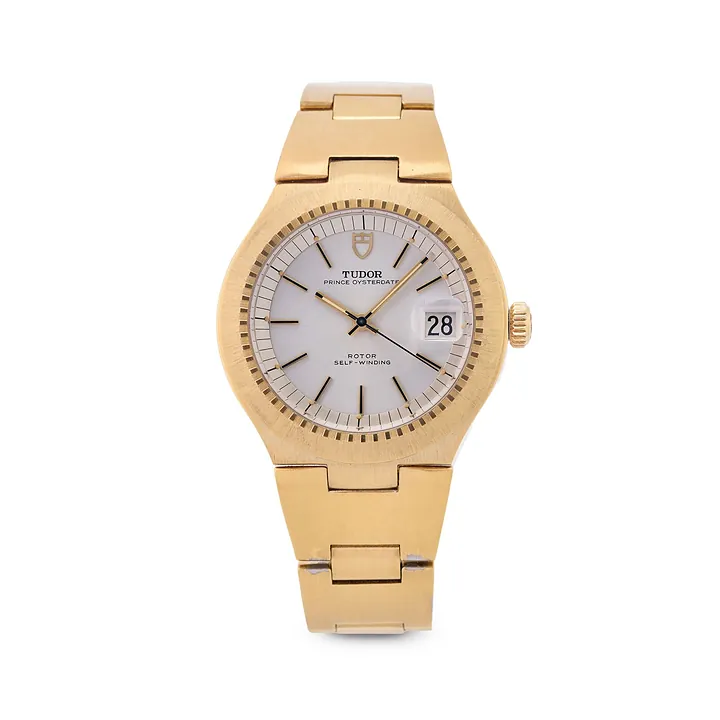
Tudor Prince Oysterdate, ref. 9101/1, c. 1973 (Antiquorum Lot 389-115)
Antiquorum auction archive, Geneva
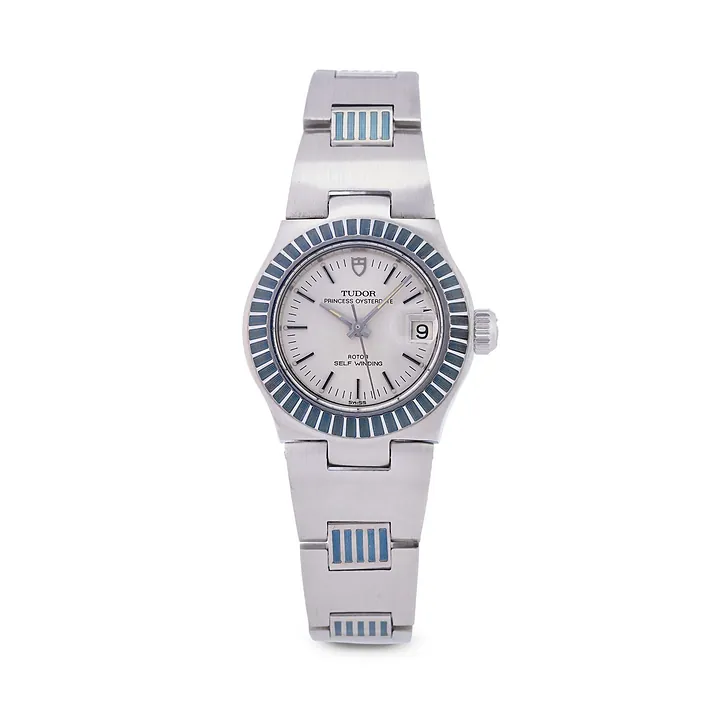
Wristwatches · c. 1974
Tudor Princess Oysterdate, ref. 9311/0, c. 1974
Antiquorum auction archive, Geneva

Wristwatches · 2008
Wristwatch by Breitling?, 2008
Museum Rotterdam

Wristwatches · c. 1990s
Audemars Piguet Bamboo, c. 1990s
Antiquorum auction archive, Geneva

Wristwatches · c. 1990
Audemars Piguet Huitieme Perpetual Calendar, ref. 25696PT, c. 1990
Antiquorum auction archive, Geneva

Wristwatches · c. 1990
Breitling Chronomat, ref. b13050.1, c. 1990
Antiquorum auction archive, Geneva