
Wristwatches · Wristwatch
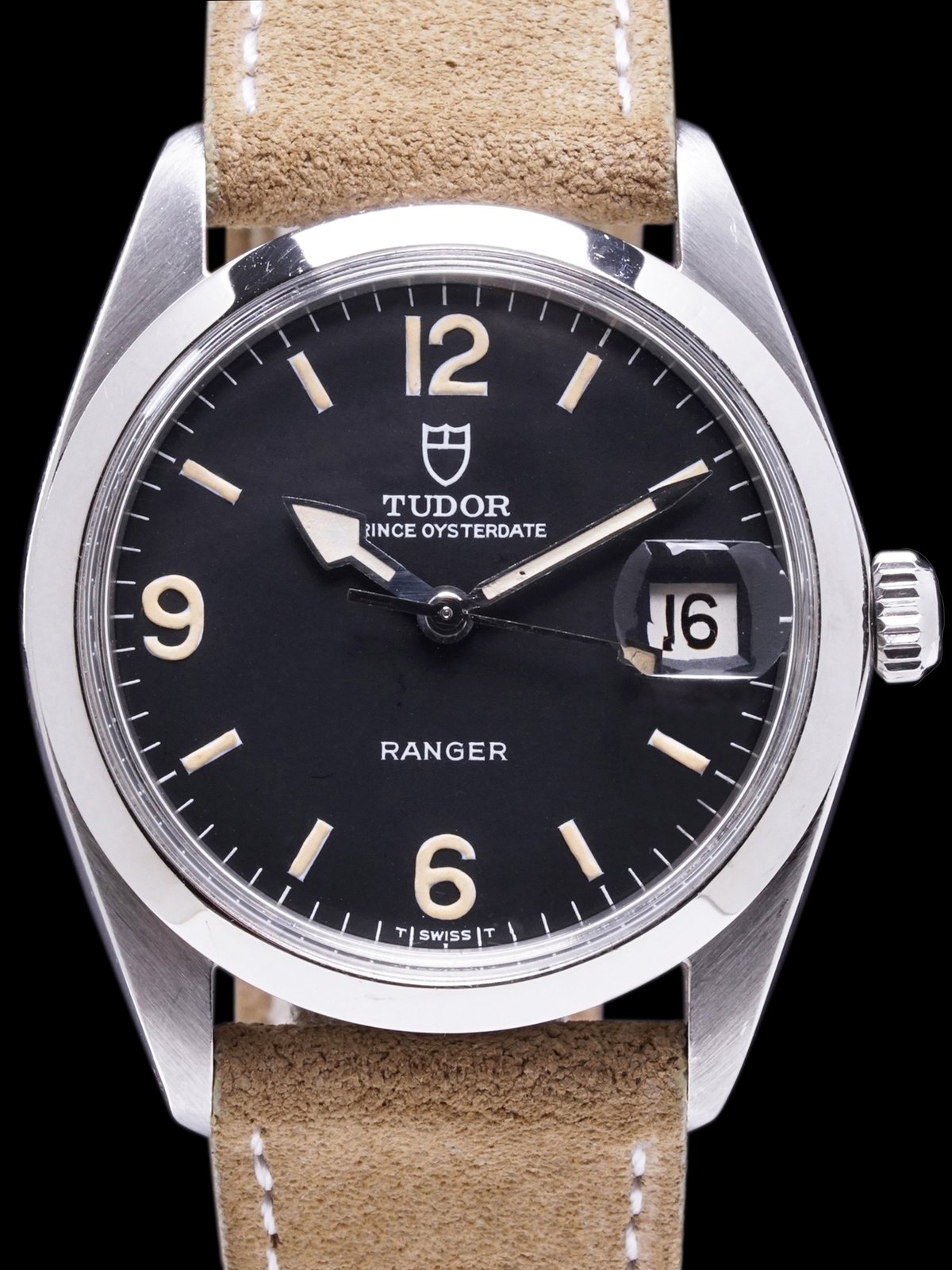
Tudor Ranger (Ref. 9050/0), 1977
- Maker / attribution
- Tudor (maker)
- Date
- 1977
- Historical period
- Quartz Revolution (1969 – 1990)
- Country of origin
- Switzerland
- Object type
- Wristwatch
- Stock no.
- TDRRGR90500
- Credit line
- Dealer listing, Craft & Tailored (TDRRGR90500)
- Catalogue title (original)
- 1977 Tudor Ranger (Ref. 9050/0) (English)
View the source record (dealer listing) ↗ (opens another website in a new tab)Suggest a correction
Record summary
Catalogued by Craft & Tailored (dealer), Los Angeles (stock number TDRRGR90500), this is a wristwatch by Tudor, made in Switzerland, dated 1977. The Atlas places it in the Quartz Revolution period (1969 – 1990) of its Wristwatches collection. The record is illustrated with 6 photographs.
Assembled from the source record's structured fields. Dates and attributions are given as the source states them; where a field is missing the Atlas leaves it blank rather than estimating.
Catalogue description
Dealer description — Craft & Tailored
The Rolex/Tudor relationship dates back to 1926 when Hans Wilsdorf, the founder of Rolex SA, wanted to create a more affordable wristwatch alternative that still maintained a high quality of craftsmanship. Tudor manufactured wristwatches adjacent to Rolex for many years, which featured more affordable non-inhouse Swiss movements, whilst still utilizing Rolex's case designs and manufacturing processes. Even though Tudor shares a lot of similarities with its older brother Rolex, Tudor's designs tended to differentiate from the Rolex formula to make for some uniquely cool timepieces in their own right. The Ranger is one of the more coveted Tudor watches amongst collectors. Known for being elusive, with only a very small number ever actually being made, Rangers are rarely seen for sale on the open market. The Ranger is often referred to as "Tudor's Explorer" and although there are similarities, such as the lumed Arabic numerals, but the Ranger comes across as a totally different watch that offers a completely different wearing experience. Especially the ref. 9050/0 which features the quick set date function at the 3 o'clock position. Stock # TDRRGR90500 Brand Tudor Style Ranger Model 9050/0 Serial 87XXXX Size Men's Material SS Dial Matte Black Millimeters 34 Bracelet 2pc Handmade Leather Strap CASE & BRACELET The very strong case appears to have been very lightly polished in the past, retaining full and symmetrical lugs that show almost no signs of use. The smooth stainless steel bezel is in overall excellent condition showing no signs of use. The case retains its original Rolex twin-lock crown. The caseback visibly retains all of its factory engravings. The watch will come supplied on a 2pc handmade leather strap. DIAL & HANDS The matte black Ranger dial is absolutely gorgeous, showing some light marks from age and otherwise remaining very clean. The tritium lume plots have aged to a wonderful creamy yellow patina with no degradation when inspected under U.V. light. The original tritium hands have aged a shade lighter than the dial but match the watches aesthetic, under U.V. light inspection the minute hand shows some minor lume loss and is stable, the sweep seconds hand shows light cracking and remains stable as well, the hour hand is fully intact. ACCESSORIES
Historical context
Quartz Revolution (1969 – 1990)
Seiko's Astron begins mass quartz timekeeping; traditional industries contract sharply.
Quartz and digital watches transformed the market after 1969. Swiss employment collapsed, Japanese and Hong Kong production soared, and the Swatch (1983) helped the Swiss industry recover; mechanical watches survived as luxury goods.
Read the period in the timelineMore wristwatches from this periodEarlier: Modern Mechanical Horology
Atlas type guide
Wristwatches
Bracelet watches were worn by women from the early nineteenth century — Breguet made one for Caroline Murat, Queen of Naples, in 1810–12 — but the wristwatch only became a man's instrument with military use and aviation in the early twentieth century. Between the World Wars it overtook the pocket watch; the 1920s and 1930s brought rectangular Art Deco cases, water-resistant cases and the first automatic winding systems.
After 1945 the wristwatch became a carrier of identity — dress watches, sports and dive watches, chronographs, calendars — produced by Swiss, American, Japanese, German, Soviet and Chinese industries. The quartz revolution after 1969 and the mechanical renaissance since the 1990s, including the rise of independent watchmakers, complete the story.
What to look for
- The reference number (between the lugs or inside the case back) and serial number, the starting point for dating.
- The calibre: its maker and number are often stamped under the dial or on the bridge.
- Originality of dial, hands and crown — refinished ('redial') dials are common.
- Case material marks: 18K/750, 14K/585, stainless steel, gold-filled, plated.
Dating clues
- Wire-lug cases: before c. 1925.
- Water-resistant screw-down cases: from 1926.
- Quartz movements: from 1969; sapphire crystals widespread after c. 1980.
General guidance written by the Atlas editors about this kind of object. It is not a statement about this particular piece; for that, rely on the source record above and on physical examination.
Related records
Wristwatches · c. 1973
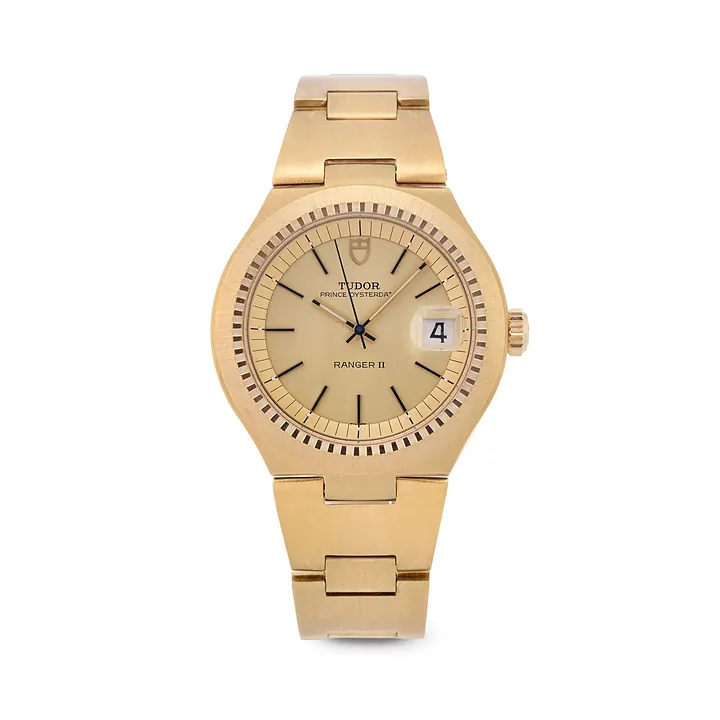
Tudor Prince Oysterdate Ranger II, ref. 9101/1, c. 1973
Antiquorum auction archive, Geneva
Wristwatches · c. 1973
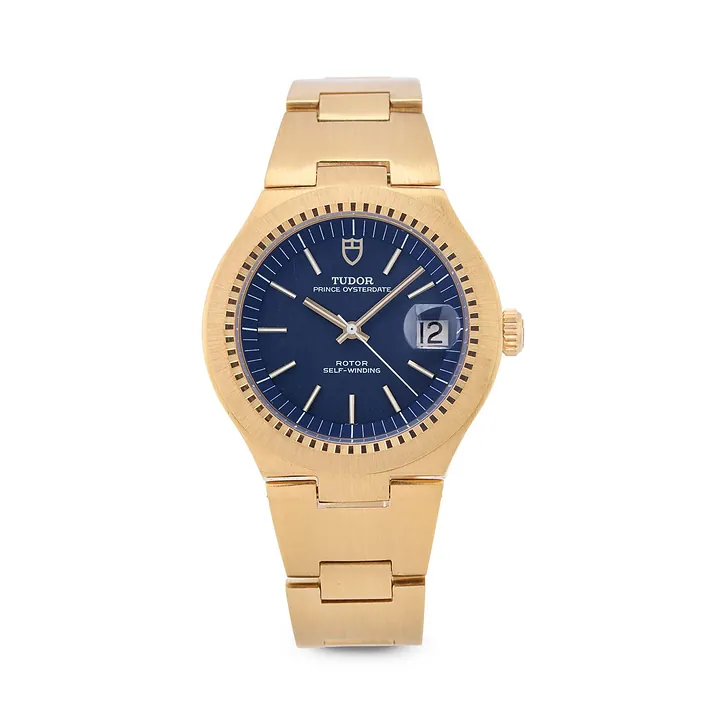
Tudor Prince Oysterdate, ref. 9101/1, c. 1973 (Antiquorum Lot 389-114)
Antiquorum auction archive, Geneva
Wristwatches · c. 1973
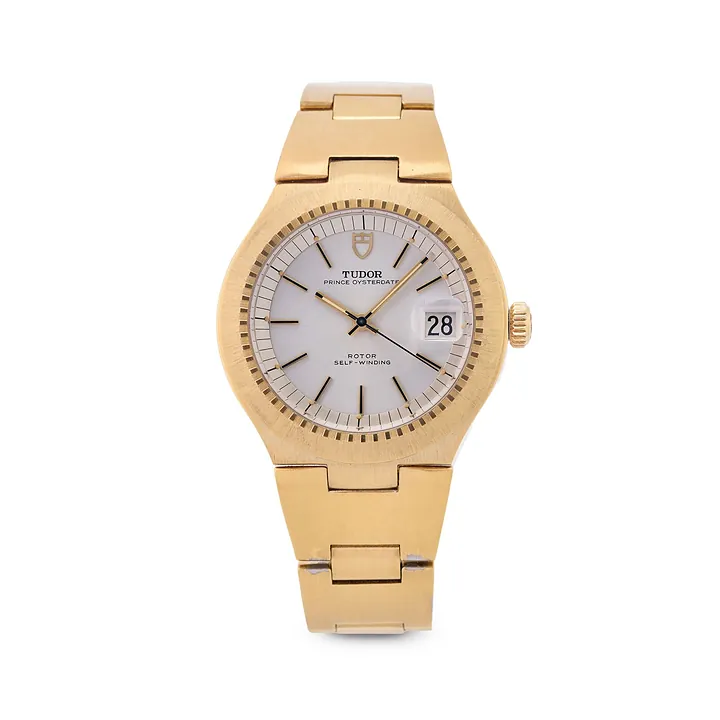
Tudor Prince Oysterdate, ref. 9101/1, c. 1973 (Antiquorum Lot 389-115)
Antiquorum auction archive, Geneva
Wristwatches · c. 1974
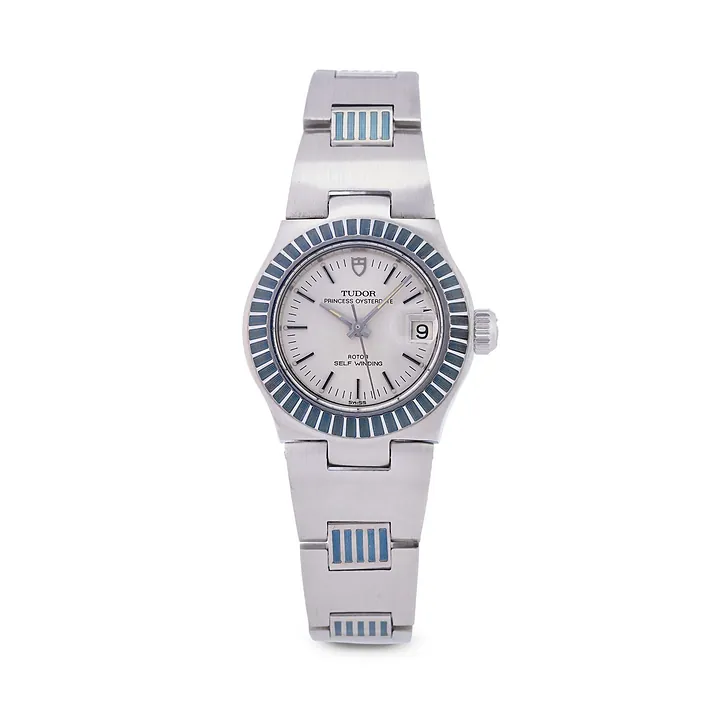
Tudor Princess Oysterdate, ref. 9311/0, c. 1974
Antiquorum auction archive, Geneva

Wristwatches · 1970
Wristwatch by Heno, Switzerland, 1970
Museum Rotterdam

Wristwatches · 1960–1986
'Tri-Compax' calendar chronograph wristwatch in gold case, by Universal, Geneva, Switzerland, 1960–1986.
Science Museum Group, London

Wristwatches · 1969–1970
Beta 21 Quartz wristwatch movement, made in Switzerland, 1970.
Science Museum Group, London

Wristwatches · c. 1969
Omega Speedmaster Moonwatch, ref. 145022-69st, c. 1969
Antiquorum auction archive, Geneva