
Wristwatches · Wristwatch
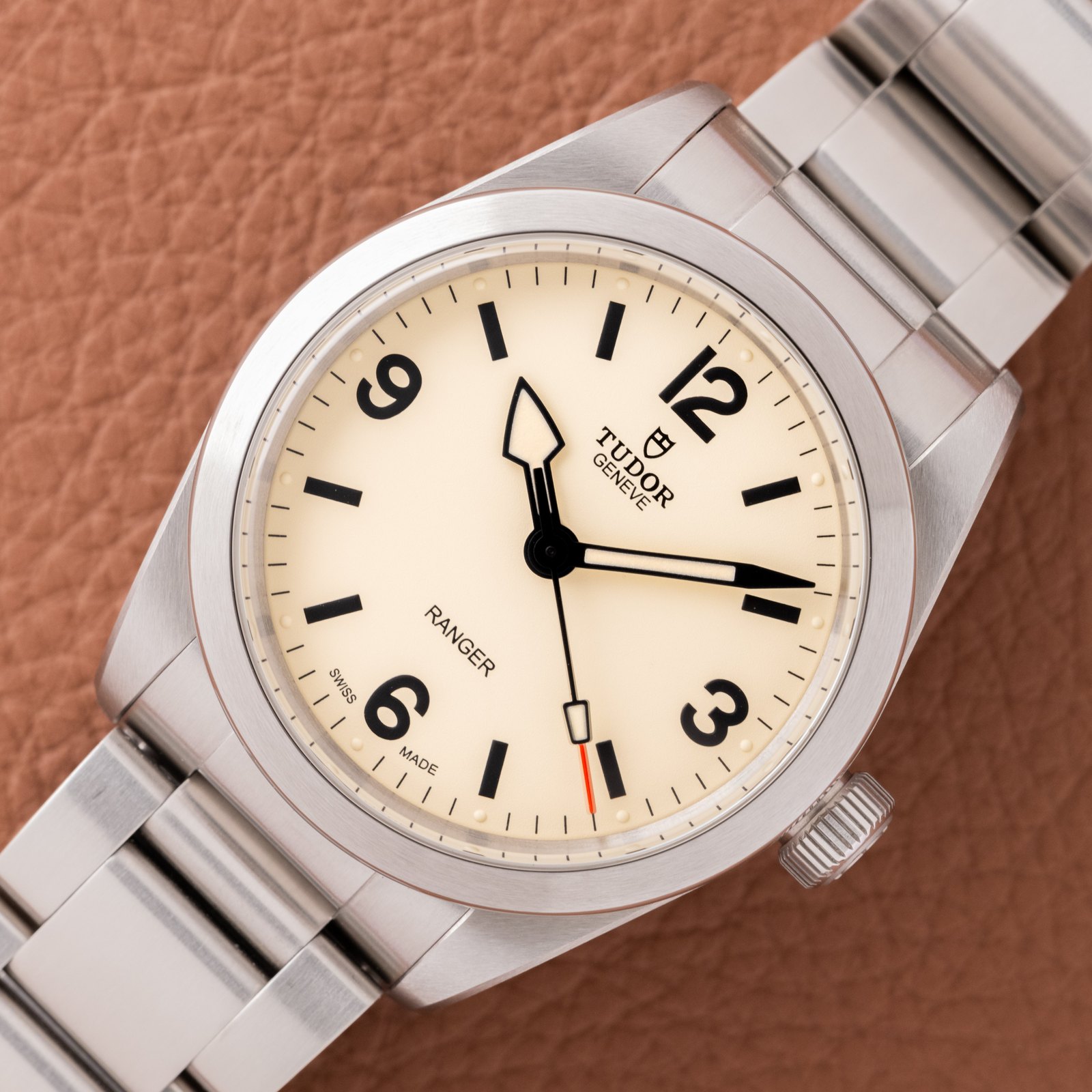
Tudor Ranger 36 Sand Beige (Ref. M79930), 2025
- Maker / attribution
- Tudor (maker)
- Date
- 2025
- Historical period
- Contemporary Horology (2010 – Present)
- Country of origin
- Switzerland
- Object type
- Wristwatch
- Dimensions
- Case 39 mm
- Stock no.
- Product 8737793376439
- Credit line
- Dealer listing, Huntington Company (product 8737793376439)
- Catalogue title (original)
- 2025 Tudor Ranger 36 Sand Beige - Box and papers (Ref. M79930) (English)
View the source record (dealer listing) ↗ (opens another website in a new tab)Suggest a correction
Record summary
Catalogued by Huntington Company (dealer) (stock number Product 8737793376439), this is a wristwatch by Tudor, made in Switzerland, dated 2025. The Atlas places it in the Contemporary Horology period (2010 – Present) of its Wristwatches collection. Recorded dimensions: Case 39 mm. The record is illustrated with 6 photographs.
Assembled from the source record's structured fields. Dates and attributions are given as the source states them; where a field is missing the Atlas leaves it blank rather than estimating.
Catalogue description
Dealer description — Huntington Company
History and Significance The Tudor Ranger has always occupied a different position from the brand’s dive watches and chronographs. Its design is rooted in the traditional field watch, with an emphasis on legibility, simplicity, and durability rather than complications or decorative finishing. The reference 79930 continues that philosophy while introducing a warmer and more distinctive aesthetic. The result is recognizably a Ranger, but with considerably more personality than the familiar black-dial configuration. The sand beige dial is the defining feature of this example. Its warm surface is paired with high-contrast black Arabic numerals and markers, creating an extremely clean and functional layout. The familiar Ranger numerals at three, six, nine, and twelve remain central to the design, while the black hands reinforce the utilitarian character of the watch. Depending on the lighting, the dial can shift from a muted beige to a warmer sandy tone. At 39mm, the stainless steel case keeps the proportions versatile without pushing the Ranger into oversized territory. The broad bezel and relatively open dial make the watch feel substantial, while the straightforward case architecture maintains the tool-watch character expected from the collection. The automatic movement underneath adds modern practicality without changing the simplicity of the design from the wrist. This particular Tudor was purchased new in 2025 and has remained with its original owner. It has been barely worn and is accompanied by its complete original set, preserving the boxes, paperwork, and accessories that belong with the watch. The combination of the sand beige dial, exceptional condition, and completeness makes the reference 79930 an especially attractive example of the modern Ranger. Writer's Thoughts The sand beige dial completely changes the Ranger. A model that is normally very restrained becomes noticeably warmer without losing the simplicity that makes the design work in the first place. The black numerals and hands provide enough contrast that the dial remains highly legible, while the unusual color gives the reference 79930 a personality of its own. It is still unmistakably Tudor, but it feels considerably less predictable than a conventional black field watch. Condition is another major strength of this example. The watch has had only one owner, was purchased in 2025, and has been barely worn, leaving the case and bracelet in exceptional condition. The complete original set has remained with the watch as well, making the package particularly appealing for a modern Tudor. Very little needs to be explained with an example preserved this well. Our Promise Every watch is thoroughly vetted, carefully described with complete transparency, and guaranteed authentic. Each piece is offered in honest condition, ensuring collectors receive a timepiece that reflects both originality and integrity. Specifications Brand: Tudor Model: Ranger Reference: M79930 Year: 2025 Case Material: Stainless steel Case Size: 39mm Dial: Sand beige dial with black Arabic numerals and hour markers Movement: Automatic Strap/Bracelet: Original Tudor stainless steel bracelet Buckle/Clasp: Original Tudor folding clasp Contents: Complete set with original box and paperwork Condition Case: The stainless steel case remains in exceptional condition with barely any evidence of wear. The surfaces and edges retain excellent definition throughout. Dial: The sand beige dial is exceptionally clean with no notable flaws or distractions. The printing, Arabic numerals, and hour markers remain crisp throughout. Hands: The original black hands remain exceptionally clean and provide strong contrast against the sand beige dial. Crystal: The crystal presents exceptionally well with no notable wear visible. Strap/Bracelet: The original stainless steel bracelet remains in exceptional condition with minimal evidence of wear. Buckle/Clasp: The original Tudor folding clasp presents exceptionally well with only minimal evidence of careful handling.
Historical context
Contemporary Horology (2010 – Present)
Silicon components, connected watches, optical-lattice research clocks and a thriving independent scene.
Smartwatches became the world's best-selling watches, while mechanical watchmaking focuses on craft, innovation (silicon components, new escapements) and independent makers.
Read the period in the timelineMore wristwatches from this periodEarlier: Mechanical Renaissance
Atlas type guide
Wristwatches
Bracelet watches were worn by women from the early nineteenth century — Breguet made one for Caroline Murat, Queen of Naples, in 1810–12 — but the wristwatch only became a man's instrument with military use and aviation in the early twentieth century. Between the World Wars it overtook the pocket watch; the 1920s and 1930s brought rectangular Art Deco cases, water-resistant cases and the first automatic winding systems.
After 1945 the wristwatch became a carrier of identity — dress watches, sports and dive watches, chronographs, calendars — produced by Swiss, American, Japanese, German, Soviet and Chinese industries. The quartz revolution after 1969 and the mechanical renaissance since the 1990s, including the rise of independent watchmakers, complete the story.
What to look for
- The reference number (between the lugs or inside the case back) and serial number, the starting point for dating.
- The calibre: its maker and number are often stamped under the dial or on the bridge.
- Originality of dial, hands and crown — refinished ('redial') dials are common.
- Case material marks: 18K/750, 14K/585, stainless steel, gold-filled, plated.
Dating clues
- Wire-lug cases: before c. 1925.
- Water-resistant screw-down cases: from 1926.
- Quartz movements: from 1969; sapphire crystals widespread after c. 1980.
General guidance written by the Atlas editors about this kind of object. It is not a statement about this particular piece; for that, rely on the source record above and on physical examination.
Related records
Wristwatches · c. 1973
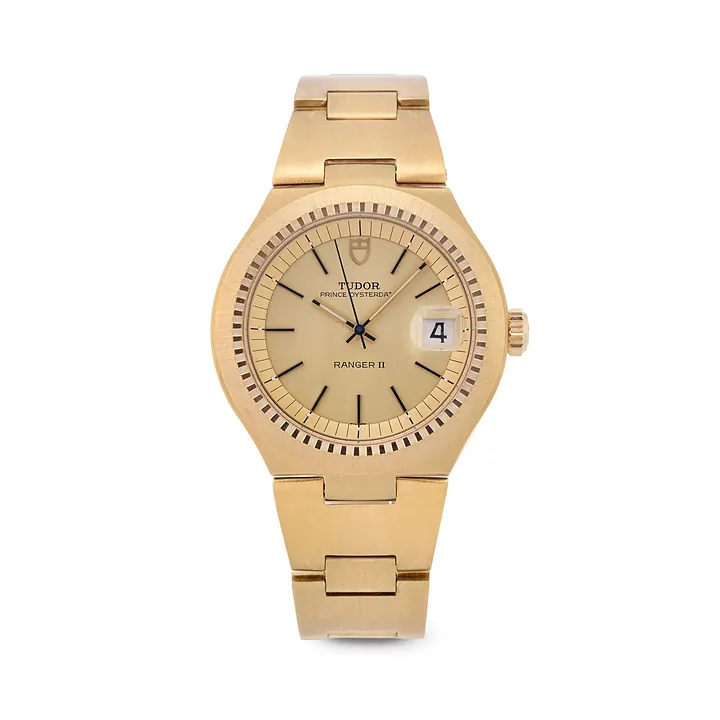
Tudor Prince Oysterdate Ranger II, ref. 9101/1, c. 1973
Antiquorum auction archive, Geneva
Wristwatches · c. 1973
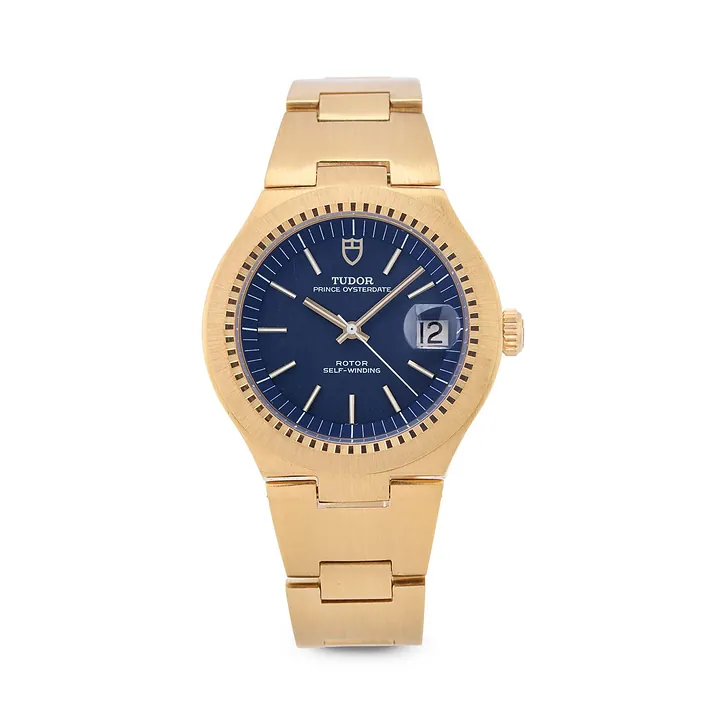
Tudor Prince Oysterdate, ref. 9101/1, c. 1973 (Antiquorum Lot 389-114)
Antiquorum auction archive, Geneva
Wristwatches · c. 1973
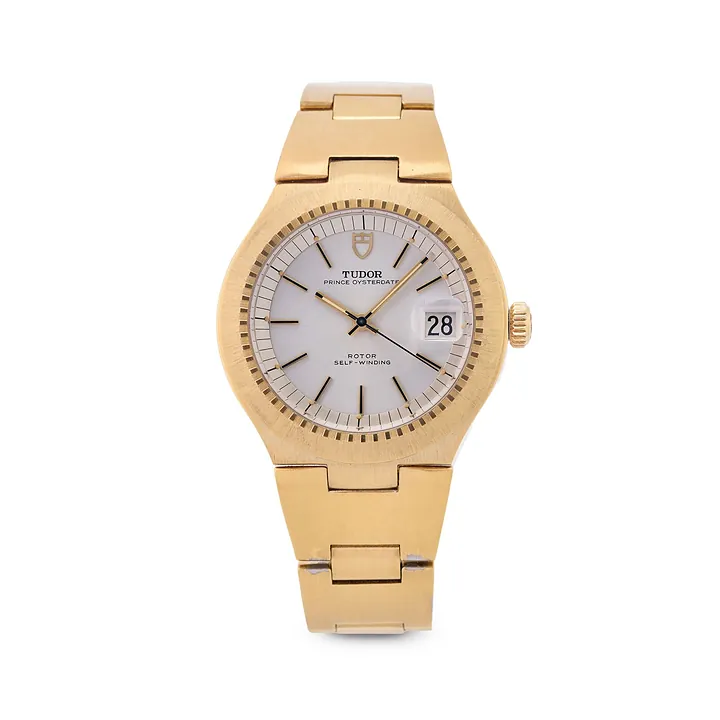
Tudor Prince Oysterdate, ref. 9101/1, c. 1973 (Antiquorum Lot 389-115)
Antiquorum auction archive, Geneva
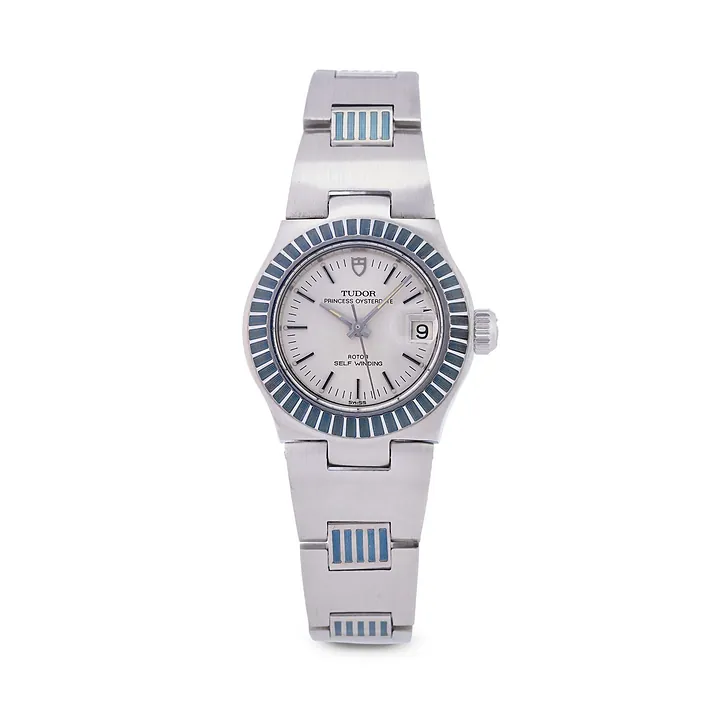
Wristwatches · c. 1974
Tudor Princess Oysterdate, ref. 9311/0, c. 1974
Antiquorum auction archive, Geneva

Wristwatches · c. 2010s
Breguet Type XXI, ref. 3810, c. 2010s (Antiquorum Lot 381-24)
Antiquorum auction archive, Geneva

Wristwatches · c. 2010s
Breguet Type XXI, ref. 3810, c. 2010s (Antiquorum Lot 386-229)
Antiquorum auction archive, Geneva

Wristwatches · Sold in September 2010
Breitling Cosmonaute, ref. A 22322, Sold in September 2010
Antiquorum auction archive, Geneva

Wristwatches · c. 2010
Corum Bubble Chrono, ref. 396.150.20, c. 2010
Antiquorum auction archive, Geneva