
Wristwatches · Wristwatch
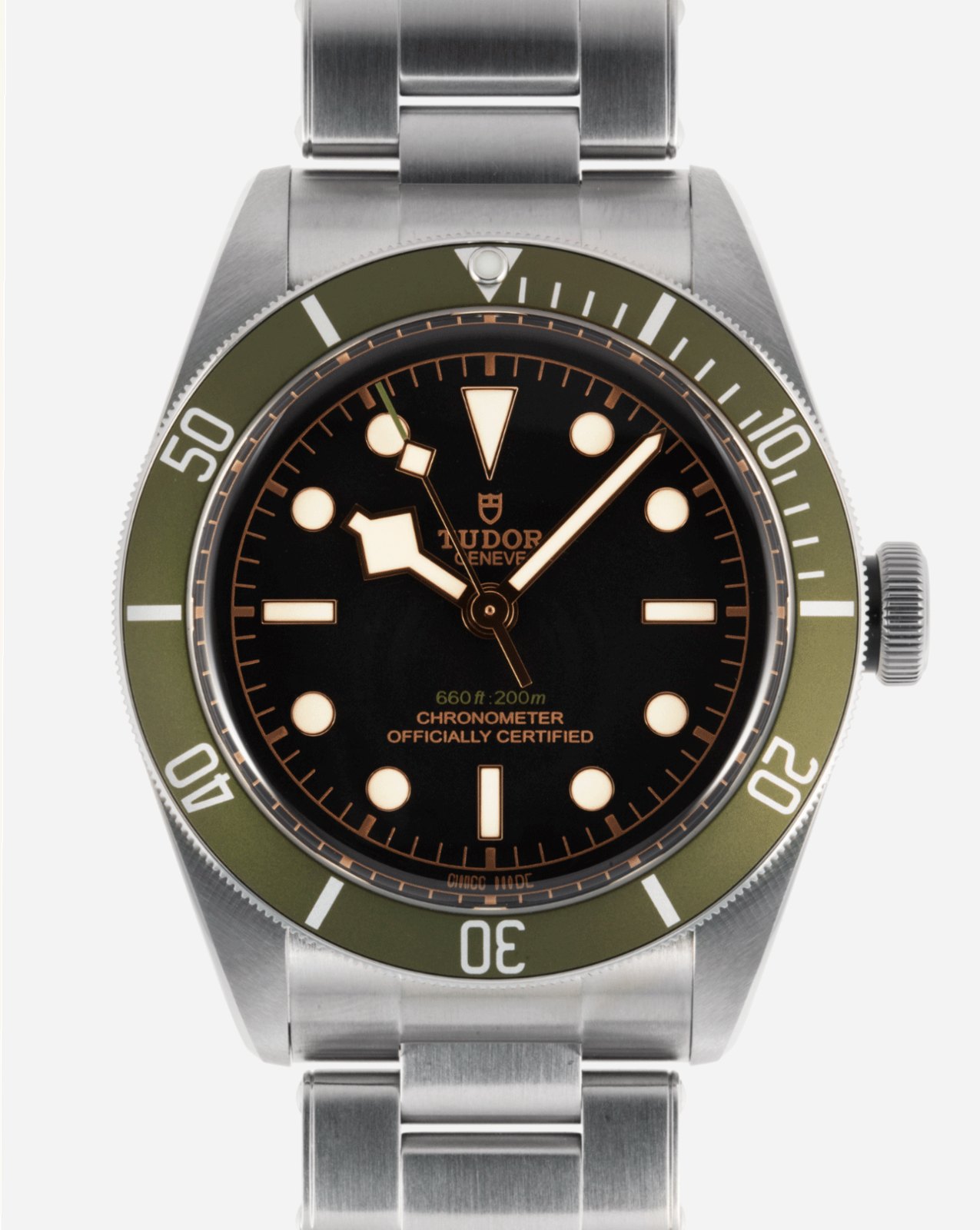
Tudor Black Bay Harrods Edition, 2021
- Maker / attribution
- Tudor (maker)
- Date
- 2021
- Historical period
- Contemporary Horology (2010 – Present)
- Country of origin
- Switzerland
- Object type
- Wristwatch
- Dimensions
- Case 41 mm
- Stock no.
- Product 6721451556951
- Credit line
- Dealer listing, S.Song Watches (product 6721451556951)
- Catalogue title (original)
- Tudor Black Bay Harrods Edition (English)
View the source record (dealer listing) ↗ (opens another website in a new tab)Suggest a correction
Record summary
Catalogued by S.Song Watches (dealer), Seattle (stock number Product 6721451556951), this is a wristwatch by Tudor, made in Switzerland, dated 2021. The Atlas places it in the Contemporary Horology period (2010 – Present) of its Wristwatches collection. Recorded dimensions: Case 41 mm. The record is illustrated with 6 photographs.
Assembled from the source record's structured fields. Dates and attributions are given as the source states them; where a field is missing the Atlas leaves it blank rather than estimating.
Catalogue description
Dealer description — S.Song Watches
After quite a few years of production, there is now a whole range of Black Bays varying in colours and case material. That being said, my favourite would certainly have to be this version. This Black Bay was made in collaboration with the famous British department store, Harrods and is sold exclusively through the Harrods Fine Watch Room. While I am always sceptical of brands releasing new models with colour changes as the only difference, this one would have to be the exception for me. The Harrods Black Bay comes with a never before seen green bezel, which is the same iconic green that has represented Harrods ever since its inception and green accents in its depth rating and the tip of the seconds hand. The chapter ring, logo and chronometer rating is all in gilt alongside the gold hour marker surrounds, which is also a nice nod to the gold font of the Harrods logo. Another nice touch is the reversal of the depth rating, where Tudor put the feet first (660ft/200m) as a tribute to the ‘Britishness’ of Harrods. While this is not strictly a limited edition as Tudor doesn’t do limiteds, there is a huge waitlist and Tudor aren’t making many of these. I have heard of clients waiting well over a year for their piece and the demand is out there. The green bezel is reminiscent of the Rolex ‘Kermit’ Submariner with its similar green bezel and I would certainly consider this the ‘Baby Kermit’. For a long time, Tudor has been seen as the ‘Poor Man’s Rolex’ as when they were first created, their philosophy was to use Rolex cases and outsourced movements to save on cost. The old Tudor Submariners used ETA movements and for awhile the Black Bay did too. Now though, this Black Bay is powered by an in-house self-winding calibre MT5602, housed in a 41mm stainless steel bevelled case and takes on its own design cues without having to follow its big brother. Today, Tudor is seen as a brand that stands on its own two feet and has cemented itself as a powerful brand in its own right.
Historical context
Contemporary Horology (2010 – Present)
Silicon components, connected watches, optical-lattice research clocks and a thriving independent scene.
Smartwatches became the world's best-selling watches, while mechanical watchmaking focuses on craft, innovation (silicon components, new escapements) and independent makers.
Read the period in the timelineMore wristwatches from this periodEarlier: Mechanical Renaissance
Atlas type guide
Wristwatches
Bracelet watches were worn by women from the early nineteenth century — Breguet made one for Caroline Murat, Queen of Naples, in 1810–12 — but the wristwatch only became a man's instrument with military use and aviation in the early twentieth century. Between the World Wars it overtook the pocket watch; the 1920s and 1930s brought rectangular Art Deco cases, water-resistant cases and the first automatic winding systems.
After 1945 the wristwatch became a carrier of identity — dress watches, sports and dive watches, chronographs, calendars — produced by Swiss, American, Japanese, German, Soviet and Chinese industries. The quartz revolution after 1969 and the mechanical renaissance since the 1990s, including the rise of independent watchmakers, complete the story.
What to look for
- The reference number (between the lugs or inside the case back) and serial number, the starting point for dating.
- The calibre: its maker and number are often stamped under the dial or on the bridge.
- Originality of dial, hands and crown — refinished ('redial') dials are common.
- Case material marks: 18K/750, 14K/585, stainless steel, gold-filled, plated.
Dating clues
- Wire-lug cases: before c. 1925.
- Water-resistant screw-down cases: from 1926.
- Quartz movements: from 1969; sapphire crystals widespread after c. 1980.
General guidance written by the Atlas editors about this kind of object. It is not a statement about this particular piece; for that, rely on the source record above and on physical examination.
Related records
Wristwatches · c. 1973
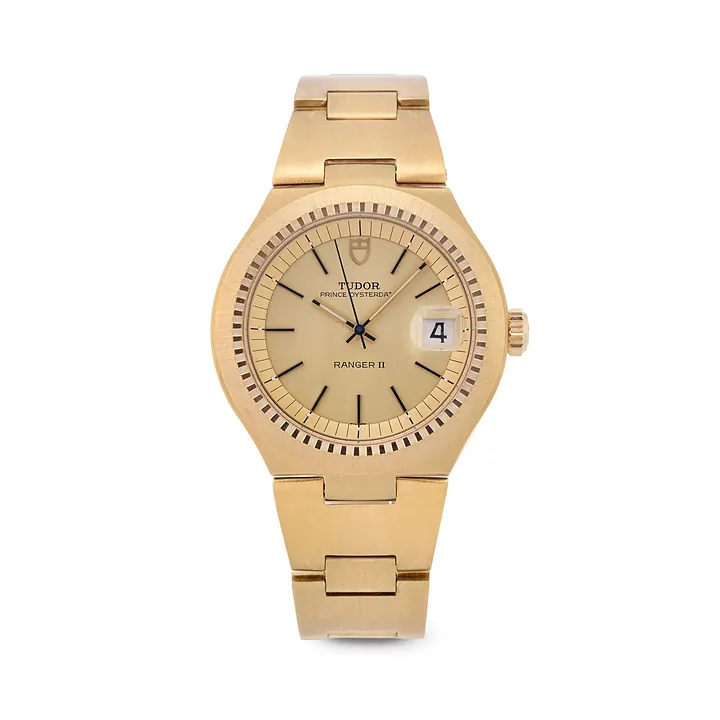
Tudor Prince Oysterdate Ranger II, ref. 9101/1, c. 1973
Antiquorum auction archive, Geneva
Wristwatches · c. 1973
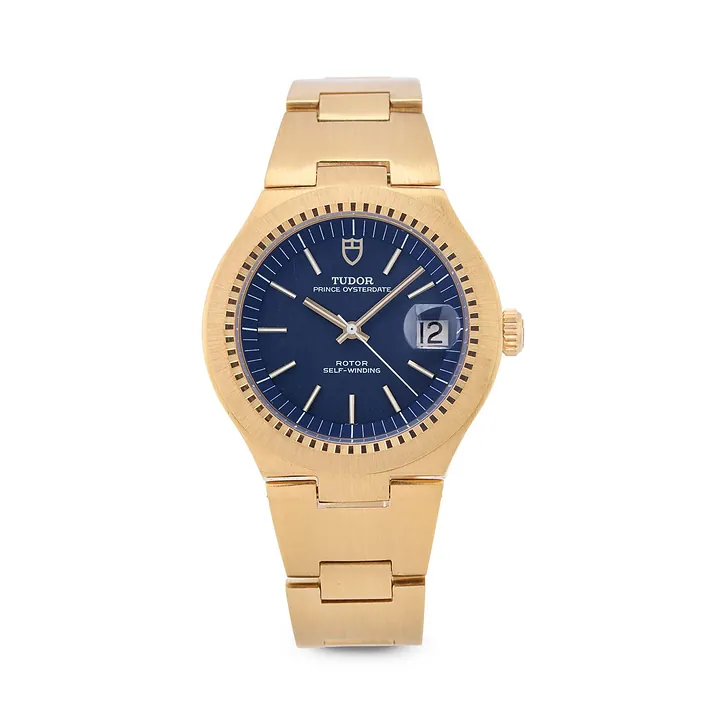
Tudor Prince Oysterdate, ref. 9101/1, c. 1973 (Antiquorum Lot 389-114)
Antiquorum auction archive, Geneva
Wristwatches · c. 1973
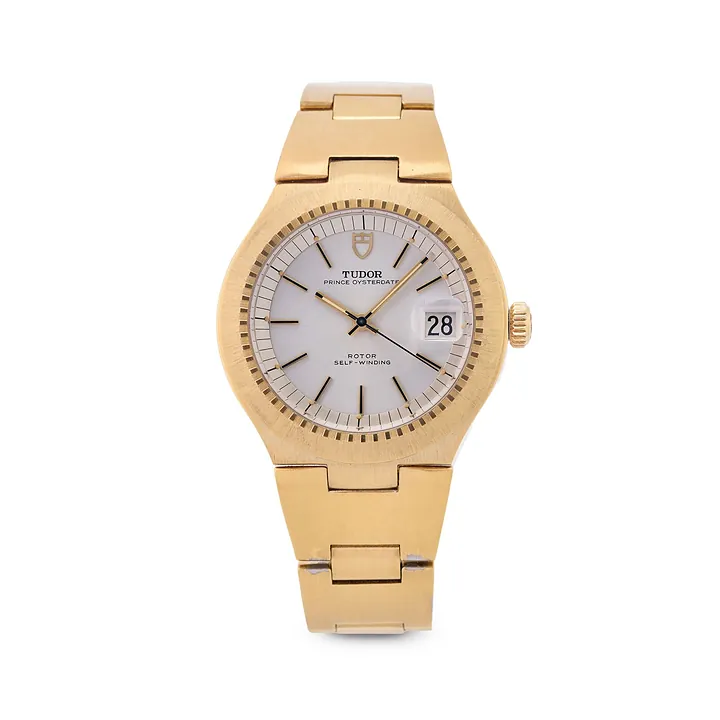
Tudor Prince Oysterdate, ref. 9101/1, c. 1973 (Antiquorum Lot 389-115)
Antiquorum auction archive, Geneva
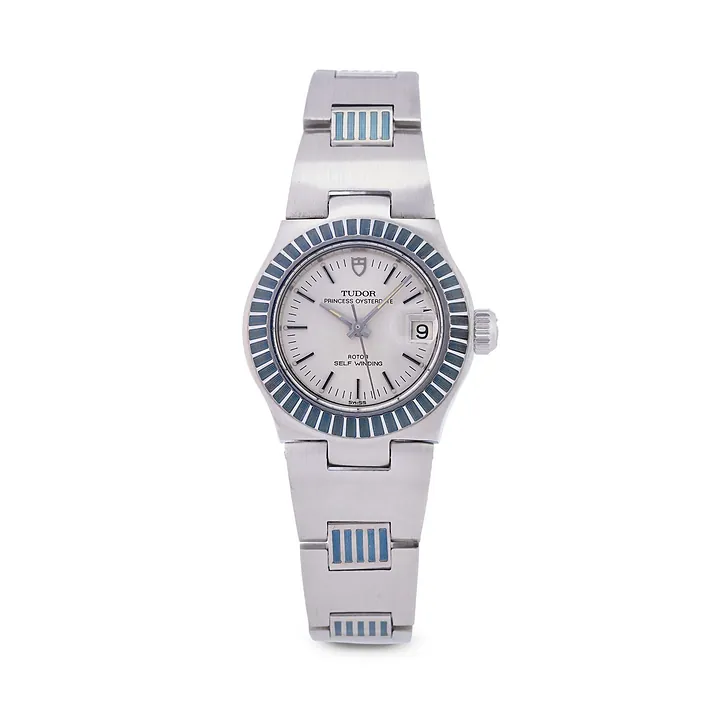
Wristwatches · c. 1974
Tudor Princess Oysterdate, ref. 9311/0, c. 1974
Antiquorum auction archive, Geneva

Wristwatches · c. 2010s
Breguet Type XXI, ref. 3810, c. 2010s (Antiquorum Lot 381-24)
Antiquorum auction archive, Geneva

Wristwatches · c. 2010s
Breguet Type XXI, ref. 3810, c. 2010s (Antiquorum Lot 386-229)
Antiquorum auction archive, Geneva

Wristwatches · Sold in September 2010
Breitling Cosmonaute, ref. A 22322, Sold in September 2010
Antiquorum auction archive, Geneva

Wristwatches · c. 2010
Corum Bubble Chrono, ref. 396.150.20, c. 2010
Antiquorum auction archive, Geneva