
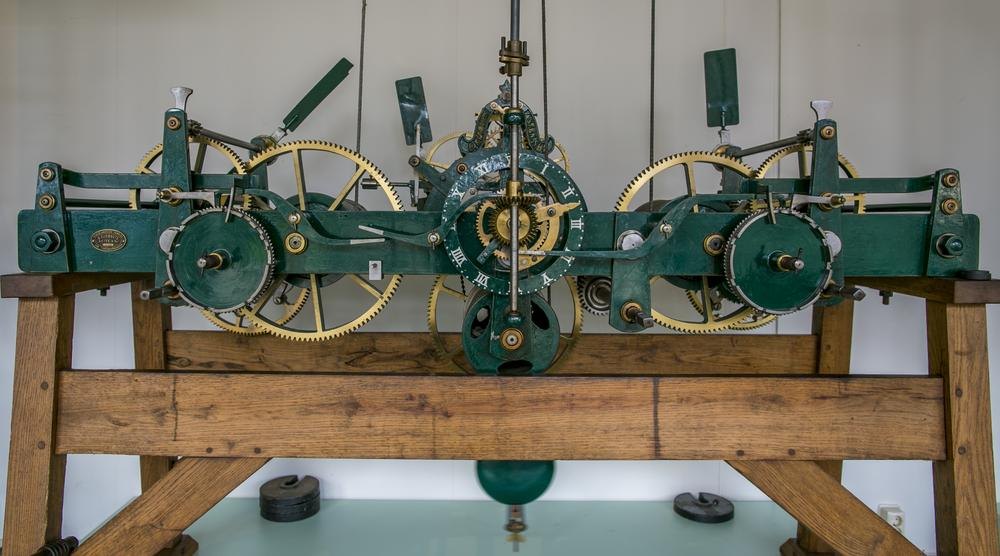
Movements & Components · Tower clock movement
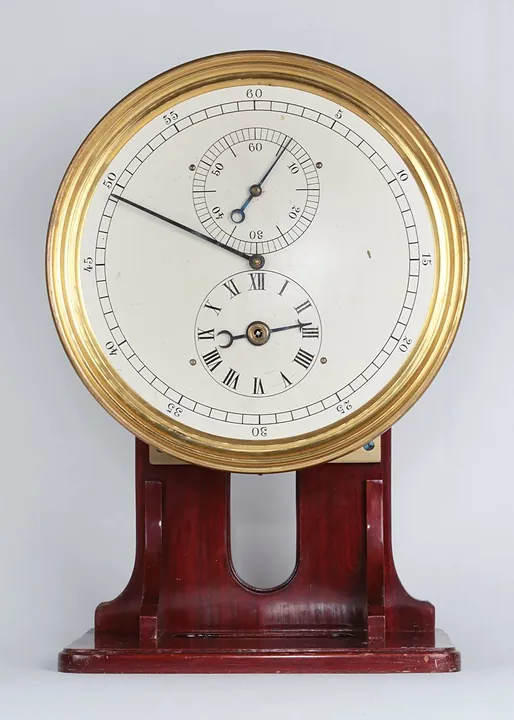
Tower clock movement by Eijsbouts te Asten, Netherlands, 1908
- Maker / attribution
- Eijsbouts te Asten (Maker)
- Date
- 1908
- Historical period
- Golden Age of Mechanical Watchmaking (1900 – 1945)
- Country of origin
- Netherlands
- Place
- Meppel, Nederland, Europa
- Object type
- Tower clock movement
- Dimensions
- Hoogte: 475 mm, diameter: mm
- Holding institution
- Museum Klok & Peel
- Accession / object no.
- 57
- Credit line
- Museum Klok & Peel
- Catalogue title (original)
- Torenuurwerk (ankergang) met twee slagwerken (Dutch)
View the source record ↗ (opens another website in a new tab)Suggest a correction
Record summary
Held and catalogued by Museum Klok & Peel (object number 57), this is a tower clock movement by Eijsbouts te Asten, made in Meppel, Nederland, Europa, Netherlands, dated 1908. The Atlas places it in the Golden Age of Mechanical Watchmaking period (1900 – 1945) of its Movements & Components collection. Recorded dimensions: Hoogte: 475 mm, diameter: mm. The record is illustrated with 1 photograph.
Assembled from the source record's structured fields. Dates and attributions are given as the source states them; where a field is missing the Atlas leaves it blank rather than estimating.
Catalogue description
Catalogue description from Museum Klok & Peel
Torenuurwerk dat duidelijk aantoont hoe de industriele techniek van de negentiende eeuw oude principes nieuwe vorm wist te geven. In het midden bevindt zich het gangwerk, het eigenlijke uurwerk, met een eigen gewichtstrommel, hoewel de slinger zelf door een extra gewichtje wordt gaande gehouden. Hierdoor wordt de nauwkeurigheid verhoogd. Links en rechts in het uurwerk bevinden zich twee slagwerken met eigen gewichtstrommels. Deze kunnen respectievelijk om kwart voor het uur en op het hele uur de ene klok, en om kwart over het uur en op het halve uur de andere klok aanslaan. Dit uurwerk staat bijna aan het einde van een ontwikkeling die meer eeuwen duurde. De eerste elektrische uurwerken waren er al. Niet veel later zou met deze, en nog later elektronische en radiogestuurde uurwerken, het tijdperk van het mechanischetorenuurwerk eindigen. Opschrift: Aan de linkerzijde is het naamplaatje van de firma bevestigd (ovaal van vorm): Nederlandsche Fabriek B.Eijsbouts Asten N.Br.) 296 van Torenuurwerken.
Shown in the original language of the source catalogue. An editor-reviewed English translation has not yet been published; we do not publish machine translations as authoritative text.
Historical context
Golden Age of Mechanical Watchmaking (1900 – 1945)
The wristwatch displaces the pocket watch; waterproof cases, self-winding and grand complications.
Precision lever movements, electric clock mechanisms and new alloys (invar, elinvar) characterised the period.
Read the period in the timelineMore movements & components from this periodEarlier: Industrial Revolution
Atlas type guide
Clock and watch movements
The movement is the mechanism of a clock or watch, without its case and dial. It consists of the power source (weight or mainspring in its barrel, sometimes with a fusee), the going train of wheels and pinions, the escapement and oscillator, the motion work that drives the hands, and in many cases additional trains for striking or complications.
From the eighteenth century watch movements were increasingly produced in stages: Swiss and French ébauche makers supplied rough movements that finishers, repasseurs and retailers completed and signed. Calibre numbers — first used systematically by American and Swiss factories in the nineteenth century — make it possible to identify movements, find spare parts and date watches.
What to look for
- Plate and bridge layout: full plate, three-quarter plate, Lépine bar calibre, bridges and cocks.
- Jewel count and whether jewels are set in chatons or rubbed in.
- Signatures, calibre and serial numbers on the plate or under the dial.
- Finishing: Geneva stripes (Côtes de Genève), perlage, bevelled edges, blued screws.
- Fusee and chain, going barrel, or electrical components.
Dating clues
- Full-plate English movements dominate before c. 1850; three-quarter plate and Lépine calibres after.
- Jewelled movements spread after Facio and Debaufre's patent of 1704, mainly in English work until c. 1800.
- Calibre numbers and factory serials allow close dating for industrial production after c. 1850.
General guidance written by the Atlas editors about this kind of object. It is not a statement about this particular piece; for that, rely on the source record above and on physical examination.
Related records
Movements & Components · 1920–1940
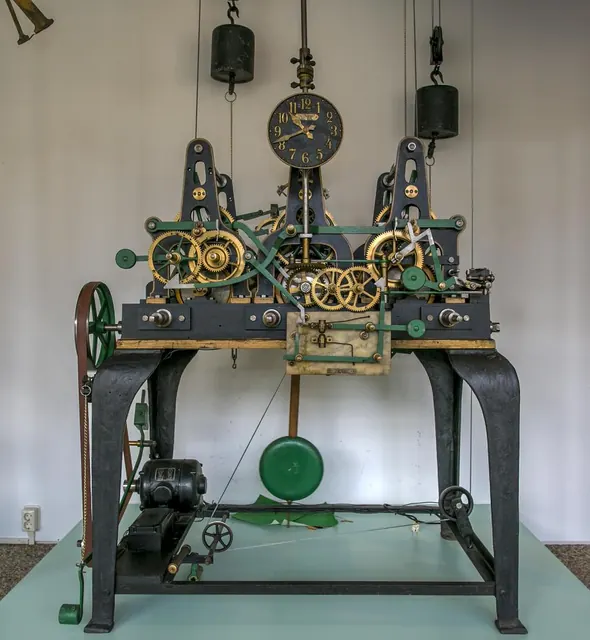
Tower clock movement by te Melle-Buer (D) Korfhage, Netherlands, 1920–1940
Museum Klok & Peel
Movements & Components · 1900–1999
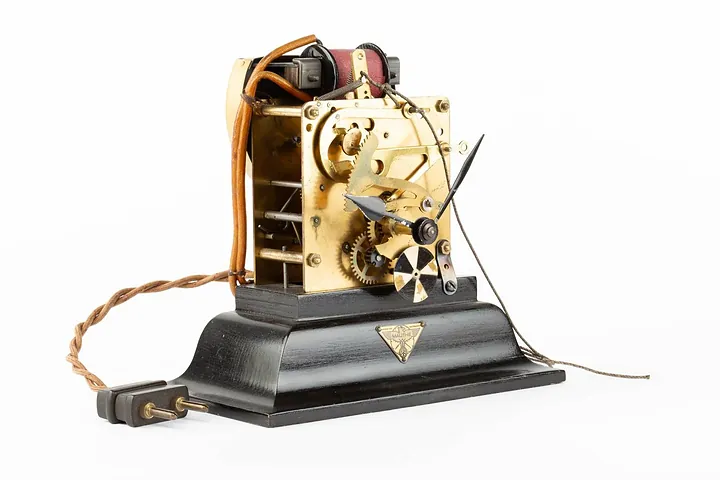
Clock movement by Friedrich Mauthe, Germany, 1900–1999 (no. 59468)
German Clock Museum
Movements & Components · 1900–1999
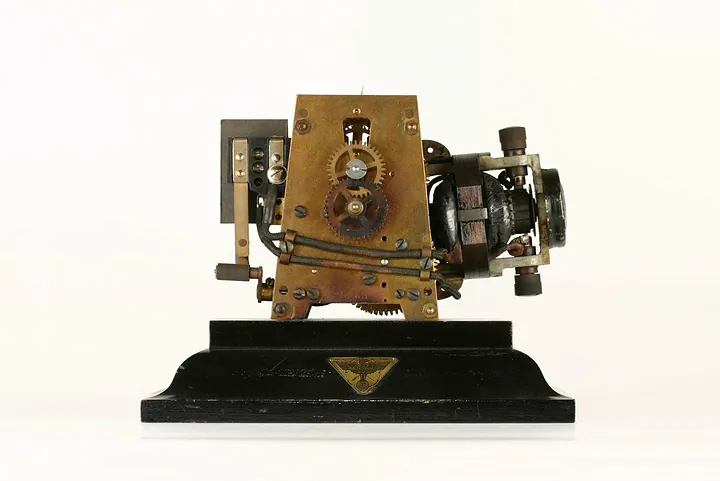
Clock movement by Friedrich Mauthe, Germany, 1900–1999 (no. 59469)
German Clock Museum
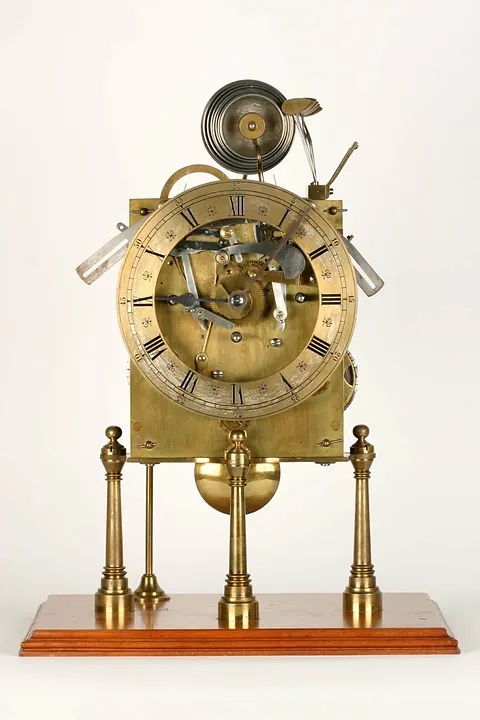
Movements & Components · c. 1900
Clock movement by Mathias Bäuerle, Germany, c. 1900
German Clock Museum
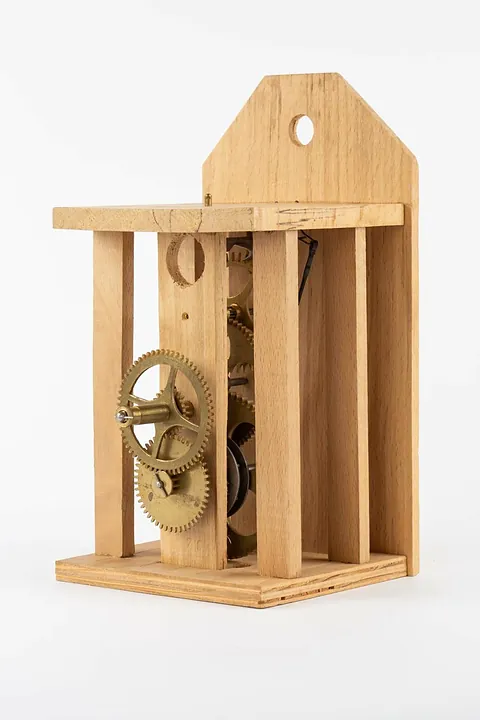
Movements & Components · 1900–1999
Clock movement, Germany, 1900–1999 (no. 59377)
German Clock Museum
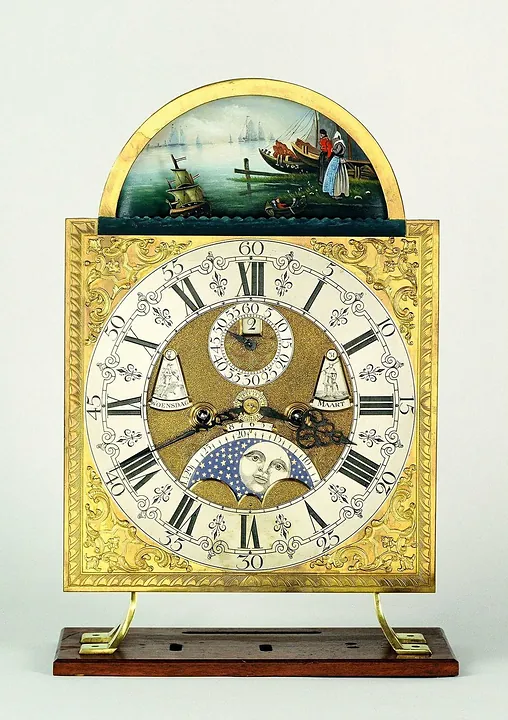
Movements & Components · 1905
Clock movement by Lorenz Furtwängler Söhne, Germany, 1905
German Clock Museum
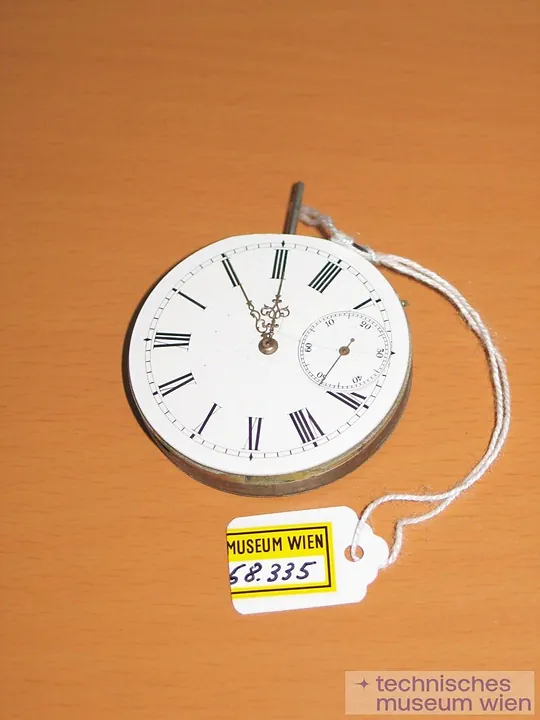
Movements & Components · 1907
Clock movement, Germany, 1907
Vienna Museum of Science and Technology
Movements & Components · 1909
Clock movement by A. G. für Uhrenfabrikation Lenzkirch, Germany, 1909
German Clock Museum