
Wristwatches · Wristwatch
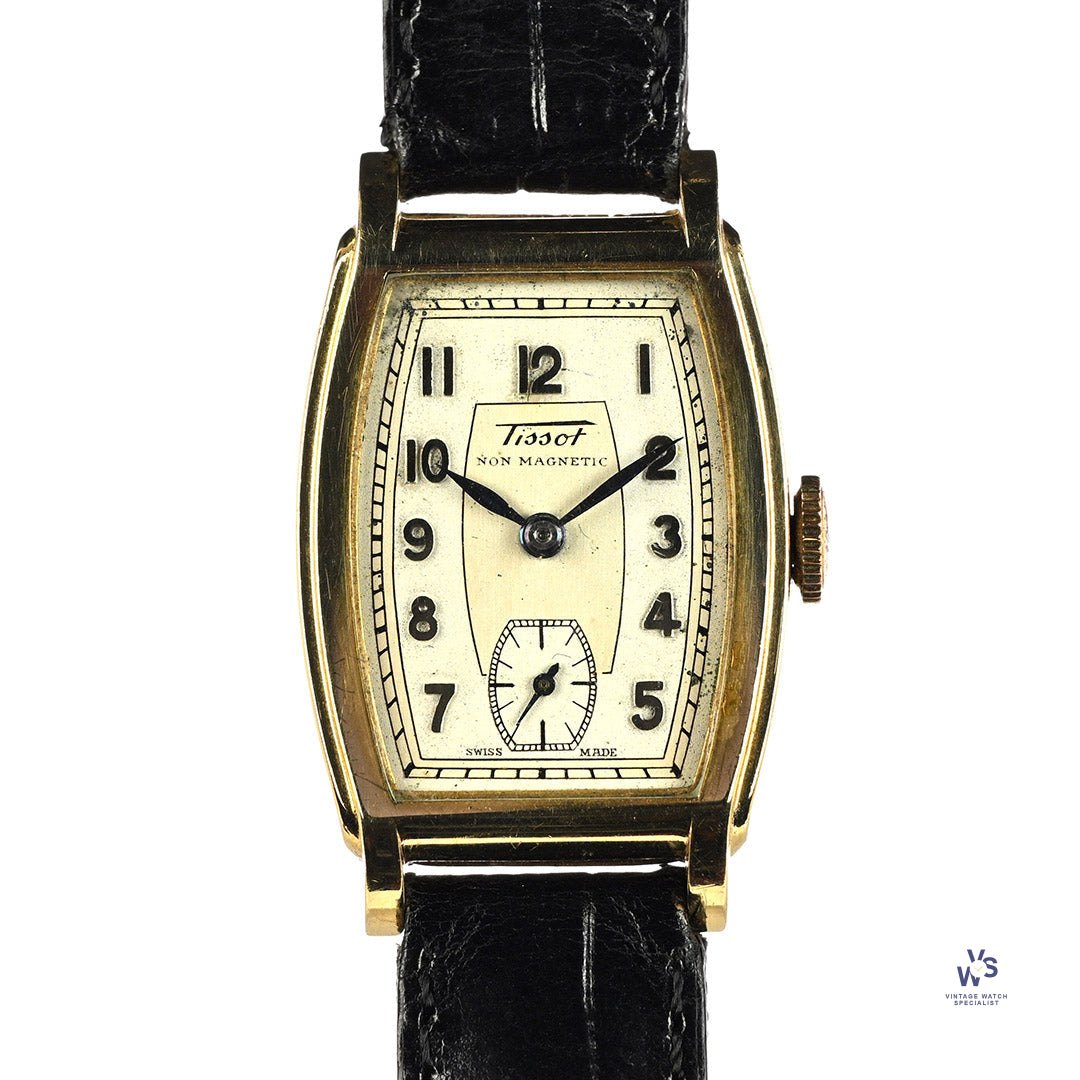
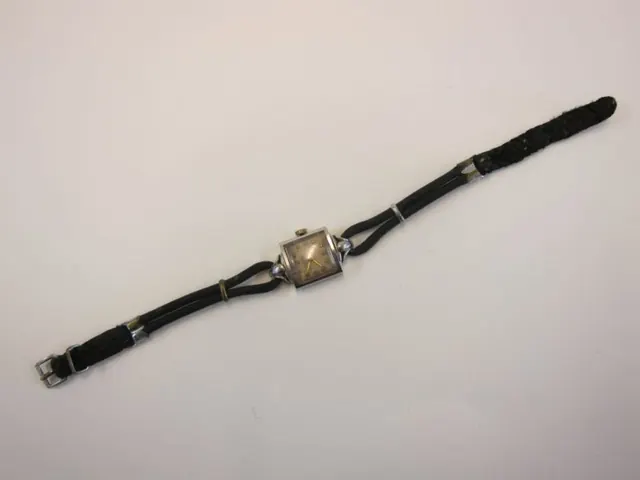
Tissot 9k Gold Art Deco Dress Watch, Dennison Case, circa 1932
- Maker / attribution
- Tissot (maker)
- Date
- c. 1932
- Historical period
- Golden Age of Mechanical Watchmaking (1900 – 1945)
- Country of origin
- Switzerland
- Object type
- Wristwatch
- Materials / technique
- gold
- Dimensions
- Case 23.5 mm
- Stock no.
- vws3738
- Credit line
- Dealer listing, Vintage Watch Specialist (vws3738)
- Catalogue title (original)
- Tissot - 9k Gold Art Deco Dress Watch - Dennison Case - c.1932 (English)
View the source record (dealer listing) ↗ (opens another website in a new tab)Suggest a correction
Record summary
Catalogued by Vintage Watch Specialist (dealer), United Kingdom (stock number vws3738), this is a wristwatch by Tissot, made in Switzerland, dated c. 1932. The Atlas places it in the Golden Age of Mechanical Watchmaking period (1900 – 1945) of its Wristwatches collection. Materials and techniques recorded by the source: gold. Recorded dimensions: Case 23.5 mm. The record is illustrated with 6 photographs.
Assembled from the source record's structured fields. Dates and attributions are given as the source states them; where a field is missing the Atlas leaves it blank rather than estimating.
Catalogue description
Dealer description — Vintage Watch Specialist
An Absolutely Charming Vintage Tissot Dress Watch with an Exquisite 9k Gold Dennison Case and Stunning Sector Dial, c.1932 Founded in 1853 in Le Locle, Switzerland, Tissot quickly gained a reputation for innovation and precision. Known for the first mass-produced pocket watch and pioneering dual-timezone models, Tissot became a leader in accessible Swiss horology. Today, it remains celebrated for blending tradition with modern technology and design. What's on Offer We're delighted to offer this exquisite vintage Tissot for sale - housed in a finely crafted 9k gold tonneau-shaped case by Dennison—a British case maker renowned for its work with prestigious Swiss brands of the era. The elegant contours of the case are perfectly echoed by the watch’s sector dial, which features a soft ecru tone that has aged beautifully over time. The dial is a masterclass in early 20th-century design: bold black Arabic numerals stand proudly against the warm background, while slender leaf hands in blued steel lend an unmistakable touch of pre-war sophistication. The character and balance of this piece are elevated by its manual-winding Tissot 20 calibre movement, a reliable 15-jewel mechanical heart that speaks to the brand’s technical heritage. This Tissot remains in superb preowned condition and is fitted with a classic leather strap that pairs perfectly with the warm gold case. At just 23.5mm wide, this watch wears with all the elegance and refinement you'd expect from a timepiece of this era—understated, yet full of presence - we love it!
Historical context
Golden Age of Mechanical Watchmaking (1900 – 1945)
The wristwatch displaces the pocket watch; waterproof cases, self-winding and grand complications.
The wristwatch overtook the pocket watch. Military use in the First World War, aviation, water-resistant cases (1926), automatic winding (1923–31), rectangular Art Deco designs and early chronographs and calendars defined the period.
Read the period in the timelineMore wristwatches from this periodEarlier: Industrial Revolution
Atlas type guide
Wristwatches
Bracelet watches were worn by women from the early nineteenth century — Breguet made one for Caroline Murat, Queen of Naples, in 1810–12 — but the wristwatch only became a man's instrument with military use and aviation in the early twentieth century. Between the World Wars it overtook the pocket watch; the 1920s and 1930s brought rectangular Art Deco cases, water-resistant cases and the first automatic winding systems.
After 1945 the wristwatch became a carrier of identity — dress watches, sports and dive watches, chronographs, calendars — produced by Swiss, American, Japanese, German, Soviet and Chinese industries. The quartz revolution after 1969 and the mechanical renaissance since the 1990s, including the rise of independent watchmakers, complete the story.
What to look for
- The reference number (between the lugs or inside the case back) and serial number, the starting point for dating.
- The calibre: its maker and number are often stamped under the dial or on the bridge.
- Originality of dial, hands and crown — refinished ('redial') dials are common.
- Case material marks: 18K/750, 14K/585, stainless steel, gold-filled, plated.
Dating clues
- Wire-lug cases: before c. 1925.
- Water-resistant screw-down cases: from 1926.
- Quartz movements: from 1969; sapphire crystals widespread after c. 1980.
General guidance written by the Atlas editors about this kind of object. It is not a statement about this particular piece; for that, rely on the source record above and on physical examination.
Related records
Pocket Watches · 1971–2001
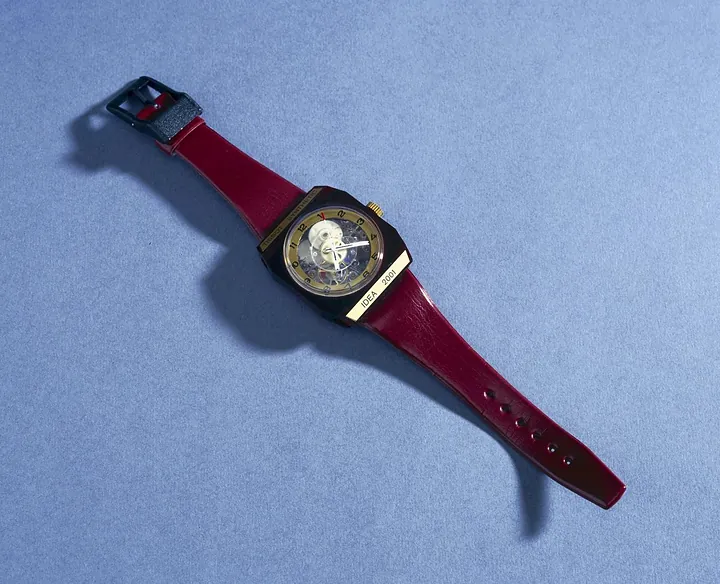
"Tissot synthetic idea 2001" the first plastic watch, introduced in 1971
Science Museum Group, London
Wristwatches · c. 1960
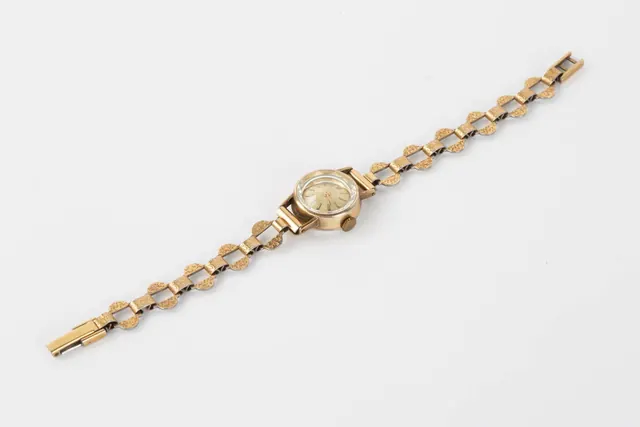
Wristwatch by Tissot, Switzerland, c. 1960
German Clock Museum
Wristwatches · 1930s
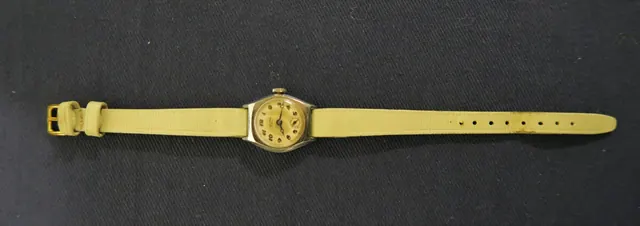
Wristwatch by Tissot, Switzerland, 1930s
HKM / Kulttuurihistoriallinen
Wristwatches · 1950–1960
Wristwatch by Tissot, 1950–1960
Modemuseum Hasselt

Wristwatches · 1931
Rolex 'Oyster Perpetual' rotor self-winding wrist-watch, lever escapement, in steel case with glass in back, Montres Rolex SA, Geneva, Switzerland, 1931
Science Museum Group, London

Wristwatches · 1900–1999
Wristwatch by Certina, Switzerland, 1900–1999
Nordic Museum Foundation

Wristwatches · 1900–1999
Wristwatch by Omega, Västerås, 1900–1999
Nordic Museum Foundation

Wristwatches · 1900–1999
Wristwatch by Universal, Switzerland, 1900–1999
Nordic Museum Foundation