
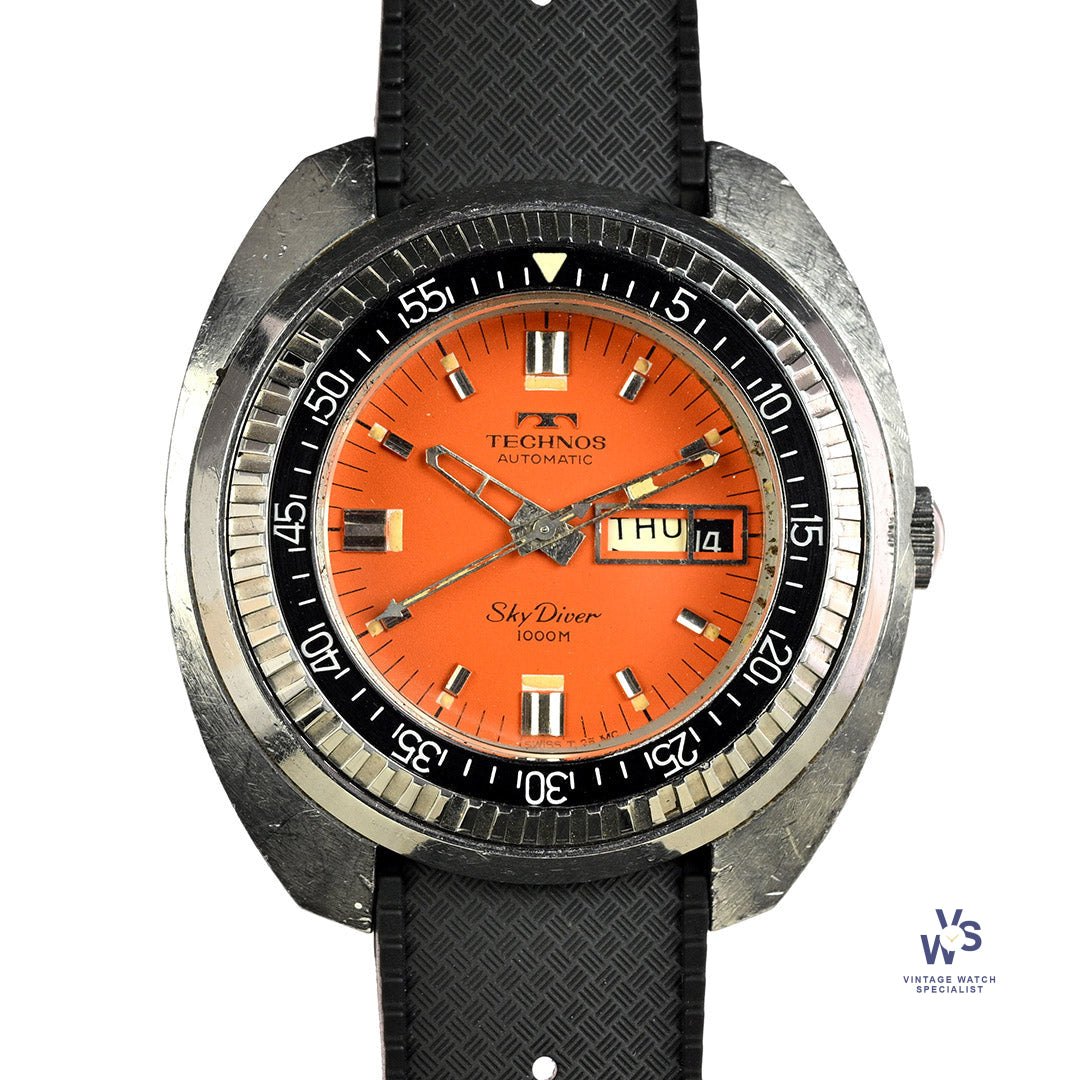
Wristwatches · Wristwatch
Technos Automatic Sky Diver, Calendar Function, circa 1970s
- Maker / attribution
- Technos (maker)
- Date
- c. 1970s
- Historical period
- Quartz Revolution (1969 – 1990)
- Country of origin
- Unrecorded in source
- Object type
- Wristwatch
- Stock no.
- vws3567
- Credit line
- Dealer listing, Vintage Watch Specialist (vws3567)
- Catalogue title (original)
- Technos Automatic Sky Diver - Calendar Function - c.1970s - Provenance Included (English)
View the source record (dealer listing) ↗ (opens another website in a new tab)Suggest a correction
Record summary
Catalogued by Vintage Watch Specialist (dealer), United Kingdom (stock number vws3567), this is a wristwatch by Technos, dated c. 1970s. The Atlas places it in the Quartz Revolution period (1969 – 1990) of its Wristwatches collection. The record is illustrated with 6 photographs.
Assembled from the source record's structured fields. Dates and attributions are given as the source states them; where a field is missing the Atlas leaves it blank rather than estimating.
Catalogue description
Dealer description — Vintage Watch Specialist
A Striking and Collectable Technos Sky Diver 1000m with a Vivid Orange Dial and Day/Date Function, in Original Condition, c.1970s Technos was founded in 1900 in the Jura Mountains of Switzerland, gaining recognition for producing robust, stylish, and affordable timepieces. The brand became especially popular from the 1950s through the 1970s, with a strong following in Latin America and Asia. Known for innovative designs and reliable Swiss movements, Technos offered everything from elegant dress watches to rugged sports models. What's on Offer We are delighted to present this striking Technos Sky Diver 1000m — a serious diver’s watch with bags of vintage charm. One of my personal favourites as my father's last watch before he passed was a Technos so my soft spot for the brand lives on and that coupled with my favourite dial color...orange! The vivid orange dial immediately commands attention, housing applied hour markers each topped with luminous plots, and bold sword hands that still retain some of their original lume. A black bezel insert with minute track sits neatly within an engine-turned steel surround, all framed by a chunky tonneau-shaped stainless steel case. Built for depth and designed with flair, this Sky Diver is a true 1970s tool watch and an irresistible piece for collectors with its retro vibe and nostalgic charm - and the added bonus with this particular watch is the fact we purchased the watch from the son of the original owner who wore the watch during his diving career and in fact taught his son to also dive. We have photos and an email which we will include with this watch for the new custodian...see extract below! “Hi Javid, Apologies for the delay in getting back to you after we spoke earlier in the month regarding the Technos watch. I've been through the old photos we have but I haven't been able to find one that clearly shows my dad (Mike xxxxx) wearing the watch (i.e. a photo where you can see the orange face). The best one I could find is attached (see Dad & watch) where you can see him standing with one of his work colleagues; the elasticated bracelet and bezel can be seen but it's hard to see the orange face (just possible on the original photo). This would have been taken in roughly 1982 around the time when we moved from Tyldesley (near Manchester) to Inverbervie (near Aberdeen) as Dad had taken a job in the Britoil offices rather than working offshore on one of their oil platforms (called Thistle). The other photos show my dad learning to dive (Tenby, July 1976) and diving under ice with the Worsley Sub-Aqua Club (I think this may have been the cold winter of 1978/79 - not that I can remember!). I spoke to my Mum (Carol xxxxx) about the watch; she can certainly remember Dad wearing it and using it for diving but she can't remember the year he got it or where he bought it from. For completeness/interest, I've also included a picture of Dad and I diving in the late 1990's/early 2000's and a picture of my daughter and I doing her first dive in October 2022 whilst on holiday in Sicily so, all in, the family have been diving for about 50 years now!"
Historical context
Quartz Revolution (1969 – 1990)
Seiko's Astron begins mass quartz timekeeping; traditional industries contract sharply.
Quartz and digital watches transformed the market after 1969. Swiss employment collapsed, Japanese and Hong Kong production soared, and the Swatch (1983) helped the Swiss industry recover; mechanical watches survived as luxury goods.
Read the period in the timelineMore wristwatches from this periodEarlier: Modern Mechanical Horology
Atlas type guide
Dive and water-resistant watches
Keeping water and dust out of a wristwatch was a long-standing challenge. Rolex's screw-down Oyster case (1926) and Omega's Marine (1932) were landmarks; in the early 1950s Blancpain's Fifty Fathoms and Rolex's Submariner defined the professional dive watch with rotating bezels for timing dives, luminous dials and high water resistance. The ISO 6425 standard (1982) later codified what a 'diver's watch' must do.
Dive watches became icons of post-war design and exploration, and their evolution — helium escape valves, ceramic bezels, saturation-diving depth ratings — records the history of underwater work.
What to look for
- Unidirectional or bidirectional rotating bezel with minute markings.
- Screw-down crown and case back; depth rating printed on the dial.
- Luminous hands and markers (radium before c. 1960, tritium c. 1960–1998, then Super-LumiNova).
- Reference numbers on the case between the lugs or inside the back.
Dating clues
- Screw-down Oyster cases: from 1926.
- Professional dive watches: from 1953.
- Tritium 'T' marks on dials: c. 1960–1998.
General guidance written by the Atlas editors about this kind of object. It is not a statement about this particular piece; for that, rely on the source record above and on physical examination.
Related records
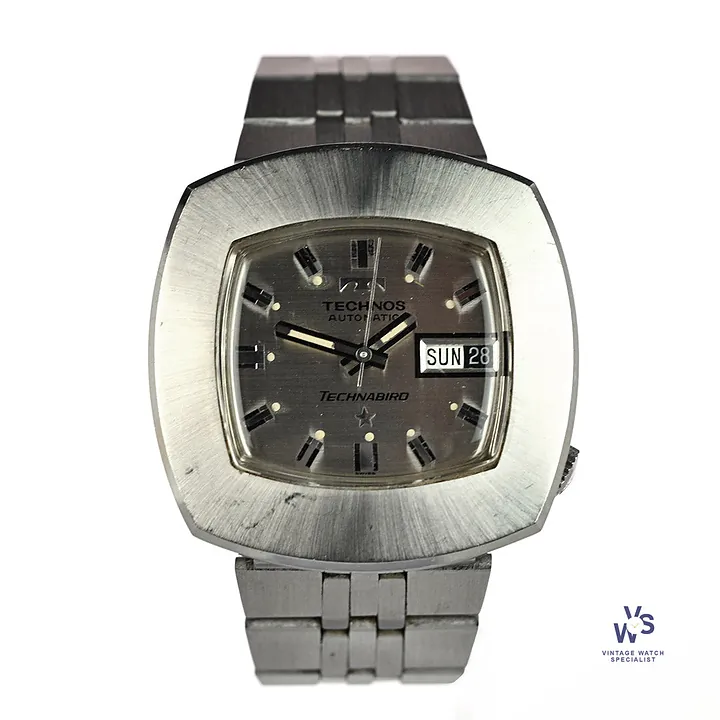
Wristwatches · c. 1970s
Technos Technabird Automatic, Silver Dial with Calendar, Stainless Steel TV Case, circa 1970s
Vintage Watch Specialist (dealer), United Kingdom
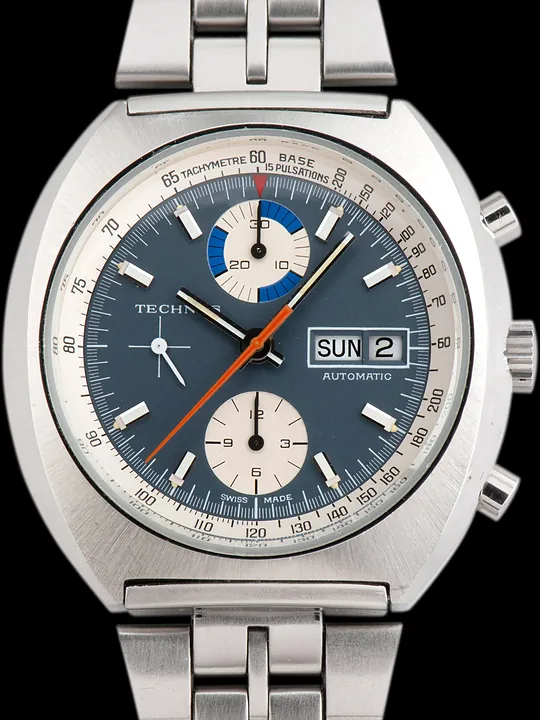
Wristwatches · 1970s
Technos Automatic Chronograph (Ref. 10767) Blue Dial, 1970s
Craft & Tailored (dealer), Los Angeles
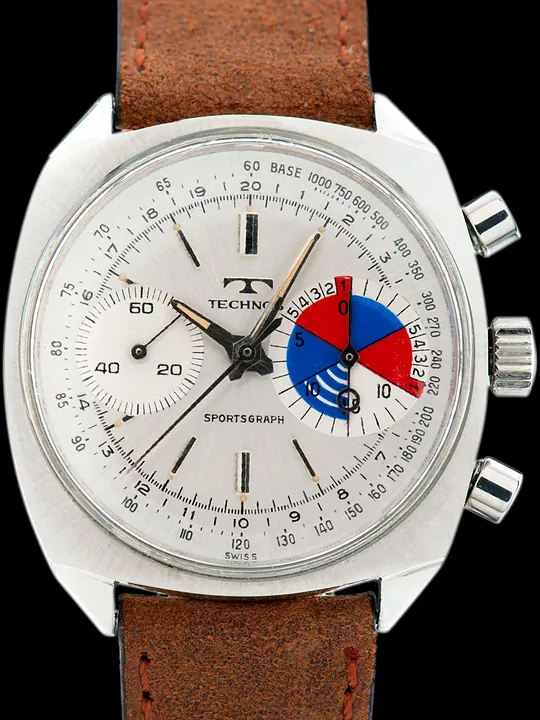
Wristwatches · 1970s
Technos Yachting Sportsgraph (Ref. 248), 1970s
Craft & Tailored (dealer), Los Angeles
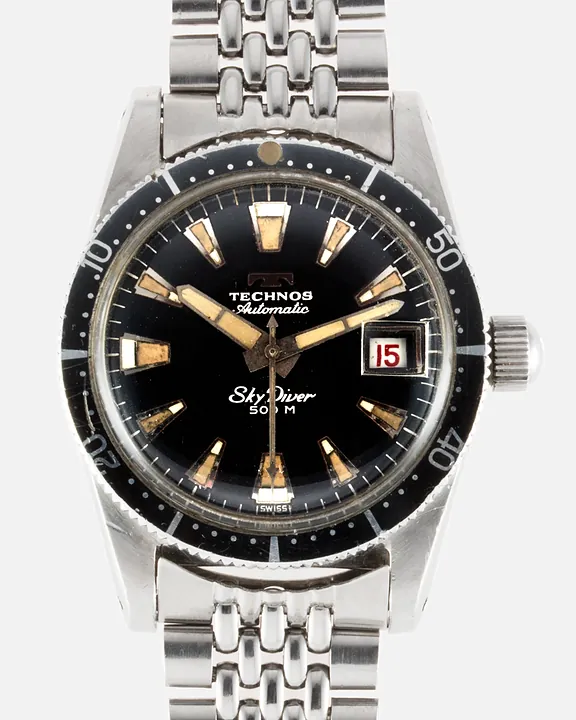
Wristwatches · 1960s
Technos Skydiver, 1960s
S.Song Watches (dealer), Seattle

Wristwatches · 1970
Wristwatch by Heno, Switzerland, 1970
Museum Rotterdam
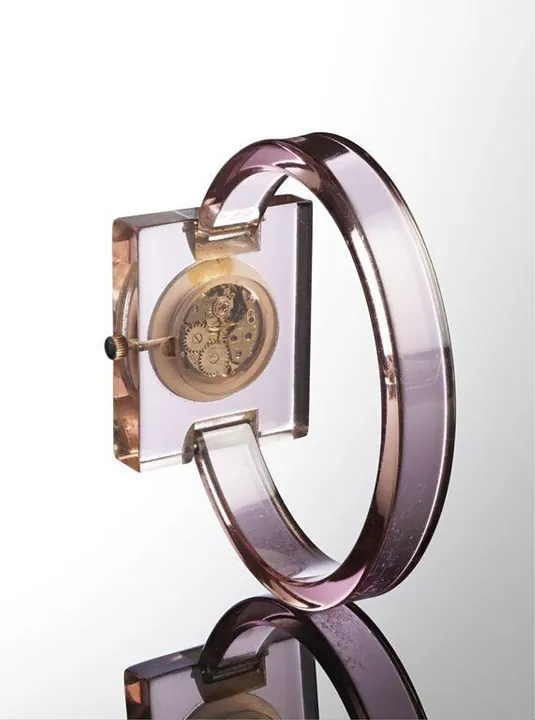
Wristwatches · 1970s
Wristwatch, plastic, by Gucci; Italy, 1970s.
Victoria and Albert Museum, London
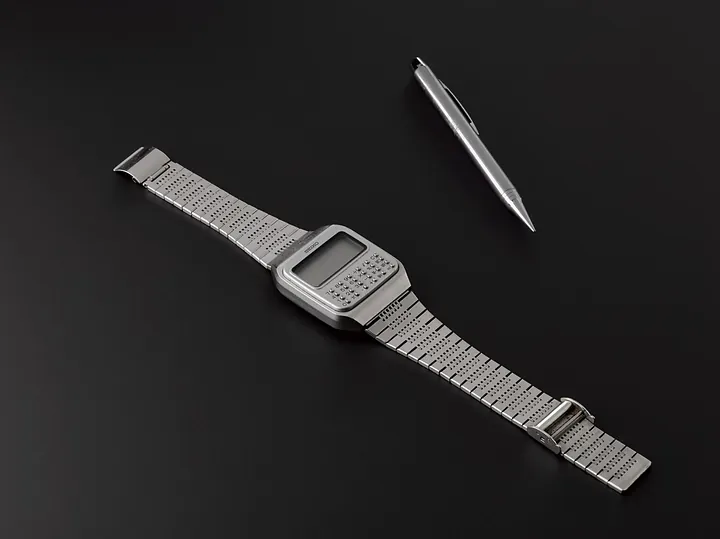
Wristwatches · 1978
Calculator wristwatch by Suwa Seikosha Co. Limited, Japan, 1978
Science Museum Group, London
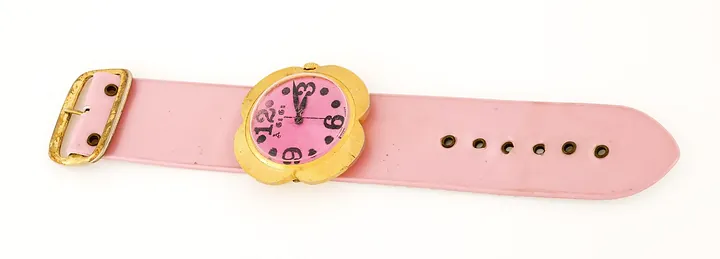
Wristwatches · 1980
Wristwatch, 1980 (no. 71413)
Museum Rotterdam