
Wristwatches · Wristwatch
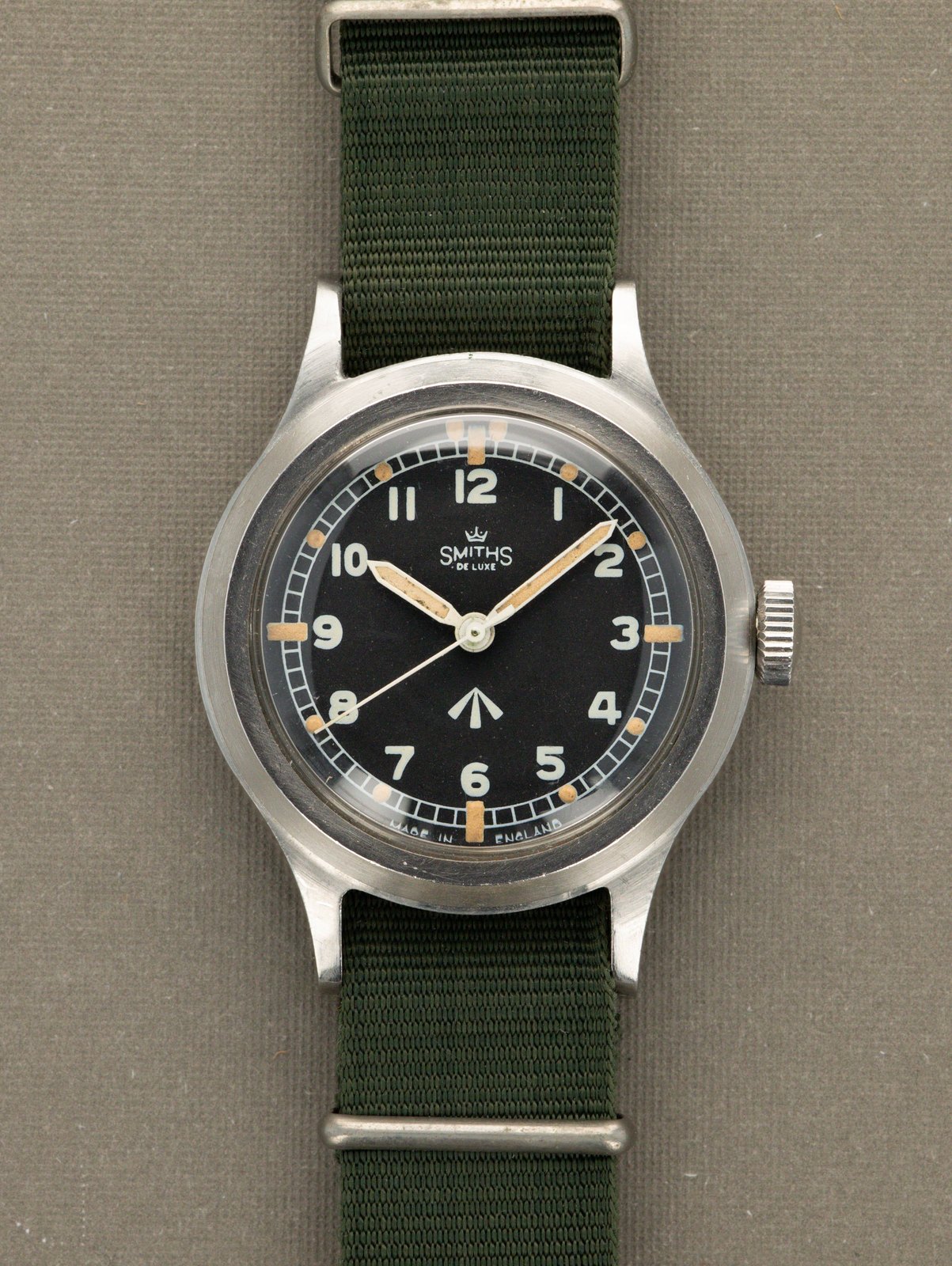
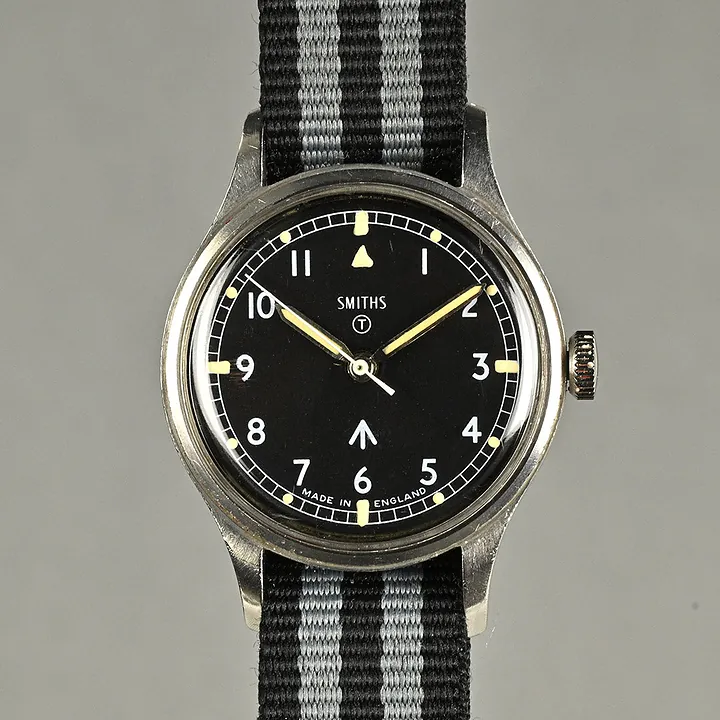
Smiths De Luxe ref. 6B/542, Matte Black 'Broad Arrow' Dial RAF-Issued
- Maker / attribution
- Smiths (maker)
- Date
- c. 1965
- Historical period
- Modern Mechanical Horology (1945 – 1969)
- Country of origin
- England
- Object type
- Wristwatch
- Dimensions
- Case 36 mm
- Stock no.
- OC3287
- Credit line
- Dealer listing, Oliver & Clarke (OC3287)
- Catalogue title (original)
- Smiths De Luxe Ref. 6B/542 - Matte Black 'Broad Arrow' Dial RAF-Issued Unpolished (English)
View the source record (dealer listing) ↗ (opens another website in a new tab)Suggest a correction
Record summary
Catalogued by Oliver & Clarke (dealer), United Kingdom (stock number OC3287), this is a wristwatch by Smiths, made in England, dated c. 1965. The Atlas places it in the Modern Mechanical Horology period (1945 – 1969) of its Wristwatches collection. Recorded dimensions: Case 36 mm. The record is illustrated with 6 photographs.
Assembled from the source record's structured fields. Dates and attributions are given as the source states them; where a field is missing the Atlas leaves it blank rather than estimating.
Catalogue description
Dealer description — Oliver & Clarke
Smiths can trace its origins to London in 1851, when Samuel Smith established a family business specializing in precision instruments and clocks. Over the following century, the company grew into one of Britain's foremost engineering firms, producing everything from automotive gauges to aircraft instruments before turning its attention to wristwatches. By the mid-twentieth century, Smiths was assembling watches in Wales using domestically produced movements, making them among the last truly British-made mechanical watches of their era. That reputation was cemented in 1953, when a Smiths wristwatch accompanied Sir Edmund Hillary on the first successful ascent of Mount Everest. The influx of inexpensive Swiss competition and the Quartz Crisis of the 1970s gradually brought Smiths' watchmaking ambitions to an end, with production ceasing by the early 1980s as the company refocused on its industrial and automotive businesses. Though the original watch division disappeared, the Smiths name has since been revived by Timefactors, whose faithful recreations preserve the utilitarian design, robust engineering, and distinctly British character that defined the marque's mechanical watches. The piece that we have here is special for a multitude of reasons. It was designed to meet the requirements of the British Ministry Of Defence to produce a watch that met a series of standards. Smiths, along with eleven other manufacturers would rise to the challenge to produce a timepiece that had a certain level of resistance to shock, magnetism, dust, and of course, excellent timekeeping. This example dates to circa 1965, which was the last year that these were produced and only very few were ever delivered. It is estimated that this is one of only about 300 units. The condition of this piece is extraordinary. The 36mm case remains unpolished and shows normal wear with no notable damage or indication this ever really saw the action that it was intended... The crown is probably original and the caseback retains all of the correct engravings. No doubt the most intriguing element of the condition on this piece, is the dial. As a general rule with military watches, hands and dials were replaces under contract service, and as a result is accepted in the collector community. The result is that many military-issued piece prior to the 1960s no longer have their original dials with Radium paint, rather later dials with Tritium (this is where the 'Circle T' comes from). This piece, however, has seemingly escaped contract service and retains its original Radium dial. Thankfully, like the rest of the watch, it remains is outstanding overall condition. The matte black surface is exceptionally clean and devoid of any major wear and retains excellent text and printing. The lower half bears the desirable 'Broad Arrow' and the Radium plots remain present and evenly paitnated with a correct and matching white-painted 'sword' handset Powering this piece is a British-made Calibre 27.CS manual-winding movements and comes fitted to a very appropriate green NATO strap. To many collectors of vintage, regardless of whether the focus is of military watches or not, this piece has everything going for it. Military issued, properly vintage, and borderline unbeatable condition. This is a real piece of history — a phrase often repeated in the world of watches, though rarely as deservedly as in this case.
Historical context
Modern Mechanical Horology (1945 – 1969)
Tool watches for divers, pilots and astronauts; electric watches anticipate the electronic age.
The classic era of the mechanical wristwatch: dive watches, chronographs for motor racing and space flight, GMT watches for jet travel, slim dress watches, automatic calendars, and the rise of Japanese manufacturers alongside Swiss, American, German and Soviet industries.
Read the period in the timelineMore wristwatches from this periodEarlier: Golden Age of Mechanical Watchmaking
Atlas type guide
Military, pilot and travel watches
The wristwatch owes much of its adoption by men to warfare and aviation. Wristlets — small pocket watches soldered with lugs and worn on a strap — were used in colonial campaigns and became standard equipment in the First World War, with protective grilles over the crystal ('shrapnel guards'). Louis Cartier's Santos (1904), designed for the aviator Alberto Santos-Dumont, is often cited as an early purpose-made pilot's watch.
In the Second World War governments specified watches in detail: the German B-Uhr observation watches, the American A-11, and the British 'W.W.W.' (the 'Dirty Dozen' set of 1945). After the war, jet travel brought GMT and world-time watches, which show two or more time zones at once — Louis Cottier's world-time mechanism and the Rolex GMT-Master (1955) are examples.
What to look for
- Military markings on the case back: broad arrow, issue numbers, 'W.W.W.', 'A.T.P.'
- High-legibility black dials with luminous Arabic numerals; oversized crowns for gloved hands.
- 24-hour hands and rotating 24-hour bezels or city rings on GMT/world-time watches.
- Wire lugs on early wristlets converted from pocket watches.
Dating clues
- Wire-lug wristlets: c. 1900–1925.
- Military specifications of the Second World War: 1939–1945.
- GMT and world-time wristwatches: mainly after 1950.
General guidance written by the Atlas editors about this kind of object. It is not a statement about this particular piece; for that, rely on the source record above and on physical examination.
Related records
Clocks · 1971–1979
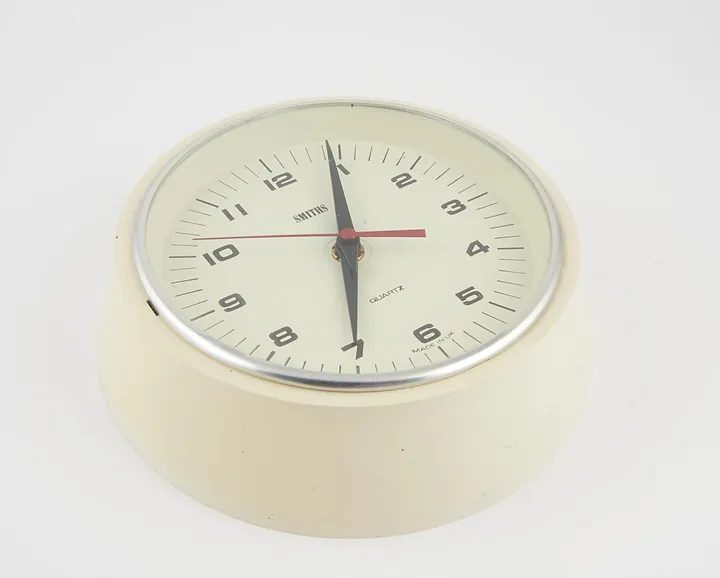
Electric clock by Smiths, England, 1971–1979
Science Museum Group, London
Wristwatches · c. 1950s
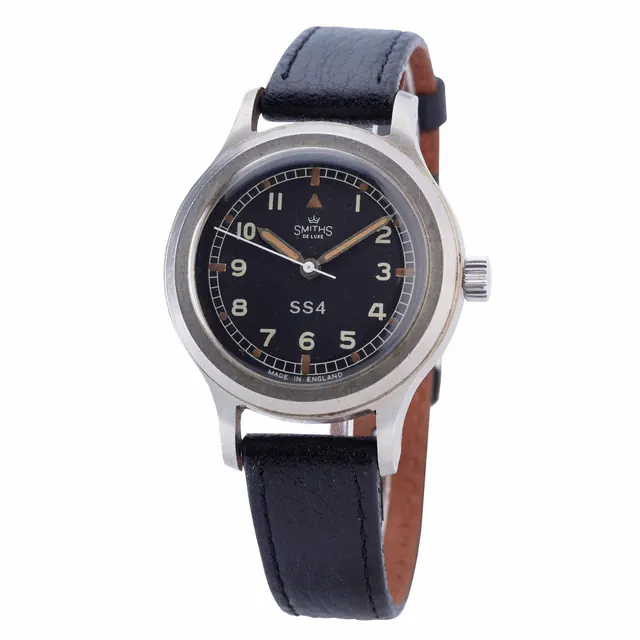
Smiths wristwatch, ref. SS4, Military, circa 1950s
Antiquorum auction archive, Geneva
Wristwatches · 1955
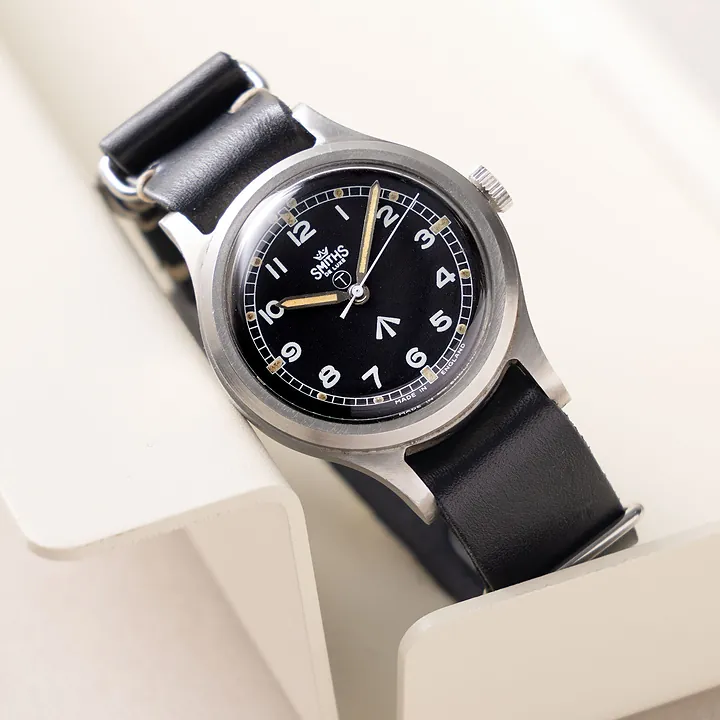
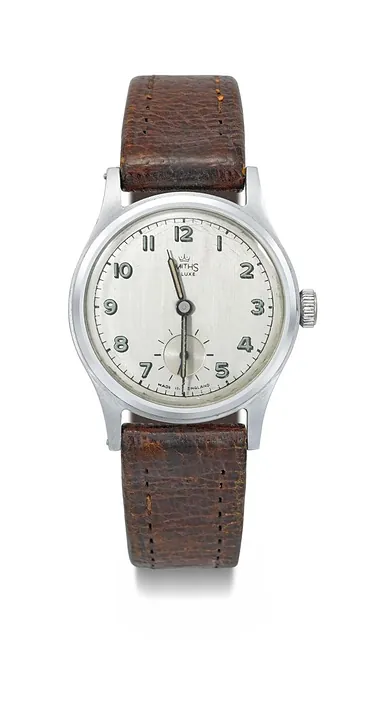
Smiths "Deluxe" ref 6B/542 Military Watch for the British RAF, 1955
Bulang & Sons (dealer), Copenhagen
Wristwatches · 1968
Smiths W10 British Army Military Watch, ref. W10/6645-99-961-4045, 1968
Vintage Watch Specialist (dealer), United Kingdom
Wristwatches · 1953
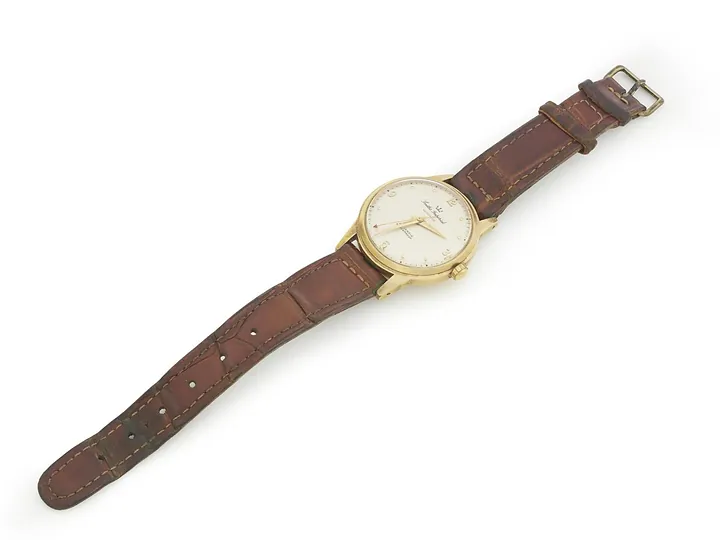
Wristwatch by Smiths English Clocks Limited, England, 1953
Science Museum Group, London
Wristwatches · 1959
Wristwatch by Smiths Clocks & Watches Ltd, England, 1959
Science Museum Group, London
Wristwatches · 1958
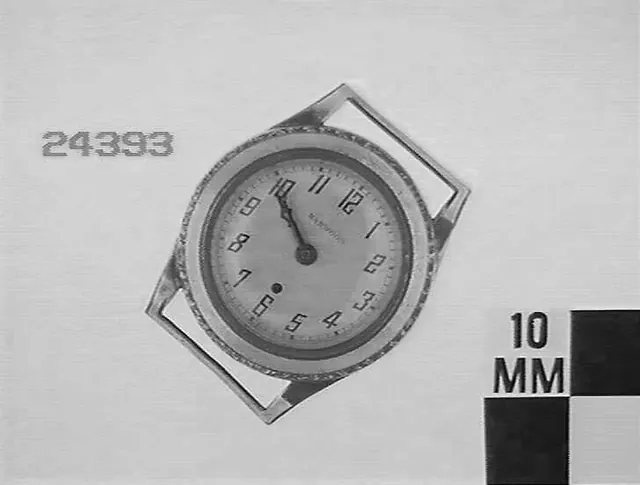
Wrist Watch - Harwood, England, 1958
Museums Victoria, Melbourne
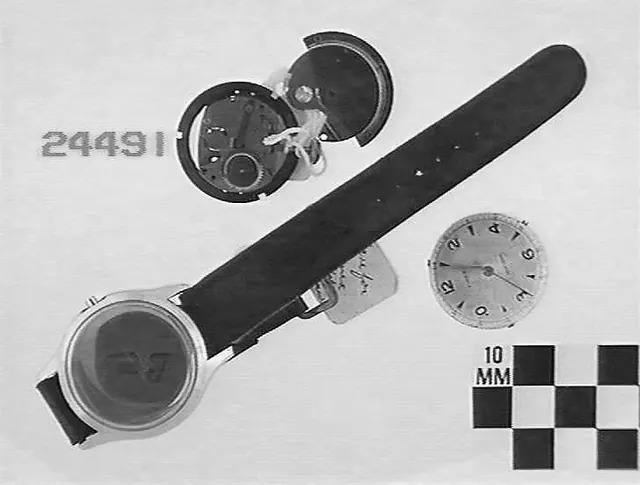
Wristwatches · c. 1957
Wrist Watch - Timex, Great Britain, c. 1957
Museums Victoria, Melbourne