
Pocket Watches · Calendar watch
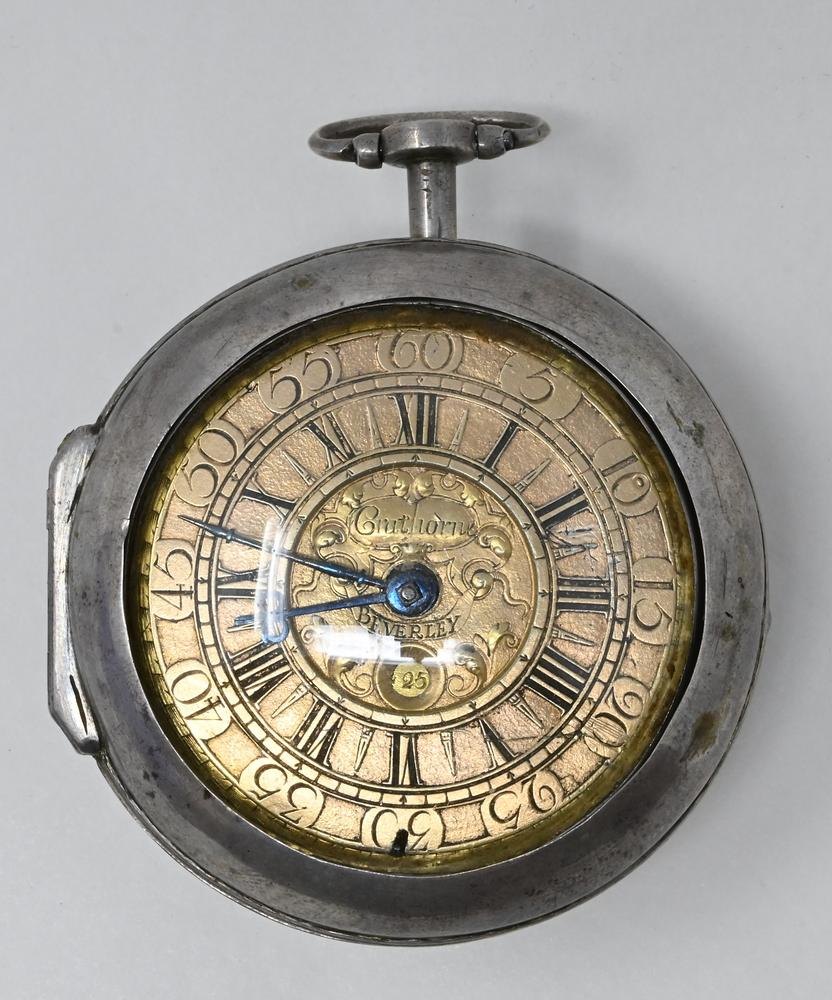
Silver pair-cased verge watch with date indicator [cases not original]
- Maker / attribution
- Jonathan Crathorn (Made by); TB (Case made by)
- Date
- 1695–1705
- Historical period
- Early Modern Horology (1600 – 1750)
- Country of origin
- British Isles
- Place
- Beverley
- Object type
- Calendar watch
- Materials / technique
- silver
- Dimensions
- Diameter: 44.50 millimetres (dial) Diameter: 50.50 millimetres (inner case) Diameter: 58.20 millimetres (outer case) Thickness: 32.70 millimetres
- Holding institution
- British Museum
- Accession / object no.
- 1958,1201.830
- Credit line
- British Museum, London
- Catalogue title (original)
- Silver pair-cased verge watch with date indicator [cases not original] (English)
View the source record ↗ (opens another website in a new tab)Suggest a correction
Record summary
Held and catalogued by British Museum (object number 1958,1201.830), this is a calendar watch by Jonathan Crathorn, made in Beverley, British Isles, dated 1695–1705. The Atlas places it in the Early Modern Horology period (1600 – 1750) of its Pocket Watches collection. Materials and techniques recorded by the source: silver. Recorded dimensions: Diameter: 44.50 millimetres (dial) Diameter: 50.50 millimetres (inner case) Diameter: 58.20 millimetres (outer case) Thickness: 32.70 millimetres. The record is illustrated with 6 photographs.
Assembled from the source record's structured fields. Dates and attributions are given as the source states them; where a field is missing the Atlas leaves it blank rather than estimating.
Catalogue description
Description — British Museum
Verge escapement. Silver-gilt dial with day-of-month aperture. Blued-steel beetle and poker hands, not original. Silver pair cases, not original?; inside of inner gilded.
Inscriptions & marks
signature; Jona Crathorne Beverley [back-plate]; signature; Crathorne; BEVERLEY [dial]; casemaker's mark; TB [coronet above, both cases]
Provenance
Previous owner/ex-collection:, Courtenay Adrian Ilbert; Acquired 1958
Historical context
Early Modern Horology (1600 – 1750)
Huygens' pendulum and balance spring transform accuracy; English makers develop the anchor and deadbeat escapements.
The balance spring (c. 1675) improved watches dramatically and introduced the minute hand. English pair-cased verge watches with pierced balance cocks and French oignons were typical; enamel painting at Blois and Geneva, and the repeating watch (1680s), made watches objects of great refinement.
Read the period in the timelineMore pocket watches from this periodEarlier: Renaissance Horology
Atlas type guide
Calendar, moon-phase and perpetual calendar watches
Calendar complications range from a simple date to the perpetual calendar, which automatically allows for months of different lengths and leap years until 2100. Pocket watches with perpetual calendars were made in the eighteenth and nineteenth centuries; Patek Philippe made the first perpetual calendar wristwatch in 1925, and series production followed in 1941. The annual calendar (Patek Philippe, 1996) needs correction only once a year.
Moon-phase displays use a disc with two moons and 59 teeth advanced daily, approximating the 29.5-day lunation; more precise trains reduce the error to one day in over a century.
What to look for
- Apertures or subsidiary dials for day, date, month and leap year.
- Moon disc under a 'bosom' shaped aperture.
- Recessed correctors on the case band for setting the calendar.
Dating clues
- Triple-date wristwatches: popular c. 1940–1955.
- Perpetual calendar wristwatches: from 1925 (unique) and 1941 (series).
General guidance written by the Atlas editors about this kind of object. It is not a statement about this particular piece; for that, rely on the source record above and on physical examination.
Related records
Pocket Watches · 1700–1710
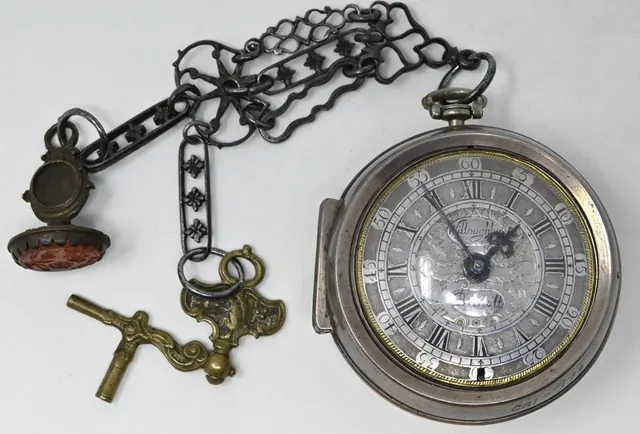
Silver pair-cased verge watch with fob chain, seal and key
British Museum
Pocket Watches · 1600–1699
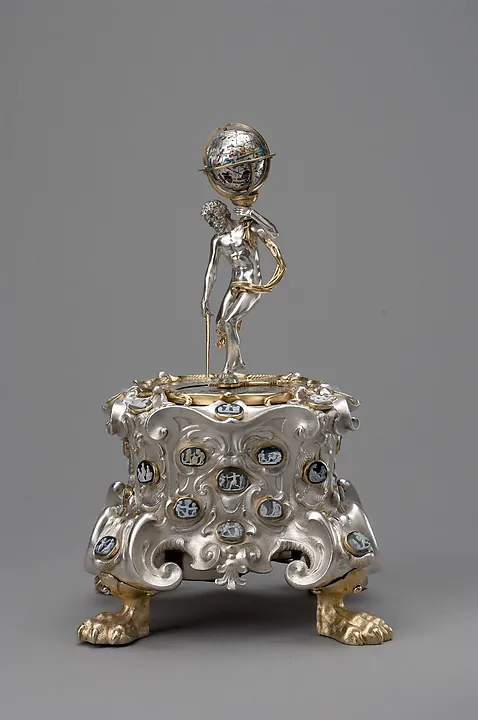
Pocket watch by Georg Ernst, Germany, 1600–1699
Fine Arts Museum Vienna
Pocket Watches · c. 1600
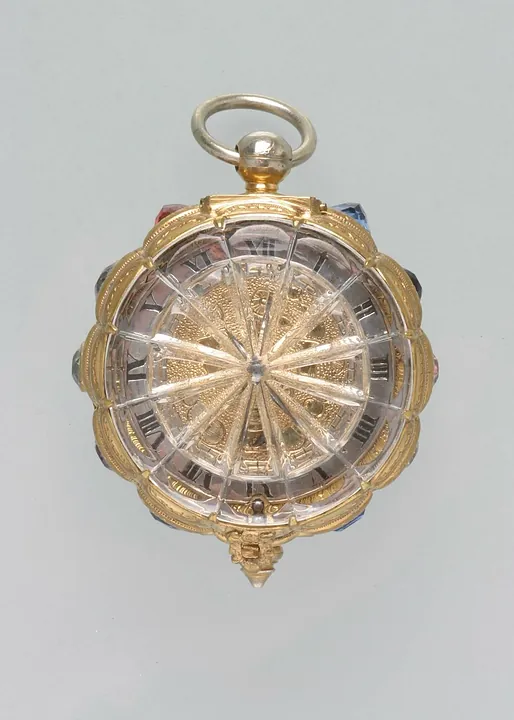
Pocket watch by Balthasar de Paep, Belgium, c. 1600
German Clock Museum
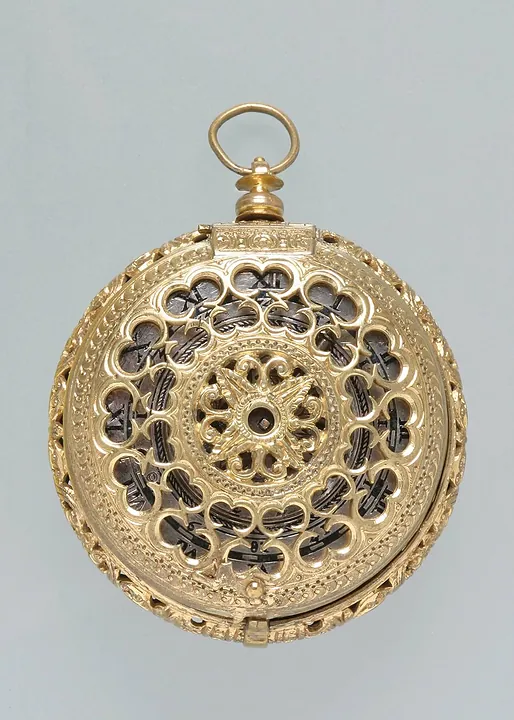
Pocket Watches · c. 1600
Pocket watch by Hans Reinboldt, France, c. 1600
German Clock Museum
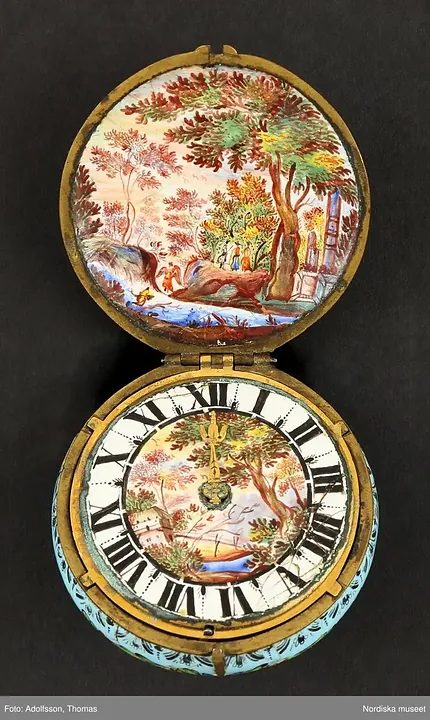
Pocket Watches · 1600–1699
Pocket watch by Johan Etmiller, Germany, 1600–1699
Nordic Museum Foundation
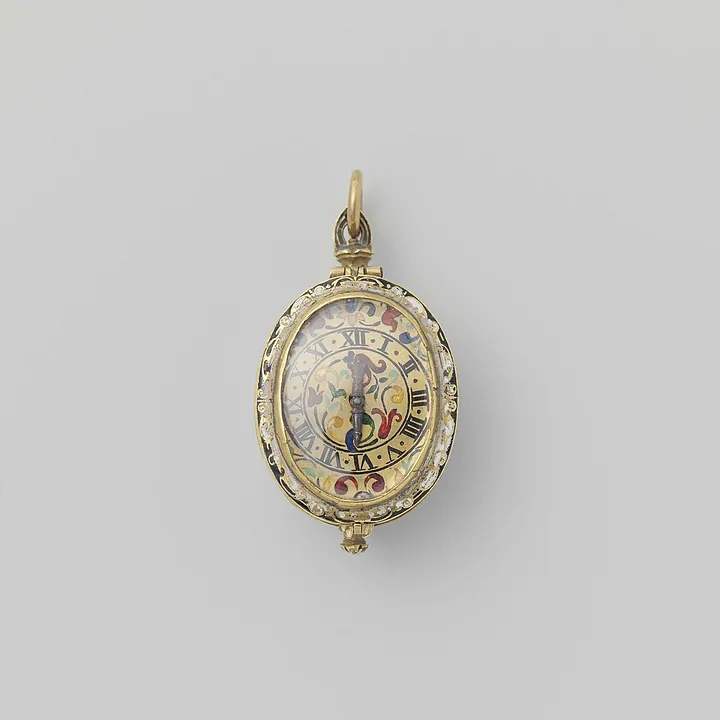
Pocket Watches · 1600
Pocket watch, France, 1600
Rijksmuseum
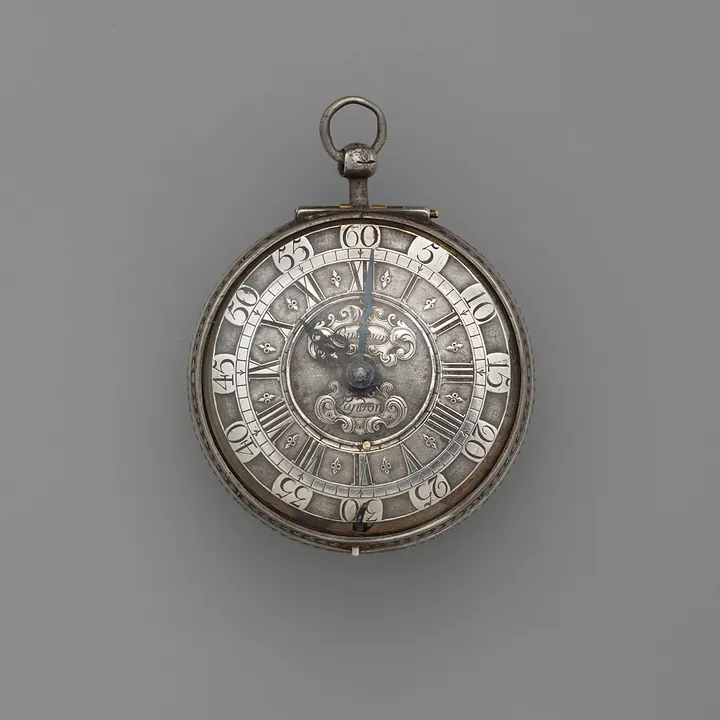
Pocket Watches · 17th century
Watch by John Bushman, England, 17th century
The Metropolitan Museum of Art, New York
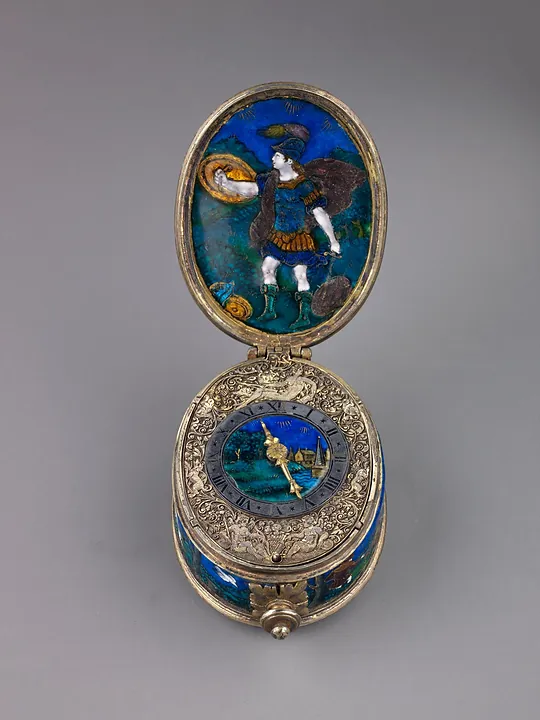
Pocket Watches · first quarter of 17th century
Watch by Suzanne de Court, France, first quarter of 17th century
The Metropolitan Museum of Art, New York