
Clocks · Carriage clock
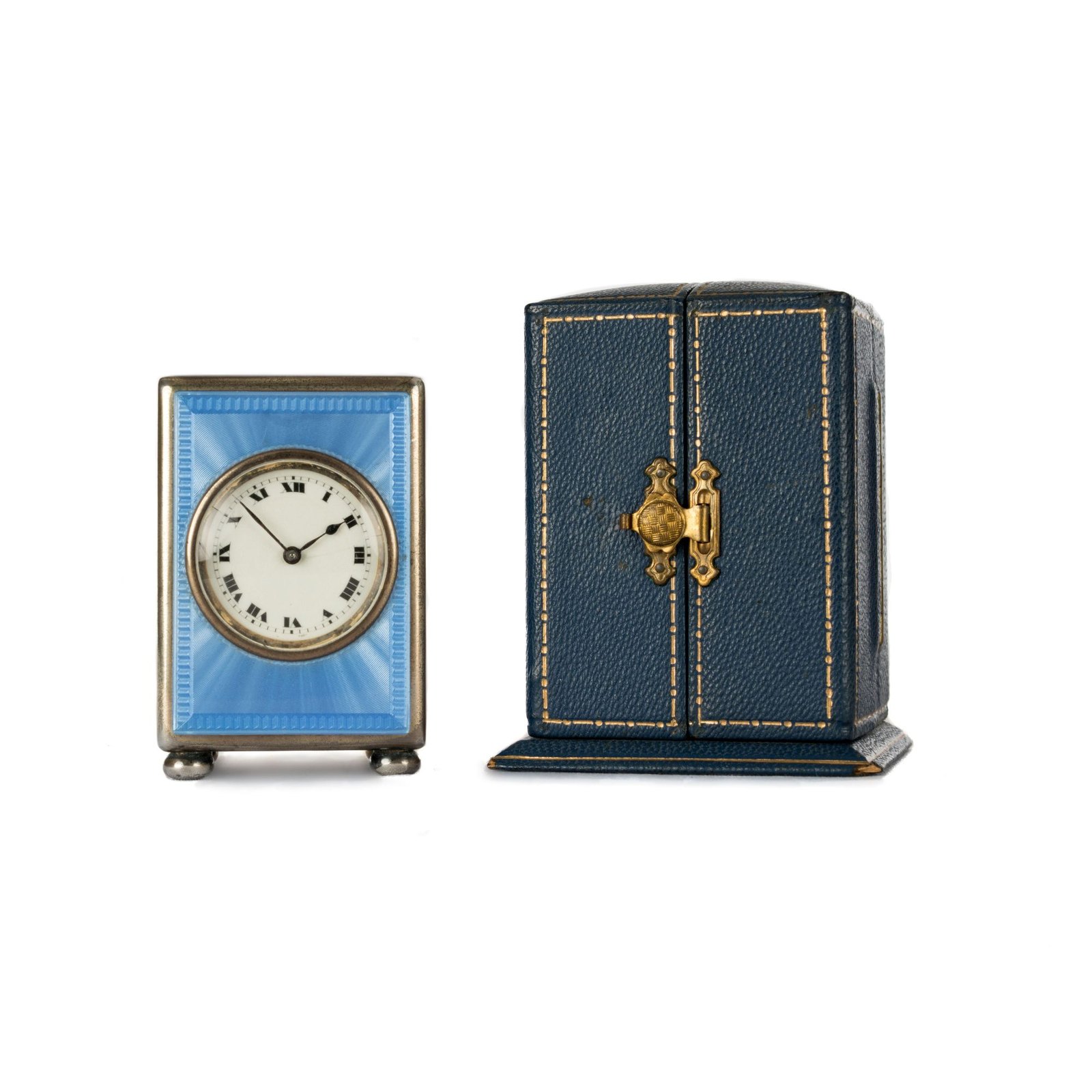
Silver & lilac guilloche enamel miniature carriage clock
- Maker / attribution
- Unrecorded in source
- Date
- c. 1923
- Historical period
- Golden Age of Mechanical Watchmaking (1900 – 1945)
- Country of origin
- Unrecorded in source
- Object type
- Carriage clock
- Materials / technique
- silver, enamel
- Stock no.
- Product 606
- Credit line
- Dealer listing, The Antique Clock Company (product 606)
- Catalogue title (original)
- A FINE SILVER & LILAC GUILLOCHE ENAMEL MINIATURE CARRIAGE CLOCK (English)
View the source record (dealer listing) ↗ (opens another website in a new tab)Suggest a correction
Record summary
Catalogued by The Antique Clock Company (dealer), Dorset (stock number Product 606), this is a carriage clock, dated c. 1923. The Atlas places it in the Golden Age of Mechanical Watchmaking period (1900 – 1945) of its Clocks collection. Materials and techniques recorded by the source: silver, enamel. The record is illustrated with 3 photographs.
Assembled from the source record's structured fields. Dates and attributions are given as the source states them; where a field is missing the Atlas leaves it blank rather than estimating.
Catalogue description
Dealer description — The Antique Clock Company
A fine silver and lilac guilloche enamel miniature carriage clock. Guilloche enamel on four sides of the clock with a very attractive engine turned pattern. The lilac guilloche enamel is a beautiful colour but very rare. The clock sits upon four silver bun feet. The dial is of white enamel on copper with Roman hour numerals and blued steel spade hands. The hinged silver back door opens to reveal the fine movement and the inside of the case retaining the original gilding to the silver. The 8 day movement with high quality thick plates, sloped shoulders and integral key has a fine original lever escapement, made by The Geneva Clock Company the movement is stamped JTC and numbered 56656. With the clock comes its original case made from an attractive blue leather and silk lining. The case is silver import hallmarked for London, England 1923. Height: 2.5″ or 6.5cm Width: 1.75″ or 4.5cm Depth: 1.25″ or 3.5cm
Historical context
Golden Age of Mechanical Watchmaking (1900 – 1945)
The wristwatch displaces the pocket watch; waterproof cases, self-winding and grand complications.
Between 1900 and 1945 clocks were electrified: master-clock systems ran factories and offices, synchronous mains clocks entered homes, and the Shortt free-pendulum clock set new standards of accuracy before the first quartz clocks (1927). Art Deco design reshaped mantel and table clocks.
Read the period in the timelineMore clocks from this periodEarlier: Industrial Revolution
Atlas type guide
Carriage and travel clocks
The carriage clock is a portable spring clock with a balance-wheel escapement and a brass case with glass panels and a carrying handle. Abraham-Louis Breguet made early examples around 1800, and from the 1830s Paul Garnier and other French makers industrialised production, with the small towns of Saint-Nicolas-d'Aliermont and the Franche-Comté supplying movements for retailers worldwide.
Typical features include a platform escapement mounted horizontally on top of the movement (usually a lever, sometimes cylinder or Garnier's chaff-cutter), striking or repeating work, and alarms. English carriage clocks, generally larger and with fusees, were made by firms such as Frodsham and Dent. Travel clocks in folding leather cases became popular in the twentieth century.
What to look for
- A platform escapement visible through the top glass.
- Case styles: corniche, gorge, anglaise, obis or engraved cases.
- Repeat buttons on top and strike/silent levers.
- Stamps of movement makers (e.g. Drocourt, Jacot, Margaine, Richard & Co.) on the backplate.
Dating clues
- Early carriage clocks with Breguet or Garnier features: c. 1800–1850.
- Mass-produced French carriage clocks: c. 1850–1914.
- Folding travel clocks and alarm travel clocks: mostly 1920–1970.
General guidance written by the Atlas editors about this kind of object. It is not a statement about this particular piece; for that, rely on the source record above and on physical examination.
Related records
Clocks · 1890–1930
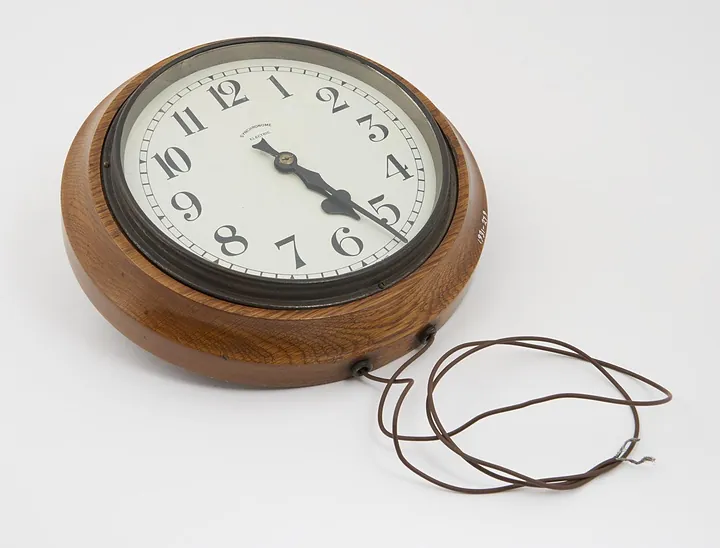
Clock with 8-inch impulse dial, by the Synchronome Company Limited, England, 1890–1930.
Science Museum Group, London
Clocks · c.1900
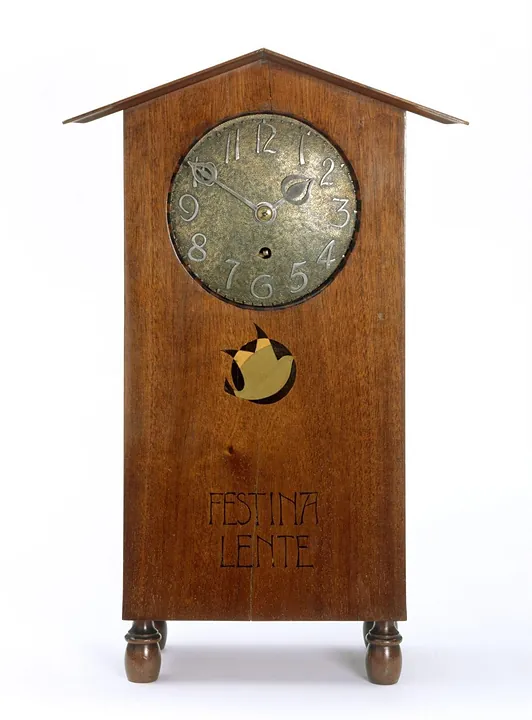
Clock by Mackay Hugh Baillie Scott, Bedfordshire, c.1900
Victoria and Albert Museum, London
Clocks · c. 1900
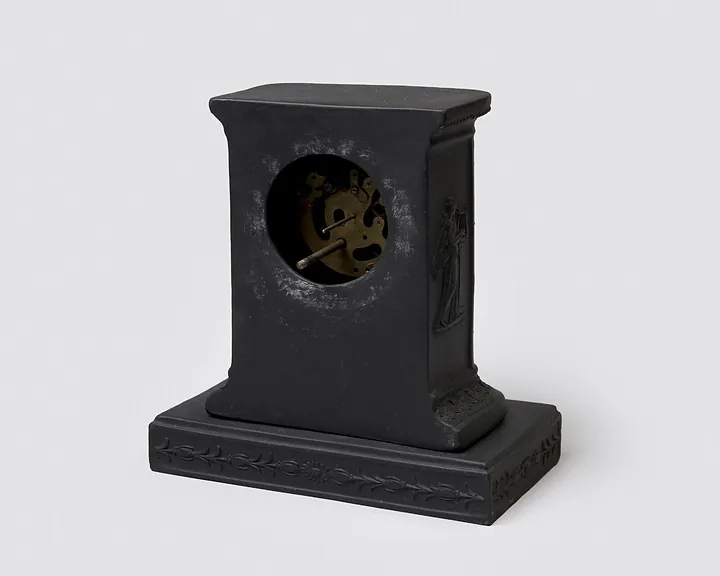
Clock, black basalt, brass, Josiah Wedgwood and Sons, Etruria, c. 1900
Victoria and Albert Museum, London
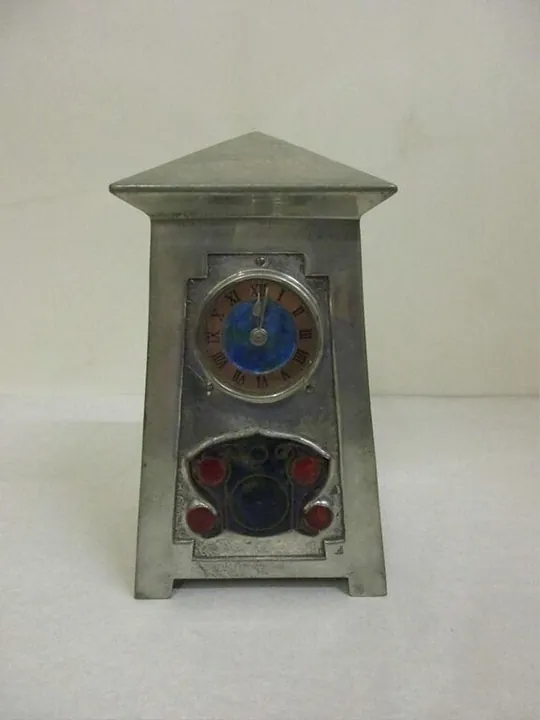
Clocks · c.1903-1904
Clock, pewter, made for Liberty& Co., England. 1903-4.
Victoria and Albert Museum, London
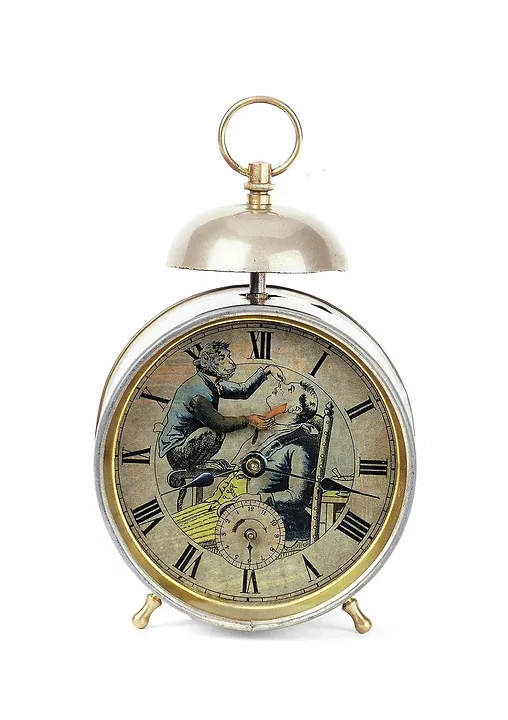
Clocks · c. 1900
Alarm clock by Union Clock Company, Germany, c. 1900
German Clock Museum
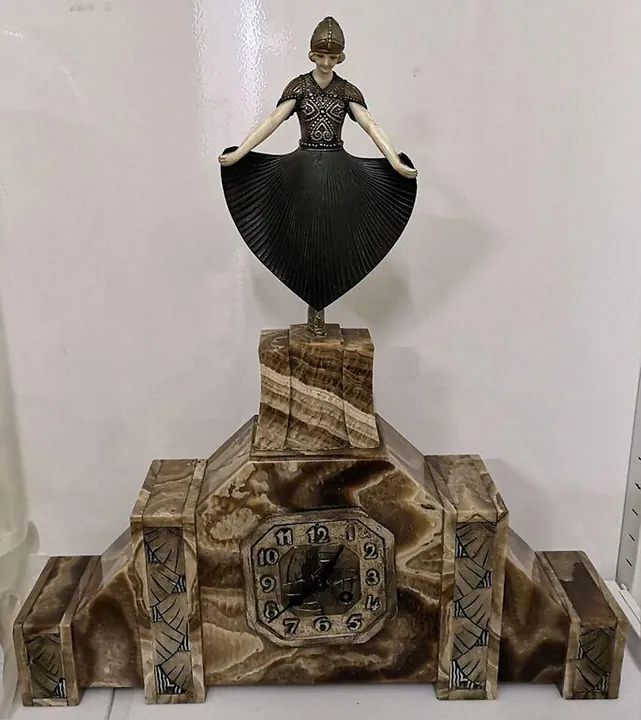
Clocks · 20th century
Base Metal, 20th c. Bronze, marble and ivory clock by Chiparus
Victoria and Albert Museum, London
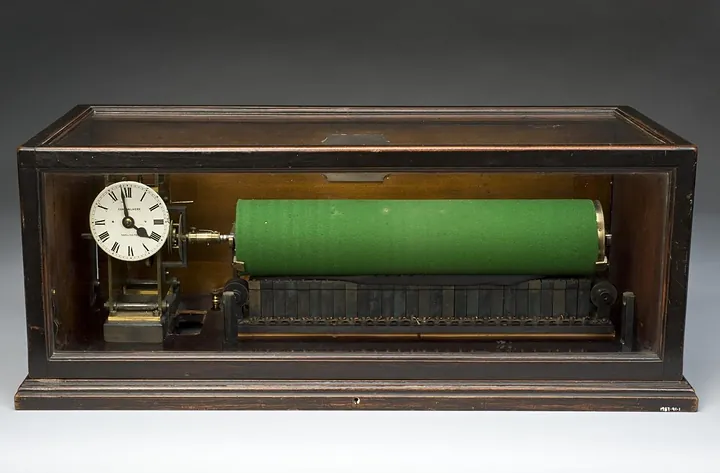
Clocks · 1900–1939
Clock by Cox-Walkers of Darlington, England, 1900–1939
Science Museum Group, London
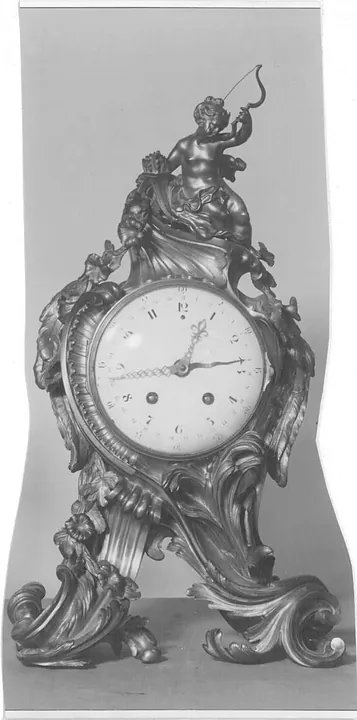
Clocks · 1900–1999
Clock by Französisch (Schule), 1900–1999
Fine Arts Museum Vienna