
Wristwatches · Wristwatch
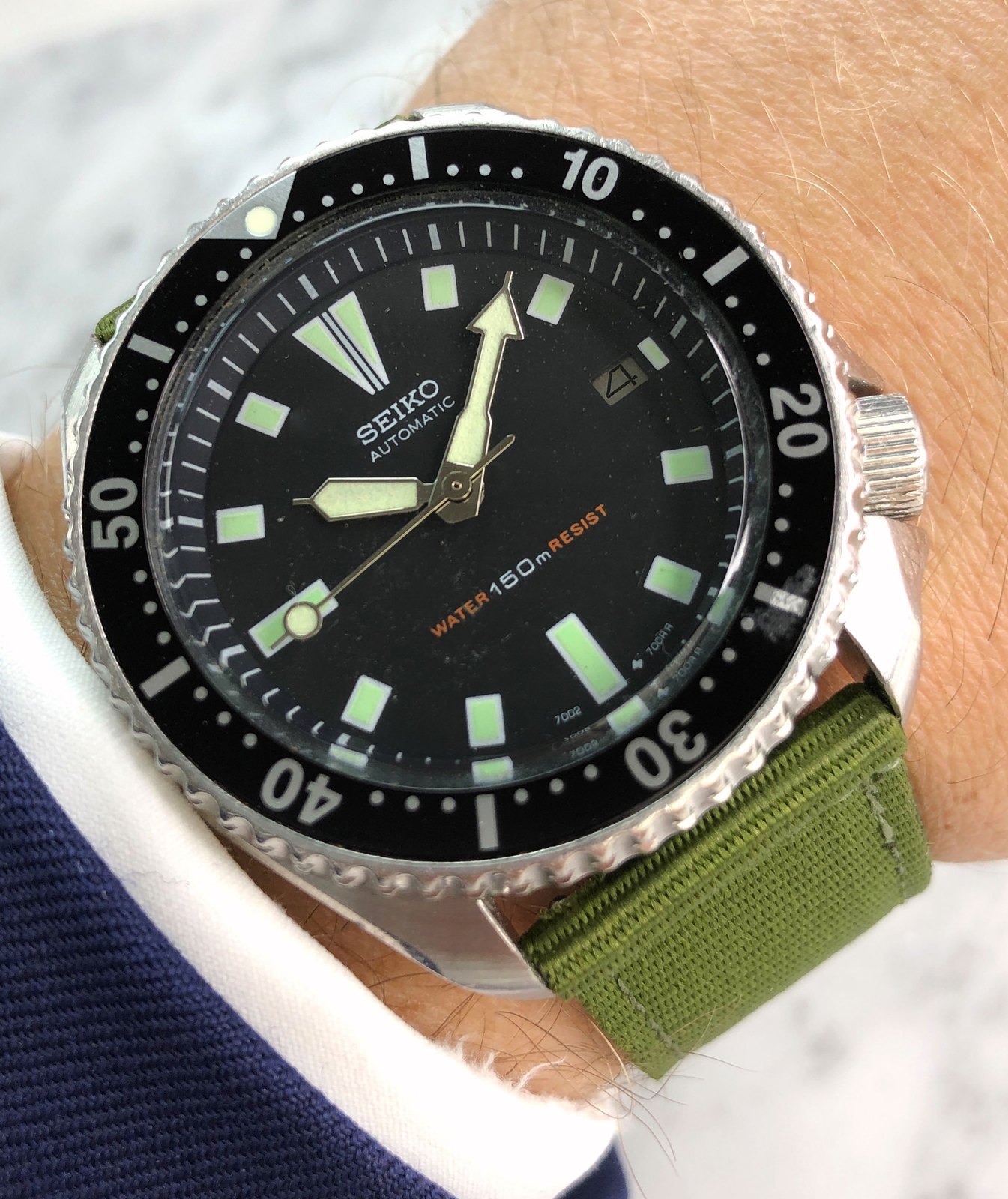
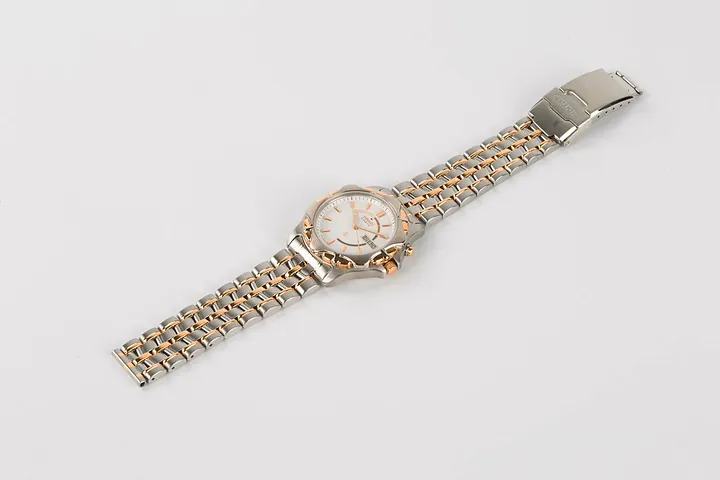
Seiko Japan Scuba Diver -700J, ref. 7002, 1990
- Maker / attribution
- Seiko (maker)
- Date
- 1990
- Historical period
- Mechanical Renaissance (1990 – 2010)
- Country of origin
- Japan
- Object type
- Wristwatch
- Materials / technique
- Stainless steel
- Dimensions
- Diameter 42 mm (without crown)
- Stock no.
- vp4807
- Credit line
- Dealer listing, Vintage Portfolio (vp4807)
- Catalogue title (original)
- Seiko Japan Scuba Diver 7002-700J (English)
View the source record (dealer listing) ↗ (opens another website in a new tab)Suggest a correction
Record summary
Catalogued by Vintage Portfolio (dealer), Vienna (stock number vp4807), this is a wristwatch by Seiko, made in Japan, dated 1990. The Atlas places it in the Mechanical Renaissance period (1990 – 2010) of its Wristwatches collection. Materials and techniques recorded by the source: Stainless steel. Recorded dimensions: Diameter 42 mm (without crown). The record is illustrated with 6 photographs.
Assembled from the source record's structured fields. Dates and attributions are given as the source states them; where a field is missing the Atlas leaves it blank rather than estimating.
Catalogue description
Dealer specification — Vintage Portfolio
Movement: automatic with centre seconds; Dial: black; Case: stainless steel; Crown: Genuine; Date display: Date; Diameter: 42 mm (without crown); Strap: nato; Dial condition, as described by the dealer: The still factory original (non-refurbished) dial has slight patina.
Historical context
Mechanical Renaissance (1990 – 2010)
Mechanical watches return as cultural objects; independent watchmaking flourishes.
Mechanical watches returned as cultural and luxury objects. Complications, tourbillons and new materials proliferated; independent watchmakers such as George Daniels, F.P. Journe and Philippe Dufour revived artisanal watchmaking; collecting vintage watches became a major field.
Read the period in the timelineMore wristwatches from this periodEarlier: Quartz Revolution
Atlas type guide
Dive and water-resistant watches
Keeping water and dust out of a wristwatch was a long-standing challenge. Rolex's screw-down Oyster case (1926) and Omega's Marine (1932) were landmarks; in the early 1950s Blancpain's Fifty Fathoms and Rolex's Submariner defined the professional dive watch with rotating bezels for timing dives, luminous dials and high water resistance. The ISO 6425 standard (1982) later codified what a 'diver's watch' must do.
Dive watches became icons of post-war design and exploration, and their evolution — helium escape valves, ceramic bezels, saturation-diving depth ratings — records the history of underwater work.
What to look for
- Unidirectional or bidirectional rotating bezel with minute markings.
- Screw-down crown and case back; depth rating printed on the dial.
- Luminous hands and markers (radium before c. 1960, tritium c. 1960–1998, then Super-LumiNova).
- Reference numbers on the case between the lugs or inside the back.
Dating clues
- Screw-down Oyster cases: from 1926.
- Professional dive watches: from 1953.
- Tritium 'T' marks on dials: c. 1960–1998.
General guidance written by the Atlas editors about this kind of object. It is not a statement about this particular piece; for that, rely on the source record above and on physical examination.
Related records
Wristwatches · 1967
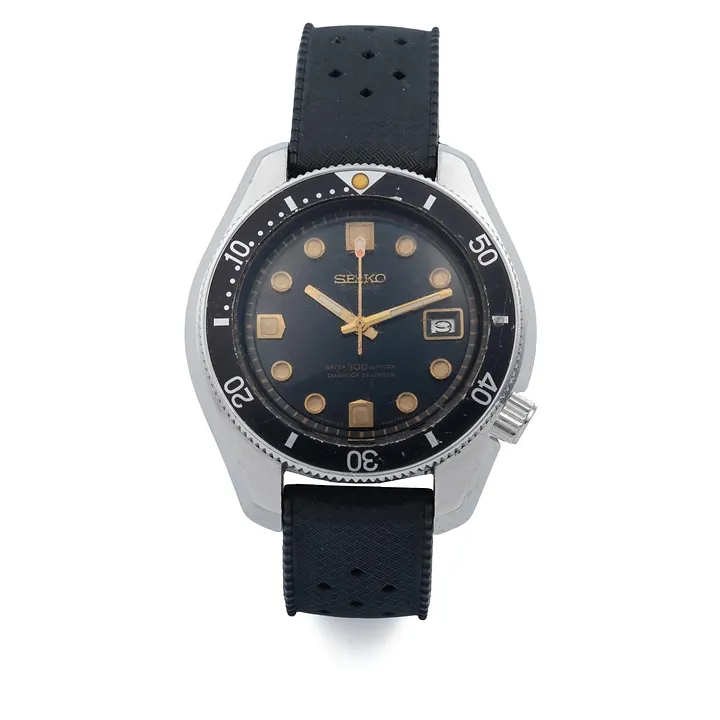
Seiko 300 M, ref. 6215-7000, 1967
Antiquorum auction archive, Geneva
Wristwatches · 1967
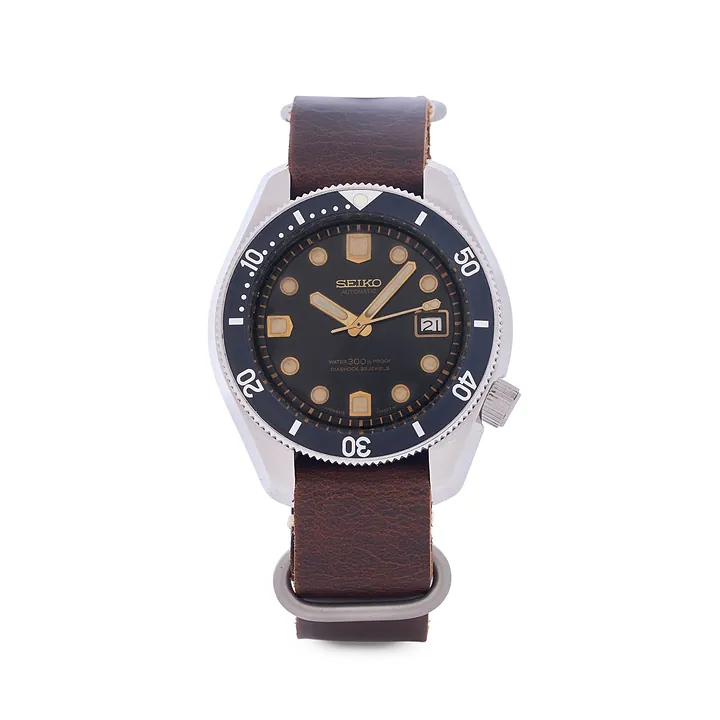
Seiko 300 Meter Diver, ref. 6215-7000, 1967
Antiquorum auction archive, Geneva
Wristwatches · c. 1968
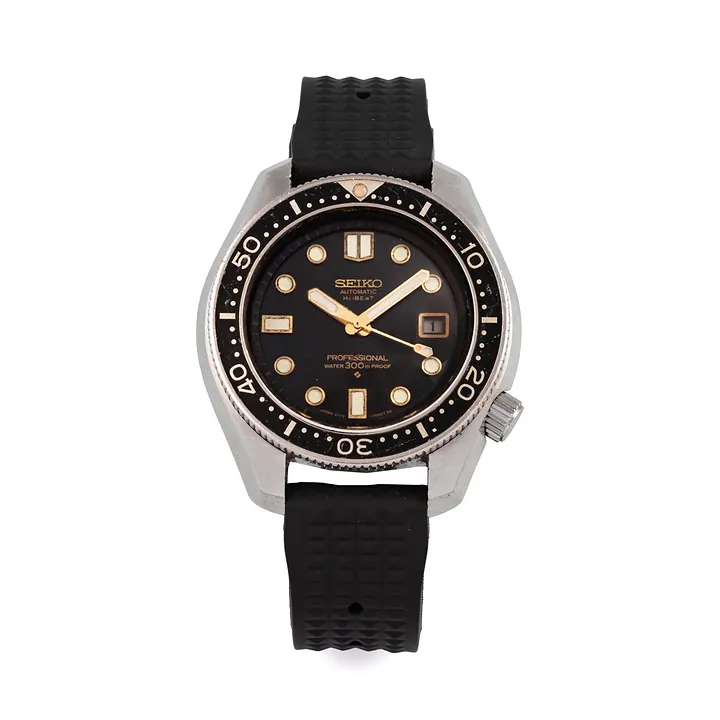
Seiko Hi-Beat, ref. 6159-7000, c. 1968
Antiquorum auction archive, Geneva
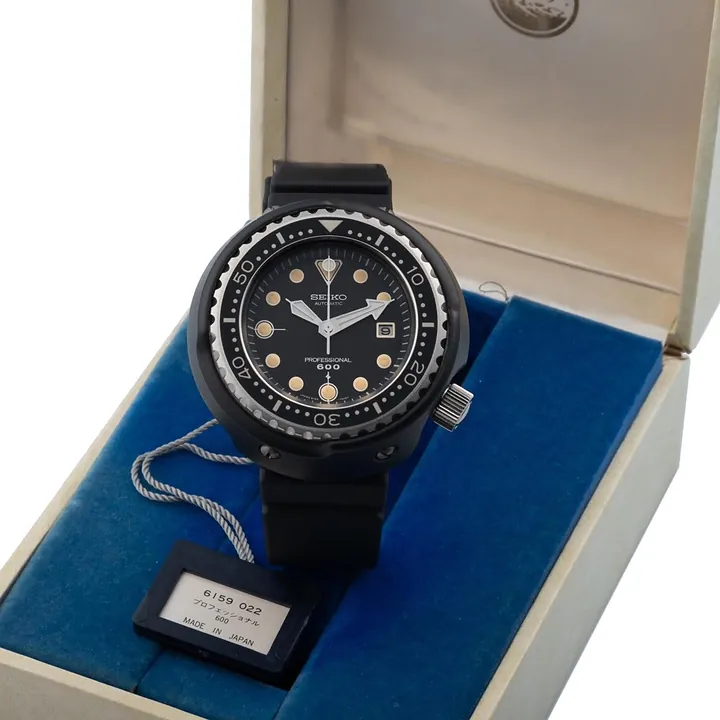
Wristwatches · 1975
Seiko Tuna Professional 600, ref. 6159-7010, 1975
Antiquorum auction archive, Geneva
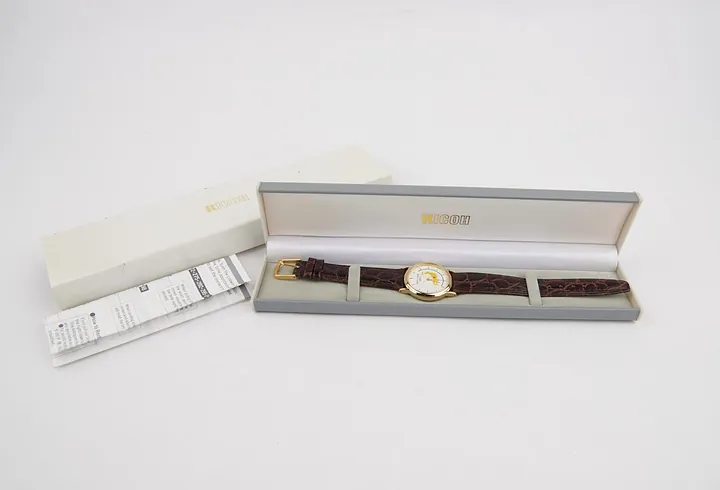
Wristwatches · 1990–1996
Wristwatch by Ricoh Elemex Corporation, Japan, 1990–1996
Science Museum Group, London
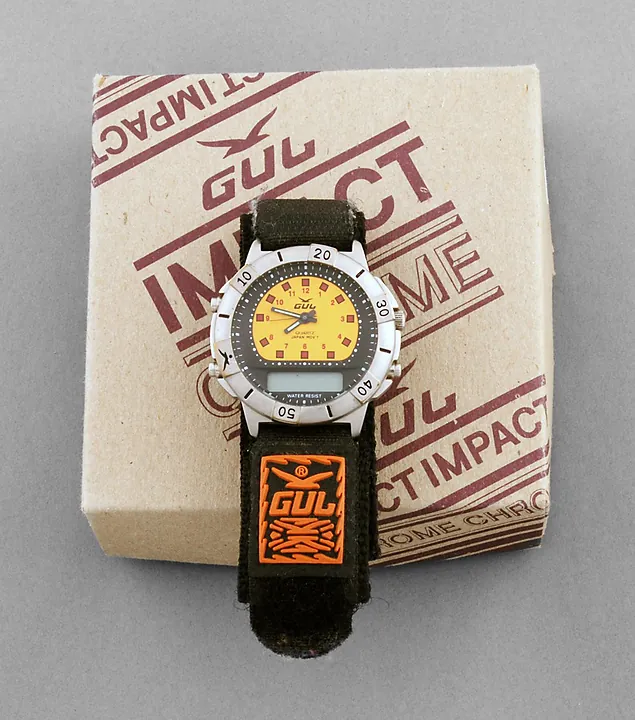
Wristwatches · 1990
Wristwatch, Japan, 1990
Blekinge Museum
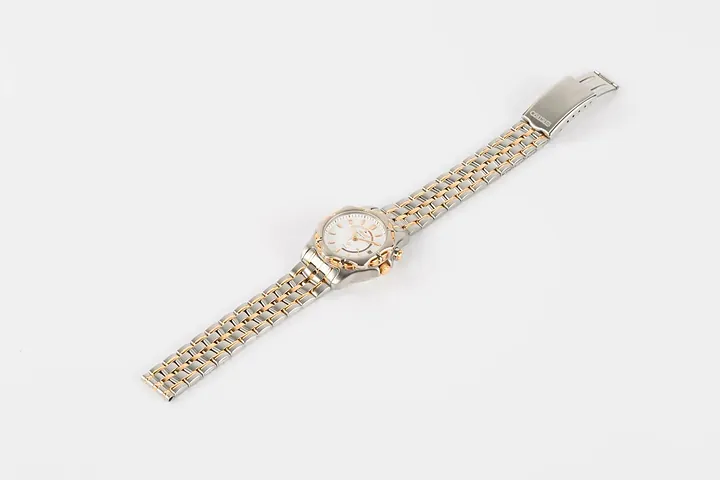
Wristwatches · 1995
Wristwatch, Japan, 1995 (no. 57932)
German Clock Museum
Wristwatches · 1995
Wristwatch, Japan, 1995 (no. 57933)
German Clock Museum