
Wristwatches · Wristwatch
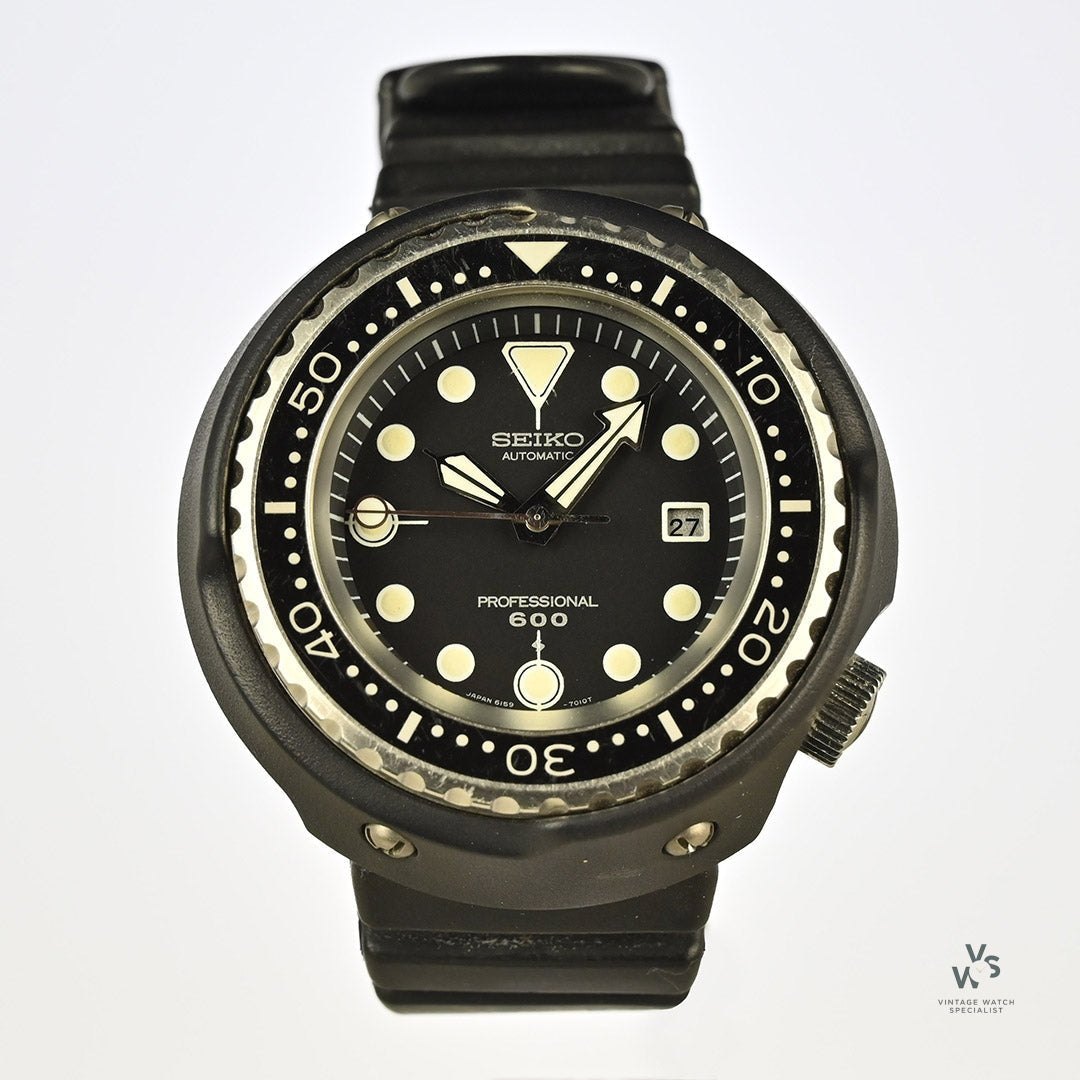
Seiko Grandfather Tuna Professional 600 Diver Titanium, ref. 6159-7010, circa 1975
- Maker / attribution
- Seiko (maker)
- Date
- c. 1975
- Historical period
- Quartz Revolution (1969 – 1990)
- Country of origin
- Japan
- Object type
- Wristwatch
- Materials / technique
- titanium
- Dimensions
- Case 50.5 mm
- Stock no.
- vws2313
- Credit line
- Dealer listing, Vintage Watch Specialist (vws2313)
- Catalogue title (original)
- Seiko - A Vintage Grandfather Tuna Professional 600 Diver Titanium - Model Ref: 6159-7010 - c.1975 (English)
View the source record (dealer listing) ↗ (opens another website in a new tab)Suggest a correction
Record summary
Catalogued by Vintage Watch Specialist (dealer), United Kingdom (stock number vws2313), this is a wristwatch by Seiko, made in Japan, dated c. 1975. The Atlas places it in the Quartz Revolution period (1969 – 1990) of its Wristwatches collection. Materials and techniques recorded by the source: titanium. Recorded dimensions: Case 50.5 mm. The record is illustrated with 6 photographs.
Assembled from the source record's structured fields. Dates and attributions are given as the source states them; where a field is missing the Atlas leaves it blank rather than estimating.
Catalogue description
Dealer description — Vintage Watch Specialist
A Superb and Rare Example of the Iconic Seiko 'Grandfather' Tuna Professional 600m Diver, in Fantastic Condition, a Rare non "M" Iteration Making it One of the Earliest in Production Terms! The story of Seiko began in 1881, when a 21-year-old entrepreneur, Kintaro Hattori, opened a shop selling and repairing watches and clocks in central Tokyo. Just eleven years later, in 1892, he established the 'Seikosha' factory. Seiko is known for introducing one of the world's first quartz wrist watches as well as the world's first quartz watch with a chronograph complication, it was also the first manufacturer to make a titanium divers watch. What’s On Offer The Seiko 'Tuna' was created after professional divers in the late 1960s complained about watch failures at working depths. This led Seiko to undertake the task of producing a tool watch that could be relied upon to withstand all the pressures of working while submerged. Cue the now legendary 'Grandfather' Tuna with a dive depth of a whopping 600 metres - a huge feat in dive watchmaking and featuring notable industry firsts including its titanium case, ceramic-coated titanium shroud, L-shaped glass gasket seal, and vented rubber strap. All in all, over 20 patents were granted to this, at that time, revolutionary timepiece. The 6159-7010 was introduced in 1975 and is distinguished by its screwed-on shroud which also led to it being affectionately named the 'Tuna'. The shroud protects the case while also allowing for 2 access points to spin the bidirectional bezel - It also adds, substantially, to the watch's rather meaty proportions - a whopping 50.5mm in this instance, but you wouldn't think so when it's on your wrist, largely due to the lugs integrating with the case and its lightweight titanium case! This particular example is likely to have been one of the earliest as it lacks the “m” for “meters” next to the depth rating and is much rarer than the "m" versions, produced later in the line-up. The production period was relatively short at just 4 years, from 1975 to 1979, and well-preserved examples such as this are becoming rarer every day. Seiko has produced many dive watches throughout the years but this is the original real deal Tuna, an iconic reference from Seiko and getting harder to find, especially in as nice a condition as this, as you have to remember most of these will have been used for there intended purpose by commercial divers! This watch is in fantastic condition with a blemish-free rich deep-set black dial boasting lumed large dot hour markers, chunky lumed hands, a lollipop sweep hand and date aperture at 3 o'clock. The dial is encapsulated under mineral glass and crowned with a rich black bidirectional bezel. It also comes on its extremely well-preserved and original Seiko 'vented' rubber strap. Despite this watch's mass, it is actually a super comfortable wearer, of course, it will not fit under your dress suit, but for more casual wear this watch is a real delight, both on and off your wrist.
Historical context
Quartz Revolution (1969 – 1990)
Seiko's Astron begins mass quartz timekeeping; traditional industries contract sharply.
Quartz and digital watches transformed the market after 1969. Swiss employment collapsed, Japanese and Hong Kong production soared, and the Swatch (1983) helped the Swiss industry recover; mechanical watches survived as luxury goods.
Read the period in the timelineMore wristwatches from this periodEarlier: Modern Mechanical Horology
Atlas type guide
Dive and water-resistant watches
Keeping water and dust out of a wristwatch was a long-standing challenge. Rolex's screw-down Oyster case (1926) and Omega's Marine (1932) were landmarks; in the early 1950s Blancpain's Fifty Fathoms and Rolex's Submariner defined the professional dive watch with rotating bezels for timing dives, luminous dials and high water resistance. The ISO 6425 standard (1982) later codified what a 'diver's watch' must do.
Dive watches became icons of post-war design and exploration, and their evolution — helium escape valves, ceramic bezels, saturation-diving depth ratings — records the history of underwater work.
What to look for
- Unidirectional or bidirectional rotating bezel with minute markings.
- Screw-down crown and case back; depth rating printed on the dial.
- Luminous hands and markers (radium before c. 1960, tritium c. 1960–1998, then Super-LumiNova).
- Reference numbers on the case between the lugs or inside the back.
Dating clues
- Screw-down Oyster cases: from 1926.
- Professional dive watches: from 1953.
- Tritium 'T' marks on dials: c. 1960–1998.
General guidance written by the Atlas editors about this kind of object. It is not a statement about this particular piece; for that, rely on the source record above and on physical examination.
Related records
Wristwatches · 1967
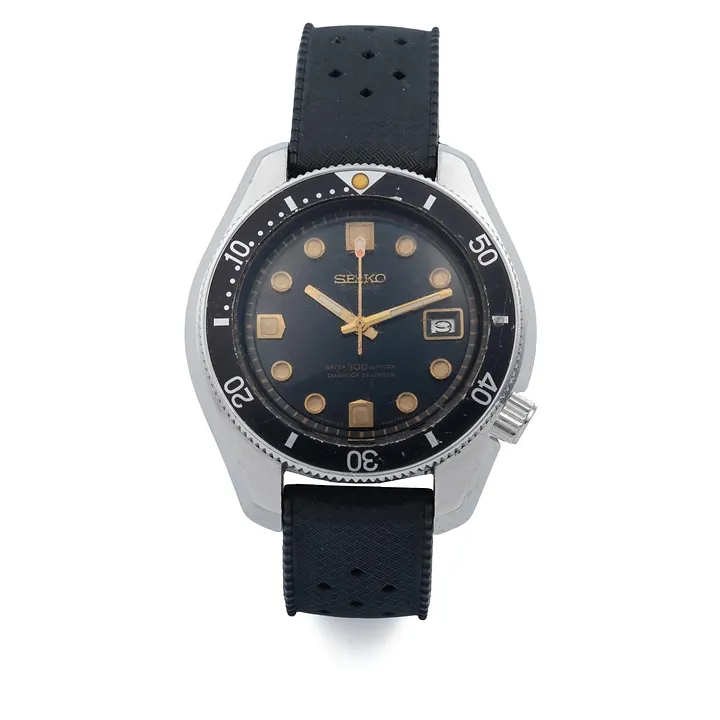
Seiko 300 M, ref. 6215-7000, 1967
Antiquorum auction archive, Geneva
Wristwatches · 1967
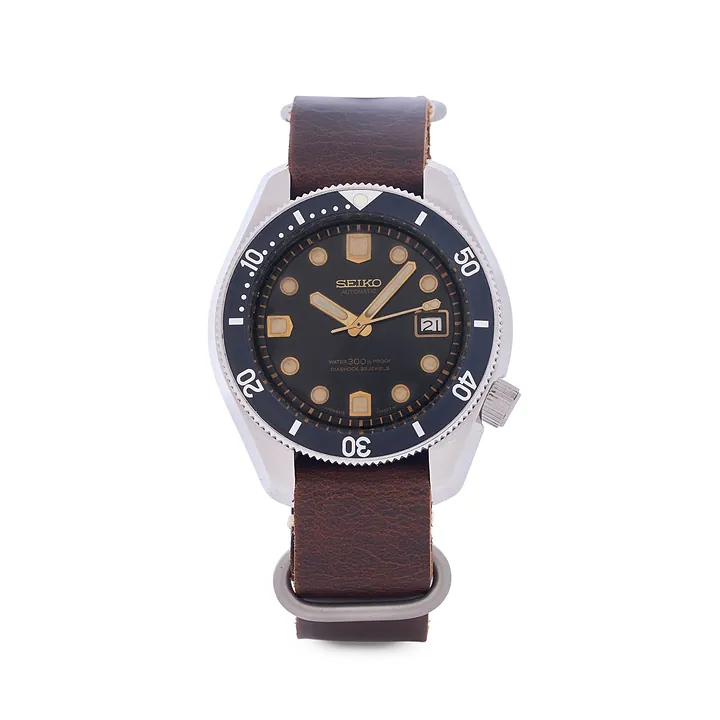
Seiko 300 Meter Diver, ref. 6215-7000, 1967
Antiquorum auction archive, Geneva
Wristwatches · c. 1968
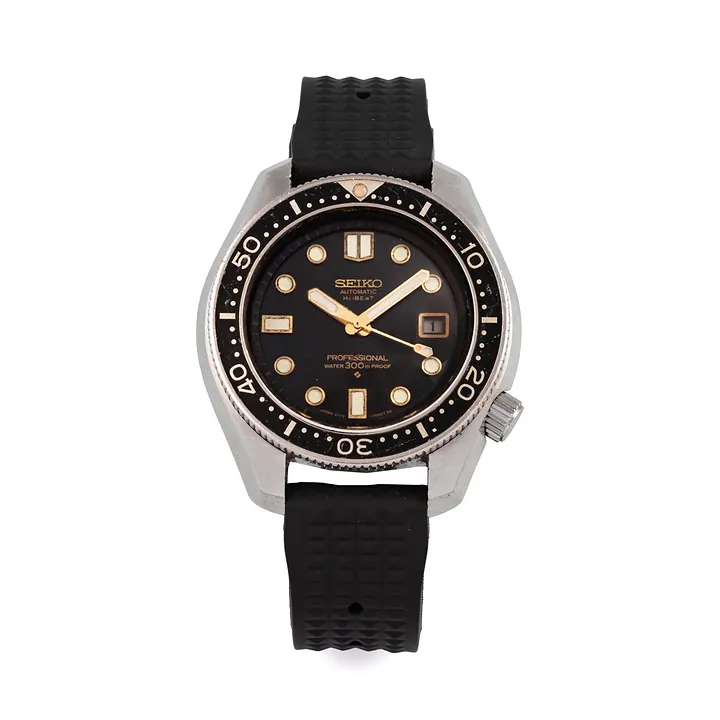
Seiko Hi-Beat, ref. 6159-7000, c. 1968
Antiquorum auction archive, Geneva
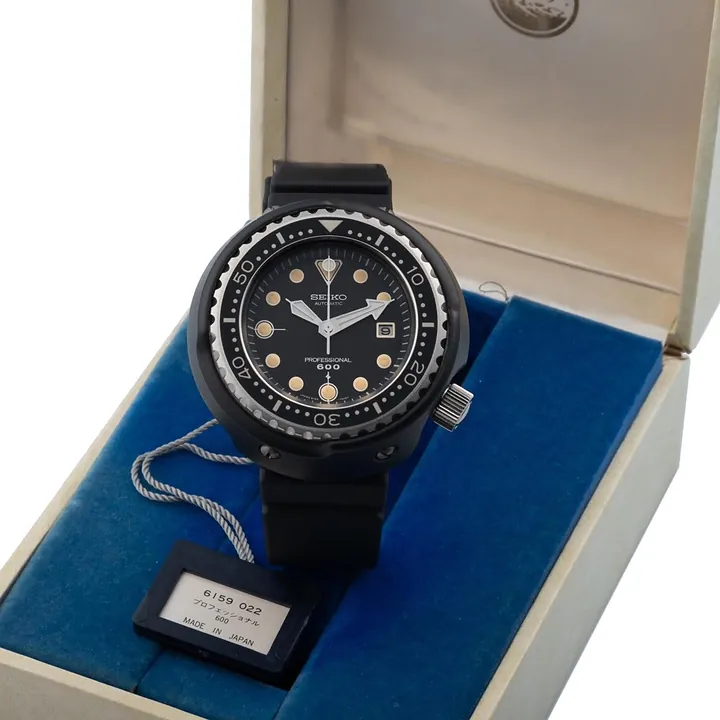
Wristwatches · 1975
Seiko Tuna Professional 600, ref. 6159-7010, 1975
Antiquorum auction archive, Geneva
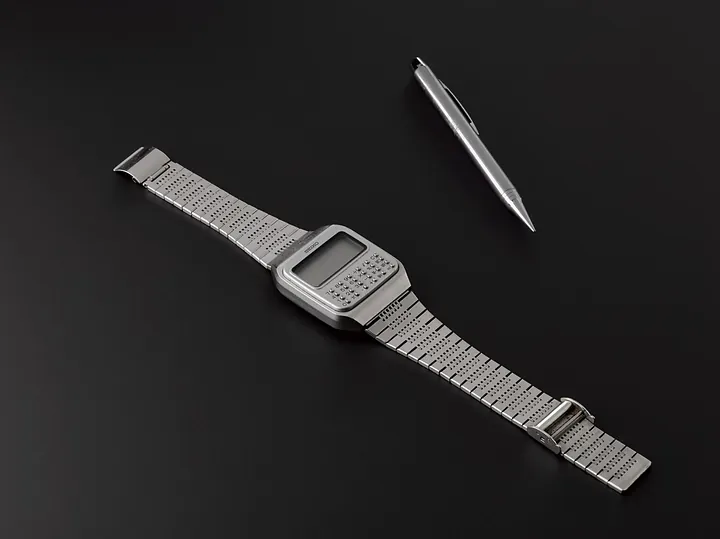
Wristwatches · 1978
Calculator wristwatch by Suwa Seikosha Co. Limited, Japan, 1978
Science Museum Group, London
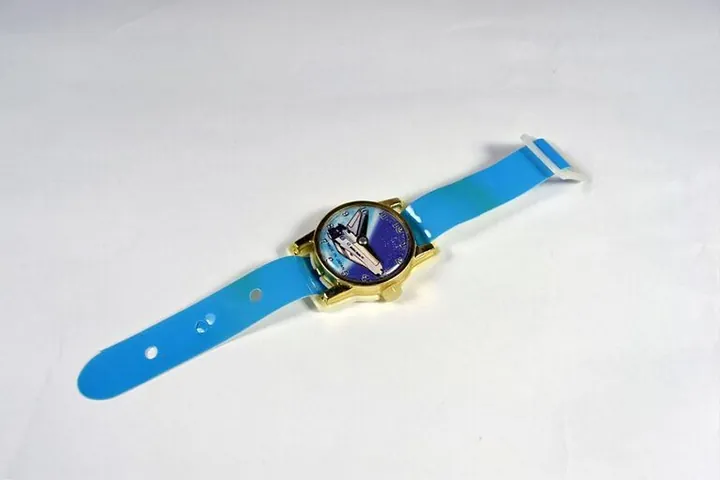
Wristwatches · 1980–1982
Wristwatch, Space Shuttle; plastic, Japan, 1970-1979?
Victoria and Albert Museum, London
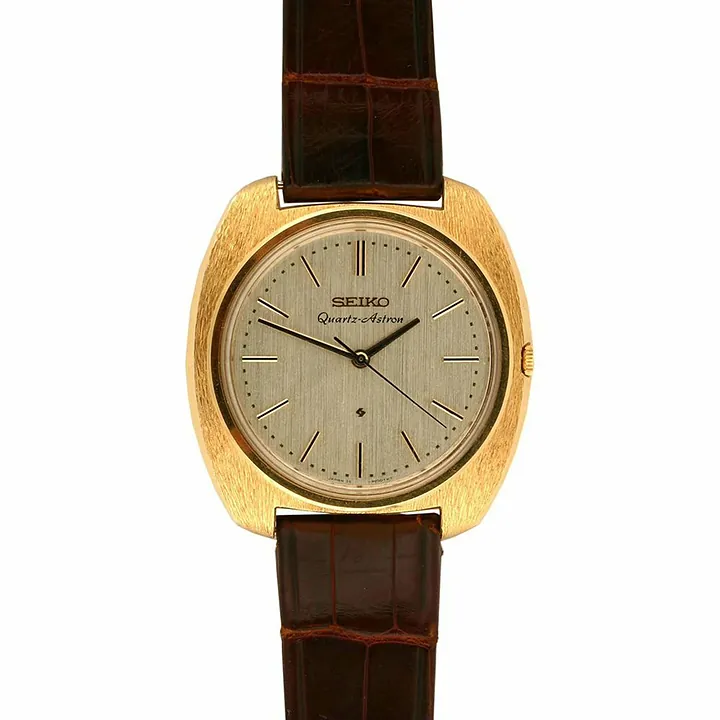
Wristwatches · 1969
Wristwatch, Japan, 1969 (no. 29912)
German Clock Museum
Wristwatches · c. 1972
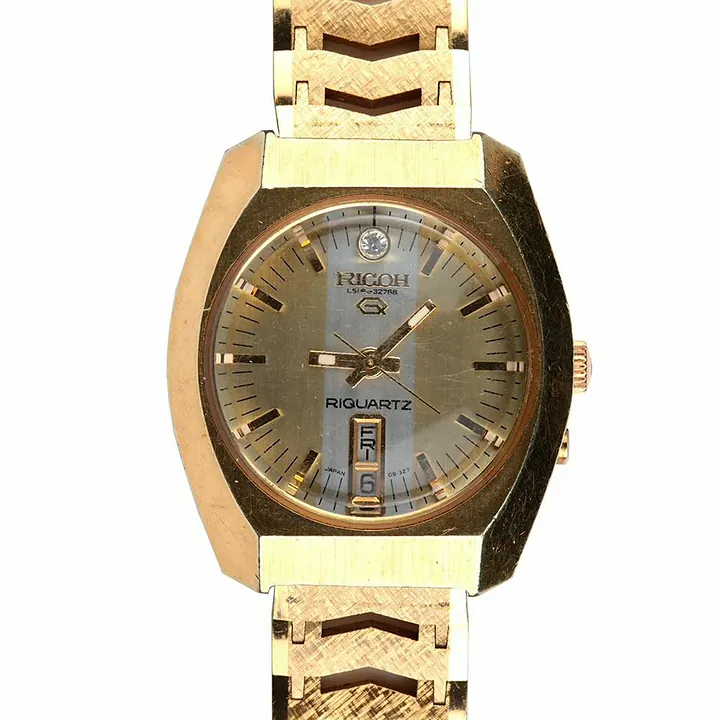
Wristwatch, Japan, c. 1972
German Clock Museum