
Wristwatches · Wristwatch
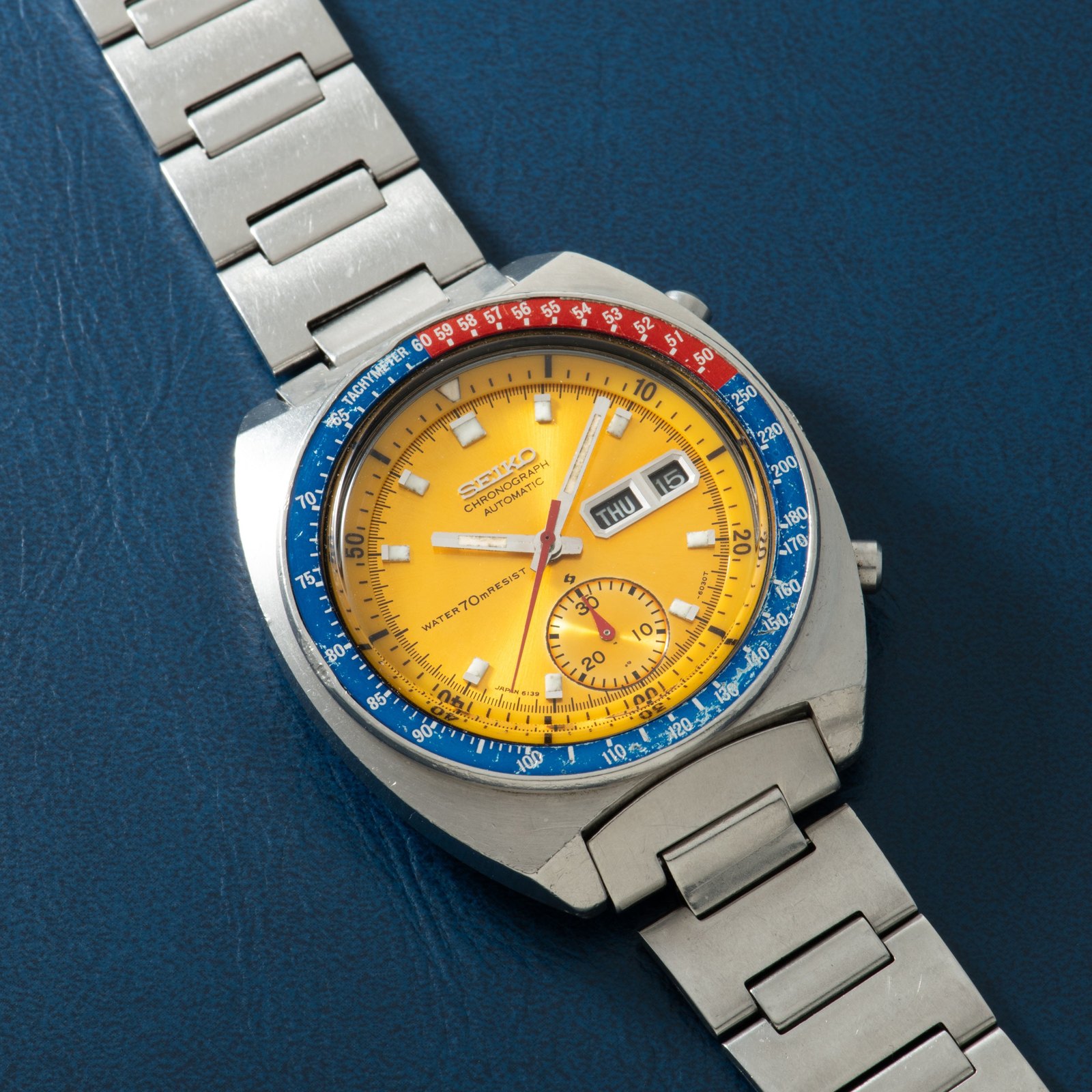
Seiko Chronograph 'Pogue', 1970s
- Maker / attribution
- Seiko (maker)
- Date
- 1970s
- Historical period
- Quartz Revolution (1969 – 1990)
- Country of origin
- Japan
- Object type
- Wristwatch
- Dimensions
- Case 41 mm
- Stock no.
- 40993326
- Credit line
- Dealer listing, Analog/Shift (40993326)
- Catalogue title (original)
- Seiko Chronograph 'Pogue' (English)
View the source record (dealer listing) ↗ (opens another website in a new tab)Suggest a correction
Record summary
Catalogued by Analog/Shift (dealer), New York (stock number 40993326), this is a wristwatch by Seiko, made in Japan, dated 1970s. The Atlas places it in the Quartz Revolution period (1969 – 1990) of its Wristwatches collection. Recorded dimensions: Case 41 mm. The record is illustrated with 6 photographs.
Assembled from the source record's structured fields. Dates and attributions are given as the source states them; where a field is missing the Atlas leaves it blank rather than estimating.
Catalogue description
Dealer description — Analog/Shift
Everyone knows the first watch worn on the Moon was the Omega Speedmaster. Far fewer people know that the first automatic chronograph to travel into space was a Seiko. For years, the distinction was attributed to the Sinn 140 worn by German astronaut Reinhard Furrer aboard Spacelab D1 in 1985. Pogue’s Seiko remained largely overlooked until watch collectors began examining Skylab photographs decades later. There it was: that unmistakable yellow dial on Pogue’s wrist. The discovery transformed the 6139-6000 series into one of the most collectible vintage Seikos and gave it the nickname by which it is now universally known: the “Pogue.” And the movement itself deserves some attention. Introduced in 1969, Seiko’s Calibre 6139 was among the earliest automatic chronograph movements ever brought to market. It combined automatic winding, a column wheel, a vertical clutch, a chronograph, and a day-date display into an impressively compact package, placing Seiko at the forefront of one of watchmaking’s great technical races. Dating to the 1970s, this Reference 6139 features a 41mm stainless steel case, colorful red-and-blue “Pepsi” bezel, barrel-shaped chronograph pushers, and the model’s distinctive recessed crown. The brilliant yellow sunburst dial features applied markers, a day-date display at 3 o’clock, a 30-minute chronograph register at 6, and a rotating internal elapsed-time bezel. This example remains in remarkably honest condition, retaining the strong case geometry and character that make an untouched vintage sports watch so appealing. It is fitted to a correct, Seiko-signed, stainless steel multi-link bracelet with a signed locking clasp. The Pogue occupies an unusual intersection of watchmaking and space history: a technically groundbreaking Japanese chronograph that went into orbit not because NASA selected it, but because an astronaut found it useful enough to bring along. Sometimes the best provenance isn’t planned.
Historical context
Quartz Revolution (1969 – 1990)
Seiko's Astron begins mass quartz timekeeping; traditional industries contract sharply.
Quartz and digital watches transformed the market after 1969. Swiss employment collapsed, Japanese and Hong Kong production soared, and the Swatch (1983) helped the Swiss industry recover; mechanical watches survived as luxury goods.
Read the period in the timelineMore wristwatches from this periodEarlier: Modern Mechanical Horology
Atlas type guide
Chronographs and split-seconds watches
A chronograph is a watch with an additional seconds hand that can be started, stopped and returned to zero independently of the timekeeping. Louis Moinet built an early example in 1816 and Nicolas Rieussec a recording 'chronographe' in 1821; Adolphe Nicole's heart-shaped reset cam (patented 1862) made the modern return-to-zero possible. Split-seconds (rattrapante) chronographs add a second hand that can be stopped for intermediate times; flyback chronographs restart instantly.
Chronographs were essential tools for doctors (pulsometer scales), artillery (telemeter), engineers and sport. In wristwatches, Valjoux, Venus, Lemania and later the automatic chronographs of 1969 (Zenith El Primero, the Chronomatic Calibre 11 group and Seiko 6139) are milestones.
What to look for
- Push-pieces on the case band or a single button in the crown (monopusher).
- Subsidiary registers for minutes and hours; tachymeter, telemeter or pulsometer scales.
- Column wheel versus cam control visible in the movement.
- Calibre markings of specialist makers (Valjoux, Lemania, Venus, Landeron).
Dating clues
- Pocket chronographs with heart cam reset: after 1862.
- Wrist chronographs: from c. 1910; two-button designs from the 1930s.
- Automatic chronographs: from 1969.
General guidance written by the Atlas editors about this kind of object. It is not a statement about this particular piece; for that, rely on the source record above and on physical examination.
Read next:Flyback chronographChronograph
Related records
Wristwatches · 1967
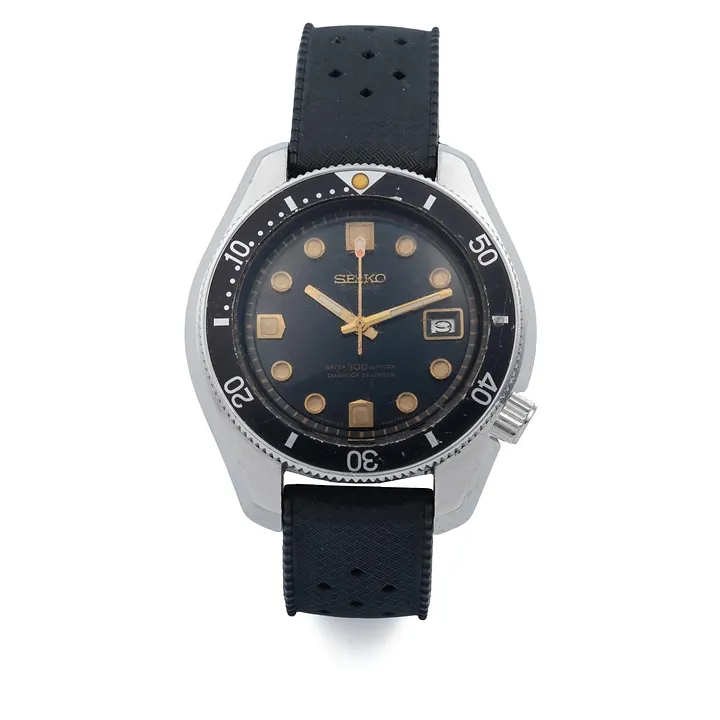
Seiko 300 M, ref. 6215-7000, 1967
Antiquorum auction archive, Geneva
Wristwatches · 1967
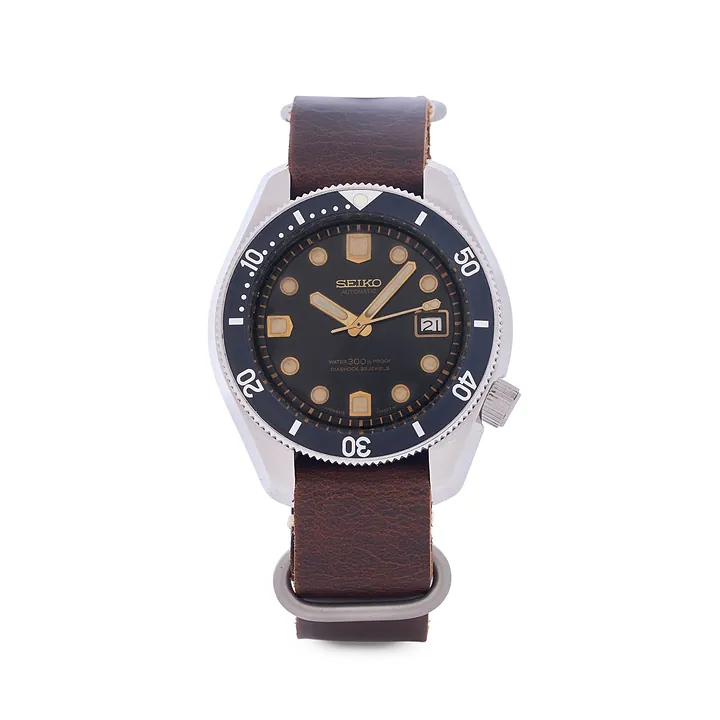
Seiko 300 Meter Diver, ref. 6215-7000, 1967
Antiquorum auction archive, Geneva
Wristwatches · c. 1968
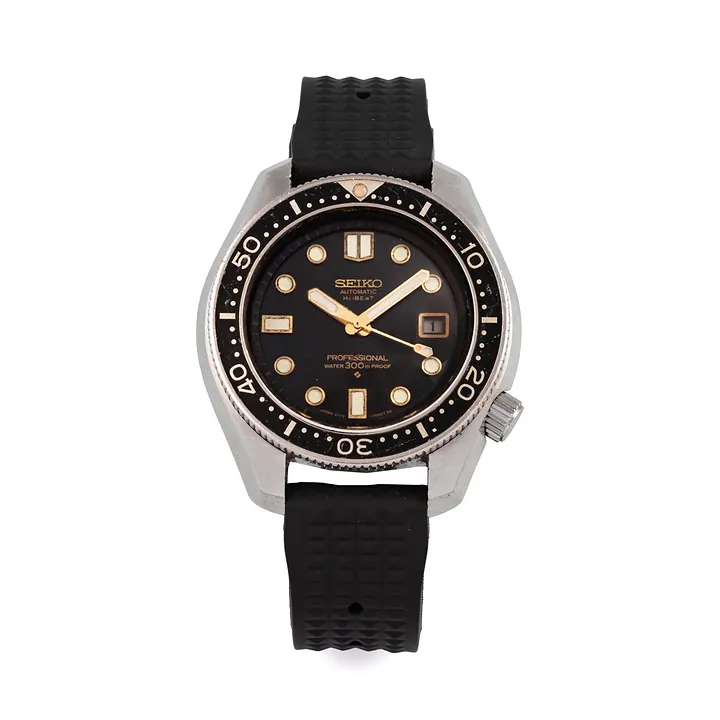
Seiko Hi-Beat, ref. 6159-7000, c. 1968
Antiquorum auction archive, Geneva
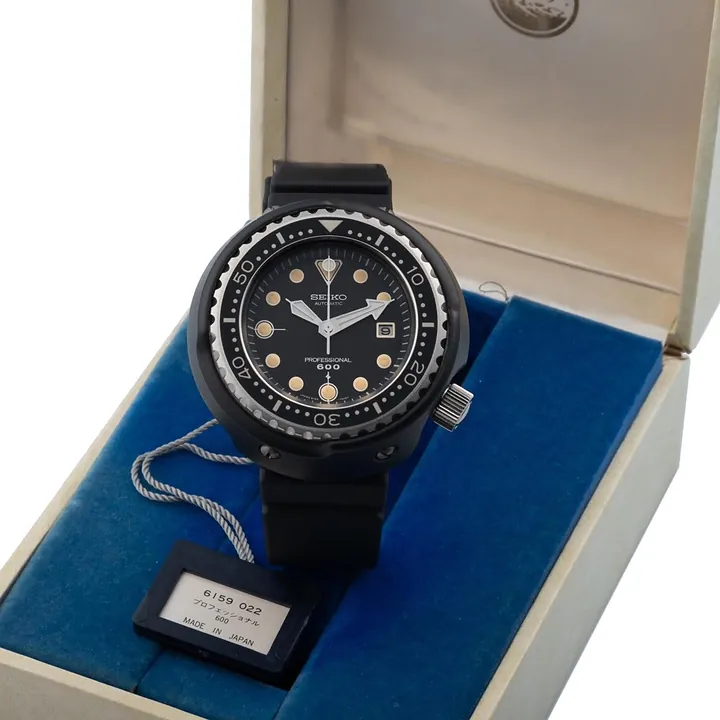
Wristwatches · 1975
Seiko Tuna Professional 600, ref. 6159-7010, 1975
Antiquorum auction archive, Geneva
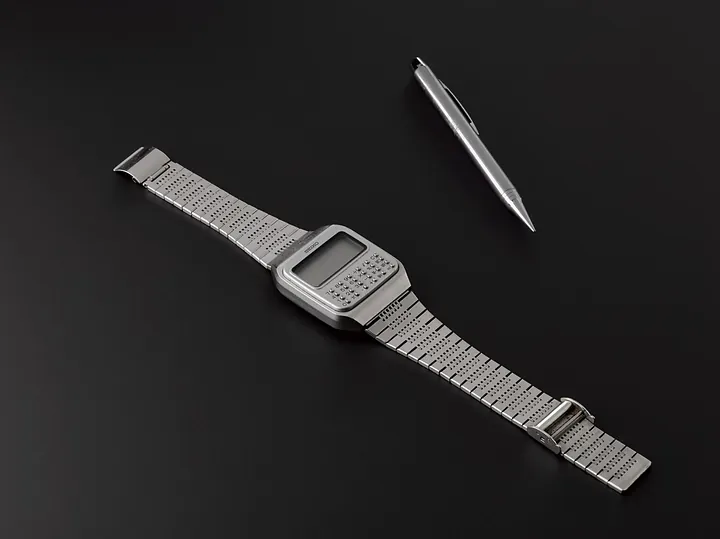
Wristwatches · 1978
Calculator wristwatch by Suwa Seikosha Co. Limited, Japan, 1978
Science Museum Group, London
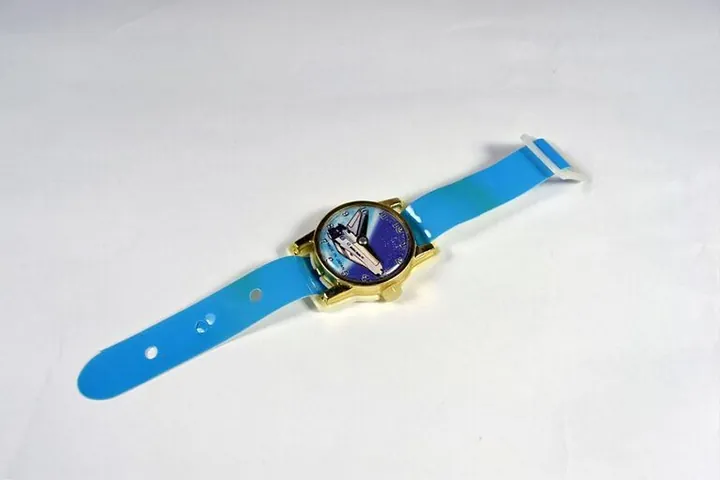
Wristwatches · 1980–1982
Wristwatch, Space Shuttle; plastic, Japan, 1970-1979?
Victoria and Albert Museum, London
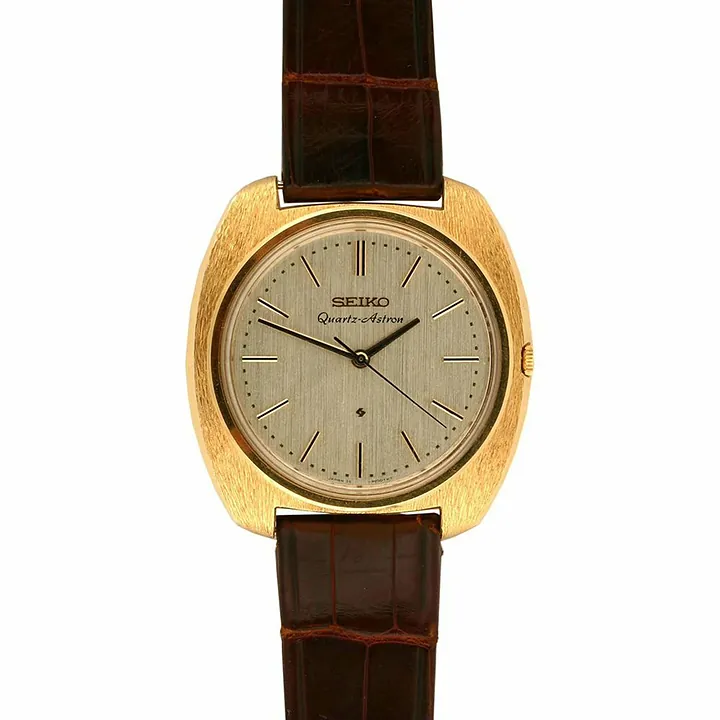
Wristwatches · 1969
Wristwatch, Japan, 1969 (no. 29912)
German Clock Museum
Wristwatches · c. 1972
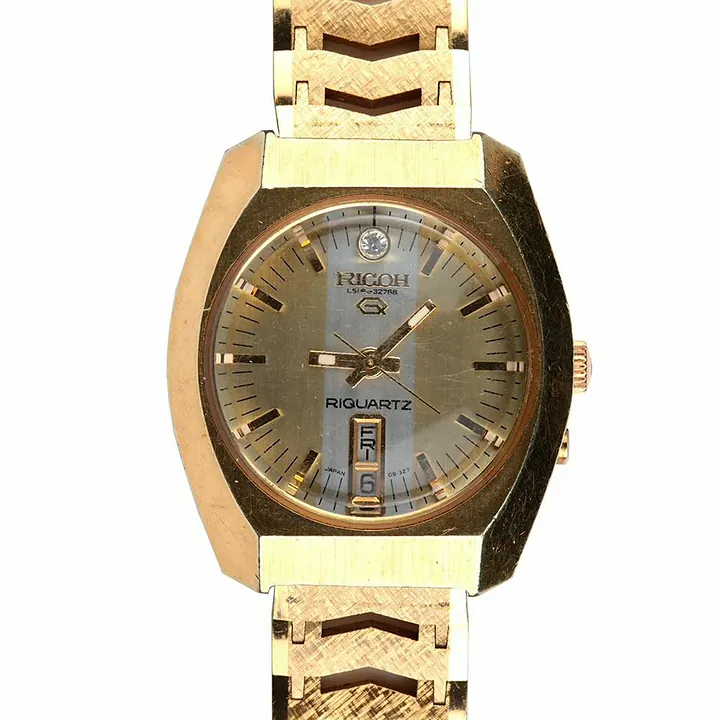
Wristwatch, Japan, c. 1972
German Clock Museum