
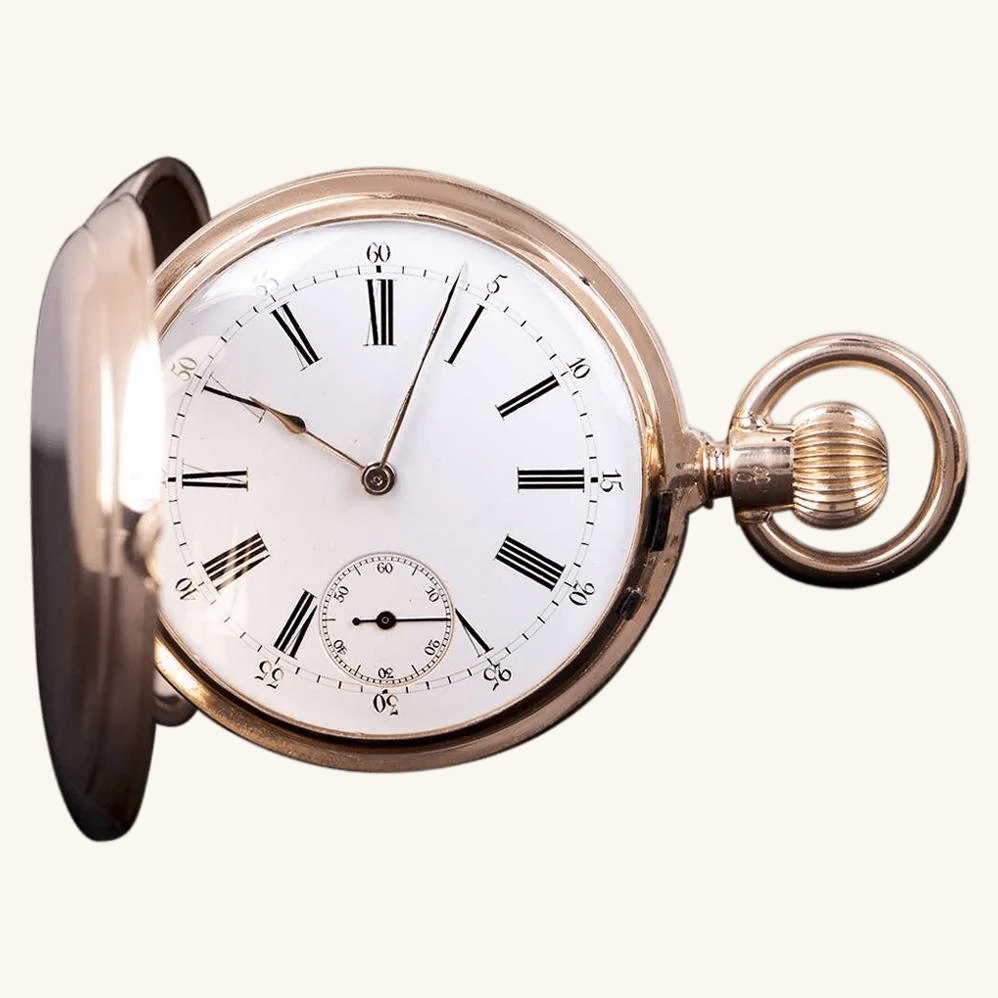
Pocket Watches · Pocket watch
Rose Gold Double Sided Calendar Pocket Watch, 1890
- Maker / attribution
- Unrecorded in source
- Date
- 1890
- Historical period
- Industrial Revolution (1850 – 1900)
- Country of origin
- Unrecorded in source
- Object type
- Pocket watch
- Materials / technique
- gold
- Dealer
- WatchMuseum.org shop
- Stock no.
- Product 5160
- Credit line
- Dealer listing, WatchMuseum.org shop (product 5160)
- Catalogue title (original)
- Rose Gold Double Sided Calendar Pocket Watch (English)
View the source record (dealer listing) ↗ (opens another website in a new tab)Suggest a correction
Record summary
Catalogued by WatchMuseum.org shop (stock number Product 5160), this is a pocket watch, dated 1890. The Atlas places it in the Industrial Revolution period (1850 – 1900) of its Pocket Watches collection. Materials and techniques recorded by the source: gold. The record is illustrated with 6 photographs.
Assembled from the source record's structured fields. Dates and attributions are given as the source states them; where a field is missing the Atlas leaves it blank rather than estimating.
Catalogue description
Dealer description — WatchMuseum.org shop
Step into a world of timeless elegance and sophistication with the Rose Gold Double Sided Calendar Pocket Watch – 1890, a rare and exquisite timepiece that beautifully captures the essence of vintage charm and modern functionality. Crafted with meticulous precision, this 18k rose gold full hunter pocket watch is a testament to the artistry and craftsmanship of the late 19th century. Its stunning white enamel dial, adorned with classic Roman numerals, transforms timekeeping into an art form, while the small seconds sub-dial at 6 o’clock adds a unique flair to its already captivating design. Flip the watch over to reveal an enamel chapter ring that elegantly displays the date and day indicators, offering both practicality and convenience for the discerning gentleman. The luxurious feel of the watch is further enhanced by its fixed 18k rose gold bezel, and the durable plastic glass ensures that style is never compromised. Powered by a reliable manual wind lever movement, this watch promises accurate timekeeping and stands as a cherished heirloom for generations to come. The exhibition caseback provides a mesmerizing glimpse into the intricate inner workings of this horological masterpiece, making it not just a timepiece, but a conversation starter. Preserved in excellent condition and presented in a beautiful box, this pocket watch is an ideal gift or a valuable addition to any collection. Experience the extraordinary blend of timeless elegance and functional sophistication with the Rose Gold Double Sided Calendar Pocket Watch – 1890, where history and luxury meet in perfect harmony. Introducing a truly exceptional timepiece, the Rare 18k Rose Gold Full Hunter Double Sided Calendar Vintage Gents Pocket Watch. Crafted with precision and elegance, this pocket watch exudes sophistication. Featuring a stunning white enamel dial adorned with roman numerals, this timepiece is not only a functional accessory but also a work of art. The small seconds sub-dial at 6 o’clock adds a touch of flair to the overall design. On the reverse side, an enamel chapter ring displays the date and day indicators, providing additional functionality and convenience. The fixed 18k rose gold bezel enhances the luxurious feel of the watch, while the plastic glass ensures durability without compromising on style. The manual wind lever movement guarantees reliable and accurate timekeeping, creating a timepiece that not only stands the test of time, but also becomes a cherished heirloom. Furthermore, the exhibition caseback allows for a glimpse into the intricate inner workings of this horological masterpiece. Meticulously preserved in excellent condition, this pocket watch comes complete with a presentation box, making it a perfect gift or a valuable addition to any collection. Experience the extraordinary with this Rare 18k Rose Gold Full Hunter Double Sided Calendar Vintage Gents Pocket Watch, where timeless elegance meets functional sophistication. Case Material: 18k Gold,Rose Gold Movement: Manual Wind Case Dimensions: Diameter: 47 mm (1.86 in) Period: 19th Century Date of Manufacture: 1890 Condition: Excellent
Historical context
Industrial Revolution (1850 – 1900)
American interchangeable-parts manufacture; railroad time standards; Swiss and German factory systems.
Machine production with interchangeable parts, pioneered by Waltham (1850s) and adopted by Elgin, Longines, Omega and others, made reliable lever watches widely affordable. Keyless winding became standard, railroad watch standards were introduced (1890s), and Swiss and American industries competed globally.
Read the period in the timelineMore pocket watches from this periodEarlier: Precision & Scientific Horology
Atlas type guide
Calendar, moon-phase and perpetual calendar watches
Calendar complications range from a simple date to the perpetual calendar, which automatically allows for months of different lengths and leap years until 2100. Pocket watches with perpetual calendars were made in the eighteenth and nineteenth centuries; Patek Philippe made the first perpetual calendar wristwatch in 1925, and series production followed in 1941. The annual calendar (Patek Philippe, 1996) needs correction only once a year.
Moon-phase displays use a disc with two moons and 59 teeth advanced daily, approximating the 29.5-day lunation; more precise trains reduce the error to one day in over a century.
What to look for
- Apertures or subsidiary dials for day, date, month and leap year.
- Moon disc under a 'bosom' shaped aperture.
- Recessed correctors on the case band for setting the calendar.
Dating clues
- Triple-date wristwatches: popular c. 1940–1955.
- Perpetual calendar wristwatches: from 1925 (unique) and 1941 (series).
General guidance written by the Atlas editors about this kind of object. It is not a statement about this particular piece; for that, rely on the source record above and on physical examination.
Related records
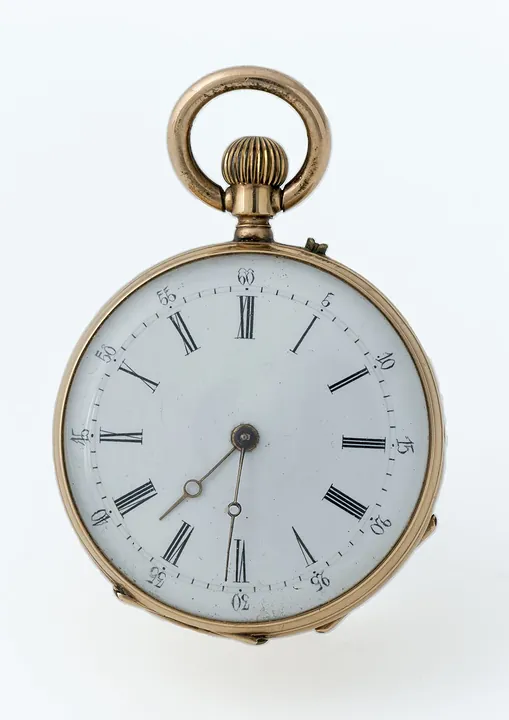
Pocket Watches · 1880
Pocket watch, 1880
Museum Rotterdam
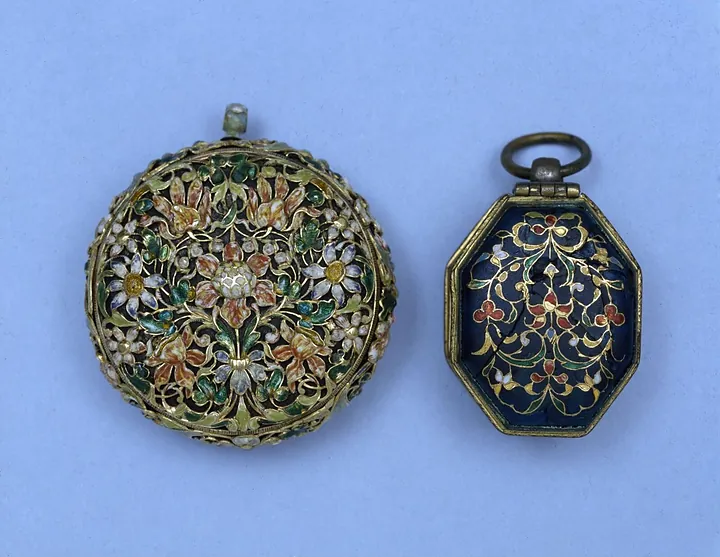
Pocket Watches · mid 19th century
Watch, enamelled gilt brass of floral design, signed 'A Bloys.', France, in an early 17th century style but possibly mid 19th century
Victoria and Albert Museum, London
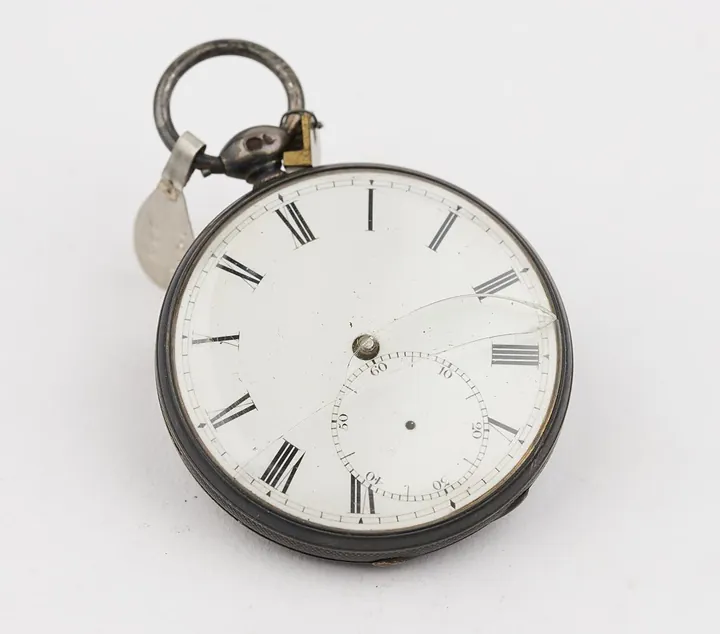
Pocket Watches · 1835–1875
Pocket watch by Cornelius Brooks Holliday, England, 1835–1875
Science Museum Group, London
Pocket Watches · c. 1840–60
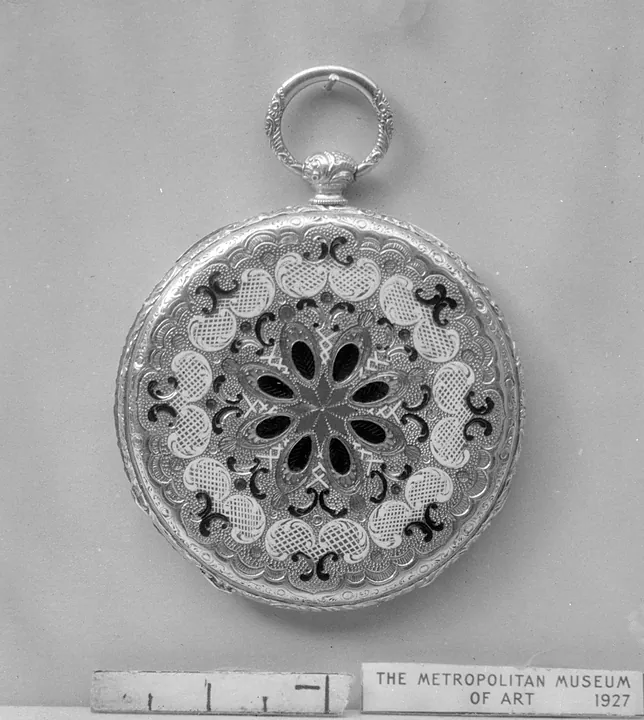
Watch by Callaud, c. 1840–60
The Metropolitan Museum of Art, New York
Pocket Watches · c. 1840-1860s
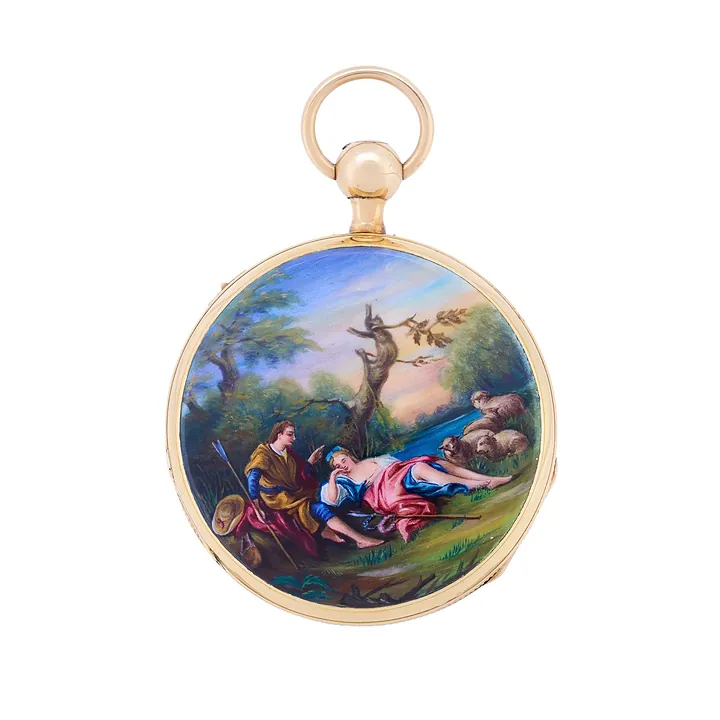
G.H. Berblinger pocket watch, c. 1840-1860s
Antiquorum auction archive, Geneva
Pocket Watches · c. 1840-1860s
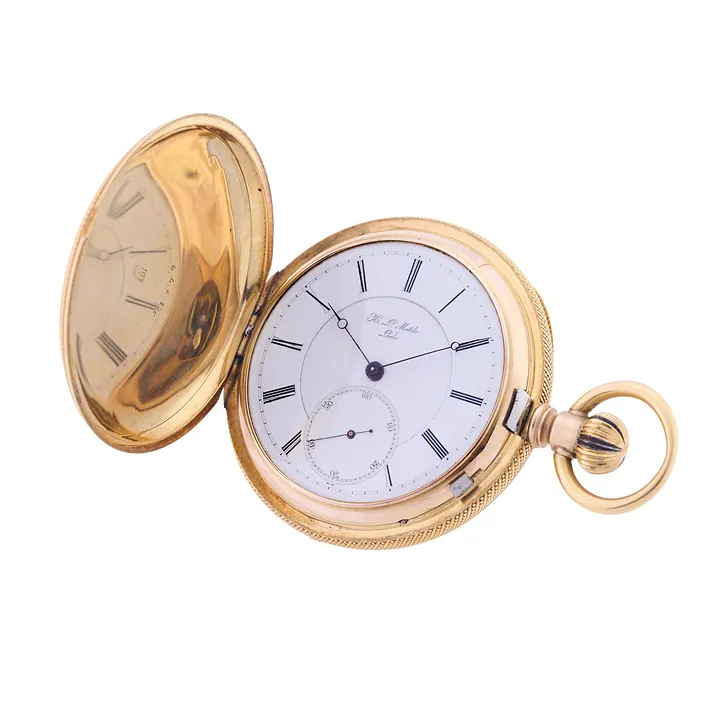
H.L Matile Locle pocket watch, c. 1840-1860s
Antiquorum auction archive, Geneva
Pocket Watches · c. 1849–50
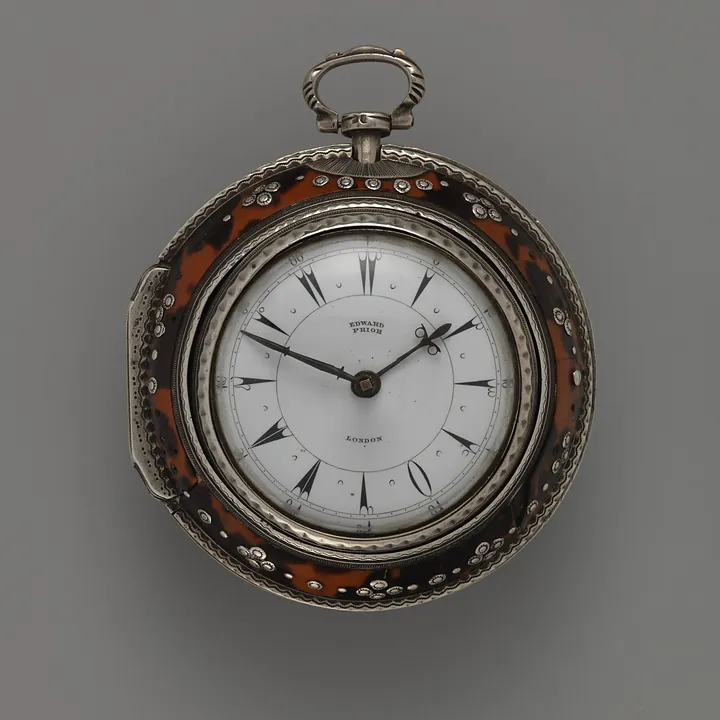
Watch by Edward Prior, England, c. 1849–50
The Metropolitan Museum of Art, New York
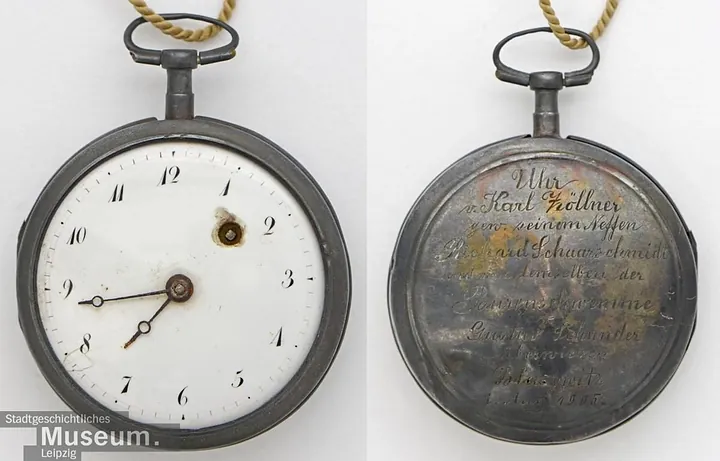
Pocket Watches · 1845–1855
Pocket watch, 1845–1855
Museum of City History Leipzig