
Wristwatches · Wristwatch
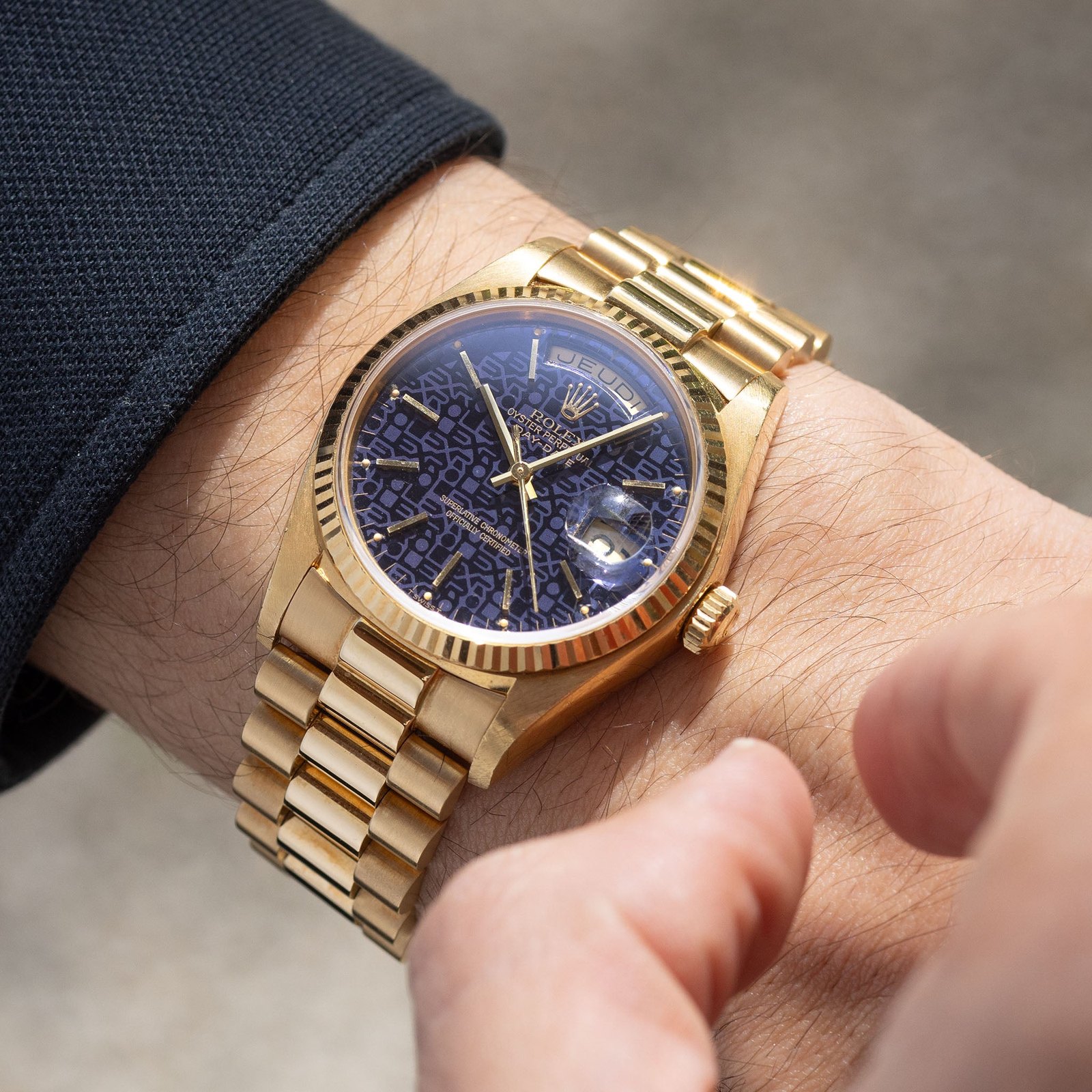
Rolex Day-Date 18038 Purple Jubilee Dial French Hallmarks, 1979
- Maker / attribution
- Rolex (maker)
- Date
- 1979
- Historical period
- Quartz Revolution (1969 – 1990)
- Country of origin
- France
- Object type
- Wristwatch
- Dimensions
- Case 36 mm
- Stock no.
- W-3677
- Credit line
- Dealer listing, Bulang & Sons (W-3677)
- Catalogue title (original)
- Rolex Day-Date 18038 Purple Jubilee Dial Box and Papers French Hallmarks (English)
View the source record (dealer listing) ↗ (opens another website in a new tab)Suggest a correction
Record summary
Catalogued by Bulang & Sons (dealer), Copenhagen (stock number W-3677), this is a wristwatch by Rolex, made in France, dated 1979. The Atlas places it in the Quartz Revolution period (1969 – 1990) of its Wristwatches collection. Recorded dimensions: Case 36 mm. The record is illustrated with 5 photographs.
Assembled from the source record's structured fields. Dates and attributions are given as the source states them; where a field is missing the Atlas leaves it blank rather than estimating.
Catalogue description
Dealer description — Bulang & Sons
Introduced in 1956, the Rolex Day-Date was the world’s first waterproof, self-winding chronometer wristwatch to display both the date and the day of the week—spelled out in full—across two separate windows. By 1977, Rolex updated the Day-Date with the introduction of the reference 18038, featuring the improved “single quickset” movement. This allowed the wearer to adjust the date independently of the time, alongside the transition from acrylic to sapphire crystal. This particular example stands out with a lovely, full case and crisp fluted bezel. Even better, it features small French hallmarks—subtle but important details indicating precious metal control marks for pieces destined for the French market at the time. The c18k yellow gold case remains in stunning condition, with the factory lines and curves still present. The President bracelet (ref. 8385) remains in strong condition, with tight links, solid end links, and a concealed clasp—exactly how you want to see it. It currently fits wrists up to approximately 18 cm. The dial is where things get especially interesting. This piece features a very cool “Jubilee” dial, with a repeating “Rolex Rolex” motif that creates a subtle three-dimensional effect. The tone leans toward a rare purple hue, combined with applied stick markers, gold printing, and a warm beige patina on the hour plots—giving it real depth and character. Interestingly, Rolex recently reintroduced a similar Jubilee-style motif on the Rolex Oyster Perpetual models, though in a more playful and colorful execution—making this vintage example feel even more relevant today. Adding to the charm, the day disc is in French, perfectly matching the French import hallmarks on the case. The original punched guarantee paper confirms a sale in Paris, tying the whole story together. The watch is accompanied by its original leather Rolex inner box, a polishing cloth, and a translation booklet—nice extras that complete the set. It has also been fully checked amd regulated by our watchmaker and is ready for many years of wear. A proper rare one — Jubilee dial with that purple hue. Don’t wait ! Specifications: Rolex Day-Date Reference 18038 36mm 18k yellow gold case, sapphire crystal Turned to purple Jubilee dial Serial 590xxxx dating to 1979 Small French import hallmarks on the case-back French day-disc Yellow gold President bracelet with concealed clasp Rolex Day-Date box, booklet, polishing cloth Punched guarantee paper stating sale in Paris, France Fully checked and regulated by our watchmaker
Historical context
Quartz Revolution (1969 – 1990)
Seiko's Astron begins mass quartz timekeeping; traditional industries contract sharply.
Quartz and digital watches transformed the market after 1969. Swiss employment collapsed, Japanese and Hong Kong production soared, and the Swatch (1983) helped the Swiss industry recover; mechanical watches survived as luxury goods.
Read the period in the timelineMore wristwatches from this periodEarlier: Modern Mechanical Horology
Atlas type guide
Calendar, moon-phase and perpetual calendar watches
Calendar complications range from a simple date to the perpetual calendar, which automatically allows for months of different lengths and leap years until 2100. Pocket watches with perpetual calendars were made in the eighteenth and nineteenth centuries; Patek Philippe made the first perpetual calendar wristwatch in 1925, and series production followed in 1941. The annual calendar (Patek Philippe, 1996) needs correction only once a year.
Moon-phase displays use a disc with two moons and 59 teeth advanced daily, approximating the 29.5-day lunation; more precise trains reduce the error to one day in over a century.
What to look for
- Apertures or subsidiary dials for day, date, month and leap year.
- Moon disc under a 'bosom' shaped aperture.
- Recessed correctors on the case band for setting the calendar.
Dating clues
- Triple-date wristwatches: popular c. 1940–1955.
- Perpetual calendar wristwatches: from 1925 (unique) and 1941 (series).
General guidance written by the Atlas editors about this kind of object. It is not a statement about this particular piece; for that, rely on the source record above and on physical examination.
Related records

Movements & Components · c. 1970s
Rolex watch movement, c. 1970s
Antiquorum auction archive, Geneva

Pocket Watches · 1982
Fake Rolex watch, gold coloured metal, possibly made in Taiwan, 1982; part of a casual outfit, UK, 1982-84.
Victoria and Albert Museum, London

Wristwatches · c. 1920s
Rolex wristwatch, c. 1920s
Antiquorum auction archive, Geneva

Wristwatches · c. 1920s
Rolex wristwatch, ref. 6194, c. 1920s
Antiquorum auction archive, Geneva
Wristwatches · c.1989
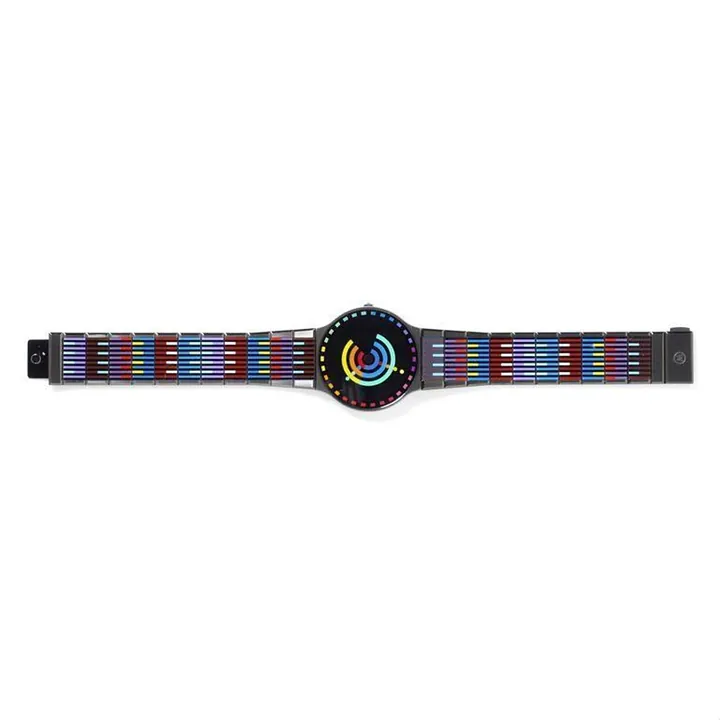
Steel, France and Switzerland, 1989; designed by Yaacov Agam (born 1928) for a limited edition by Movado
Victoria and Albert Museum, London
Wristwatches · c. 1972
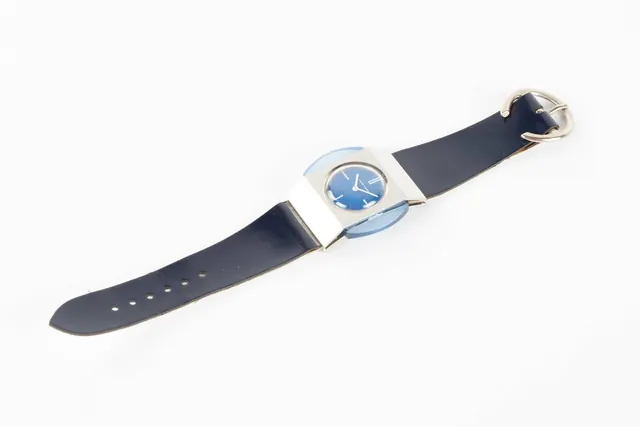
Wristwatch, France, c. 1972
German Clock Museum
Wristwatches · 1986
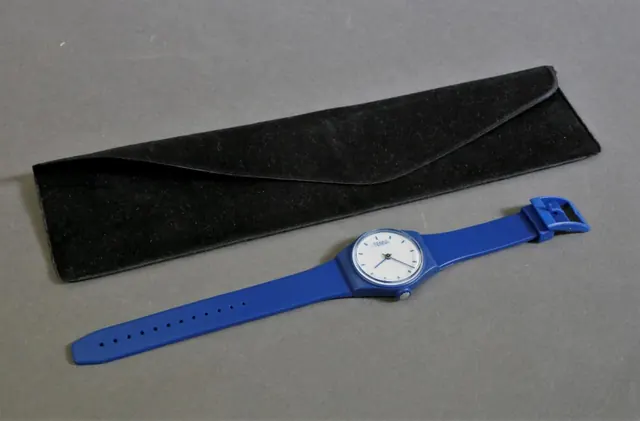
Wristwatch, France, 1986
Työväenmuseo Werstas
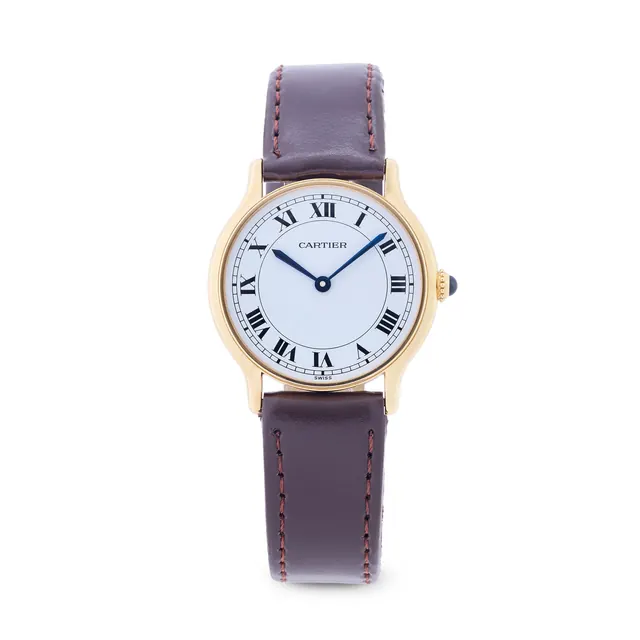
Wristwatches · c. 1970-1980s
Cartier wristwatch, ref. 10713, Riviera, circa 1970-1980s
Antiquorum auction archive, Geneva