
Wristwatches · Wristwatch
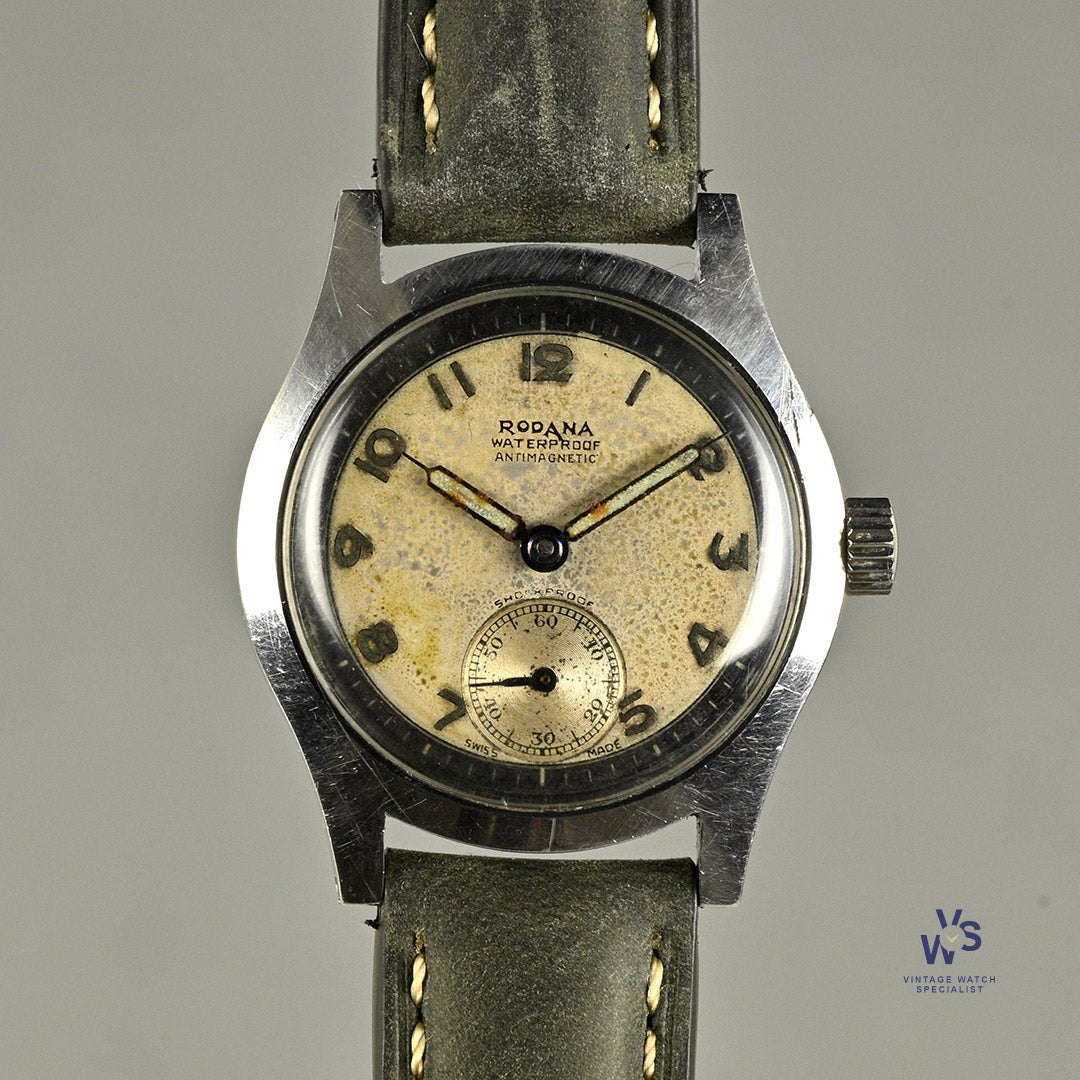
Rodana Waterproof Antimagnetic Watch, circa 1940s
- Maker / attribution
- Rodana (maker)
- Date
- c. 1940s
- Historical period
- Golden Age of Mechanical Watchmaking (1900 – 1945)
- Country of origin
- Unrecorded in source
- Object type
- Wristwatch
- Dimensions
- Case 30 mm
- Stock no.
- vws4408cs
- Credit line
- Dealer listing, Vintage Watch Specialist (vws4408cs)
- Catalogue title (original)
- Rodana Waterproof Antimagnetic Watch c.1940s (English)
View the source record (dealer listing) ↗ (opens another website in a new tab)Suggest a correction
Record summary
Catalogued by Vintage Watch Specialist (dealer), United Kingdom (stock number vws4408cs), this is a wristwatch by Rodana, dated c. 1940s. The Atlas places it in the Golden Age of Mechanical Watchmaking period (1900 – 1945) of its Wristwatches collection. Recorded dimensions: Case 30 mm. The record is illustrated with 6 photographs.
Assembled from the source record's structured fields. Dates and attributions are given as the source states them; where a field is missing the Atlas leaves it blank rather than estimating.
Catalogue description
Dealer description — Vintage Watch Specialist
The 1940s were an important period in the development of practical, reliable wristwatches. With mechanical watches becoming essential everyday instruments, Swiss manufacturers increasingly concentrated on improving their durability, accuracy and resistance to the demands of daily life. Among the many Swiss watchmaking names associated with this period was Rodana , a brand whose vintage timepieces reflected the functional design and mechanical craftsmanship of the era. Rodana watches from the mid-twentieth century can be found in a variety of styles, from understated dress watches to more purposeful designs featuring waterproof cases, antimagnetic protection and highly legible dials. These features were particularly desirable during the 1930s and 1940s, when watch manufacturers were developing increasingly sophisticated methods of protecting mechanical movements against moisture, dust and magnetic interference. The use of Staybrite stainless steel was another important development. This corrosion-resistant steel alloy was particularly well suited to watch cases, offering greater durability than many of the plated base-metal cases commonly used in earlier wristwatches. The term Staybrite became associated with quality stainless-steel construction and appears on the casebacks of numerous vintage Swiss watches from this period. Today, watches such as this Rodana offer collectors a wonderful opportunity to enjoy the character of early Swiss wristwatch design, with their compact proportions, distinctive dials and beautifully traditional mechanical construction. What's on Offer Here we have a particularly characterful Rodana Waterproof Antimagnetic wristwatch, dating from approximately the 1940s , housed in a stainless-steel Staybrite case and powered by a 15-jewel manual-winding movement. This is a lovely example of a vintage watch that wears its history proudly. The most striking feature is undoubtedly the dial, which has developed a wonderful warm cream colour with extensive natural patina across its surface creating an attractive mottled appearance that gives the watch a distinctive vintage personality. The dial features bold Arabic numerals in an unusual arrangement, with the figures positioned to follow the circular shape of the dial. Their darkened finish contrasts beautifully with the aged background, giving the watch an almost military-inspired appearance without making any claim of military issue. At 12 o'clock sits the Rodana signature , accompanied by the words Waterproof and Antimagnetic , reflecting two important features promoted by Swiss watchmakers during this period. The watch has a traditional subsidiary seconds dial at 6 o'clock , complete with its own finely detailed chapter ring and small seconds hand. The syringe hands offer luminous inserts that have aged naturally over the decades. Their appearance works particularly well with the warm tones of the dial. The stainless-steel Staybrite case measures approximately 30mm across and 36mm lug-to-lug , reflecting the compact proportions typical of wristwatches produced during the 1940s. Its angular lugs and polished surfaces give the watch a purposeful appearance, while the case displays the expected marks of wear associated with its considerable age. The caseback is clearly engraved with the period markings: WATERPROOF – ANTIMAGNETIC – STAYBRITE – FAB. SUISSE – ESTANCO These markings are particularly interesting, reinforcing the watch's Swiss manufacture and the emphasis placed on protective case construction. The watch is fitted with a leather strap featuring contrasting cream stitching, a sympathetic choice that complements its aged dial and understated vintage styling. The movement has been tested on a time grapher and is currently recording good results. We believe the watch is running well, although its previous service history is unknown. Should you prefer to have the watch professionally serviced before delivery, this can be arranged through our watchmaker at an additional cost. Simply add a note when placing the watch in your basket, and we will contact you to discuss the available servicing options. With its distinctive patinated dial, traditional hand-wound movement and attractive stainless-steel case, this Rodana is a lovely piece of 1940s Swiss watchmaking history. Condition Details: Crystal: Excellent Dial: Fair Bezel: Good Case: Good Movement: Not Serviced Overall: Good
Historical context
Golden Age of Mechanical Watchmaking (1900 – 1945)
The wristwatch displaces the pocket watch; waterproof cases, self-winding and grand complications.
The wristwatch overtook the pocket watch. Military use in the First World War, aviation, water-resistant cases (1926), automatic winding (1923–31), rectangular Art Deco designs and early chronographs and calendars defined the period.
Read the period in the timelineMore wristwatches from this periodEarlier: Industrial Revolution
Atlas type guide
Dive and water-resistant watches
Keeping water and dust out of a wristwatch was a long-standing challenge. Rolex's screw-down Oyster case (1926) and Omega's Marine (1932) were landmarks; in the early 1950s Blancpain's Fifty Fathoms and Rolex's Submariner defined the professional dive watch with rotating bezels for timing dives, luminous dials and high water resistance. The ISO 6425 standard (1982) later codified what a 'diver's watch' must do.
Dive watches became icons of post-war design and exploration, and their evolution — helium escape valves, ceramic bezels, saturation-diving depth ratings — records the history of underwater work.
What to look for
- Unidirectional or bidirectional rotating bezel with minute markings.
- Screw-down crown and case back; depth rating printed on the dial.
- Luminous hands and markers (radium before c. 1960, tritium c. 1960–1998, then Super-LumiNova).
- Reference numbers on the case between the lugs or inside the back.
Dating clues
- Screw-down Oyster cases: from 1926.
- Professional dive watches: from 1953.
- Tritium 'T' marks on dials: c. 1960–1998.
General guidance written by the Atlas editors about this kind of object. It is not a statement about this particular piece; for that, rely on the source record above and on physical examination.
Related records
Wristwatches · 1900–1999
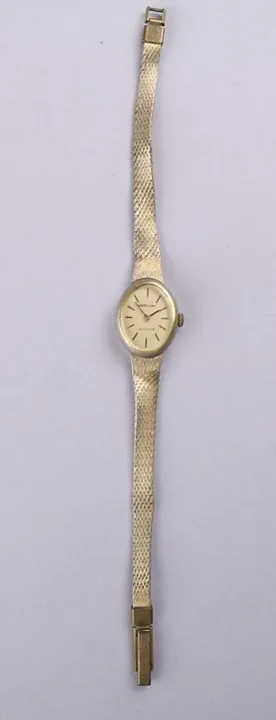
Wristwatch by Mercury, 1900–1999
Modemuseum Hasselt
Wristwatches · 1900–1999
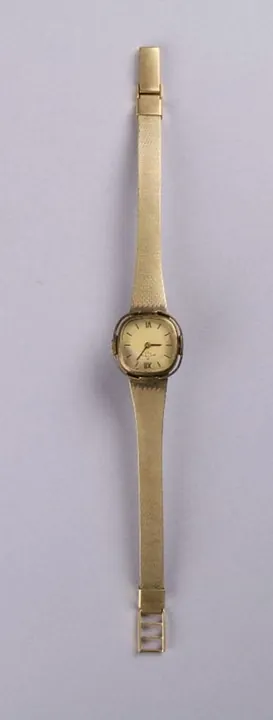
Wristwatch by Nutrix, 1900–1999
Modemuseum Hasselt

Wristwatches · 1920
Wristwatch, 1920
Modemuseum Hasselt

Wristwatches · 1931
Rolex 'Oyster Perpetual' rotor self-winding wrist-watch, lever escapement, in steel case with glass in back, Montres Rolex SA, Geneva, Switzerland, 1931
Science Museum Group, London
Wristwatches · c. 1936
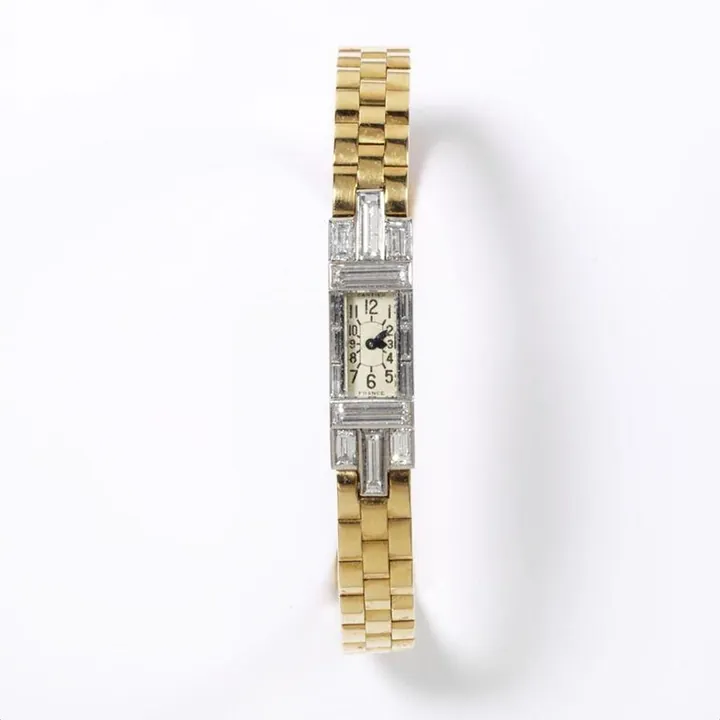
Watch with diamond-set platinum case and gold link bracelet, Cartier, Paris, c. 1936.
Victoria and Albert Museum, London
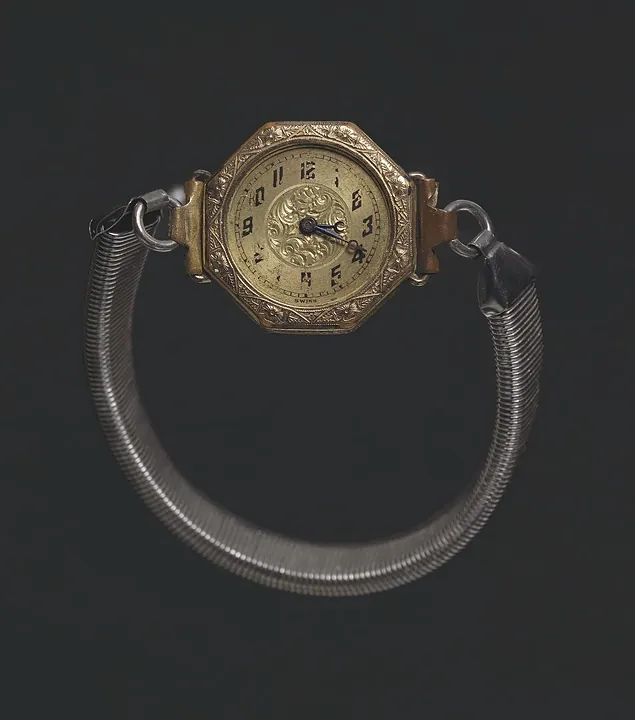
Wristwatches · early to mid 20th century
Woman's wristwatch worn by Harriette Vyda Simms Moore, early to mid 20th century
National Museum of African American History and Culture, Smithsonian Institution, Washington DC

Wristwatches · 1900–1999
Wristwatch by Certina, Switzerland, 1900–1999
Nordic Museum Foundation
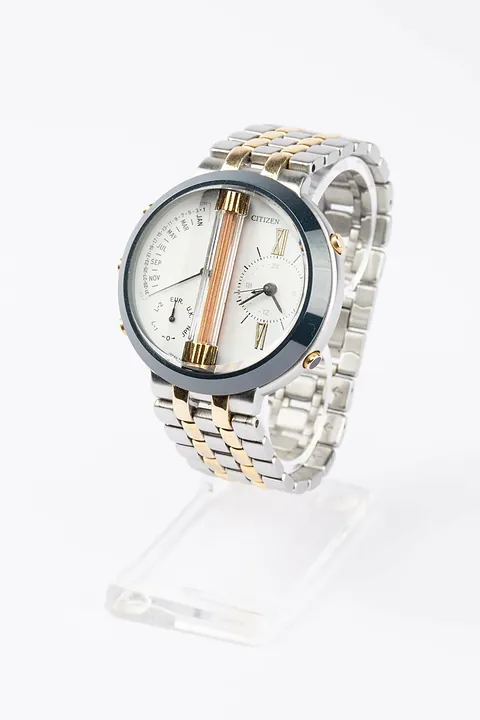
Wristwatches · 1900–1999
Wristwatch by Citizen, Japan, 1900–1999
German Clock Museum