
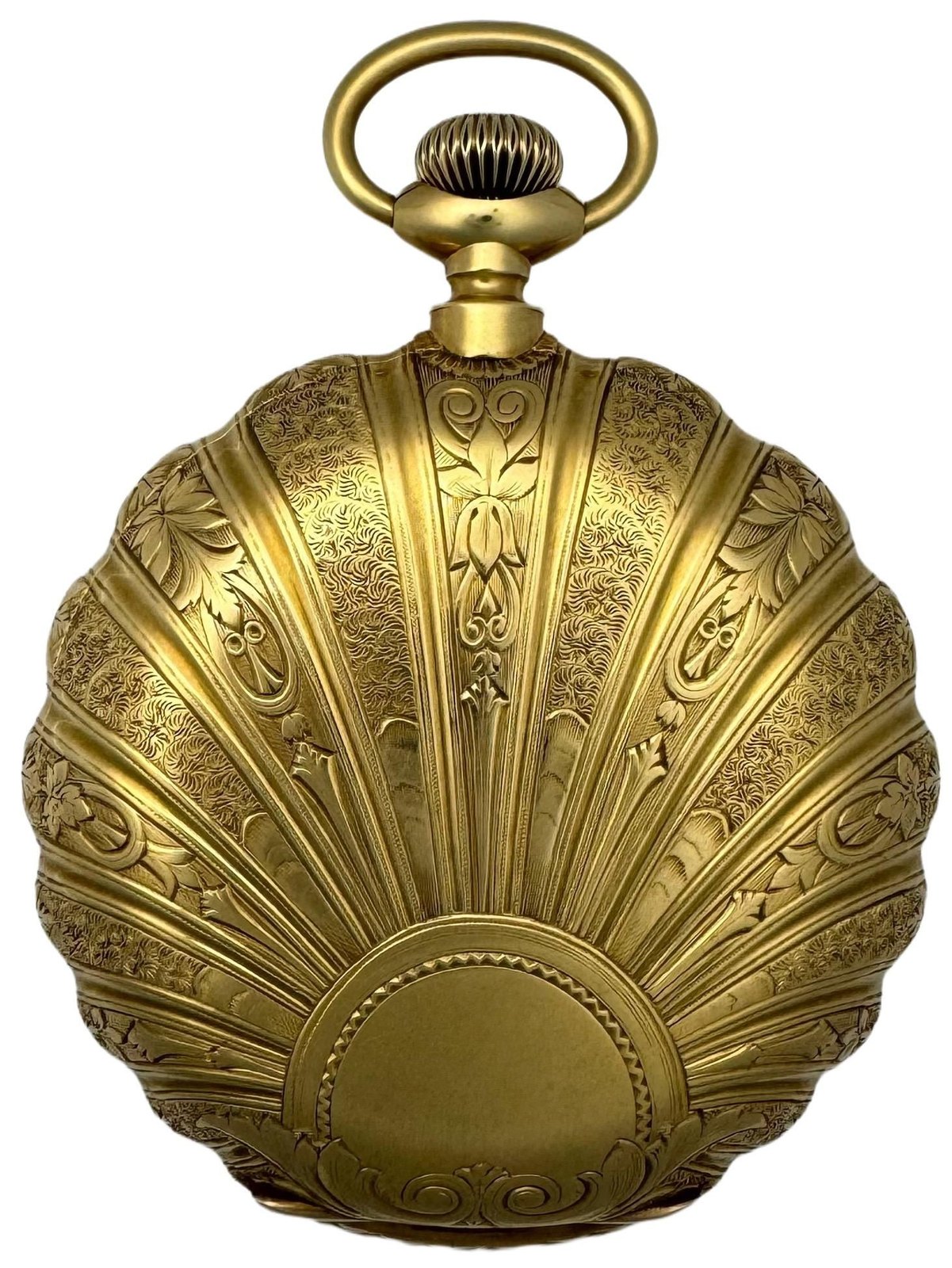
Pocket Watches · Pocket watch
Rare Patek Philippe Guillaume Balance Extra 18k Gold Chronometer Pocket Watch Original Case Matching, c. 1898
- Maker / attribution
- Patek Philippe (maker)
- Date
- c. 1898
- Historical period
- Industrial Revolution (1850 – 1900)
- Country of origin
- Switzerland
- Object type
- Pocket watch
- Materials / technique
- 18k gold, gold
- Auction house
- LiveAuctioneers auction archive
- Lot
- Item 186169357
- Credit line
- Auction lot record: lot 9485, Fine Jewelry Watches Art And General Antiques, Hess Fine Auctions (2024), via LiveAuctioneers
- Catalogue title (original)
- Rare Patek Philippe Guillaume Balance Extra 18k Gold Chronometer Pocket Watch Original Case Matching (English)
View the source record (auction lot) ↗ (opens another website in a new tab)Suggest a correction
Record summary
Catalogued by LiveAuctioneers auction archive (lot Item 186169357), this is a pocket watch by Patek Philippe, made in Switzerland, dated c. 1898. The Atlas places it in the Industrial Revolution period (1850 – 1900) of its Pocket Watches collection. Materials and techniques recorded by the source: 18k gold, gold. The record is illustrated with 4 photographs.
Assembled from the source record's structured fields. Dates and attributions are given as the source states them; where a field is missing the Atlas leaves it blank rather than estimating.
Catalogue description
Lot description — Hess Fine Auctions
Title: Rare Patek Philippe Guillaume Balance Extra 18k Gold Chronometer Pocket Watch Original Case Matching Serial Number to Movement Running Antique Circa 1898 Description: An incredible, rare, Patek Philippe 18k gold pocket watch that has matching case and movement serial numbers. Serial Number: 106816. This lot includes a plethora of original paperwork and subsequent paperwork that delineates its provenance. This includes a huge copy of the first class observatory paper from 1899, with first-class certificate. Additionally, the original papers refer to it as a chronometer with a compensated balance. The subsequent letters trace the origin and owners of the watch, as well as its condition, pricing, and locale, including the ownership of a Mr. Francis Jefferson Dodd, a Senior Minister of the Baptist Church in Fairborn, Georgia. Condition: Excellent overall. Crystal is in excellent condition without any chips, scratches, gouges, or clouding. Dial is in excellent condition and has no hairlines, chips, cracks, abrasions, or stains. Hands are in excellent condition and are straight, align well, have retained their vibrancy and functionality. Case is in excellent condition and has no dents, dings, gouges, or toning. No monogram is present. Movement Condition: Movement is running and keeping strong time. Case Diameter: 56 mm Case Thickness: 14 mm Material: 18k Gold Circa: 1898 Estimated weight of piece: 152.41 grams. Box & Papers: Paperwork and Provenance Estimated size of package: 12 x 10 x 3 Described by: Sam DT 55927 NFDDDD Additional Info: If the winning bidder would like to arrange to pick up their item at our store, please notify us by email and we will make the appropriate shipping adjustments.
Historical context
Industrial Revolution (1850 – 1900)
American interchangeable-parts manufacture; railroad time standards; Swiss and German factory systems.
Machine production with interchangeable parts, pioneered by Waltham (1850s) and adopted by Elgin, Longines, Omega and others, made reliable lever watches widely affordable. Keyless winding became standard, railroad watch standards were introduced (1890s), and Swiss and American industries competed globally.
Read the period in the timelineMore pocket watches from this periodEarlier: Precision & Scientific Horology
Atlas type guide
Pocket chronometers and precision watches
A pocket chronometer is a watch built to observatory standards, traditionally with a detent escapement like a marine chronometer. English makers such as John Arnold and Thomas Earnshaw made the first pocket chronometers in the 1780s. In the nineteenth century the term increasingly referred to any watch that had passed official rating trials at observatories in Kew, Neuchâtel, Geneva or Besançon, and the Swiss lever chronometer became dominant.
Tourbillon and karrusel watches belong to the same world of precision. Breguet patented the tourbillon in 1801 to average out positional errors; Bahne Bonniksen's karrusel (1892) was a cheaper English alternative. Rating certificates (bulletins de marche) that accompany such watches are historical documents in their own right.
What to look for
- Detent escapement (no pallets; a fine spring detent locks the escape wheel).
- Observatory certificates, competition results or 'Chronometer' marking on the dial.
- Tourbillon carriage visible through an aperture or on the movement.
- Fine finishing: jewelled holes in gold chatons, diamond endstones.
Dating clues
- English pocket chronometers: c. 1780–1900.
- Observatory trials at Neuchâtel from 1866, Geneva from 1873, Kew from 1884.
- Karrusels: 1892–c. 1915.
General guidance written by the Atlas editors about this kind of object. It is not a statement about this particular piece; for that, rely on the source record above and on physical examination.
Read next:Spring detent (chronometer) escapementTourbillonDetached lever escapement
Related records

Clocks · 1965–1975
Quartz master clock QM 1, with movement by Patek Phillippe, Switzerland, 1965–1975. Supplied by English Clock Systems.
Science Museum Group, London

Instruments · 1965–1984
Chronometer by Patek Philippe and Kelvin Hughes, England, 1965–1984
Science Museum Group, London

Pocket Watches · c. 1895
Patek Philippe pocket watch, c. 1895
Antiquorum auction archive, Geneva

Pocket Watches · c. 1900
Patek Philippe Chronometro Gondolo, c. 1900
Antiquorum auction archive, Geneva
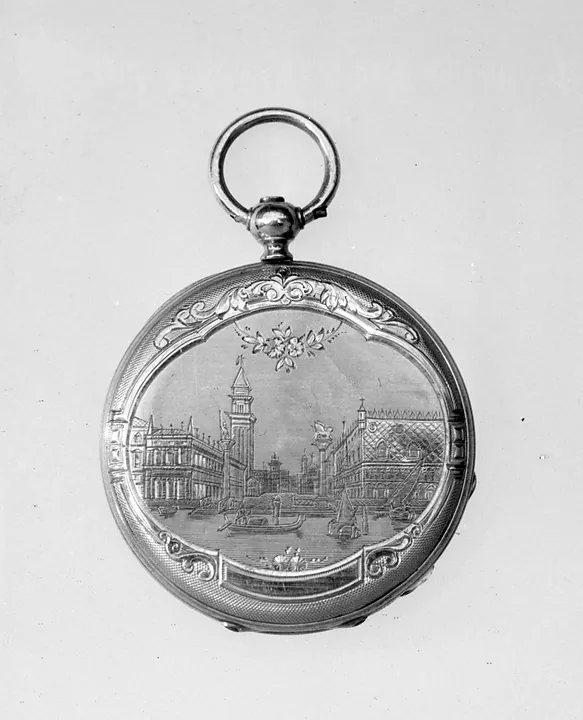
Pocket Watches · c. 1850
Watch by Eugène Bornand, Switzerland, c. 1850
The Metropolitan Museum of Art, New York
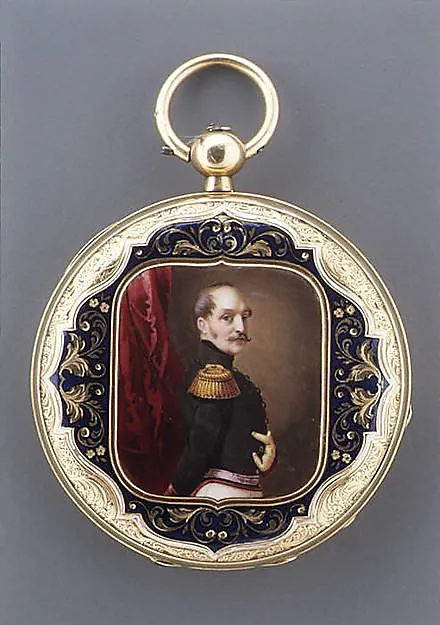
Pocket Watches · probably c. 1850–55
Watch by Firm of Perret & Cie, Switzerland, probably c. 1850–55
The Metropolitan Museum of Art, New York
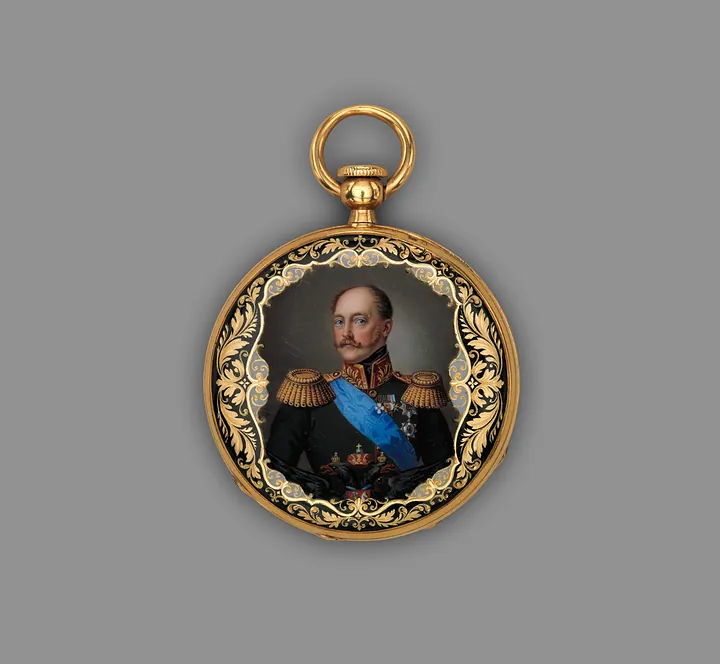
Pocket Watches · c. 1850–55
Watch by François Czapek, c. 1850–55
The Metropolitan Museum of Art, New York
Pocket Watches · c. 1850
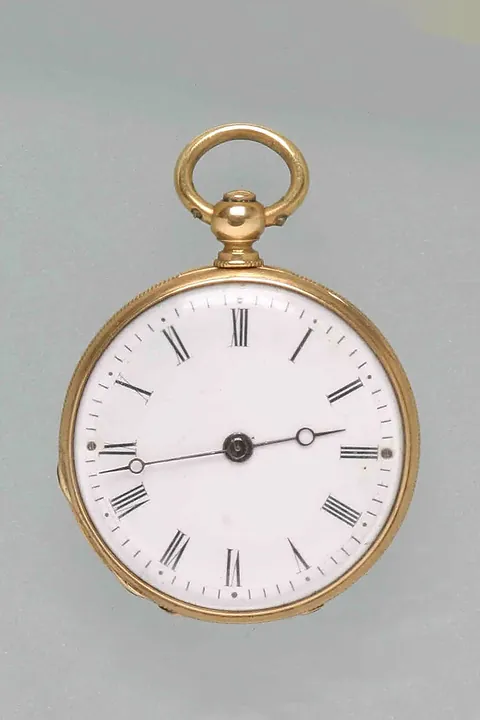
Pocket watch by D Bachelard et Fils, Switzerland, c. 1850
German Clock Museum