
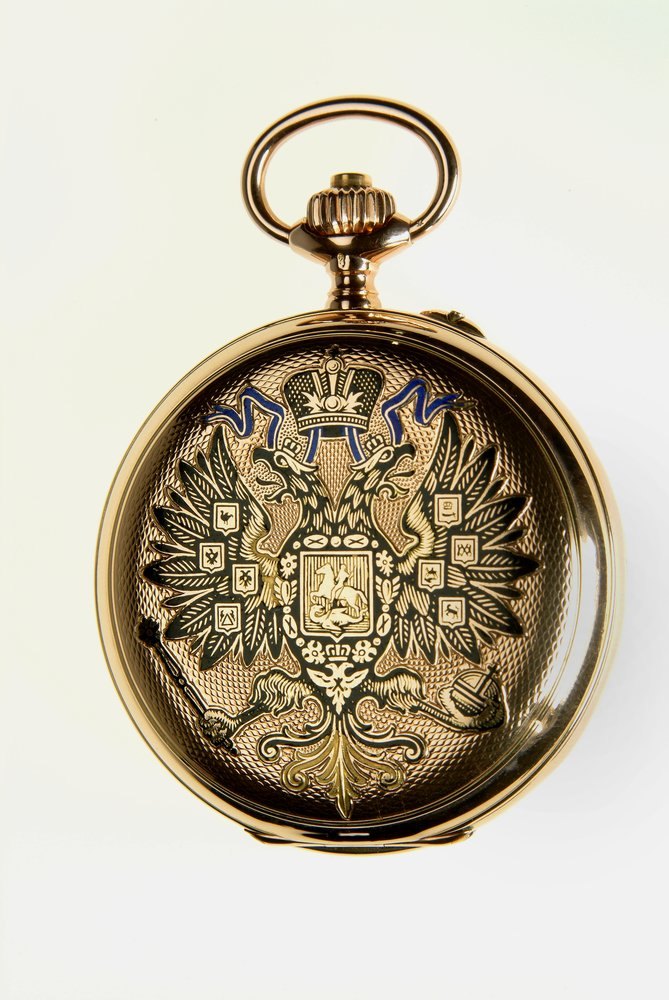
Movements & Components · Pocket watch
Pocket watch by Pavel Buhre, Switzerland, 1900
- Maker / attribution
- Pavel Buhre (Created)
- Date
- 1900
- Historical period
- Golden Age of Mechanical Watchmaking (1900 – 1945)
- Country of origin
- Switzerland
- Place
- Le Locle
- Object type
- Pocket watch
- Materials / technique
- 14 Karat Rotgold, graviert (Guilloche); Emaille (Niello); Metall, gebläut; Glas; Metall, vergoldet; Rubine
- Dimensions
- Durchmesser (mit Bügel): 7 cm; Gewicht: 90 g
- Holding institution
- Kulturstiftung Sachsen-Anhalt - Museum Schloss Neuenburg
- Accession / object no.
- MSN-V 11624 H
- Credit line
- Kulturstiftung Sachsen-Anhalt - Museum Schloss Neuenburg
- Catalogue title (original)
- Taschenuhr mit dem Kleinen Wappen des Russischen Kaiserreichs (German)
View the source record ↗ (opens another website in a new tab)Suggest a correction
Record summary
Held and catalogued by Kulturstiftung Sachsen-Anhalt - Museum Schloss Neuenburg (object number MSN-V 11624 H), this is a pocket watch by Pavel Buhre, made in Le Locle, Switzerland, dated 1900. The Atlas places it in the Golden Age of Mechanical Watchmaking period (1900 – 1945) of its Movements & Components collection. Materials and techniques recorded by the source: 14 Karat Rotgold, graviert (Guilloche); Emaille (Niello); Metall, gebläut; Glas; Metall, vergoldet; Rubine. Recorded dimensions: Durchmesser (mit Bügel): 7 cm; Gewicht: 90 g. The record is illustrated with 3 photographs.
Assembled from the source record's structured fields. Dates and attributions are given as the source states them; where a field is missing the Atlas leaves it blank rather than estimating.
Catalogue description
Catalogue description from Kulturstiftung Sachsen-Anhalt - Museum Schloss Neuenburg (German)
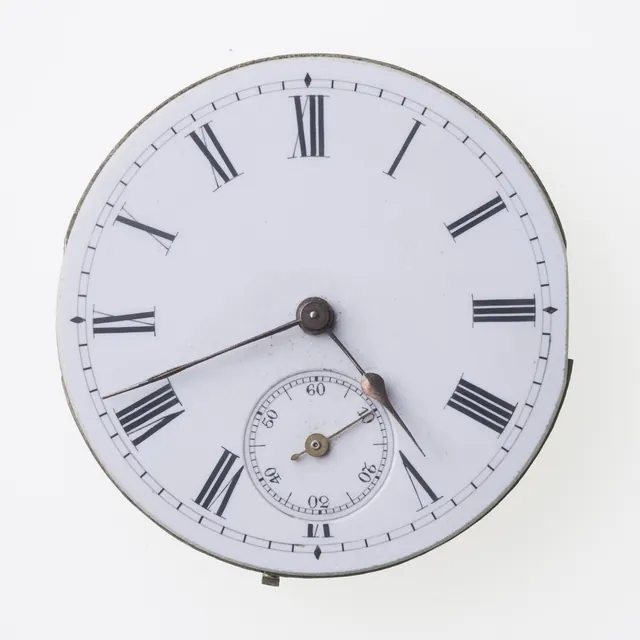
Die Taschenuhr, aufgrund des Sprungdeckels auch Savonnette genannt, wurde um 1900 von dem Uhrenhersteller Paul Buhré in Le Locle gefertigt. Das Gehäuse der Taschenuhr wurde im Typ Lucia (schwerste Ausführung) hergestellt, besteht aus 14 Karat Rotgold und ist beidseitig guillochiert. Auf der Vorderseite wurde großflächig das Kleine Wappen des Russischen Kaiserreichs mit dem dreifach gekrönten Doppeladler, welches in der Zeit von 1883 bis 1917 in Anwendung war, wiedergegeben. Der Adler ist mit einem Brustschild mit einer Darstellung des Heiligen Georg († um 303) belegt. Der Märtyrer Georg reitet auf einem Pferd. Unter ihm befindet sich ein auf dem Rücken liegender Drache, den Georg mit einer Lanze tötet. Auf den Adlerschwingen sind acht kleine Wappenschilde aufgelegt. Der Doppeladler hält in der rechten Klaue das russische Reichszepter und in der linken Klaue den russischen Reichsapfel. Über den Adlerhäuptern schwebt die Krone des russischen Reiches (Zarenkrone). Das Motiv wurde in schwarzem Emaille in der sogenannten Niello-Technik ausgeführt. Die Kronenbänder sind mit blauem Emaille eingefärbt. Das weiße Emailleziffernblatt der Taschenuhr hat schwarze römische Zahlen, eine umlaufende Minuterie und jeweils einen gebläuten Lanzen- und Birnenzeiger. Oberhalb befindet sich auf dem Ziffernblatt eine Aufschrift "Faber Type". Unten wurde ein Sekundenziffernblatt mit einem geraden Zeiger eingesetzt. Das Uhrwerk ist mit einem vergoldeten Schweizer Ankerwerk, einem aufgeschnittenen Bimetall mit Ausgleichsschrauben und Rubin-Lagersteinen sowie mit einem Hemmungsrad ausgestattet. Auf der Cuvette, die das Uhrwerk schützt, wurde die Uhr in kyrillischer Schrift mit "Pavel Buhre Hoflieferant seiner Majestät Nr. 430661" graviert. Die Familie Buhré gehörte zu den wichtigsten Uhrenhändlern Russlands. Paul Buhré war Hoflieferant des russischen Zaren und unterhielt neben Geschäften in Sankt Petersburg auch weitere in Moskau. Um 1880 gründete Paul Buhré unter seinem Namen eine Uhrenfabrik in Le Locle.
Shown in the original language of the source catalogue. An editor-reviewed English translation has not yet been published; we do not publish machine translations as authoritative text.
Historical context
Golden Age of Mechanical Watchmaking (1900 – 1945)
The wristwatch displaces the pocket watch; waterproof cases, self-winding and grand complications.
Precision lever movements, electric clock mechanisms and new alloys (invar, elinvar) characterised the period.
Read the period in the timelineMore movements & components from this periodEarlier: Industrial Revolution
Atlas type guide
Clock and watch movements
The movement is the mechanism of a clock or watch, without its case and dial. It consists of the power source (weight or mainspring in its barrel, sometimes with a fusee), the going train of wheels and pinions, the escapement and oscillator, the motion work that drives the hands, and in many cases additional trains for striking or complications.
From the eighteenth century watch movements were increasingly produced in stages: Swiss and French ébauche makers supplied rough movements that finishers, repasseurs and retailers completed and signed. Calibre numbers — first used systematically by American and Swiss factories in the nineteenth century — make it possible to identify movements, find spare parts and date watches.
What to look for
- Plate and bridge layout: full plate, three-quarter plate, Lépine bar calibre, bridges and cocks.
- Jewel count and whether jewels are set in chatons or rubbed in.
- Signatures, calibre and serial numbers on the plate or under the dial.
- Finishing: Geneva stripes (Côtes de Genève), perlage, bevelled edges, blued screws.
- Fusee and chain, going barrel, or electrical components.
Dating clues
- Full-plate English movements dominate before c. 1850; three-quarter plate and Lépine calibres after.
- Jewelled movements spread after Facio and Debaufre's patent of 1704, mainly in English work until c. 1800.
- Calibre numbers and factory serials allow close dating for industrial production after c. 1850.
General guidance written by the Atlas editors about this kind of object. It is not a statement about this particular piece; for that, rely on the source record above and on physical examination.
Related records
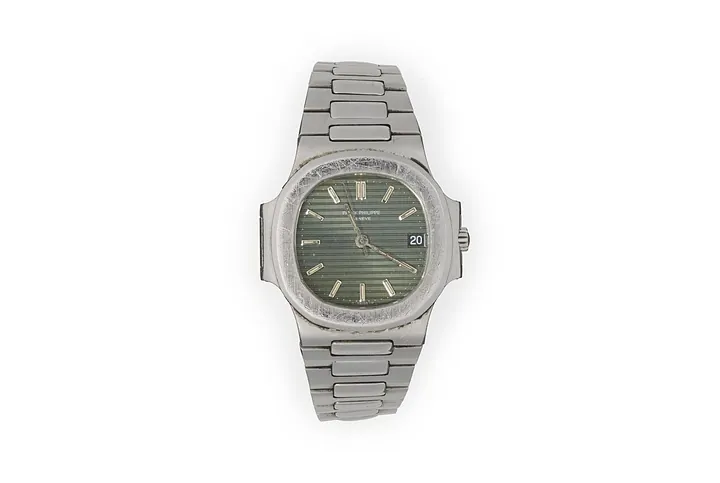
Movements & Components · 1901–2000
Nautilus wristwatch in a stainless steel case by Patek Phillippe, with co-axial escapement fitted by George Daniels, Switzerland/Isle of Man 1981/2.
Science Museum Group, London
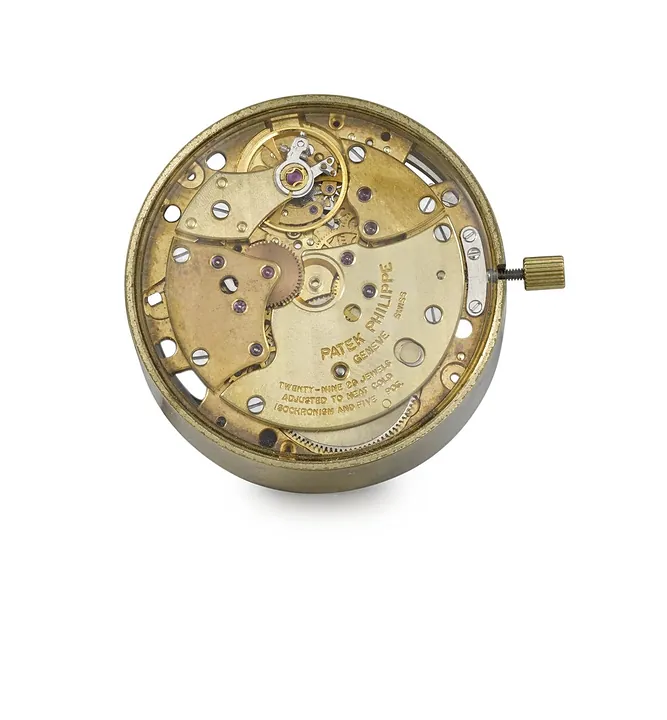
Movements & Components · 1901–2000
Watch movement by Philippe Patek, Switzerland, 1901–2000
Science Museum Group, London
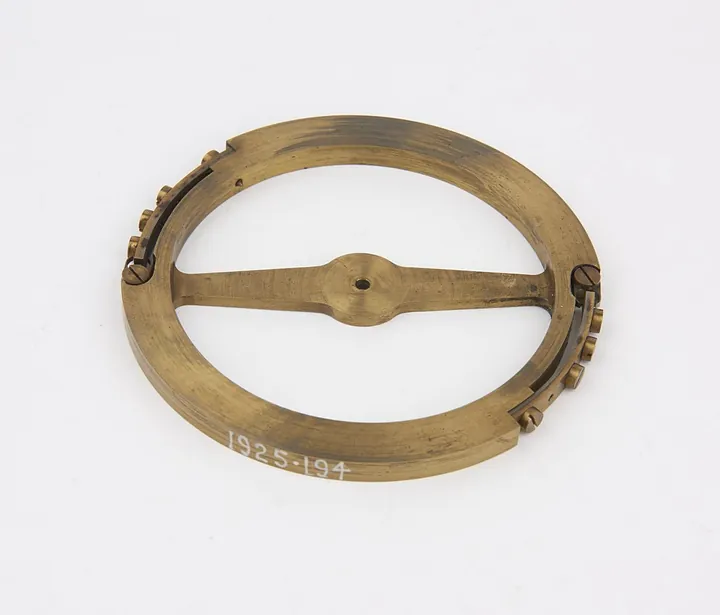
Movements & Components · 1920–1925
Balance / regulating part by Paul Ditisheim, Europe, 1920–1925
Science Museum Group, London
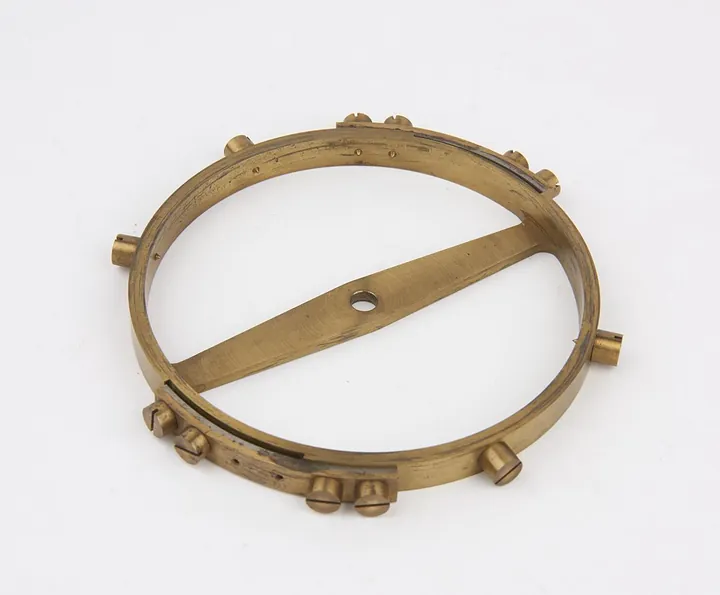
Movements & Components · 1920–1925
Model of Paul Ditisheim's monometallic compensation balance for use with Elinvar hairsprings, with radial poising screws, Europe, 1920–1925
Science Museum Group, London
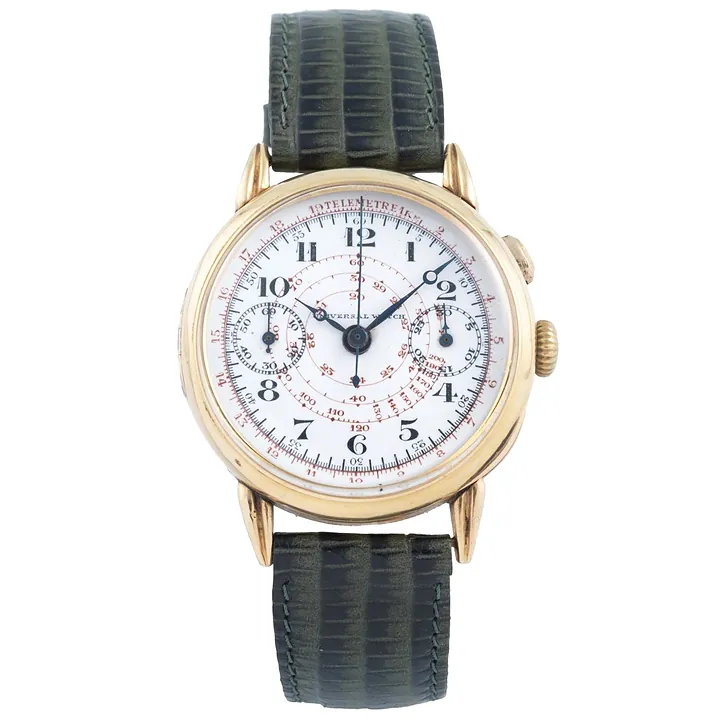
Movements & Components · c. 1935
Universal Watch Co. watch dial, c. 1935
Antiquorum auction archive, Geneva
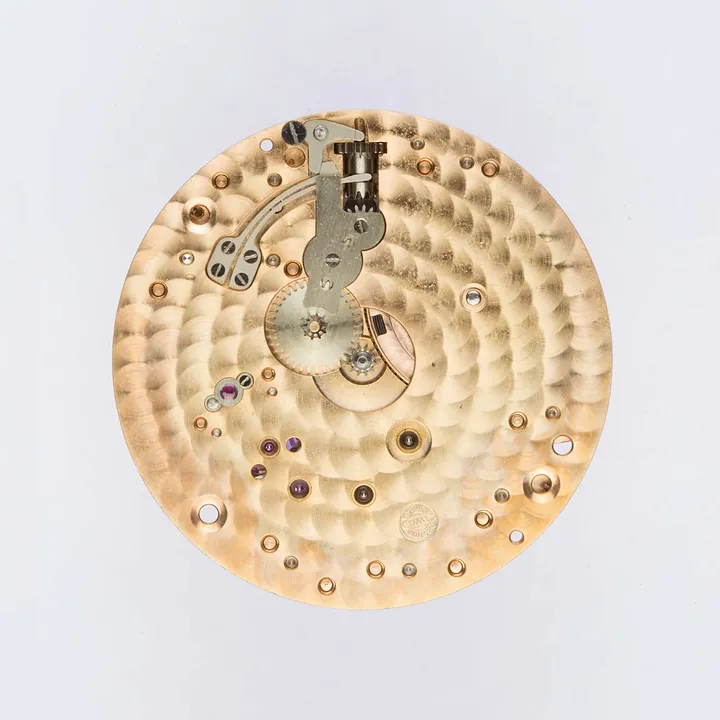
Movements & Components · c. 1935
Watch movement, Switzerland, c. 1935
German Clock Museum
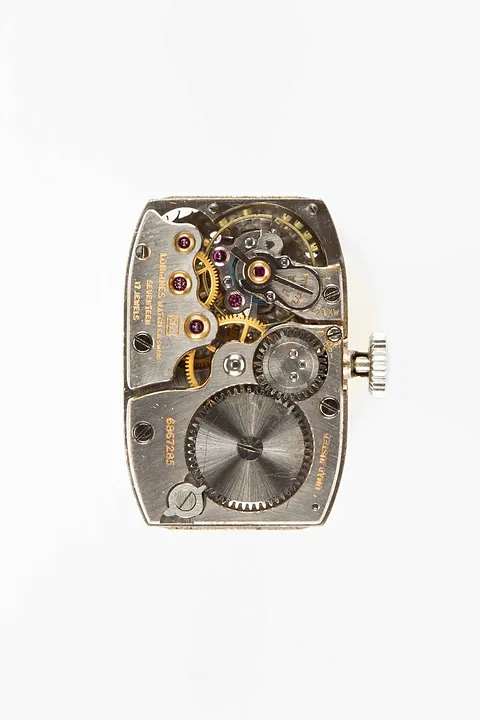
Movements & Components · c. 1940
Wristwatch movement by Francillon und Cie (Longines), Switzerland, c. 1940
German Clock Museum
Movements & Components · c. 1880-1925
Pocket Watch Movement - Switzerland, c. 1880-1925
Museums Victoria, Melbourne