
Pocket Watches · Pocket watch
Pocket watch, 1944–1954
- Maker / attribution
- Unrecorded in source
- Date
- 1944–1954
- Historical period
- Modern Mechanical Horology (1945 – 1969)
- Country of origin
- Unrecorded in source
- Object type
- Pocket watch
- Materials / technique
- u.a. Silber, Kunststoff, verschiedene Metalle und Metalllegierungen (Material)
- Dimensions
- Höhe: 11 mm; Länge: 68 mm; Durchmesser: 50 mm (Länge mit Bügel gemessen)
- Holding institution
- Montanhistorisches Dokumentationszentrum
- Accession / object no.
- 030007722043 (Inventarnummer)
- Credit line
- Montanhistorisches Dokumentationszentrum
- Catalogue title (original)
- Taschenuhr von Friedrich Schmidtke zur Erinnerung an das 25-jährige Dienstjubiläum Fried. Krupp Bergwerke AG (German)
View the source record ↗ (opens another website in a new tab)Suggest a correction
Record summary
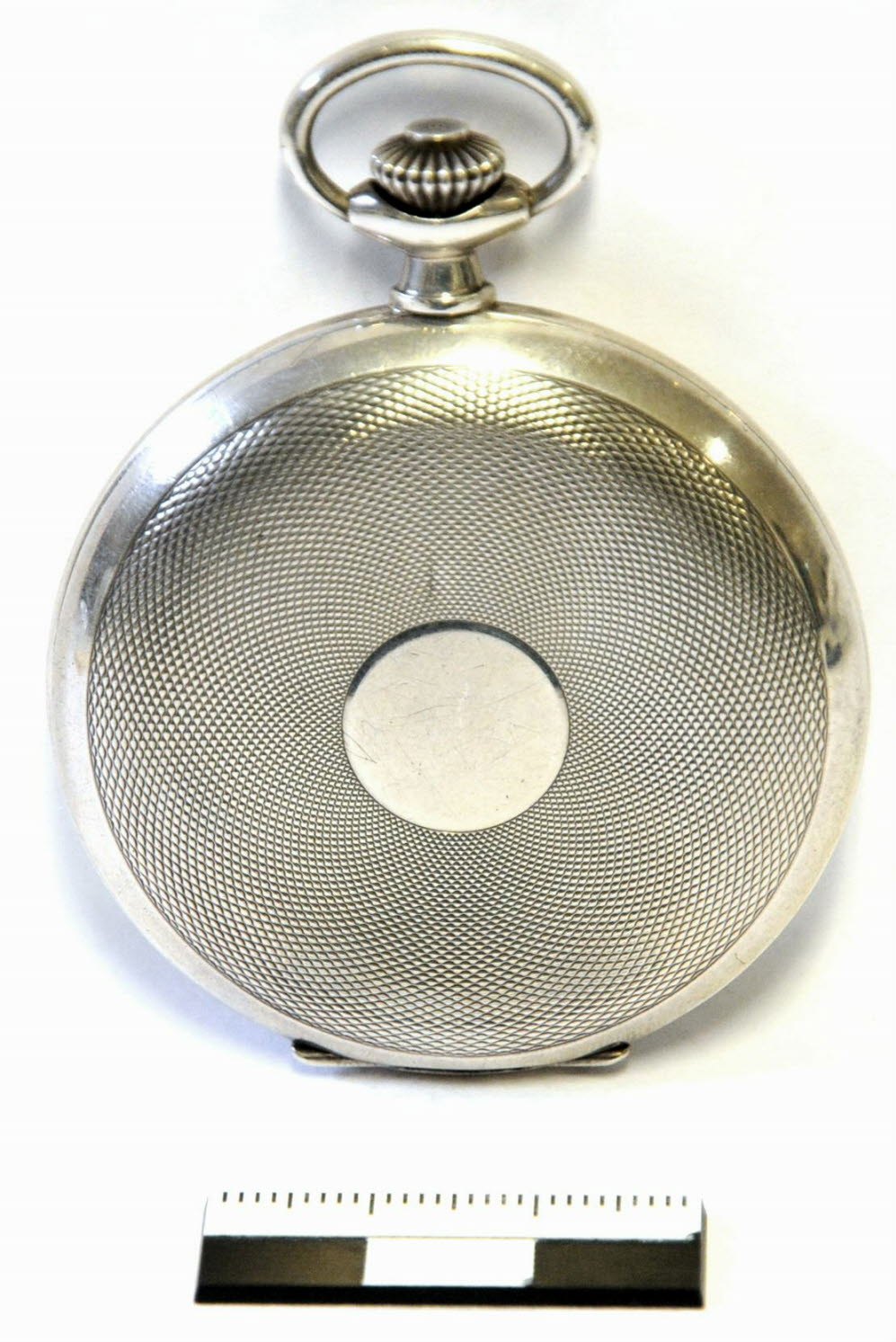
Held and catalogued by Montanhistorisches Dokumentationszentrum (object number 030007722043 (Inventarnummer)), this is a pocket watch, dated 1944–1954. The Atlas places it in the Modern Mechanical Horology period (1945 – 1969) of its Pocket Watches collection. Materials and techniques recorded by the source: u.a. Silber, Kunststoff, verschiedene Metalle und Metalllegierungen (Material). Recorded dimensions: Höhe: 11 mm; Länge: 68 mm; Durchmesser: 50 mm (Länge mit Bügel gemessen). The record is illustrated with 1 photograph.
Assembled from the source record's structured fields. Dates and attributions are given as the source states them; where a field is missing the Atlas leaves it blank rather than estimating.
Catalogue description
Catalogue description from Montanhistorisches Dokumentationszentrum
Taschenuhr mit Sprungdeckel (Savonnette), Gehäuse aus 900er Silber, geriffelter und herausziehbarer Krone mit Druckknopf und Pendant mit Bügel zur Befestigung einer Uhrkette auf Position 3. Das Uhrenglas ist in einem Deckel mit Lünette eingelassen und wird durch einen Sprungdeckel geschützt, der durch den Druckknopf in der Krone geöffnet werden kann. Die Schauseite des Sprungdeckels ist guillochiert und mit einer runden Kartusche verziert. Auf der Innenseite finden sich verschiedene Stempelmarken u.a. Kontroll- und Feingehaltstempel (Reichssilberstempel / 0,900), Herstellerstempel (Stowa / Büffelmarke) und Zahlenfolge "1222847". Unter dem Uhrenglas liegt ein Zifferblatt mit arabischen Ziffern, Hilfsblatt für Sekunden ("Kleine Sekunde") auf Position 6 und goldfarbenen Stunden- und Minutenzeiger. Zusätzlich zeigt es das Firmenlogo "Stowa" auf Position 12. Der Rückdeckel mit Scharnier und Lippe zur Öffnung ist auf der Außenseite guillochiert und das Uhrwerk wird durch einen Staubdeckel (Cuvette) mit Widmung geschützt. Auf den Innenseiten der Deckel wiederholen sich z.T. die Stempelmarken. Das Stellen der Zeiger erfolgt über die gezogene Krone. Die Taschenuhr ist eine Ehrengabe für Friedrich Schmidtke zur Erinnerung an das 25-jährige Dienstjubiläum von Fried. Krupp Bergwerke AG. Staubdeckel: "Herrn Friedrich Schmidtke zur Erinnerung an das 25-jährige Dienstjubliäum Fried. Krupp Berwerke Essen 1949"
Shown in the original language of the source catalogue. An editor-reviewed English translation has not yet been published; we do not publish machine translations as authoritative text.
Historical context
Modern Mechanical Horology (1945 – 1969)
Tool watches for divers, pilots and astronauts; electric watches anticipate the electronic age.
After 1945 the pocket watch became a niche product — presentation and railway watches, inexpensive pin-lever watches, and commemorative pieces — while most innovation moved to the wrist.
Read the period in the timelineMore pocket watches from this periodEarlier: Golden Age of Mechanical Watchmaking
Atlas type guide
Pocket watches
The pocket watch was the dominant personal timekeeper from the late seventeenth century until the First World War. Its development tracks the history of the escapement: verge watches with fusees until the late eighteenth century; Thomas Mudge's lever escapement (c. 1755) and the cylinder escapement popularised by George Graham and later by Swiss makers; and the Swiss and English lever watches of the nineteenth century. Lépine's bar-bridge calibre and keyless winding made watches thinner and easier to use.
Industrialisation transformed the trade: American factories such as Waltham (from 1850) and Elgin produced interchangeable parts by machine, and Swiss makers responded with their own mechanisation after the 1876 Philadelphia Exhibition. By 1900 a reliable watch was affordable to millions; the finest makers continued to produce complications and precision watches.
What to look for
- The escapement: verge (crown wheel), cylinder, duplex, English or Swiss lever.
- Key winding (a square arbor in dial or back) or keyless crown winding.
- Signatures and serial numbers on the movement, dial and inside case back.
- Hallmarks, case maker's marks and gold or silver standards stamped in the case.
- Dial material: enamel, silver, gold, later printed metal.
Dating clues
- Verge watches dominate before c. 1800; cylinder watches c. 1770–1900; lever watches after c. 1820.
- Keyless winding: increasingly common after c. 1860.
- Manufacturer serial number lists exist for Waltham, Elgin, Longines, Omega, Patek Philippe and others.
General guidance written by the Atlas editors about this kind of object. It is not a statement about this particular piece; for that, rely on the source record above and on physical examination.
Read next:Verge escapementDetached lever escapementFuseeIdentification Centre
Related records
Pocket Watches · 1934–1962
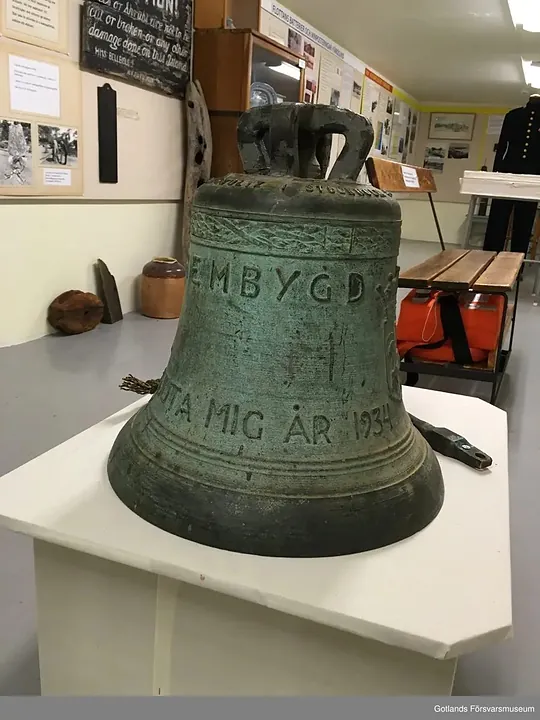
Pocket watch, Sweden, 1934–1962
Gotland Defense Museum
Pocket Watches · c. 1945
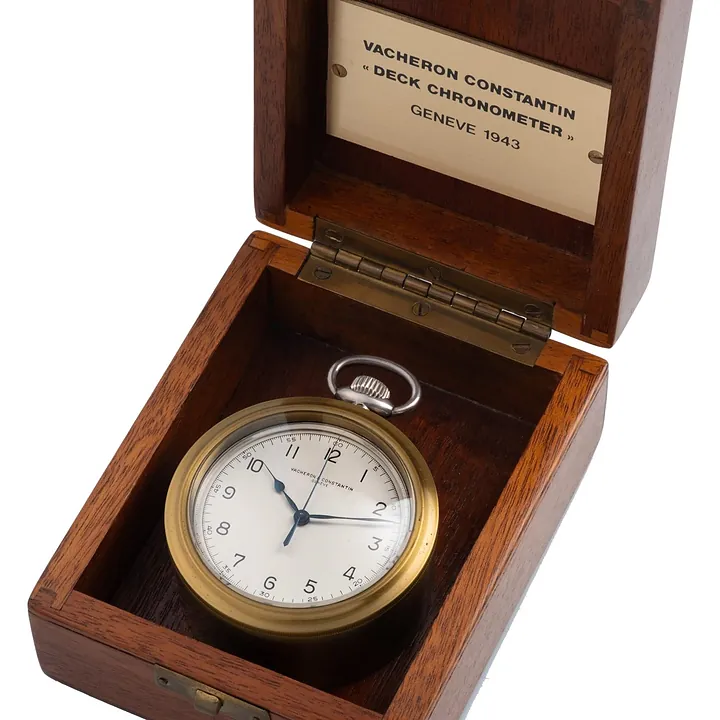
Vacheron Constantin pocket chronometer, c. 1945
Antiquorum auction archive, Geneva
Pocket Watches · c. 1945
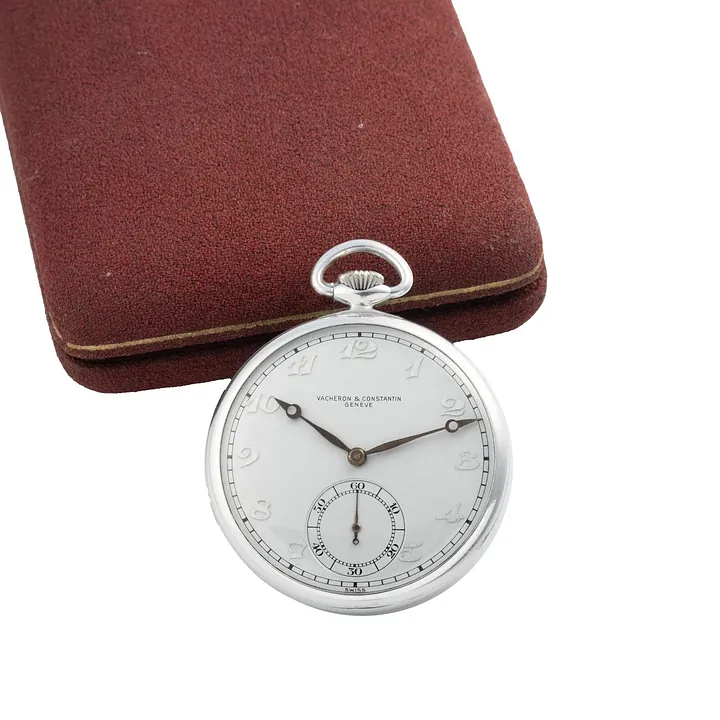
Vacheron Constantin watch, c. 1945
Antiquorum auction archive, Geneva
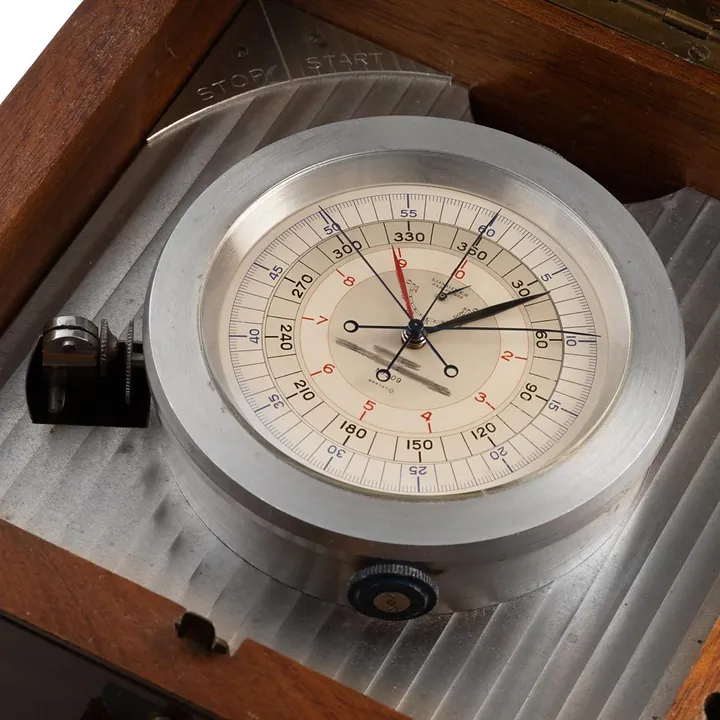
Pocket Watches · Sold to Longines France in January 1946
Longines Siderograph, ref. 5397, Sold to Longines France in January 1946
Antiquorum auction archive, Geneva
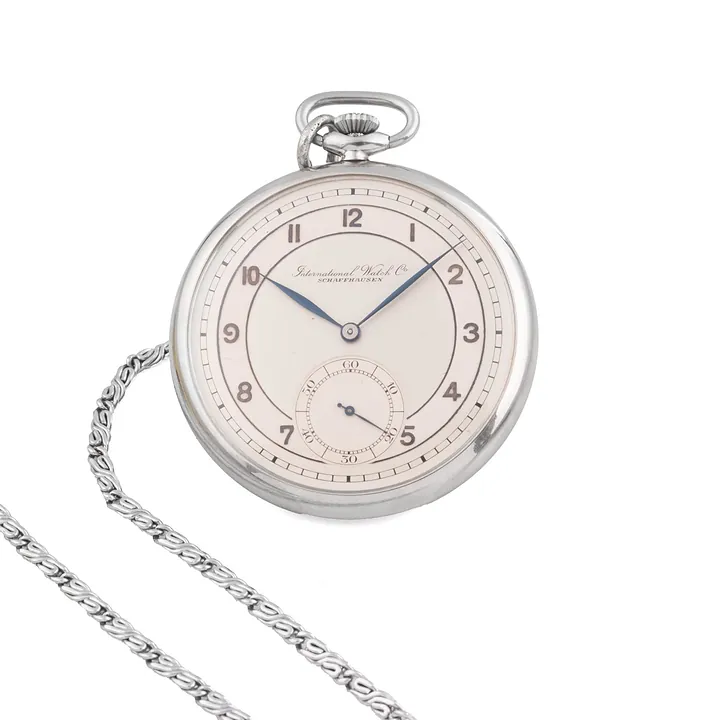
Pocket Watches · c. 1950
IWC Pocket Watch, c. 1950
Antiquorum auction archive, Geneva
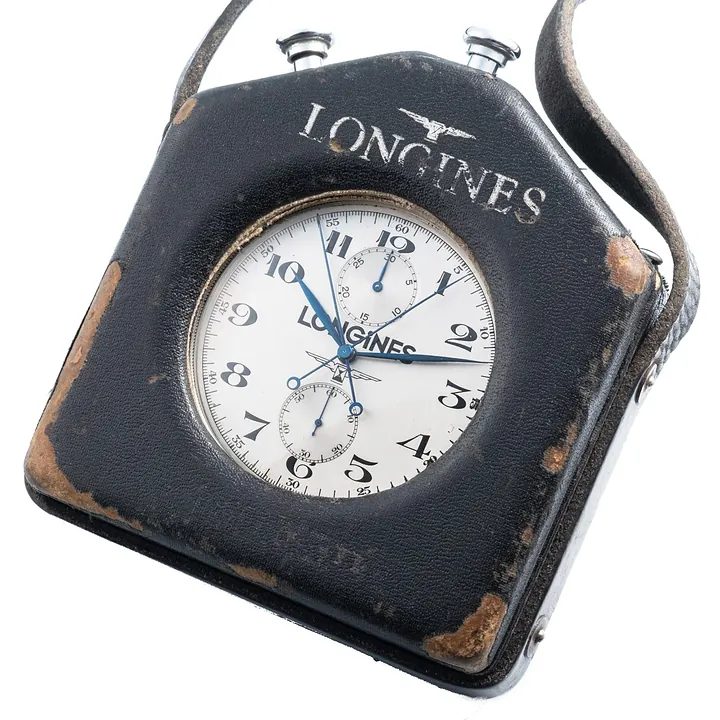
Pocket Watches · c. 1950
Longines pocket watch, ref. 4507, c. 1950
Antiquorum auction archive, Geneva
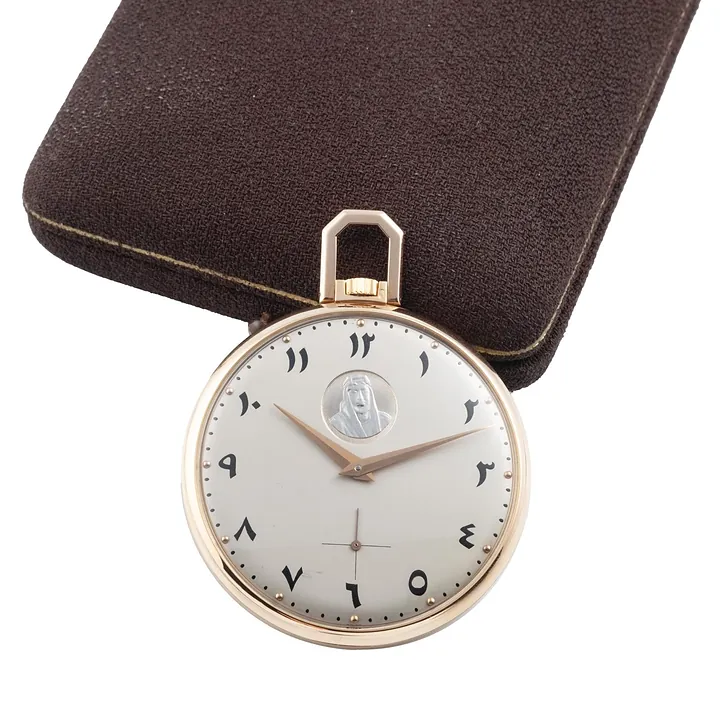
Pocket Watches · c. 1950s
Universal Genève pocket watch, ref. 11746 3/ 11746 1, c. 1950s
Antiquorum auction archive, Geneva
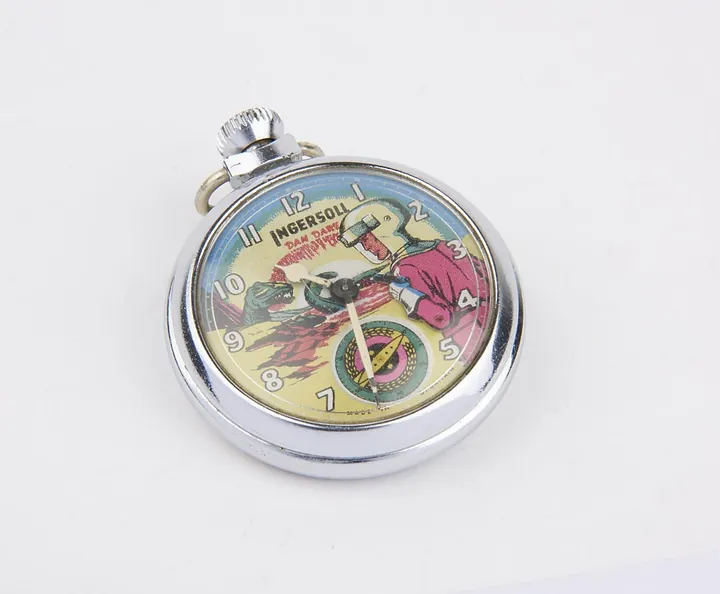
Pocket Watches · 1953
Pocket watch by Ingersoll Limited, England, 1953
Science Museum Group, London