
Wristwatches · Wristwatch
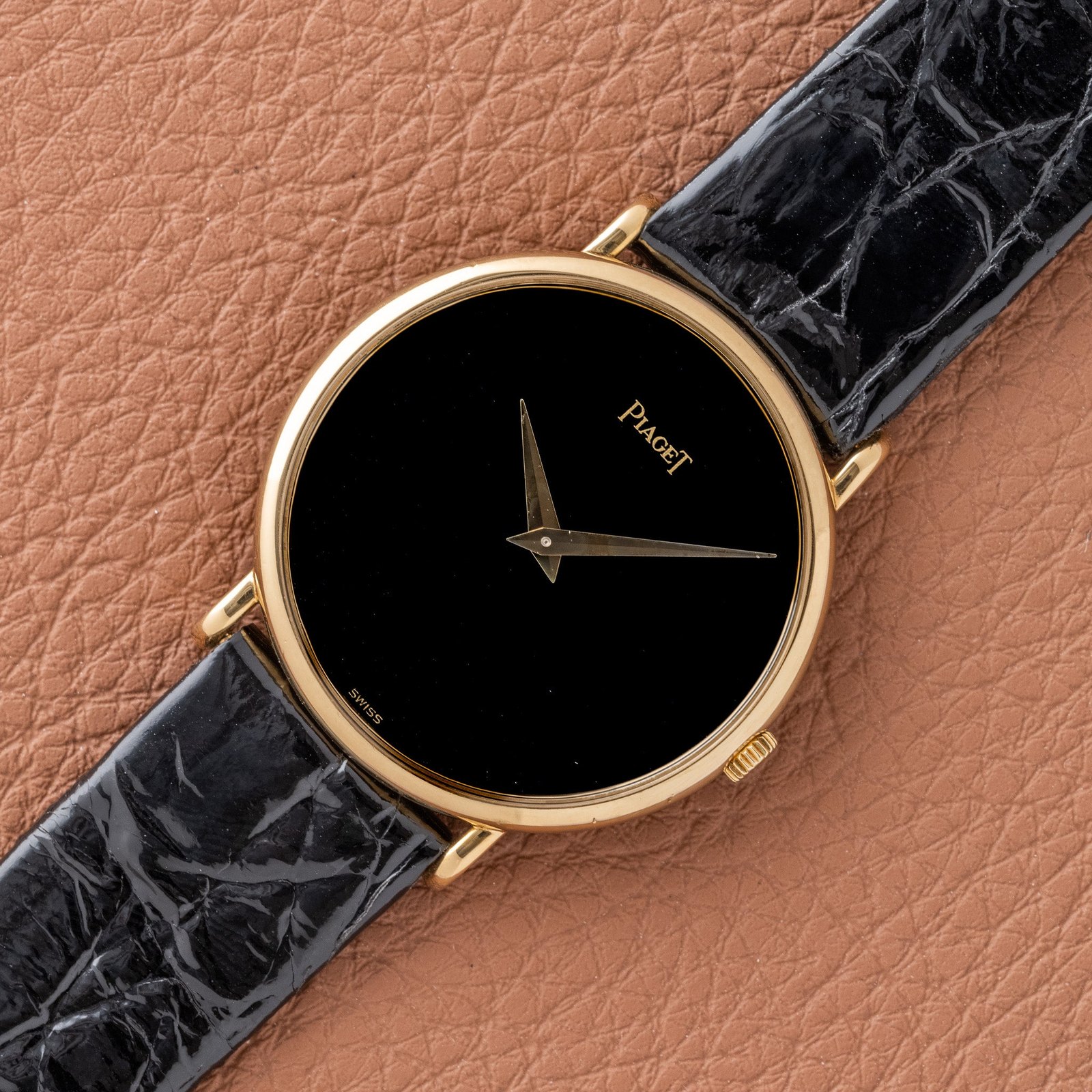
Piaget Dancer 18k Gold Dress Watch (Ref. 9025), 1980s
- Maker / attribution
- Piaget (maker)
- Date
- 1980s
- Historical period
- Quartz Revolution (1969 – 1990)
- Country of origin
- Switzerland
- Object type
- Wristwatch
- Materials / technique
- gold
- Dimensions
- Case 30 mm
- Stock no.
- Product 8364484264119
- Credit line
- Dealer listing, Huntington Company (product 8364484264119)
- Catalogue title (original)
- 1980s Piaget Dancer 18k Gold Dress Watch (Ref. 9025) (English)
View the source record (dealer listing) ↗ (opens another website in a new tab)Suggest a correction
Record summary
Catalogued by Huntington Company (dealer) (stock number Product 8364484264119), this is a wristwatch by Piaget, made in Switzerland, dated 1980s. The Atlas places it in the Quartz Revolution period (1969 – 1990) of its Wristwatches collection. Materials and techniques recorded by the source: gold. Recorded dimensions: Case 30 mm. The record is illustrated with 6 photographs.
Assembled from the source record's structured fields. Dates and attributions are given as the source states them; where a field is missing the Atlas leaves it blank rather than estimating.
Catalogue description
Dealer description — Huntington Company
History and Significance This Piaget reference 9025 is a clear expression of the brand’s design language during its late 20th century dress watch period, when ultra-thin construction, precious metals, and restrained aesthetics defined much of Piaget’s output. Rather than leaning on complications or overt branding, Piaget focused on proportion, surface finishing, and material quality, creating watches intended to function as elegant objects first and timekeepers second. The reference 9025 fits squarely within that philosophy. The round 18k yellow gold case is slim and understated, allowing the black lacquer dial to take center stage. Black lacquer dials from this era are particularly desirable, as they were produced in relatively small numbers and are unforgiving to manufacture, with any flaw immediately visible. When preserved well, they offer a depth and gloss that modern printed dials rarely achieve. This watch also reflects Piaget’s close relationship with high-end jewelry watchmaking. The thin profile, elongated lugs, and minimalist dial design give it a strong cocktail watch character, blurring the line between traditional dress watch and jewelry piece. Paired with its original strap and signed gold buckle, this example remains a cohesive and correct representation of how the watch was originally sold and worn. Writer’s Thoughts This is a watch that succeeds through restraint. On the wrist, it wears light, flat, and elegant, disappearing under a cuff but still feeling special when noticed. The black lacquer dial gives it a formal presence, while the slim yellow gold case keeps it timeless rather than trendy. For someone looking for a true vintage cocktail or dress watch from a serious manufacturer, this Piaget offers that experience without excess. Our Promise Every watch we offer is carefully inspected and verified for authenticity. We stand behind the integrity of each piece and represent it accurately and transparently. Our goal is to ensure complete confidence when purchasing from Huntington Company. Specifications Brand: Piaget Model: Dress Watch (Ref. 9025) Year: Circa 1990s Case Material: 18k yellow gold Case Size: 30mm and 33mm lug to lug Dial: Black lacquer Crystal: Sapphire Movement: Manual wind Piaget movement Strap/Bracelet: Original black leather strap Buckle/Clasp: Original Piaget 18k yellow gold tang buckle Contents: Watch only Condition Case: 18k yellow gold case shows light surface hairlines visible under close inspection, most notably along the case sides and lugs. No deep dents or gouges observed. Overall finish remains even and consistent with careful wear. Crystal: Sapphire crystal is clean with no visible chips or cracks. Dial: Black lacquer dial shows some hand drag and very little wear, only noticeable in certain light. Hands: Original hands show light patina consistent with age, with no corrosion or damage. Strap/Bracelet: Original leather strap shows normal wear from use and remains perfectly wearable. Buckle/Clasp: Original Piaget yellow gold buckle shows light surface wear and functions properly.
Historical context
Quartz Revolution (1969 – 1990)
Seiko's Astron begins mass quartz timekeeping; traditional industries contract sharply.
Quartz and digital watches transformed the market after 1969. Swiss employment collapsed, Japanese and Hong Kong production soared, and the Swatch (1983) helped the Swiss industry recover; mechanical watches survived as luxury goods.
Read the period in the timelineMore wristwatches from this periodEarlier: Modern Mechanical Horology
Atlas type guide
Wristwatches
Bracelet watches were worn by women from the early nineteenth century — Breguet made one for Caroline Murat, Queen of Naples, in 1810–12 — but the wristwatch only became a man's instrument with military use and aviation in the early twentieth century. Between the World Wars it overtook the pocket watch; the 1920s and 1930s brought rectangular Art Deco cases, water-resistant cases and the first automatic winding systems.
After 1945 the wristwatch became a carrier of identity — dress watches, sports and dive watches, chronographs, calendars — produced by Swiss, American, Japanese, German, Soviet and Chinese industries. The quartz revolution after 1969 and the mechanical renaissance since the 1990s, including the rise of independent watchmakers, complete the story.
What to look for
- The reference number (between the lugs or inside the case back) and serial number, the starting point for dating.
- The calibre: its maker and number are often stamped under the dial or on the bridge.
- Originality of dial, hands and crown — refinished ('redial') dials are common.
- Case material marks: 18K/750, 14K/585, stainless steel, gold-filled, plated.
Dating clues
- Wire-lug cases: before c. 1925.
- Water-resistant screw-down cases: from 1926.
- Quartz movements: from 1969; sapphire crystals widespread after c. 1980.
General guidance written by the Atlas editors about this kind of object. It is not a statement about this particular piece; for that, rely on the source record above and on physical examination.
Related records
Wristwatches · c. 1980
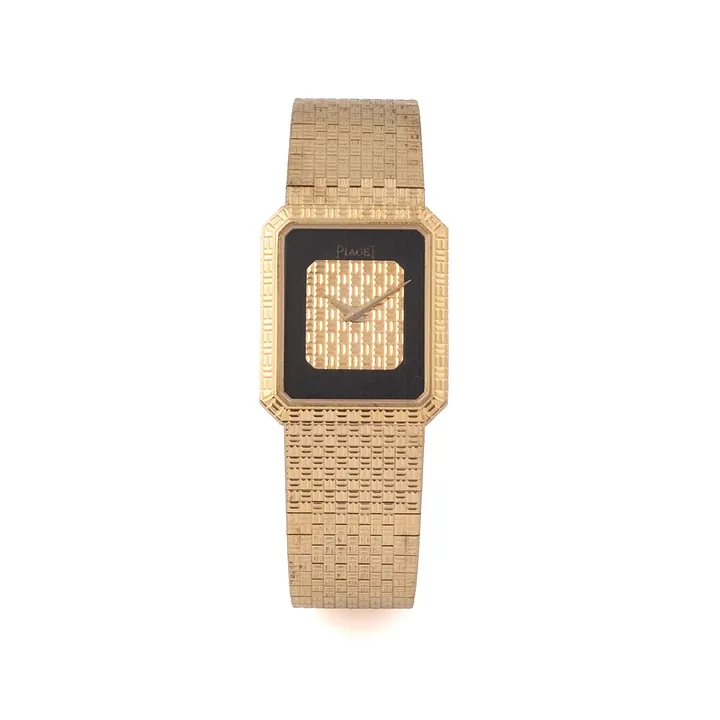
Piaget wristwatch, ref. 7141 C5, c. 1980
Antiquorum auction archive, Geneva
Wristwatches · c. 1984
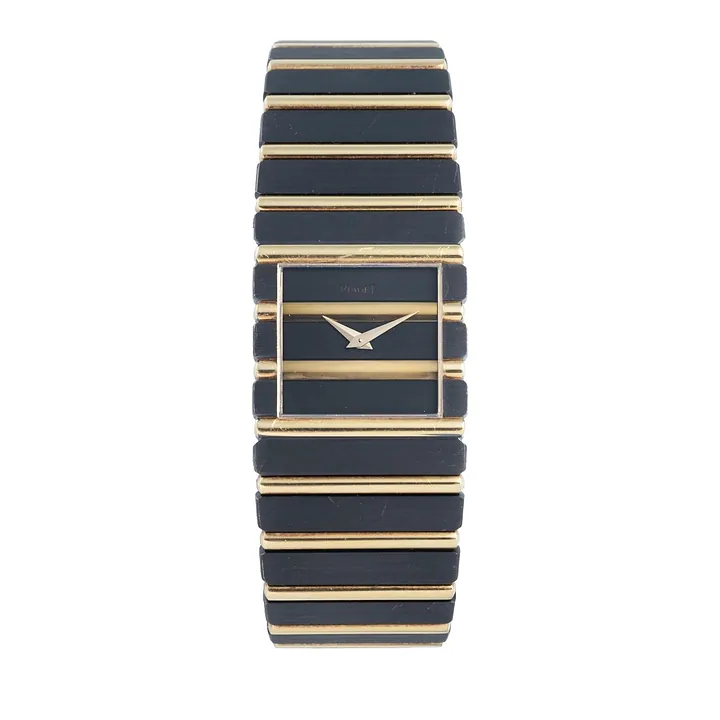
Piaget Polo Square ''zebra'', ref. 7131 C 701, c. 1984
Antiquorum auction archive, Geneva
Wristwatches · c. 1990
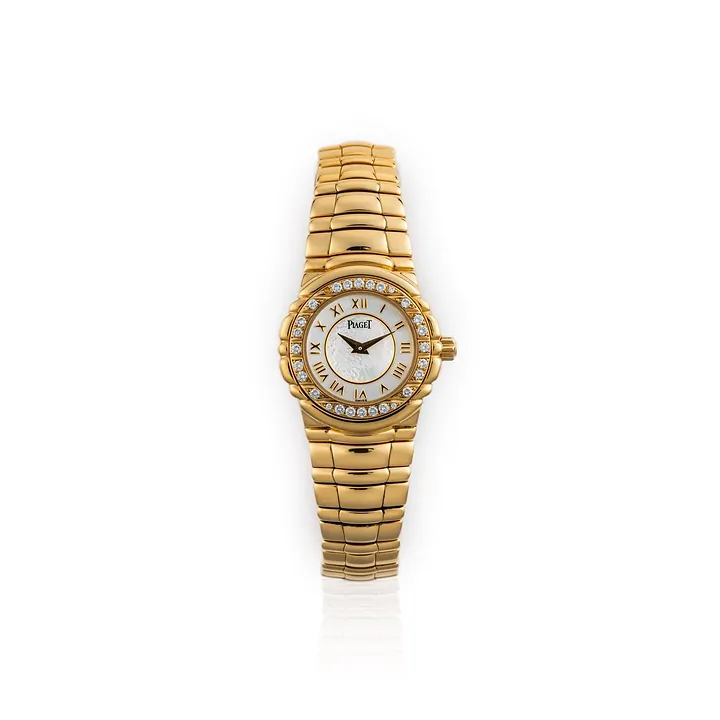
Piaget Lady Gold and Diamond Watch, ref. 16033, c. 1990
Antiquorum auction archive, Geneva
Wristwatches · c. 2000s
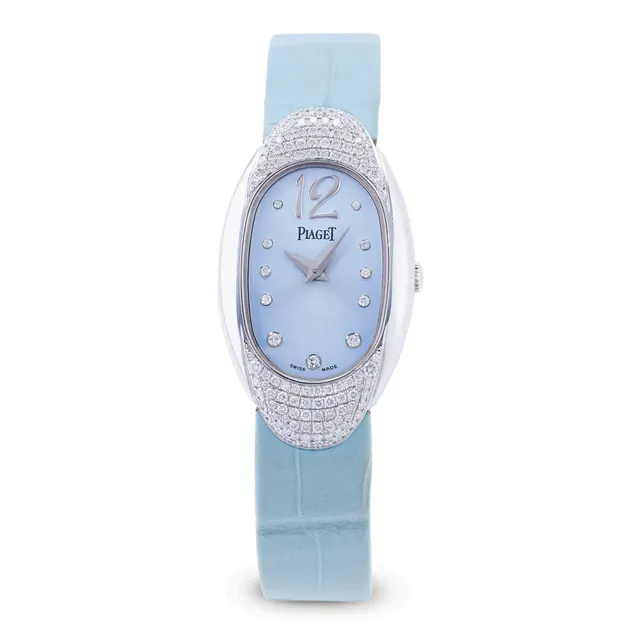
Piaget wristwatch, ref. PI0002, Limelight, circa 2000s
Antiquorum auction archive, Geneva

Wristwatches · 1970
Wristwatch by Heno, Switzerland, 1970
Museum Rotterdam

Wristwatches · 1960–1986
'Tri-Compax' calendar chronograph wristwatch in gold case, by Universal, Geneva, Switzerland, 1960–1986.
Science Museum Group, London

Wristwatches · 1969–1970
Beta 21 Quartz wristwatch movement, made in Switzerland, 1970.
Science Museum Group, London

Wristwatches · c. 1969
Omega Speedmaster Moonwatch, ref. 145022-69st, c. 1969
Antiquorum auction archive, Geneva