
Wristwatches · Wristwatch
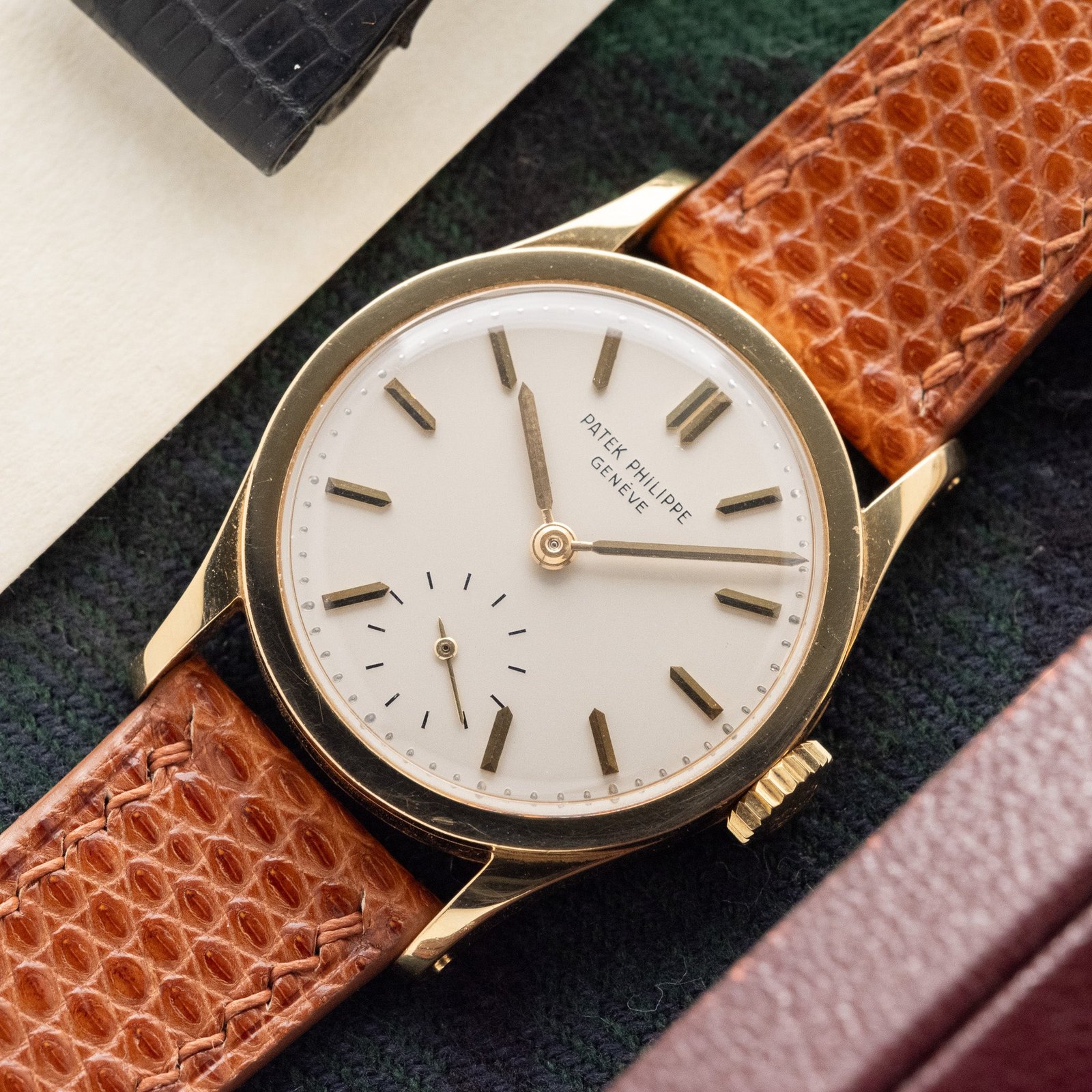
Patek Philippe Ref. 96 Calatrava - Unpolished Mint - Box & Extract, 1971
- Maker / attribution
- Patek Philippe (maker)
- Date
- 1971
- Historical period
- Quartz Revolution (1969 – 1990)
- Country of origin
- Switzerland
- Object type
- Wristwatch
- Dimensions
- Case 31 mm
- Stock no.
- Product 7911314391223
- Credit line
- Dealer listing, Huntington Company (product 7911314391223)
- Catalogue title (original)
- 1971 Patek Philippe Ref. 96 Calatrava - Unpolished Mint - Box & Extract (English)
View the source record (dealer listing) ↗ (opens another website in a new tab)Suggest a correction
Record summary
Catalogued by Huntington Company (dealer) (stock number Product 7911314391223), this is a wristwatch by Patek Philippe, made in Switzerland, dated 1971. The Atlas places it in the Quartz Revolution period (1969 – 1990) of its Wristwatches collection. Recorded dimensions: Case 31 mm. The record is illustrated with 6 photographs.
Assembled from the source record's structured fields. Dates and attributions are given as the source states them; where a field is missing the Atlas leaves it blank rather than estimating.
Catalogue description
Dealer description — Huntington Company
Worth The Read The Reference 96 Calatrava is synonymous with timeless design. Produced from 1932 to 1973, the Ref. 96 has stood the test of time as one of the most important dress watch designs in history. Exemplifying the Bauhaus principle that form follows function, the Ref. 96 design focuses on indicating time in the clearest manner possible. And yet, in designing a practical, utilitarian timepiece, Patek Philippe bore forth one of the most important dress watches of the 20th Century. Nearly 100 years later, it remains one of the most collectible watches produced by the venerable Patek Philippe. While the Ref. 96 was produced for 51 years, very few top condition examples surface to the market as the watches are typically in heavily worn condition or are hidden away in private collections, often for decades. On offer here is a mint condition Ref. 96 in yellow gold dating to 1971 with the archival extract from Patek Philippe confirming its authenticity. This unpolished gem is in superb condition with well proportioned lugs and deep, crisp hallmarks. The dial is in an extraordinary state with untouched raised enamel typography and is free from blemishes. We can truly say we have never seen another Ref. 96 with an untouched dial in this state of preservation. This particular example houses the highly desirable ‘Amagnetic’ caliber 27 AM 400. The watch comes with its original box, Patek Philippe signed buckle, and hang tag along with the extract. Fewer and fewer examples of this important dress watch are surfacing to the market as savvy collectors snatch them up. This particular example is a true collector’s dream and was clearly seldom worn. It may have spent the past few decades sitting in a safe-deposit box at the bank. It is very unlikely we will see another top quality 96 like this for many years. Do not miss out on this special opportunity to acquire this uncommon late series Ref. 96 in truly exceptional condition. Specifications Reference: 96 Model: Calatrava Movement: Amagnetic Caliber 27 AM 400 Year: 1971 (final years of production) Contents: Box, hangtag, and Patek Philippe Extract From The Archives Case: The classic 31mm case is in mint unpolished condition. It features a sharp bezel and the original signed crown. Dial: The dial is in perfect condition. A flawless dial with the untouched raised enamel typography. Strap & Buckle: It comes on a handmade lizard strap with its original Patek Philippe signed buckle.
Historical context
Quartz Revolution (1969 – 1990)
Seiko's Astron begins mass quartz timekeeping; traditional industries contract sharply.
Quartz and digital watches transformed the market after 1969. Swiss employment collapsed, Japanese and Hong Kong production soared, and the Swatch (1983) helped the Swiss industry recover; mechanical watches survived as luxury goods.
Read the period in the timelineMore wristwatches from this periodEarlier: Modern Mechanical Horology
Atlas type guide
Wristwatches
Bracelet watches were worn by women from the early nineteenth century — Breguet made one for Caroline Murat, Queen of Naples, in 1810–12 — but the wristwatch only became a man's instrument with military use and aviation in the early twentieth century. Between the World Wars it overtook the pocket watch; the 1920s and 1930s brought rectangular Art Deco cases, water-resistant cases and the first automatic winding systems.
After 1945 the wristwatch became a carrier of identity — dress watches, sports and dive watches, chronographs, calendars — produced by Swiss, American, Japanese, German, Soviet and Chinese industries. The quartz revolution after 1969 and the mechanical renaissance since the 1990s, including the rise of independent watchmakers, complete the story.
What to look for
- The reference number (between the lugs or inside the case back) and serial number, the starting point for dating.
- The calibre: its maker and number are often stamped under the dial or on the bridge.
- Originality of dial, hands and crown — refinished ('redial') dials are common.
- Case material marks: 18K/750, 14K/585, stainless steel, gold-filled, plated.
Dating clues
- Wire-lug cases: before c. 1925.
- Water-resistant screw-down cases: from 1926.
- Quartz movements: from 1969; sapphire crystals widespread after c. 1980.
General guidance written by the Atlas editors about this kind of object. It is not a statement about this particular piece; for that, rely on the source record above and on physical examination.
Related records
Clocks · 1965–1975
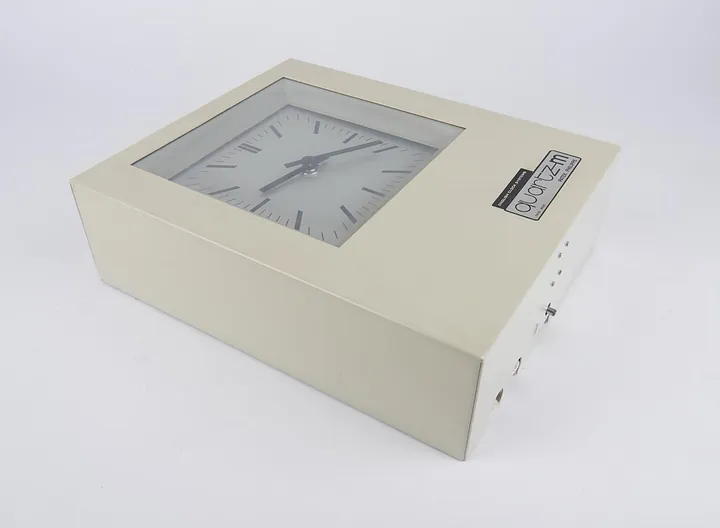
Quartz master clock QM 1, with movement by Patek Phillippe, Switzerland, 1965–1975. Supplied by English Clock Systems.
Science Museum Group, London
Instruments · 1965–1984
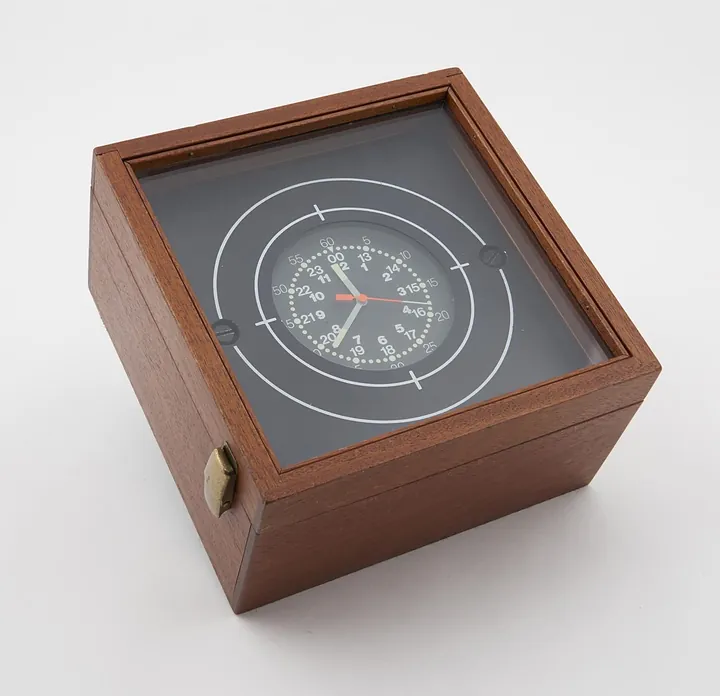
Chronometer by Patek Philippe and Kelvin Hughes, England, 1965–1984
Science Museum Group, London
Pocket Watches · c. 1895
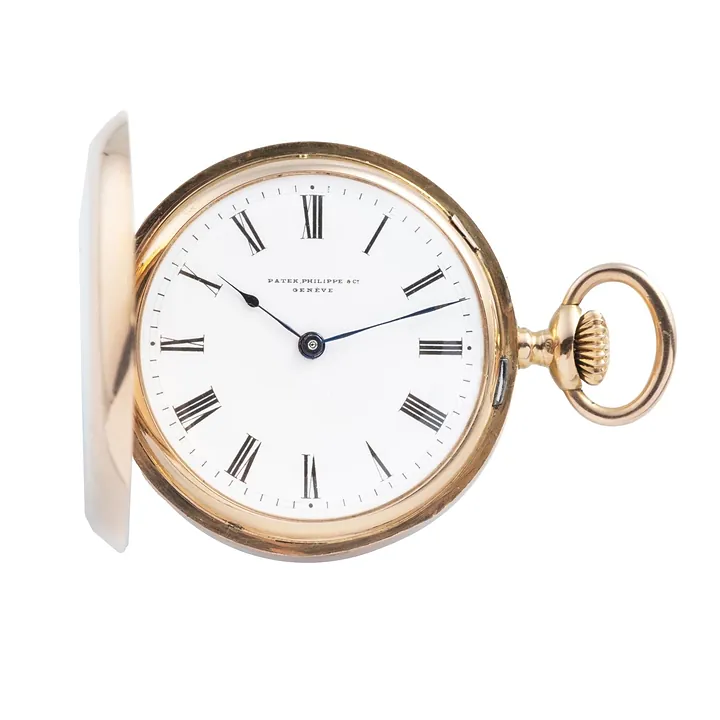
Patek Philippe pocket watch, c. 1895
Antiquorum auction archive, Geneva

Pocket Watches · c. 1900
Patek Philippe Chronometro Gondolo, c. 1900
Antiquorum auction archive, Geneva

Wristwatches · 1970
Wristwatch by Heno, Switzerland, 1970
Museum Rotterdam

Wristwatches · 1960–1986
'Tri-Compax' calendar chronograph wristwatch in gold case, by Universal, Geneva, Switzerland, 1960–1986.
Science Museum Group, London

Wristwatches · 1969–1970
Beta 21 Quartz wristwatch movement, made in Switzerland, 1970.
Science Museum Group, London

Wristwatches · c. 1969
Omega Speedmaster Moonwatch, ref. 145022-69st, c. 1969
Antiquorum auction archive, Geneva