
Wristwatches · Wristwatch
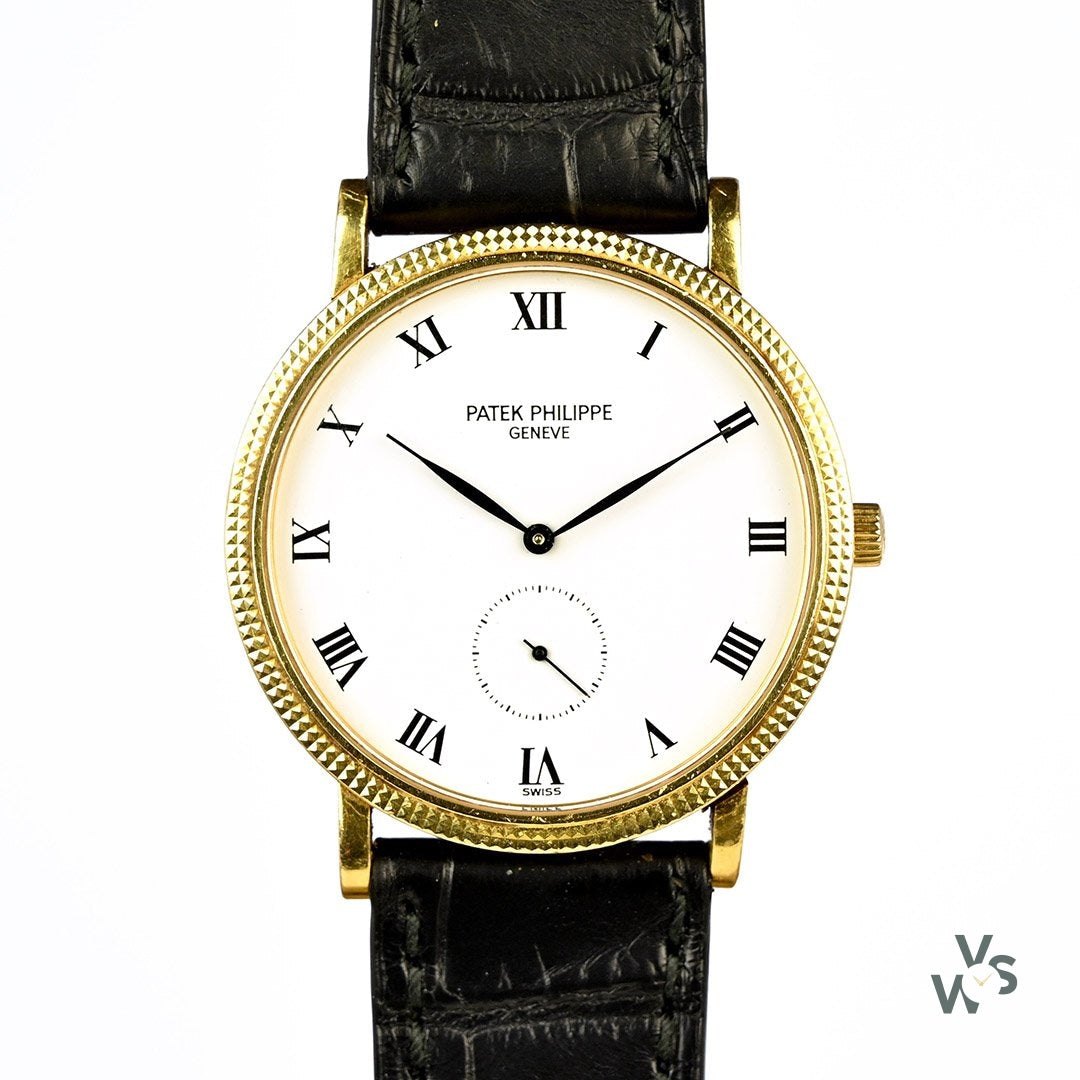
Patek Philippe Calatrava, 18K Yellow Gold, Model 3919, Clous de Paris Bezel, circa 1990s
- Maker / attribution
- Patek Philippe (maker)
- Date
- c. 1990s
- Historical period
- Mechanical Renaissance (1990 – 2010)
- Country of origin
- France
- Object type
- Wristwatch
- Materials / technique
- 18k yellow gold
- Dimensions
- Case 33 mm
- Stock no.
- vws1925cs
- Credit line
- Dealer listing, Vintage Watch Specialist (vws1925cs)
- Catalogue title (original)
- Patek Philippe - Calatrava - 18K Yellow Gold - Model 3919 - Clous de Paris Bezel - c.1990s ***SOLD*** (English)
View the source record (dealer listing) ↗ (opens another website in a new tab)Suggest a correction
Record summary
Catalogued by Vintage Watch Specialist (dealer), United Kingdom (stock number vws1925cs), this is a wristwatch by Patek Philippe, made in France, dated c. 1990s. The Atlas places it in the Mechanical Renaissance period (1990 – 2010) of its Wristwatches collection. Materials and techniques recorded by the source: 18k yellow gold. Recorded dimensions: Case 33 mm. The record is illustrated with 6 photographs.
Assembled from the source record's structured fields. Dates and attributions are given as the source states them; where a field is missing the Atlas leaves it blank rather than estimating.
Catalogue description
Dealer description — Vintage Watch Specialist
A Simply Stunning Vintage 18K Yellow Gold Patek Philippe Calatrava Model Ref: 3919 with Clous de Paris Bezel and White Dial with Roman Numerals. The Ultimate Classic, Gold Dress Watch. In 1839, Antoine Norbert de Patek established a watch factory with his compatriot, François Czapek, a watchmaker. They registered a partnership, Patek, Czapek & Cie, which was limited to six years. This company was subsequently liquidated and Patek went on to seek the services of another watchmaker. In 1844, whilst visiting Paris, Patek learned of another watchmaker named Jean Adrien Philippe. Philippe was the inventor of a pocket watch, able to be wound without a winding key. Patek invited Philippe to join him in Geneva and the following year, the company Patek & Cie was founded. Initially, Philippe was engaged as technical director of the company but went on to become a partner in 1851. Jean Adrien Philippe voiced his frustration that the nomenclature of the company failed to recognise his surname. As a result, the company was renamed Patek, Philippe & Cie. The name remained unchanged until 2009 when the comma was deemed superfluous and the company simply became known as Patek Philippe. What’s On Offer The Patek Philippe Calatrava is one of the brand's most iconic pieces — the epitome of style and elegance. The quintessential dress watch for both men and women, the Calatrava has a classic design characterised by clean lines, minimalist dial, and understated elegance. If you are looking for the ultimate dress watch with the ultimate pedigree, you can stop searching. This well-preserved Calatrava is a stunning example with its blemish-free glossy white dial and crisp Roman numerals. The slim leaf hands and subtle subsidiary seconds are a nod to early Calatrava styling but the “Clous de Paris” bezel design (although not as elegant sounding, is sometimes known as the hobnail pattern), is the pièce de résistance with its minute pyramid formations. Simply stunning. The watch is in overall excellent condition and is an absolute joy on the wrist. This watch will simply never go out of style. Additional information Made from Case: 18k Yellow Gold Dial: White Crystal: Glass Bracelet: Leather Pin Buckle Strap Technical specifications Winding: Manual Movement Type: Mechanical Caliber: 215PS Jewels: 18 Waterproof: N/A Power reserve: 44hrs Purchase details Condition: Excellent Model Reference: Calatrava Date of issue: c.1990s Guarantee: 12 Months by VWS Dimensions Width (without crown): 33mm Lug width: 15.5mm Lug height: (lug to lug)38mm Wrist size: Adjustable
Historical context
Mechanical Renaissance (1990 – 2010)
Mechanical watches return as cultural objects; independent watchmaking flourishes.
Mechanical watches returned as cultural and luxury objects. Complications, tourbillons and new materials proliferated; independent watchmakers such as George Daniels, F.P. Journe and Philippe Dufour revived artisanal watchmaking; collecting vintage watches became a major field.
Read the period in the timelineMore wristwatches from this periodEarlier: Quartz Revolution
Atlas type guide
Wristwatches
Bracelet watches were worn by women from the early nineteenth century — Breguet made one for Caroline Murat, Queen of Naples, in 1810–12 — but the wristwatch only became a man's instrument with military use and aviation in the early twentieth century. Between the World Wars it overtook the pocket watch; the 1920s and 1930s brought rectangular Art Deco cases, water-resistant cases and the first automatic winding systems.
After 1945 the wristwatch became a carrier of identity — dress watches, sports and dive watches, chronographs, calendars — produced by Swiss, American, Japanese, German, Soviet and Chinese industries. The quartz revolution after 1969 and the mechanical renaissance since the 1990s, including the rise of independent watchmakers, complete the story.
What to look for
- The reference number (between the lugs or inside the case back) and serial number, the starting point for dating.
- The calibre: its maker and number are often stamped under the dial or on the bridge.
- Originality of dial, hands and crown — refinished ('redial') dials are common.
- Case material marks: 18K/750, 14K/585, stainless steel, gold-filled, plated.
Dating clues
- Wire-lug cases: before c. 1925.
- Water-resistant screw-down cases: from 1926.
- Quartz movements: from 1969; sapphire crystals widespread after c. 1980.
General guidance written by the Atlas editors about this kind of object. It is not a statement about this particular piece; for that, rely on the source record above and on physical examination.
Related records

Clocks · 1965–1975
Quartz master clock QM 1, with movement by Patek Phillippe, Switzerland, 1965–1975. Supplied by English Clock Systems.
Science Museum Group, London

Instruments · 1965–1984
Chronometer by Patek Philippe and Kelvin Hughes, England, 1965–1984
Science Museum Group, London

Pocket Watches · c. 1895
Patek Philippe pocket watch, c. 1895
Antiquorum auction archive, Geneva

Pocket Watches · c. 1900
Patek Philippe Chronometro Gondolo, c. 1900
Antiquorum auction archive, Geneva
Wristwatches · c. 1990
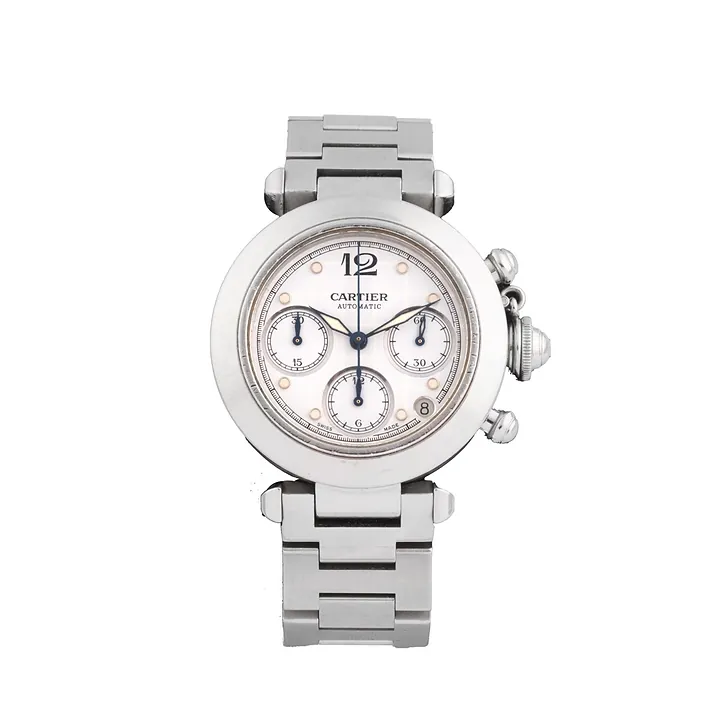
Cartier Pasha, ref. 2412, c. 1990
Antiquorum auction archive, Geneva
Wristwatches · c. 1990
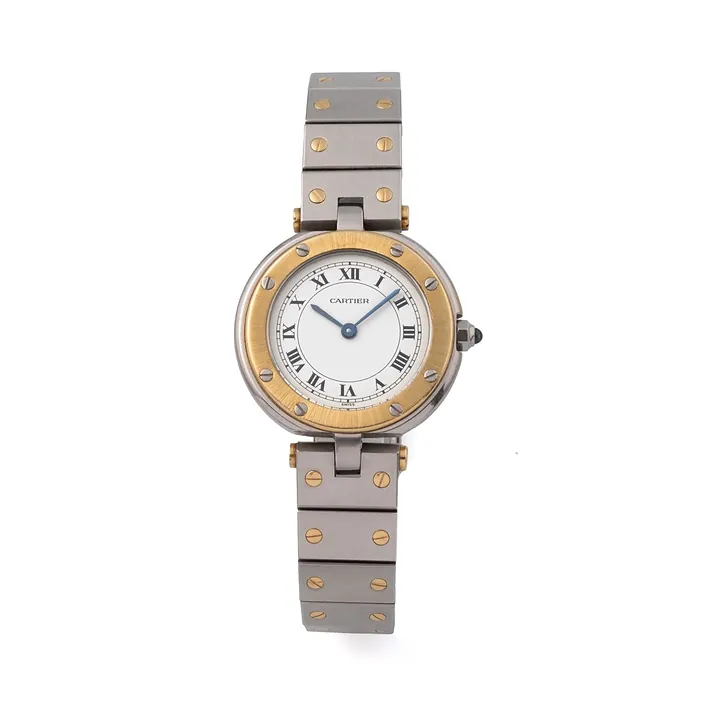
Cartier Santos Ronde Vendome, c. 1990
Antiquorum auction archive, Geneva
Wristwatches · c. 1990s
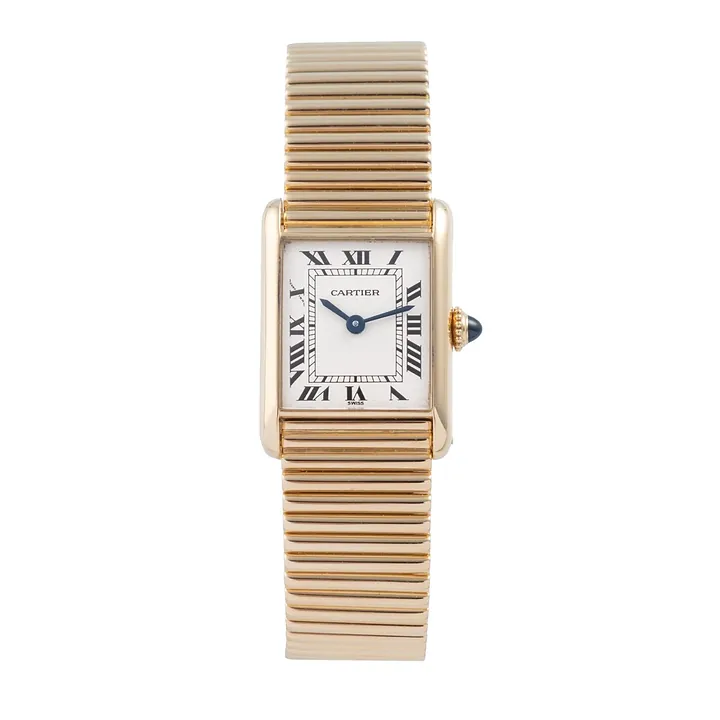
Cartier Tank Louis Cartier, ref. 6711, c. 1990s
Antiquorum auction archive, Geneva
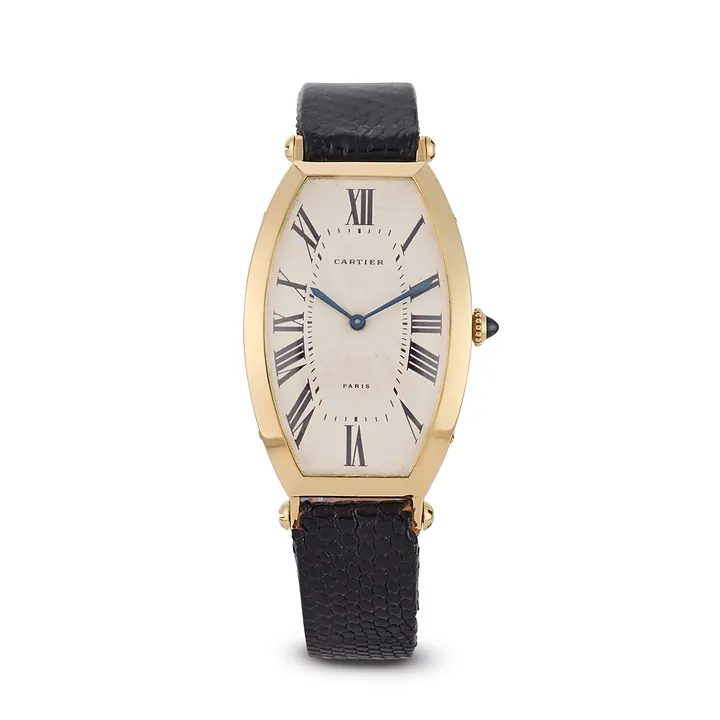
Wristwatches · c. 1991
Cartier Tonneau Paris 1991, c. 1991
Antiquorum auction archive, Geneva