
Wristwatches · Wristwatch
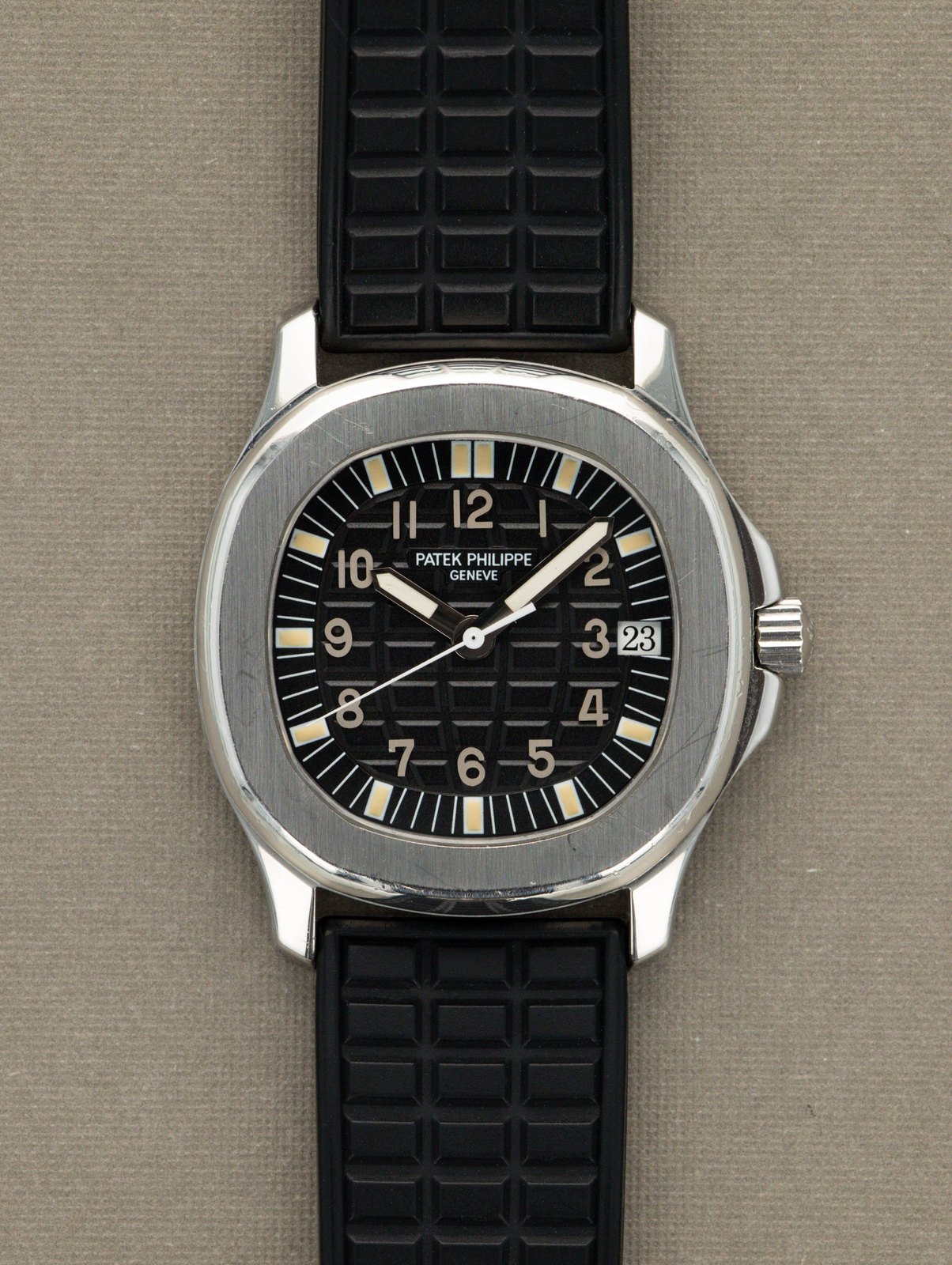
Patek Philippe Aquanuat ref. 5060A, Tritium Dial
- Maker / attribution
- Patek Philippe (maker)
- Date
- c. mid 1990s
- Historical period
- Mechanical Renaissance (1990 – 2010)
- Country of origin
- Switzerland
- Object type
- Wristwatch
- Dimensions
- Case 36 mm
- Stock no.
- OC2736
- Credit line
- Dealer listing, Oliver & Clarke (OC2736)
- Catalogue title (original)
- Patek Philippe Aquanuat Ref. 5060A - Tritium Dial (English)
View the source record (dealer listing) ↗ (opens another website in a new tab)Suggest a correction
Record summary
Catalogued by Oliver & Clarke (dealer), United Kingdom (stock number OC2736), this is a wristwatch by Patek Philippe, made in Switzerland, dated c. mid 1990s. The Atlas places it in the Mechanical Renaissance period (1990 – 2010) of its Wristwatches collection. Recorded dimensions: Case 36 mm. The record is illustrated with 6 photographs.
Assembled from the source record's structured fields. Dates and attributions are given as the source states them; where a field is missing the Atlas leaves it blank rather than estimating.
Catalogue description
Dealer description — Oliver & Clarke
The first Aquanaut was officially launched in 1997 and paid tribute to its older brother, the Nautilus, by way of its overall sporting appearance, and its bezel shape — and thats about it. Gone were the porthole-style 'ears' and in with more traditional lugs — allowing for a more conventional (and versatile) wearing experience. Being the 1990s, many of the first References utilized Tritium on their dials for a number of years, extending into the early 2000s, and they are already and will continue to age beautifully in the years to come. Neo-vintage charm at its finest! The Aquanaut that we have here, a Reference 5060A, is a stainless steel example dating to circa the mid 1990s. The 36mm case shows signs of a light previous polishing and light signs of wear throughout, which is matched with the bezel. Inside, this piece retains its desirable Tritium dial with that attractive anthracite color and deep 'hobnail' pattern found only on early Aquanauts. The dial and handset are both beautifully preserved and remain in seemingly flawless condition. The indices have patinated to an attractive and even tan color, while the handset remains slightly lighter, which is typical on '90s Awuanauts. This example comes fitted to its black 'hobnail'-pattern rubber strap with its correct stainless steel 'butterfly' deployant clasp. Furthermore, this piece has its correct solid caseback — the primary difference between the subsequent Reference 5066A and the 5060A that we have here. This reference is a favorite for a few of us over here at HQ, and we think, a perfect 'elevated' daily driver that can be worn by virtually anyone and on a wide variety of straps.
Historical context
Mechanical Renaissance (1990 – 2010)
Mechanical watches return as cultural objects; independent watchmaking flourishes.
Mechanical watches returned as cultural and luxury objects. Complications, tourbillons and new materials proliferated; independent watchmakers such as George Daniels, F.P. Journe and Philippe Dufour revived artisanal watchmaking; collecting vintage watches became a major field.
Read the period in the timelineMore wristwatches from this periodEarlier: Quartz Revolution
Atlas type guide
Wristwatches
Bracelet watches were worn by women from the early nineteenth century — Breguet made one for Caroline Murat, Queen of Naples, in 1810–12 — but the wristwatch only became a man's instrument with military use and aviation in the early twentieth century. Between the World Wars it overtook the pocket watch; the 1920s and 1930s brought rectangular Art Deco cases, water-resistant cases and the first automatic winding systems.
After 1945 the wristwatch became a carrier of identity — dress watches, sports and dive watches, chronographs, calendars — produced by Swiss, American, Japanese, German, Soviet and Chinese industries. The quartz revolution after 1969 and the mechanical renaissance since the 1990s, including the rise of independent watchmakers, complete the story.
What to look for
- The reference number (between the lugs or inside the case back) and serial number, the starting point for dating.
- The calibre: its maker and number are often stamped under the dial or on the bridge.
- Originality of dial, hands and crown — refinished ('redial') dials are common.
- Case material marks: 18K/750, 14K/585, stainless steel, gold-filled, plated.
Dating clues
- Wire-lug cases: before c. 1925.
- Water-resistant screw-down cases: from 1926.
- Quartz movements: from 1969; sapphire crystals widespread after c. 1980.
General guidance written by the Atlas editors about this kind of object. It is not a statement about this particular piece; for that, rely on the source record above and on physical examination.
Related records
Clocks · 1965–1975
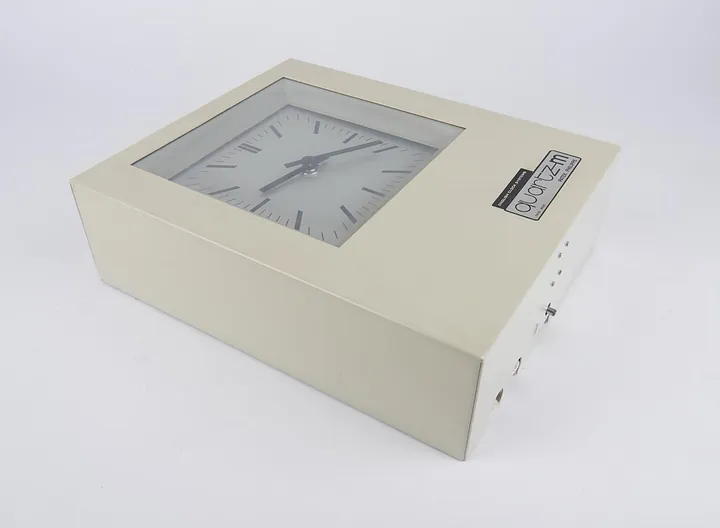
Quartz master clock QM 1, with movement by Patek Phillippe, Switzerland, 1965–1975. Supplied by English Clock Systems.
Science Museum Group, London
Instruments · 1965–1984
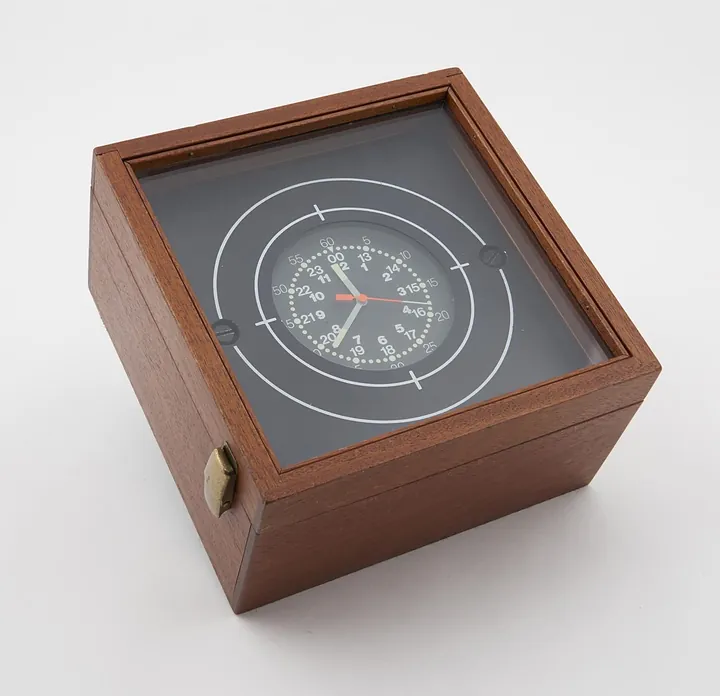
Chronometer by Patek Philippe and Kelvin Hughes, England, 1965–1984
Science Museum Group, London
Pocket Watches · c. 1895
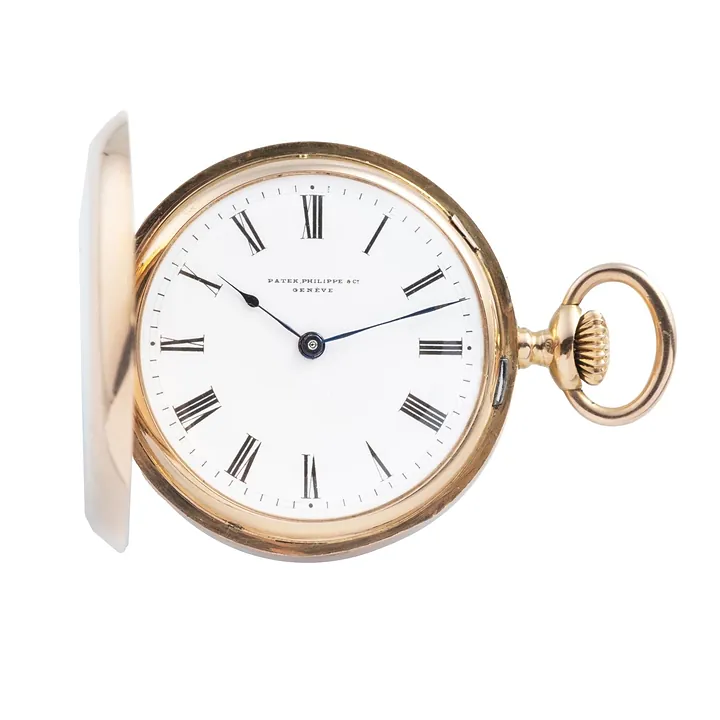
Patek Philippe pocket watch, c. 1895
Antiquorum auction archive, Geneva

Pocket Watches · c. 1900
Patek Philippe Chronometro Gondolo, c. 1900
Antiquorum auction archive, Geneva

Wristwatches · 2008
Wristwatch by Breitling?, 2008
Museum Rotterdam

Wristwatches · c. 1990s
Audemars Piguet Bamboo, c. 1990s
Antiquorum auction archive, Geneva

Wristwatches · c. 1990
Audemars Piguet Huitieme Perpetual Calendar, ref. 25696PT, c. 1990
Antiquorum auction archive, Geneva

Wristwatches · c. 1990
Breitling Chronomat, ref. b13050.1, c. 1990
Antiquorum auction archive, Geneva