
Wristwatches · Wristwatch
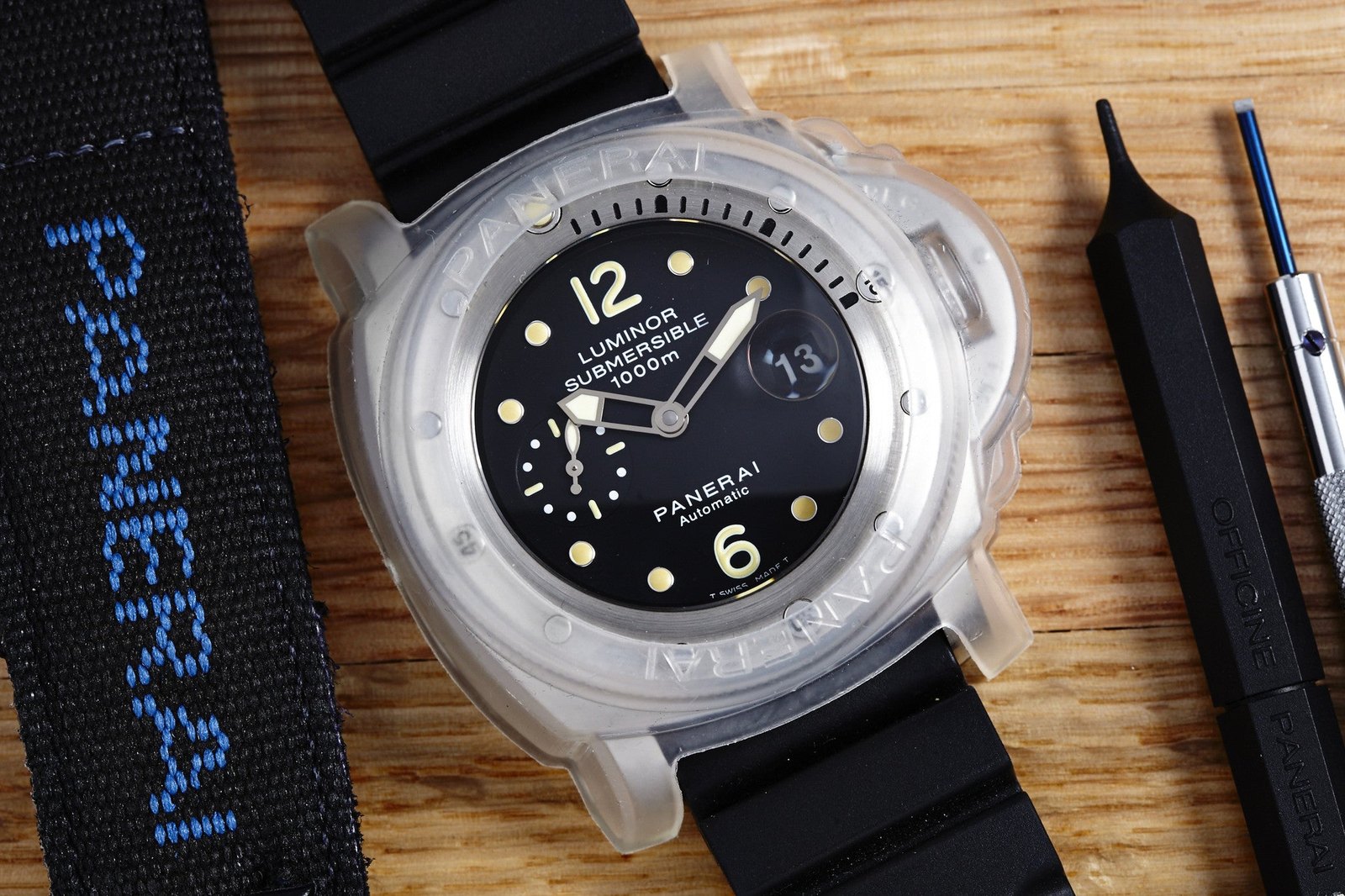
Panerai PAM243 Luminor Submersible Tritium Dial, 2008
- Maker / attribution
- Panerai (maker)
- Date
- 2008
- Historical period
- Mechanical Renaissance (1990 – 2010)
- Country of origin
- Italy
- Object type
- Wristwatch
- Stock no.
- Product 998037825
- Credit line
- Dealer listing, Analog/Shift (product 998037825)
- Catalogue title (original)
- Panerai PAM243 Luminor Submersible Tritium Dial Box & Papers (English)
View the source record (dealer listing) ↗ (opens another website in a new tab)Suggest a correction
Record summary
Catalogued by Analog/Shift (dealer), New York (stock number Product 998037825), this is a wristwatch by Panerai, made in Italy, dated 2008. The Atlas places it in the Mechanical Renaissance period (1990 – 2010) of its Wristwatches collection. The record is illustrated with 6 photographs.
Assembled from the source record's structured fields. Dates and attributions are given as the source states them; where a field is missing the Atlas leaves it blank rather than estimating.
Catalogue description
Dealer description — Analog/Shift
For us vintage snobs, modern watches can be a touchy subject. Either they give us the same palpitations that their vintage brethren do, or they make us feel, well, dead inside. And for those of you who know us well, you already know that Panerai isn't a brand you're likely to find on our wrists. That said, there is no denying the allure of their original professional diving watch: the Luminor Submersible. With a supremely rugged case design, signature rotating bezel, 5mm thick sapphire crystal, Helium Escape Valve, and large luminescent dive-style hands, this was a beast when it hit the market and is just as much so today. While big watches are generally on the "outs" in terms of acceptable fashion, purpose-built tool watches such as this one get a pass. While this example appears never to have seen rough usage, there is no doubt that it could take most anything you could throw at it. This is a model that Paneristi covet, for good reason. This particular Submersible features one of the last Tritium dials offered by Panerai, dating from 2008. It is in fantastic condition over all, with a recent full service and professional case refinishing that makes it look brand new, aside from a slight patination to that gorgeous Tritium! This piece also comes complete with its full kit: Inner and outer boxes, paperwork, tools, service documents and two genuine Panerai straps. If you are looking for a large, professional-grade diver with unmistakable looks, you've found your next watch!
Historical context
Mechanical Renaissance (1990 – 2010)
Mechanical watches return as cultural objects; independent watchmaking flourishes.
Mechanical watches returned as cultural and luxury objects. Complications, tourbillons and new materials proliferated; independent watchmakers such as George Daniels, F.P. Journe and Philippe Dufour revived artisanal watchmaking; collecting vintage watches became a major field.
Read the period in the timelineMore wristwatches from this periodEarlier: Quartz Revolution
Atlas type guide
Wristwatches
Bracelet watches were worn by women from the early nineteenth century — Breguet made one for Caroline Murat, Queen of Naples, in 1810–12 — but the wristwatch only became a man's instrument with military use and aviation in the early twentieth century. Between the World Wars it overtook the pocket watch; the 1920s and 1930s brought rectangular Art Deco cases, water-resistant cases and the first automatic winding systems.
After 1945 the wristwatch became a carrier of identity — dress watches, sports and dive watches, chronographs, calendars — produced by Swiss, American, Japanese, German, Soviet and Chinese industries. The quartz revolution after 1969 and the mechanical renaissance since the 1990s, including the rise of independent watchmakers, complete the story.
What to look for
- The reference number (between the lugs or inside the case back) and serial number, the starting point for dating.
- The calibre: its maker and number are often stamped under the dial or on the bridge.
- Originality of dial, hands and crown — refinished ('redial') dials are common.
- Case material marks: 18K/750, 14K/585, stainless steel, gold-filled, plated.
Dating clues
- Wire-lug cases: before c. 1925.
- Water-resistant screw-down cases: from 1926.
- Quartz movements: from 1969; sapphire crystals widespread after c. 1980.
General guidance written by the Atlas editors about this kind of object. It is not a statement about this particular piece; for that, rely on the source record above and on physical examination.
Related records
Wristwatches · Sold in Nov 2006
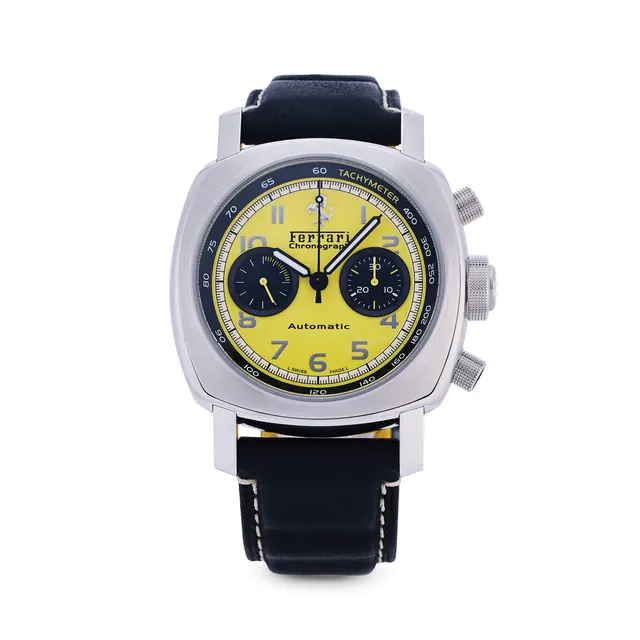
Panerai wristwatch, ref. FER00011, Ferrari Granturismo Chronograph Limited 169/700, Sold in Nov 2006
Antiquorum auction archive, Geneva
Wristwatches · originally sold in October 2007 (per the lot record)
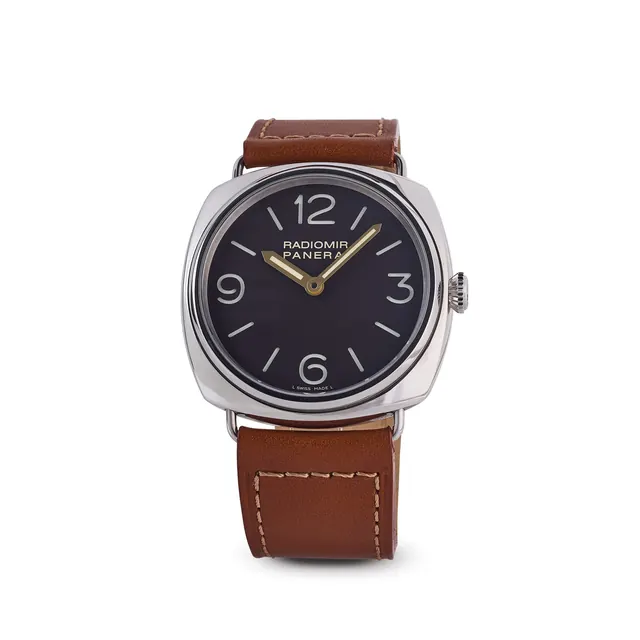
Panerai wristwatch, ref. PAM, Radiomir 1938 New Old Stock, originally sold in October 2007
Antiquorum auction archive, Geneva
Wristwatches · c. 2002-2006
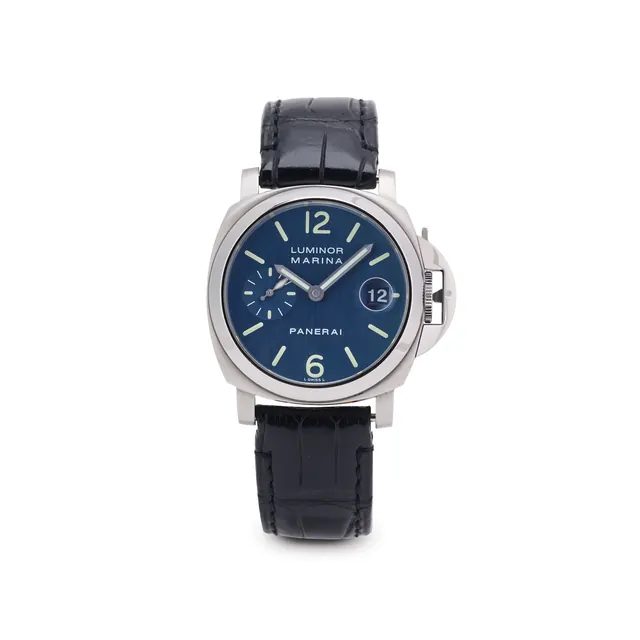
Panerai wristwatch, ref. PAM, Lumior Marina, circa 2002-2006
Antiquorum auction archive, Geneva
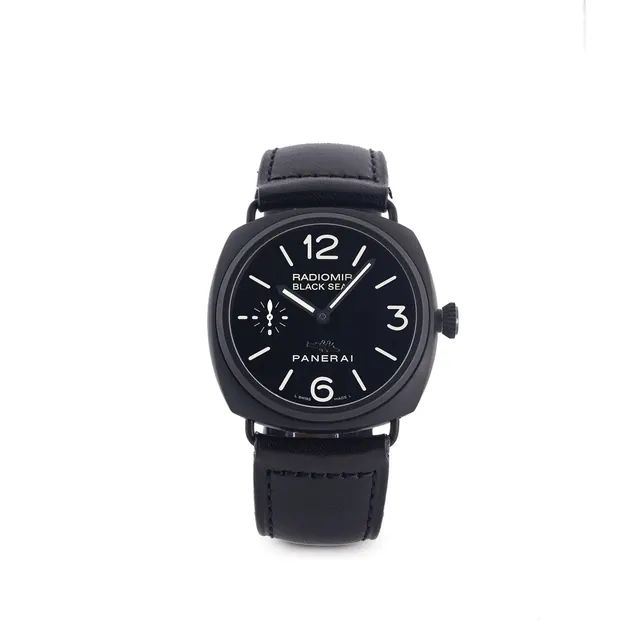
Wristwatches · c. 2009
Panerai wristwatch, ref. PAM00292, Radiomir Black Seal Limited Edition of 1000 Pieces, circa 2009
Antiquorum auction archive, Geneva
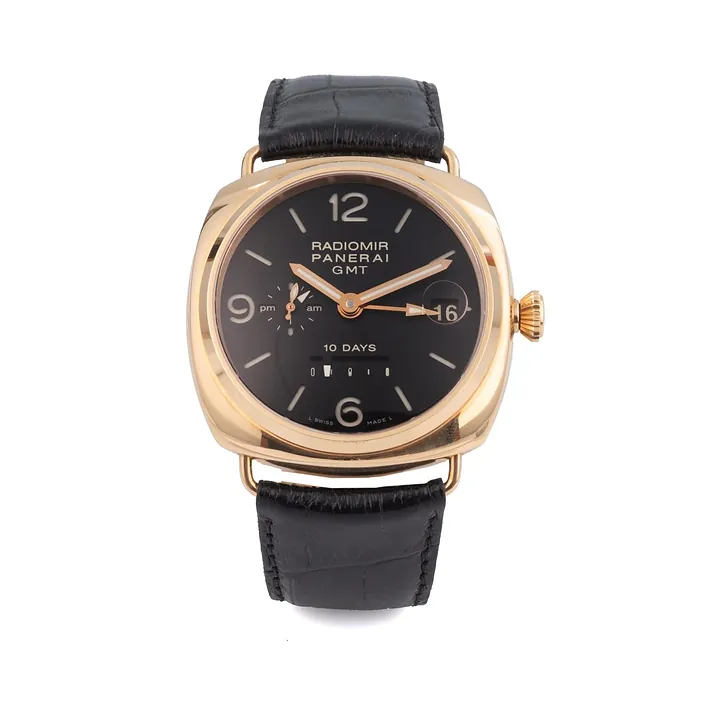
Wristwatches · c. 2007
Officine Panerai Radiomir GMT, ref. 06706, c. 2007
Antiquorum auction archive, Geneva
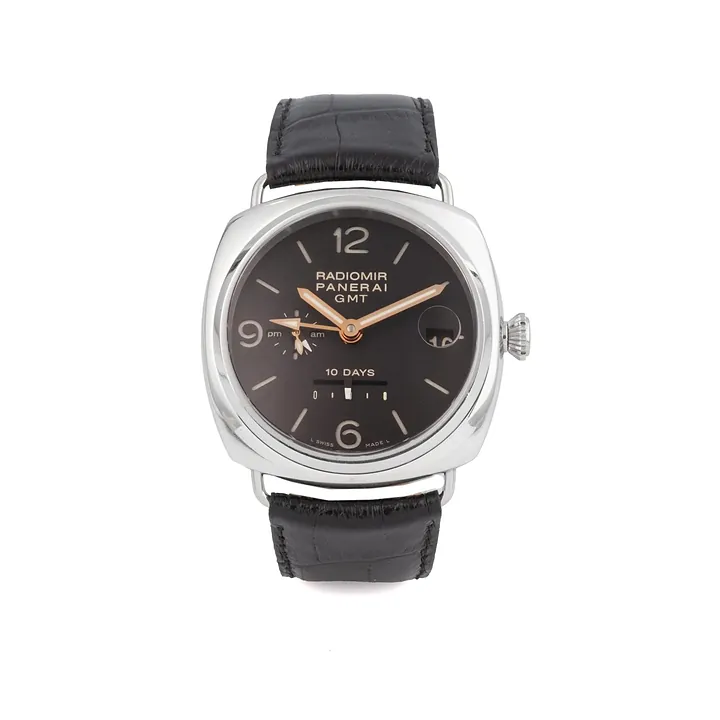
Wristwatches · c. 2007
Officine Panerai Radiomir GMT, ref. PAAM00274, c. 2007
Antiquorum auction archive, Geneva
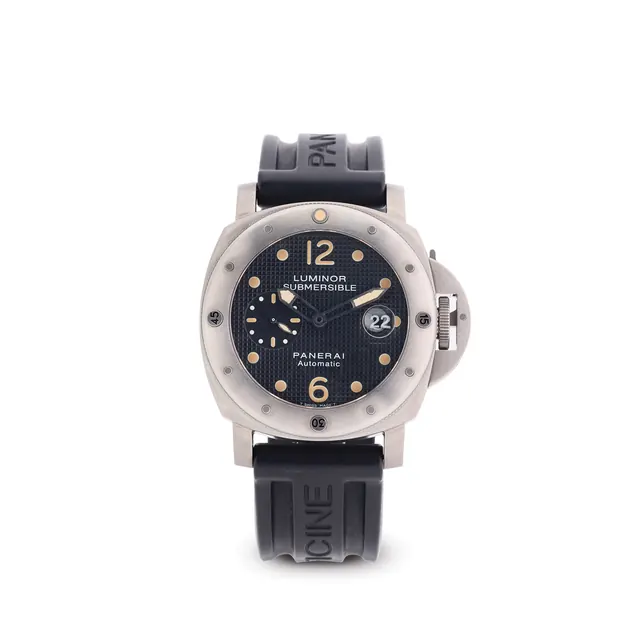
Wristwatches · c. Jun 1998
Panerai wristwatch, ref. PAM025/OP6507, Luminor Submersible, circa Jun 1998
Antiquorum auction archive, Geneva
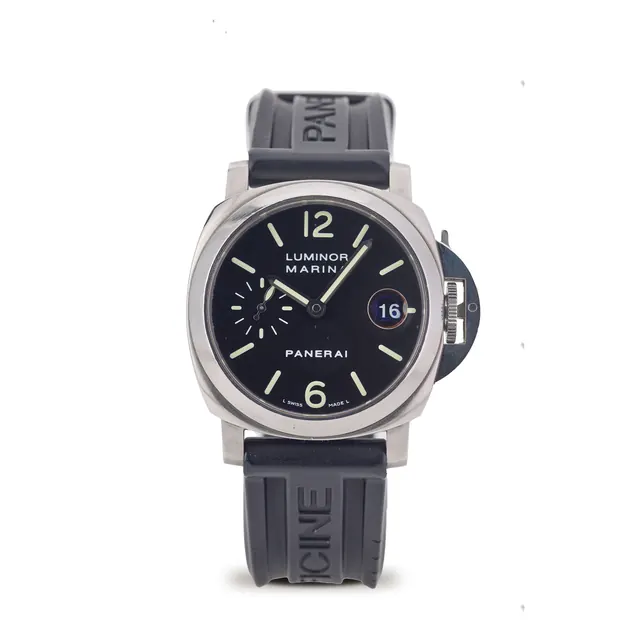
Wristwatches · originally sold in 2006 (per the lot record)
Panerai wristwatch, ref. PAM0048, Luminor Marina, originally sold in 2006
Antiquorum auction archive, Geneva