
Wristwatches · Wristwatch
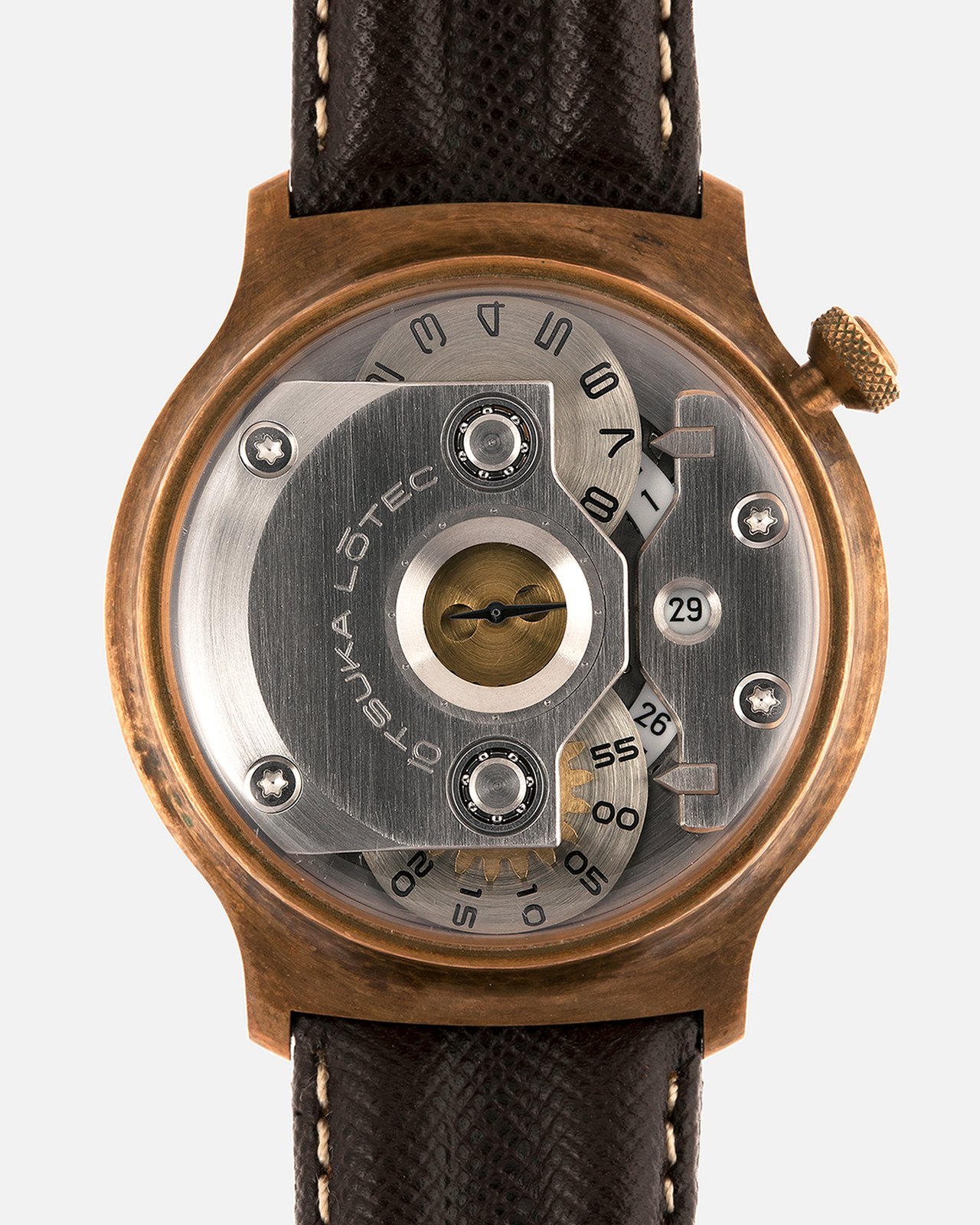
Otsuka Lotec Model No. 5 Bronze R-1 Reiwa, 2020
- Maker / attribution
- Otsuka Lotec (maker)
- Date
- 2020
- Historical period
- Contemporary Horology (2010 – Present)
- Country of origin
- Japan
- Object type
- Wristwatch
- Materials / technique
- bronze
- Dimensions
- Case 42 mm
- Stock no.
- Product 7791954395223
- Credit line
- Dealer listing, S.Song Watches (product 7791954395223)
- Catalogue title (original)
- Otsuka Lotec Model No. 5 Bronze R-1 Reiwa (English)
View the source record (dealer listing) ↗ (opens another website in a new tab)Suggest a correction
Record summary
Catalogued by S.Song Watches (dealer), Seattle (stock number Product 7791954395223), this is a wristwatch by Otsuka Lotec, made in Japan, dated 2020. The Atlas places it in the Contemporary Horology period (2010 – Present) of its Wristwatches collection. Materials and techniques recorded by the source: bronze. Recorded dimensions: Case 42 mm. The record is illustrated with 6 photographs.
Assembled from the source record's structured fields. Dates and attributions are given as the source states them; where a field is missing the Atlas leaves it blank rather than estimating.
Catalogue description
Dealer description — S.Song Watches
Otsuka Lotec has become one of the more interesting names to emerge from contemporary Japanese independent watchmaking. Founded by industrial designer Jiro Katayama, the brand takes its name from the Otsuka neighbourhood of Tokyo, where Katayama established his workshop, combined with “Lotec”, a reference to the deliberately low-tech approach behind his watches. Katayama's route into watchmaking was rather unconventional. Originally working as an automotive designer, he began experimenting with watchmaking after acquiring a small bench lathe, eventually establishing Otsuka Lotec in 2008. For much of its early existence, production was incredibly small, with Katayama designing and producing his watches from a small workshop in Tokyo. The Model No. 5 was introduced in 2012 and became one of the earliest recognisable Otsuka Lotec designs. Rather than using conventional hands, the time is displayed in a regulator-style layout through separate rotating discs for the hours and minutes, together with running seconds and a date display. The result feels somewhere between a watch and an analogue measuring instrument, an aesthetic that would eventually become synonymous with Otsuka Lotec. The present example is a particularly unusual version known as the Edition R-1 . Produced in 2019 and delivered on the 1st of January 2020, it was created to mark the first year of Japan's new Reiwa era and is accompanied by its original card specifically marked “REIWA, 1st 2019”. The R-1 designation is also engraved in red on the caseback. There were several extremely small bronze versions of the Model No. 5 produced around this period. A smooth bronze version was produced for the Taiwanese market in 2017 in an edition of 22 pieces, followed in 2018 by a separate 22-piece edition with a hand-hammered bronze case. The R-1 followed in 2019, again using a hand-hammered bronze case but carrying its own R-1 designation and Reiwa documentation. Unlike the two earlier editions, the production number of the R-1 is not known. What is clear, however, is just how rarely it appears. Information surrounding the R-1 is exceptionally scarce, and I have been unable to find another public sale. Considering that the other early bronze variants were themselves produced in editions of just 22 pieces, the scarcity of surviving information and publicly documented examples makes the R-1 an exceptionally rare version of an already difficult-to-find early Otsuka Lotec. The 42mm bronze case is finished using Tsuchime , a traditional Japanese hand-hammering technique more commonly encountered on handcrafted Japanese metalwork such as cups and knives. Each individual strike creates a slightly different impression in the bronze, giving the case its irregular texture and ensuring that no two surfaces are quite identical. Combined with the natural patination of bronze, it gives the watch a particularly handmade quality that feels entirely appropriate for Katayama's early approach to watchmaking. Inside is an automatic Miyota 8215 that has been heavily modified by Katayama to accommodate the unconventional display. Hours and minutes are indicated through separate rotating discs, with running seconds positioned centrally and a date display alongside. It is a relatively simple base movement transformed into something that looks and functions almost nothing like the movement with which it started. For me, the appeal of this watch is really in how early it is in the Otsuka Lotec story. Today the brand has become internationally recognised, yet these watches came from a period when Otsuka Lotec remained an extremely small operation centred around Katayama's workshop in Tokyo. With its rarity and special case, it is, without a doubt, one of the most collectable and important Otsuka Lotec watches made to date.
Historical context
Contemporary Horology (2010 – Present)
Silicon components, connected watches, optical-lattice research clocks and a thriving independent scene.
Smartwatches became the world's best-selling watches, while mechanical watchmaking focuses on craft, innovation (silicon components, new escapements) and independent makers.
Read the period in the timelineMore wristwatches from this periodEarlier: Mechanical Renaissance
Atlas type guide
Wristwatches
Bracelet watches were worn by women from the early nineteenth century — Breguet made one for Caroline Murat, Queen of Naples, in 1810–12 — but the wristwatch only became a man's instrument with military use and aviation in the early twentieth century. Between the World Wars it overtook the pocket watch; the 1920s and 1930s brought rectangular Art Deco cases, water-resistant cases and the first automatic winding systems.
After 1945 the wristwatch became a carrier of identity — dress watches, sports and dive watches, chronographs, calendars — produced by Swiss, American, Japanese, German, Soviet and Chinese industries. The quartz revolution after 1969 and the mechanical renaissance since the 1990s, including the rise of independent watchmakers, complete the story.
What to look for
- The reference number (between the lugs or inside the case back) and serial number, the starting point for dating.
- The calibre: its maker and number are often stamped under the dial or on the bridge.
- Originality of dial, hands and crown — refinished ('redial') dials are common.
- Case material marks: 18K/750, 14K/585, stainless steel, gold-filled, plated.
Dating clues
- Wire-lug cases: before c. 1925.
- Water-resistant screw-down cases: from 1926.
- Quartz movements: from 1969; sapphire crystals widespread after c. 1980.
General guidance written by the Atlas editors about this kind of object. It is not a statement about this particular piece; for that, rely on the source record above and on physical examination.
Related records
Wristwatches · Sold in December 2025
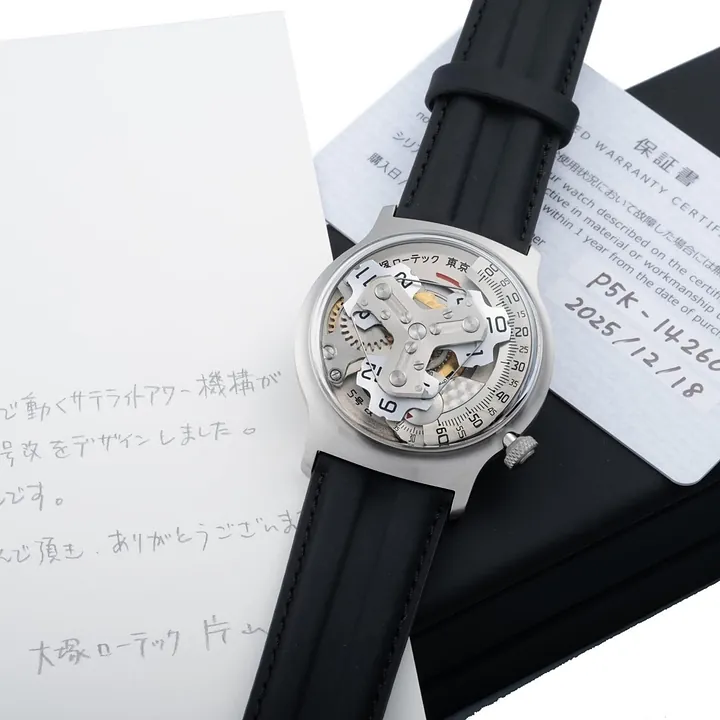
Otsuka Lotec Kai, ref. 5, Sold in December 2025
Antiquorum auction archive, Geneva
Wristwatches · originally sold in July 2025 (per the lot record)
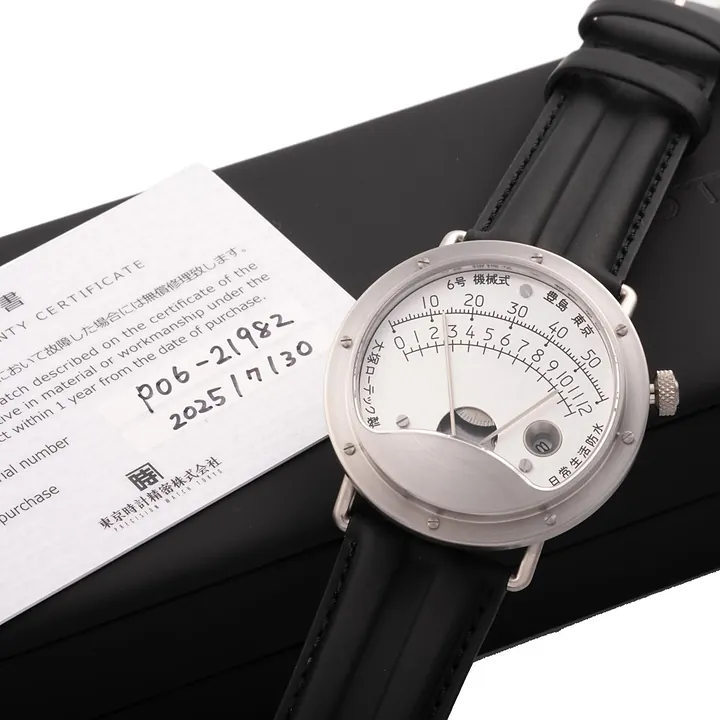
Otsuka Lotec wristwatch, ref. 6, originally sold in July 2025
Antiquorum auction archive, Geneva
Wristwatches · Sold in November 2025
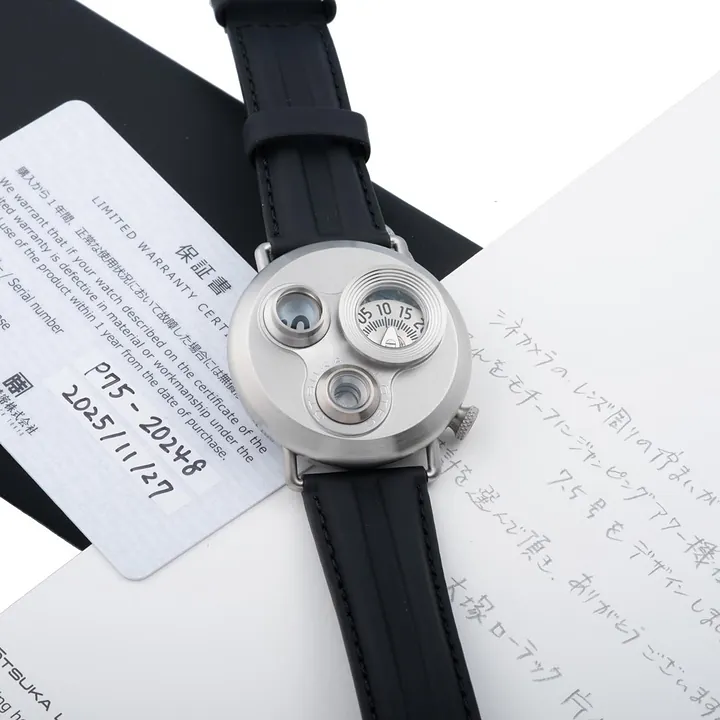
Otsuka Lotec wristwatch, ref. 7.5, Sold in November 2025
Antiquorum auction archive, Geneva
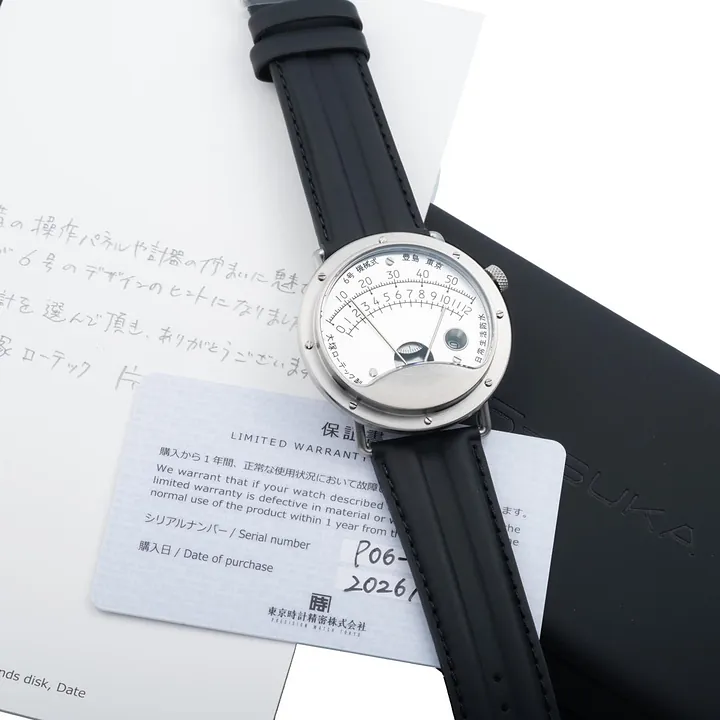
Wristwatches · Sold in January 2026
Otsuka Lotec wristwatch, ref. 6, Sold in January 2026
Antiquorum auction archive, Geneva
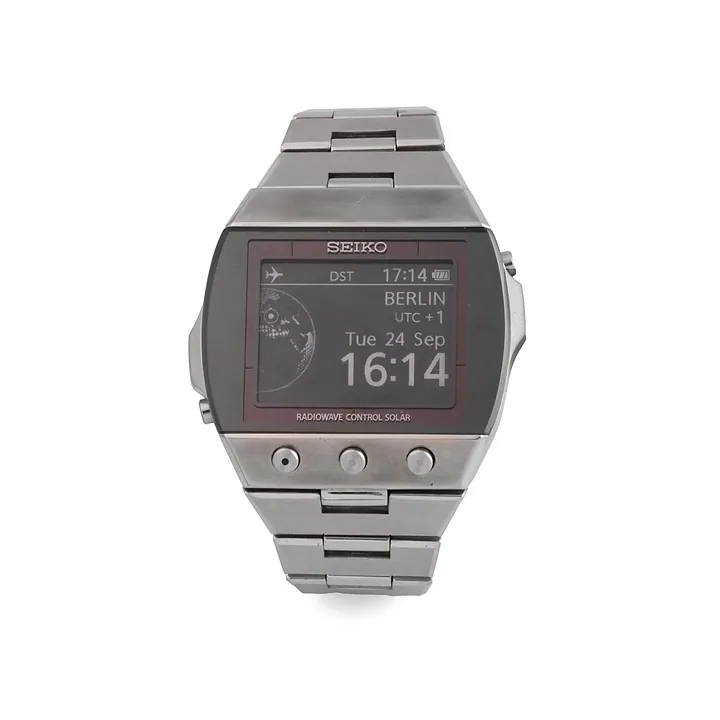
Wristwatches · Sold in 2011
Seiko Brights Spirit, ref. S770, Sold in 2011
Antiquorum auction archive, Geneva
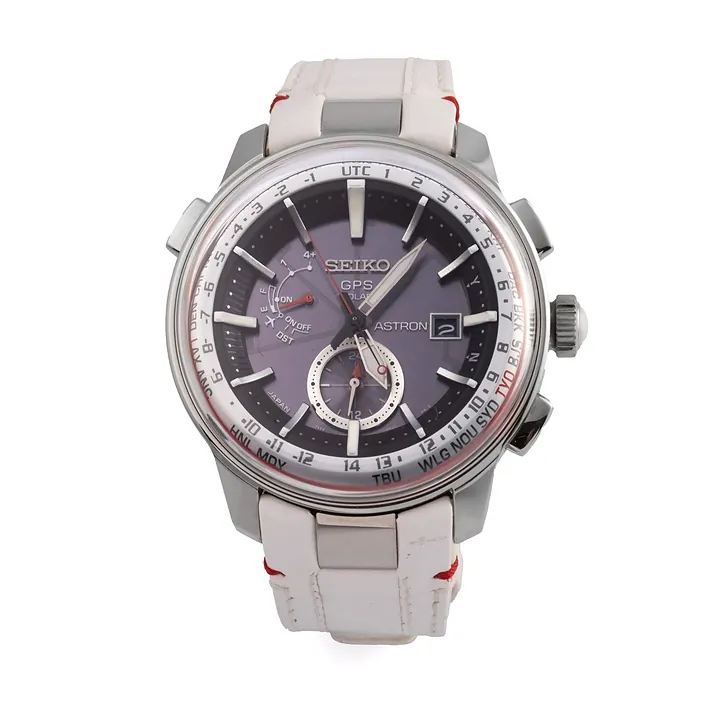
Wristwatches · originally sold in 2014 (per the lot record)
Seiko Astron GPS Solar, ref. SBXA045, originally sold in 2014
Antiquorum auction archive, Geneva
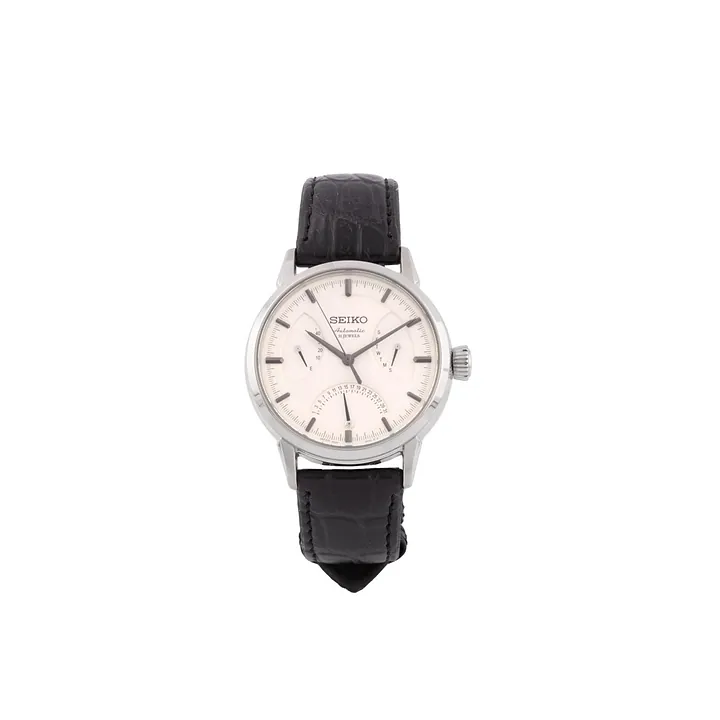
Wristwatches · c. 2015
Seiko Presage, c. 2015
Antiquorum auction archive, Geneva
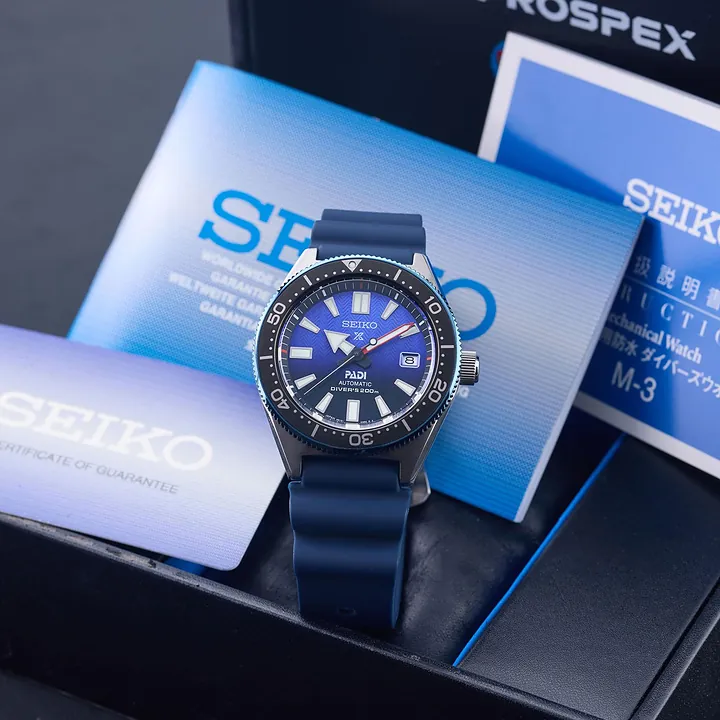
Wristwatches · originally sold in 2018 (per the lot record)
Seiko Prospex Padi Special Edition, ref. SBDC055, originally sold in 2018
Antiquorum auction archive, Geneva