
Wristwatches · Wristwatch
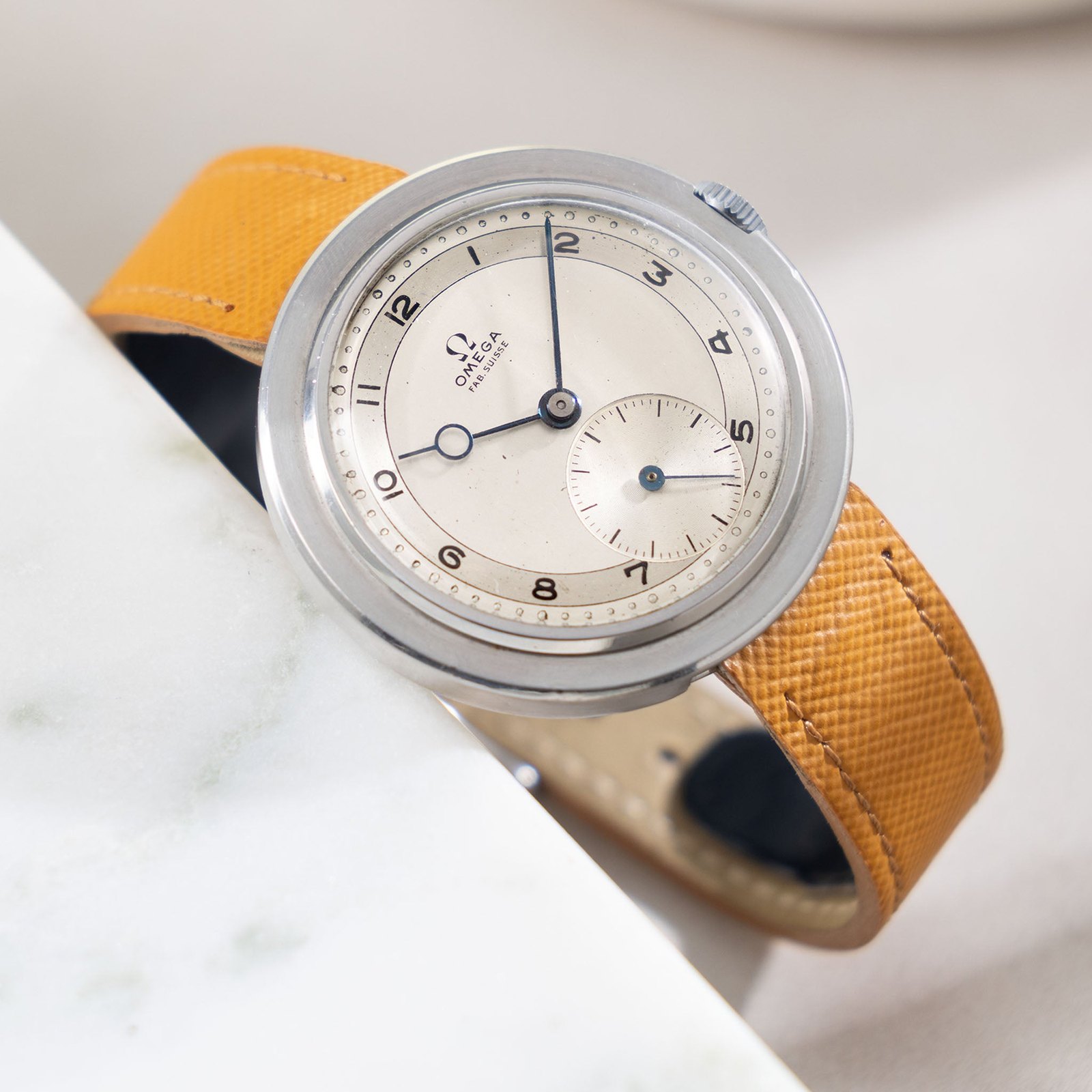
Omega Disco-Volante Oversized Dresswatch ref. CK2013 Two-Tone Silver Dial, mid 1930s
- Maker / attribution
- Omega (maker)
- Date
- mid 1930s
- Historical period
- Golden Age of Mechanical Watchmaking (1900 – 1945)
- Country of origin
- Switzerland
- Object type
- Wristwatch
- Materials / technique
- silver
- Dimensions
- Case 39 mm
- Stock no.
- W-3419
- Credit line
- Dealer listing, Bulang & Sons (W-3419)
- Catalogue title (original)
- Omega Disco-Volante Oversized Dresswatch ref. CK2013 Two-Tone Silver Dial (English)
View the source record (dealer listing) ↗ (opens another website in a new tab)Suggest a correction
Record summary
Catalogued by Bulang & Sons (dealer), Copenhagen (stock number W-3419), this is a wristwatch by Omega, made in Switzerland, dated mid 1930s. The Atlas places it in the Golden Age of Mechanical Watchmaking period (1900 – 1945) of its Wristwatches collection. Materials and techniques recorded by the source: silver. Recorded dimensions: Case 39 mm. The record is illustrated with 6 photographs.
Assembled from the source record's structured fields. Dates and attributions are given as the source states them; where a field is missing the Atlas leaves it blank rather than estimating.
Catalogue description
Dealer description — Bulang & Sons
omegDuring the 1930s, a new aesthetic began to take shape: slim, oversized cases with flat bezels and short lugs — a style affectionately nicknamed “Disco Volante” or “Flying Saucer” by collectors. Omega was a key advocate of this bold design language, producing numerous variations, many featuring an impressive 39mm diameter. To put that into perspective, men’s wristwatches of the era typically measured between 30 and 32mm, making the “Flying Saucer” case a bold and unconventional presence on the wrist. This particular example features a beautiful silver dial, with a brushed, semi-glossy outer rim and a matte finish at the center. Additional details include a “dotted” minute track, a small running seconds sub dial, and a stunning blued handset that adds a pop of character and charm. The watch is paired with the strap shown in the photographs, and the hand-wound Caliber 26.5 movement has been fully checked and regulated by our watchmaker. An exceptional piece of early Omega design, this watch offers both historical significance and timeless appeal. Feel free to reach out to arrange a viewing or a call — we’d be delighted to share more with you. Specifications: Omega Reference “flying saucer“ Dress-watch reference CK2013 39mm steel case with no-lugs Silver two tone dial, blued hands , small seconds Caliber 26.5 hand-wound movement Movement serial 807xxxx / case no. 951xxxx dating to the mid 1930s Comes on the leather strap as pictured Fully checked by our watchmaker
Historical context
Golden Age of Mechanical Watchmaking (1900 – 1945)
The wristwatch displaces the pocket watch; waterproof cases, self-winding and grand complications.
The wristwatch overtook the pocket watch. Military use in the First World War, aviation, water-resistant cases (1926), automatic winding (1923–31), rectangular Art Deco designs and early chronographs and calendars defined the period.
Read the period in the timelineMore wristwatches from this periodEarlier: Industrial Revolution
Atlas type guide
Wristwatches
Bracelet watches were worn by women from the early nineteenth century — Breguet made one for Caroline Murat, Queen of Naples, in 1810–12 — but the wristwatch only became a man's instrument with military use and aviation in the early twentieth century. Between the World Wars it overtook the pocket watch; the 1920s and 1930s brought rectangular Art Deco cases, water-resistant cases and the first automatic winding systems.
After 1945 the wristwatch became a carrier of identity — dress watches, sports and dive watches, chronographs, calendars — produced by Swiss, American, Japanese, German, Soviet and Chinese industries. The quartz revolution after 1969 and the mechanical renaissance since the 1990s, including the rise of independent watchmakers, complete the story.
What to look for
- The reference number (between the lugs or inside the case back) and serial number, the starting point for dating.
- The calibre: its maker and number are often stamped under the dial or on the bridge.
- Originality of dial, hands and crown — refinished ('redial') dials are common.
- Case material marks: 18K/750, 14K/585, stainless steel, gold-filled, plated.
Dating clues
- Wire-lug cases: before c. 1925.
- Water-resistant screw-down cases: from 1926.
- Quartz movements: from 1969; sapphire crystals widespread after c. 1980.
General guidance written by the Atlas editors about this kind of object. It is not a statement about this particular piece; for that, rely on the source record above and on physical examination.
Related records

Instruments · 1950–1976
Omega Megaquartz 2400 marine chronometer, 1950–1976
Science Museum Group, London

Instruments · 1960–1979
Stopwatch / timer by Omega, 1960–1979
Science Museum Group, London

Instruments · 1960–1979
Stopwatch / timer by Omega, Switzerland, 1960–1979
Science Museum Group, London

Instruments · 1960–1979
Stopwatch by Omega, Swiss made, single-button type reading 0 - 60 seconds in fifths and 0 - 5 minutes in minutes on subsidiary dial, 1960-79.
Science Museum Group, London

Wristwatches · 1931
Rolex 'Oyster Perpetual' rotor self-winding wrist-watch, lever escapement, in steel case with glass in back, Montres Rolex SA, Geneva, Switzerland, 1931
Science Museum Group, London

Wristwatches · 1900–1999
Wristwatch by Certina, Switzerland, 1900–1999
Nordic Museum Foundation
Wristwatches · 1900–1999
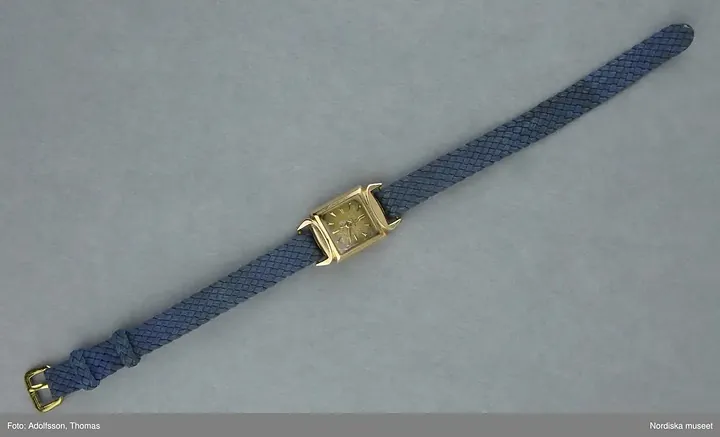
Wristwatch by Omega, Västerås, 1900–1999
Nordic Museum Foundation
Wristwatches · 1900–1999
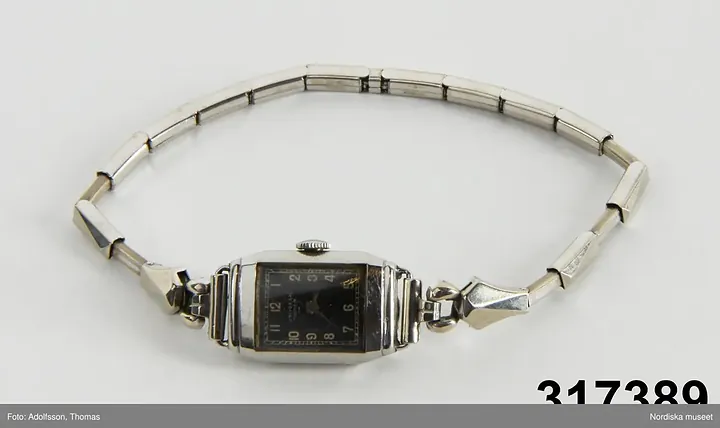
Wristwatch by Universal, Switzerland, 1900–1999
Nordic Museum Foundation